
Yosemite National Park’s free shuttle system makes getting around the park simple and stress-free. Here’s what you need to know:
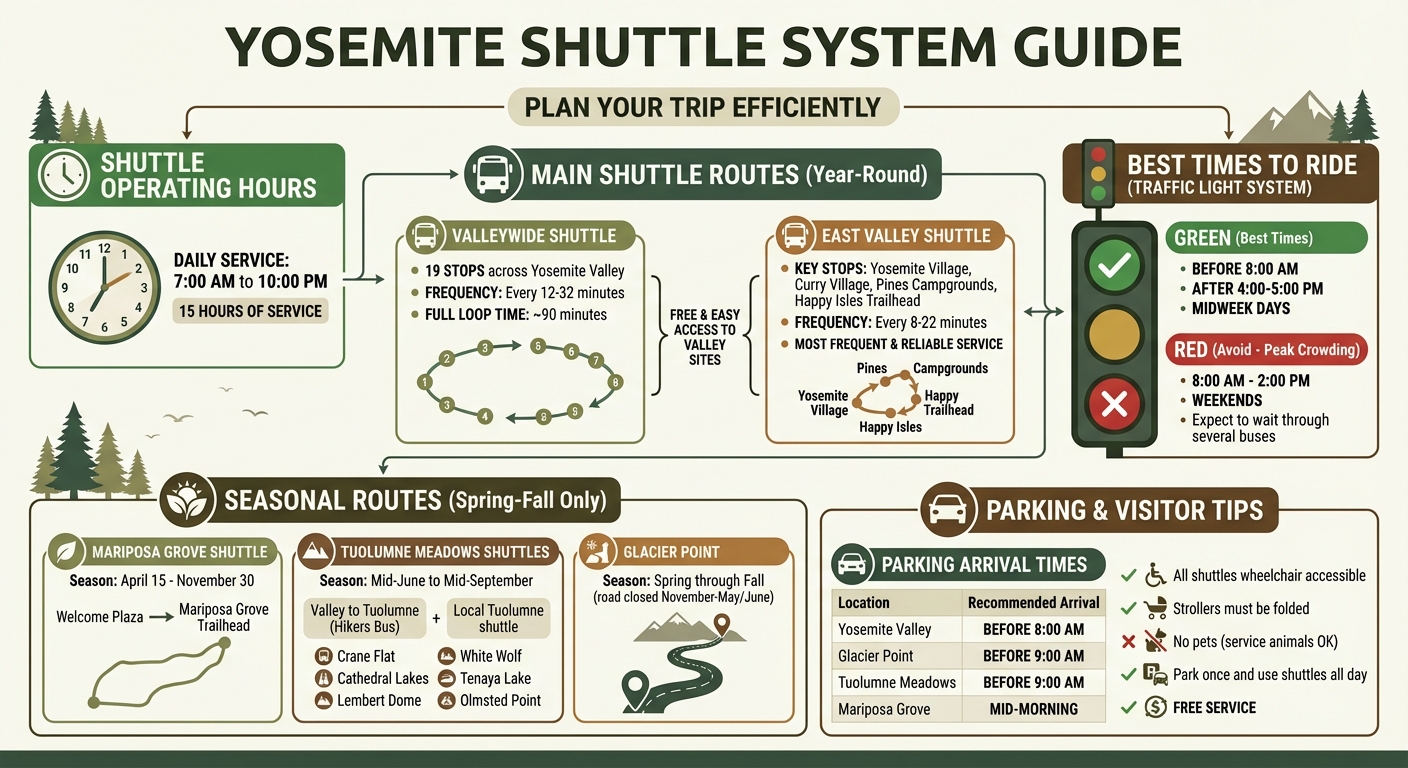
- Hours: Shuttles run daily from 7:00 AM to 10:00 PM, offering 15 hours of service.
- Routes:
- The Valleywide Shuttle covers 19 stops across Yosemite Valley, with buses every 12–32 minutes.
- The East Valley Shuttle connects Yosemite Village, Curry Village, campgrounds, and trailheads like Happy Isles, arriving every 8–22 minutes.
- Seasonal Services: Routes to Mariposa Grove, Glacier Point, and Tuolumne Meadows only operate spring through fall. These are paused during winter due to snow.
- Accessibility: All shuttles are wheelchair-friendly, but strollers must be folded, and pets are not allowed (service animals permitted).
Tips for Visitors:
- Arrive early (before 8:00 AM) to avoid parking issues.
- Avoid peak shuttle times (8:00 AM–2:00 PM) to skip long waits.
- Use the YARTS bus system for entry to the park without parking hassles.
Yosemite Shuttle Routes, Hours, and Best Times to Visit Guide
Yosemite Shuttle Operating Hours
Daily Operating Hours
Yosemite Valley shuttles run daily from 7:00 AM to 10:00 PM, providing 15 hours of service. Both the Valleywide Shuttle and the East Valley Shuttle adhere to this schedule, making it convenient for visitors to explore the park.
The East Valley Shuttle operates every 8–22 minutes, depending on the time of day. This route serves the eastern part of the valley, connecting key locations such as Yosemite Village, Curry Village, the Pines Campgrounds, and popular trailheads. Meanwhile, the Valleywide Shuttle, covering 19 stops, runs every 12–32 minutes, with a full loop taking approximately 90 minutes. These consistent schedules are designed to suit a variety of visitor plans.
Seasonal Schedule Changes
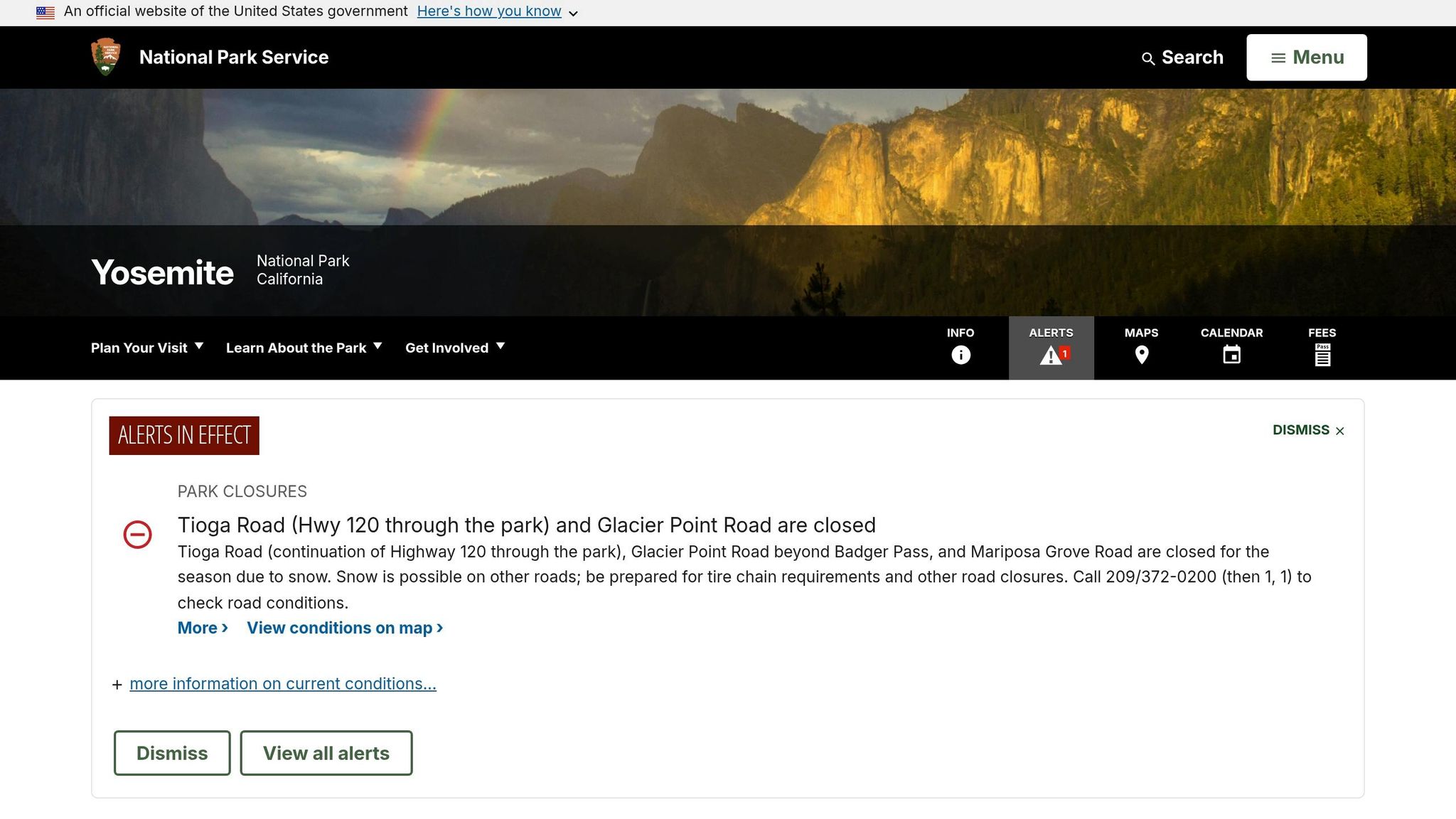
While Yosemite Valley shuttles operate throughout the year, some routes are seasonal. Shuttles for areas like Mariposa Grove, Tuolumne Meadows, and Glacier Point are available only from spring through fall. These services pause during winter when snow closes high-elevation roads. As of February 26, 2026, Tioga Road, Glacier Point Road, and Mariposa Grove Road remain closed for the season, meaning shuttles to these areas are not running.
Typically, high-elevation roads close between November and May or June, depending on snowfall. Once these roads reopen in late spring, seasonal shuttles resume with varying schedules based on visitor demand. For instance, the Mariposa Grove shuttle operates frequently during its season, transporting visitors from the Welcome Plaza to the grove. Until these roads reopen, seasonal shuttle services remain unavailable.
Free Yosemite Valley Shuttles
Shuttle Routes and Seasonal Services
Here’s a closer look at Yosemite’s shuttle routes and their seasonal offerings, designed to help visitors navigate the park efficiently.
East Valley Shuttle Route
The East Valley Shuttle runs throughout the year, connecting Yosemite Village, Curry Village, and all three Pines campgrounds (North, Upper, and Lower). It also stops at several popular trailheads. During busier times, shuttles arrive every 8 to 12 minutes, while quieter periods see intervals of 18 to 22 minutes. This makes it one of Yosemite’s most frequent and reliable shuttle services.
Tuolumne Meadows Shuttle Service
When Tioga Road is open, the Tuolumne Meadows area is served by two shuttles. The Tuolumne Hikers Bus, managed by Yosemite Hospitality, provides direct transit between Yosemite Valley and Tuolumne Meadows, with stops at key locations like Crane Flat and White Wolf. Once in the high country, the Tuolumne Meadows Shuttle operates on a fixed schedule from mid-June to mid-September. This service connects visitors to major stops, including Tuolumne Meadows Lodge, the Visitor Center, Cathedral Lakes Trailhead, Tenaya Lake, Lembert Dome, and Olmsted Point. These shuttles help ease vehicle congestion while ensuring access to Yosemite’s high country.
For those exploring the valley, the Mariposa Grove Shuttle offers seasonal transportation to one of Yosemite’s most iconic attractions.
Mariposa Grove Shuttle
The Mariposa Grove Shuttle runs seasonally, typically from April 15 through November 30, providing essential access to the Giant Sequoia grove. It departs from the Mariposa Grove Welcome Plaza at the South Entrance and takes visitors directly to the Mariposa Grove Trailhead. This service is especially important for those without a qualifying disabled placard, as it’s the main way to reach these awe-inspiring trees during peak season.
sbb-itb-00512f3
Planning Your Shuttle Trip
When to Ride the Shuttle
Try to ride the shuttle before 8:00 AM or after 4:00–5:00 PM to avoid the busiest times. Between 8:00 AM and 2:00 PM, shuttles are often packed, and you may have to wait through several buses just to get a seat.
If possible, plan your visit for midweek. This is when shuttle demand tends to be lower. Once you’ve figured out your timing, be ready to navigate the challenges of peak-season crowds.
Dealing with Crowds During Peak Season
If you’re parking in Yosemite Valley, leave your car where it is. Parking lots are usually full by 8:00 AM during busy times, and finding another spot later in the day can be next to impossible.
"If you find a parking space, plan to leave your car there; you will not be able to find another parking spot. Walk, bike, or use the free shuttle to get around Yosemite Valley."
– National Park Service
For live updates on parking and traffic, text "ynptraffic" to 333111. If shuttle lines are too long at popular stops, consider walking or renting a bike to move between trailheads. Be ready to stand on crowded buses and pack extra food and water to make waiting more manageable during peak hours.
Park Entry Requirements
Your shuttle plans should also include preparing for park entry. In 2026, no entrance reservations are required, which means more visitors showing up on good-weather days. Expect delays of 1–2 hours at the South Entrance and up to 30 minutes at Arch Rock, Big Oak Flat, and Tioga Pass during busy times.
"With record visitation in recent years and no reservation system in place this year, we’re asking visitors to come prepared, be patient, and treat the park – and each other – with respect."
– Cassius M. Cash, President & CEO, Yosemite Conservancy
To avoid long waits, plan to arrive at entrance stations before 8:00 AM. This early start can help you secure parking and minimize delays. Alternatively, consider using the YARTS bus system from outside the park. It’s a stress-free way to skip parking hassles entirely. Getting into the park smoothly sets the tone for a more enjoyable day.
Other Ways to Get Around Yosemite
If you’re looking for alternatives to the shuttles in Yosemite, there are plenty of other ways to explore the park.
YARTS Bus System
The Yosemite Area Regional Transportation System (YARTS) is a convenient option for getting to Yosemite from nearby communities. These air-conditioned buses come equipped with onboard restrooms and plenty of storage for your gear. Operating since May 2000, YARTS has provided over 1,000,000 rides across a service area of 480 square miles. The system runs year-round on Highway 140, connecting Merced and Mariposa to Yosemite, while seasonal routes on Highways 41, 120, and 120/395 operate from May through September.
Once inside the park, the Highway 140 route stops at key locations like Curry Village and Yosemite Village. Other routes link up with the Yosemite Valley Shuttle at Yosemite Village. Plus, your YARTS ticket includes the park entrance fee, making it a hassle-free way to visit.
Reservations are recommended to guarantee a seat, but walk-on passengers are welcome on a first-come, first-served basis. Free parking is available at lots in Merced, Mariposa, and Midpines. Children under 2 can ride for free with an approved car seat, and adults with disabilities (and their caregivers) receive a 50% discount.
Biking in Yosemite
Yosemite Valley boasts over 12 miles of paved bike paths, and cyclists are also allowed on the park’s regular roads as long as they follow traffic laws. For short trips, the free Yosemite Bike Share program offers bikes for up to two hours through an app available for both iOS and Android. Alternatively, you can rent bikes on a first-come, first-served basis at Curry Village, Yosemite Village, and Yosemite Valley Lodge.
E-bikes with motors under 750 watts and fully functional pedals are permitted wherever standard bikes are allowed, but electric scooters are restricted to bike paths. Keep in mind that mountain biking and off-trail riding are not allowed, the speed limit on bike paths is 15 mph, and helmets are mandatory for riders under 18. If biking isn’t your thing, driving or walking are always solid options.
Driving and Walking Options
Driving is an option, but parking in Yosemite Valley often fills up by 8:00 AM during peak season. For spots like Glacier Point or Tuolumne Meadows, aim to arrive by 9:00 AM. Once you’ve parked at Yosemite Village, Curry Village, or near Yosemite Falls, it’s best to leave your car there, as finding another spot can be tough.
| Destination | Recommended Arrival | Alternative Access |
|---|---|---|
| Yosemite Valley | Before 8:00 AM | YARTS, Biking, Walking |
| Glacier Point | Before 9:00 AM | Glacier Point Tour (fee), Hiking |
| Tuolumne Meadows | Before 9:00 AM | YARTS, Hikers’ Bus (seasonal) |
| Mariposa Grove | Mid-morning | Free shuttle from Welcome Plaza |
Walking is a great way to get around when shuttles are full. For those up for a challenge, longer hikes like the Four Mile or Panorama Trails to Glacier Point offer a full-day adventure. Be sure to check parking and traffic updates before heading out.
Conclusion
Yosemite’s shuttle system simplifies your visit from the moment you arrive. By parking once and hopping on the free Valley shuttles, you eliminate the stress of hunting for parking at multiple spots during busy seasons. These shuttles connect key locations like Yosemite Village, Curry Village, trailheads, and lodges, making it easy to explore the park.
On top of convenience, the shuttle system aligns with Yosemite’s sustainability efforts. As Shaka Guide explains:
The shuttle system embodies Yosemite’s commitment to sustainability and preservation by reducing the number of cars in the park and thereby the environmental impact.
Considering the park welcomes about four million visitors each year, this system plays a crucial role in protecting Yosemite’s granite cliffs and natural beauty while keeping traffic under control.
Accessibility is another highlight. Every shuttle is equipped with features to accommodate all visitors, ensuring that everyone can enjoy the park’s treasures. Whether you’re using the year-round Valley routes or seasonal lines to Mariposa Grove and Tuolumne Meadows, the shuttles offer a hassle-free way to explore.
To make the most of your trip, check the latest schedules online or at a visitor center, arrive early during peak times, and remember that Valley shuttles follow a one-way counterclockwise loop. Plan your stops carefully to avoid unnecessary backtracking and long rides.
FAQs
Where do I find real-time shuttle and parking updates?
You can find real-time shuttle and parking updates on the official Yosemite National Park website. Be sure to visit the current conditions and traffic pages for the latest details. For added convenience, the Transit app offers real-time departure times for the Yosemite Valley Shuttle, helping you plan your trip with ease.
How do I switch between Valley shuttles and YARTS in one day?
To navigate between Valley shuttles and YARTS in a single day, start with the free Valleywide Shuttle within Yosemite Valley. This shuttle operates daily from 7 a.m. to 10 p.m., and no tickets are required. For trips outside the park, YARTS is your go-to option, running year-round on a fixed schedule. Be sure to plan your journey around YARTS’ schedule, then use the Valleywide Shuttle for local travel within the park. Both services are reliable, accessible, and designed to run frequently.
What’s the best backup plan if shuttles are too crowded?
If the shuttles are packed, try arriving early to steer clear of the busiest times. Another option? Walk, bike, or hop on public transportation like the regional bus system. These alternatives let you skip the crowds and explore the park more comfortably.