
If I plan to camp overnight in Yellowstone’s backcountry, I need a permit for every night. And that permit must match my campsites or zones, dates, group size, and travel method.
Here’s the short version:
- Overnight backcountry trips need a permit
- Day hikes do not
- Peak season runs May 15–October 31
- Early Access Lottery: March 1–March 20
- General reservations open: April 26
- Non-peak reservations open: October 6
- Walk-up permits: available within 48 hours of the trip start
- Permit pickup: I still need to finalize it in person within 2 days of departure
That last part trips people up. A reservation is not the same as the permit in my hand.
A few trip-planning facts matter too. Yellowstone uses designated backcountry campsites in summer, while winter may use sites, zones, or road corridors depending on snow and closures. Cell service can be weak, so I’d bring offline or printed maps. And timing matters: some drives inside the park can take longer than they look on a map. One example from the guide: Old Faithful to Colter Bay is at least 1.5 hours.
Beyond Roads End – Summer Backcountry Safety Video
sbb-itb-00512f3
What I’d keep in mind
If I wanted to avoid mistakes, I’d focus on four things first:
- Build the route before I book
- Pick the exact campsite codes or zones
- Match each night to the right place
- Check mileage against my group’s pace
- Use the right permit window
- Peak season has a lottery and then general booking
- Winter and non-peak dates use a different opening date
- Know the limits
- My permit covers only what’s listed
- Group size, boats, and stock animals must match the permit
- Finish the process in person
- Booking online does not finish the job
- I still need permit pickup close to departure
Quick comparison
| Trip type | Permit needed? | How I camp | Main timing |
|---|---|---|---|
| Day hike | No | No overnight stay | N/A |
| Summer overnight | Yes | Designated campsites | Lottery: March 1–20; General: April 26 |
| Walk-up overnight | Yes | Designated campsites if open | Within 48 hours of start |
| Winter overnight | Yes | Sites, zones, or corridors | October 6 for reservations |
Bottom line: if I want a Yellowstone backcountry trip to go smoothly, I need to plan the route first, book in the right window, and pick up the permit in person before I start.
Who needs a Yellowstone backcountry permit and what it covers
If you’re planning to spend the night in Yellowstone’s backcountry, you need a Yellowstone Backcountry Use Permit. That applies to overnight backpacking, boating, and stock-supported trips.
The permit is tied to the exact details on it. In plain English, it covers only the campsites or zones listed, the approved dates, your group size, and your travel method. So if your plans change, the permit doesn’t automatically change with them.
Overnight trips require a permit; day hikes do not
Day hiking in Yellowstone does not require a backcountry permit.
Campsite limits, stay limits, and group rules
Yellowstone manages overnight backcountry travel through designated campsites or zones. Your permit must match the number of people, stock animals, and boats listed for the trip.
Each permit also sets limits on how many people, stock animals, and boats can be part of your trip. That can affect your route, campsite picks, and travel dates, especially if you’re trying to line up a trip for a larger group.
How to plan your itinerary around campsite zones, seasons, and travel dates
Once your permit rules are clear, plan your route around the campsites and dates you can actually use. Start with the itinerary, not the reservation form. Before you send in a request, know exactly which campsites you want, which nights you’ll stay at each one, and whether the plan matches your group’s daily mileage and fitness level.
Use maps and campsite codes to build your route
Start with the official NPS backcountry maps. They show trailheads, campsite codes, and trail junctions. Use those maps to line up campsite codes, junctions, and travel days. Then check everything again with offline maps or printed maps before you enter the park.
Daily mileage matters, but so does how your group actually moves on the trail. A route on paper can look fine and still fall apart if the campsites you need aren’t open on the exact nights you need them. And trailhead-to-trailhead driving can eat up more time than you’d expect from the map alone.
For example, the drive from Old Faithful to Colter Bay near the southern boundary takes at least 1.5 hours, so build that into your itinerary.
Summer designated sites vs. winter backcountry zones
In the main summer season, overnight camping is limited to designated backcountry campsites listed by campsite code. That means your trip has to match the exact sites that are open for the dates you’re requesting.
Season changes the whole setup. In winter, Yellowstone shifts to designated sites, winter zones, or road corridors, depending on snow conditions and current closures. Travel also changes. You’ll usually be moving by skis or snowshoes, and wheeled access is limited to the North to Northeast entrance road.
That seasonal split helps narrow your route before you even look at permit dates.
Seasonal planning comparison table
| Season | Access Pattern | Where You Can Camp | Key Constraints | Route Flexibility |
|---|---|---|---|---|
| Peak (Summer) | Lottery and general reservations; book well in advance | Designated backcountry campsites only | High demand; limited trailhead parking | Low – must match specific booked sites |
| Spring/Fall | Walk-up or non-peak permits are more common | Designated backcountry campsites | Variable weather; fewer crowds | Moderate – more site availability |
| Winter | Non-peak or winter-specific permits | Designated sites, winter zones, or road corridors | Road closures; limited services; skiing or snowshoeing required | High, but access depends on snow and closures |
When permit windows open and where to apply
Once you’ve locked in your route and dates, the next step is simple: line them up with the right permit window. Advance Yellowstone backcountry permit reservations go through Recreation.gov. If you’re planning a winter trip, you’ll also need to work with the Central Backcountry Office closer to your departure date.
Peak season: lottery, general reservations, and walk-up permits
Peak season runs from May 15 through October 31, and popular campsites can fill fast. So this process starts earlier than many people expect.
The Early Access Lottery runs from March 1 through March 20 on Recreation.gov. It’s the best route if you need fixed dates or want a popular itinerary. Results are posted around March 25, and winners get an early-April booking window.
If you skip the lottery or don’t get picked, general reservations open April 26 on Recreation.gov for whatever inventory is left. Yellowstone also holds back some sites for walk-up permits. These are issued in person at a backcountry office within 48 hours of your start date.
Walk-up permits can be a good option if your plans are flexible. But there’s a catch: availability is first-come, first-served, and there are no promises.
Non-peak and winter permits
For trips between November 1 and May 14, reservations open October 6 on Recreation.gov. If you’re heading out in winter, contact the Central Backcountry Office closer to your trip date.
Permit access comparison table
| Permit Method | When to Apply/Reserve | Where to Apply | Best Fit For | Key Limits |
|---|---|---|---|---|
| Early Access Lottery | March 1 – March 20 | Recreation.gov | Travelers with fixed dates or popular routes | One application per person; limited winners |
| General Reservations | Starts April 26 | Recreation.gov | Those who missed the lottery | Remaining inventory only |
| Walk-up Permits | Within 48 hours of start | In person (park backcountry office) | Flexible travelers or last-minute trips | First-come, first-served; limited availability |
| Non-Peak Reservations | Starts October 6 | Recreation.gov | Winter and early spring backcountry users | Seasonal weather and access restrictions apply |
After you get your permit, you’ll still need to take care of the fee and pickup steps before the trip.
Fees, permit pickup, and final trip checklist
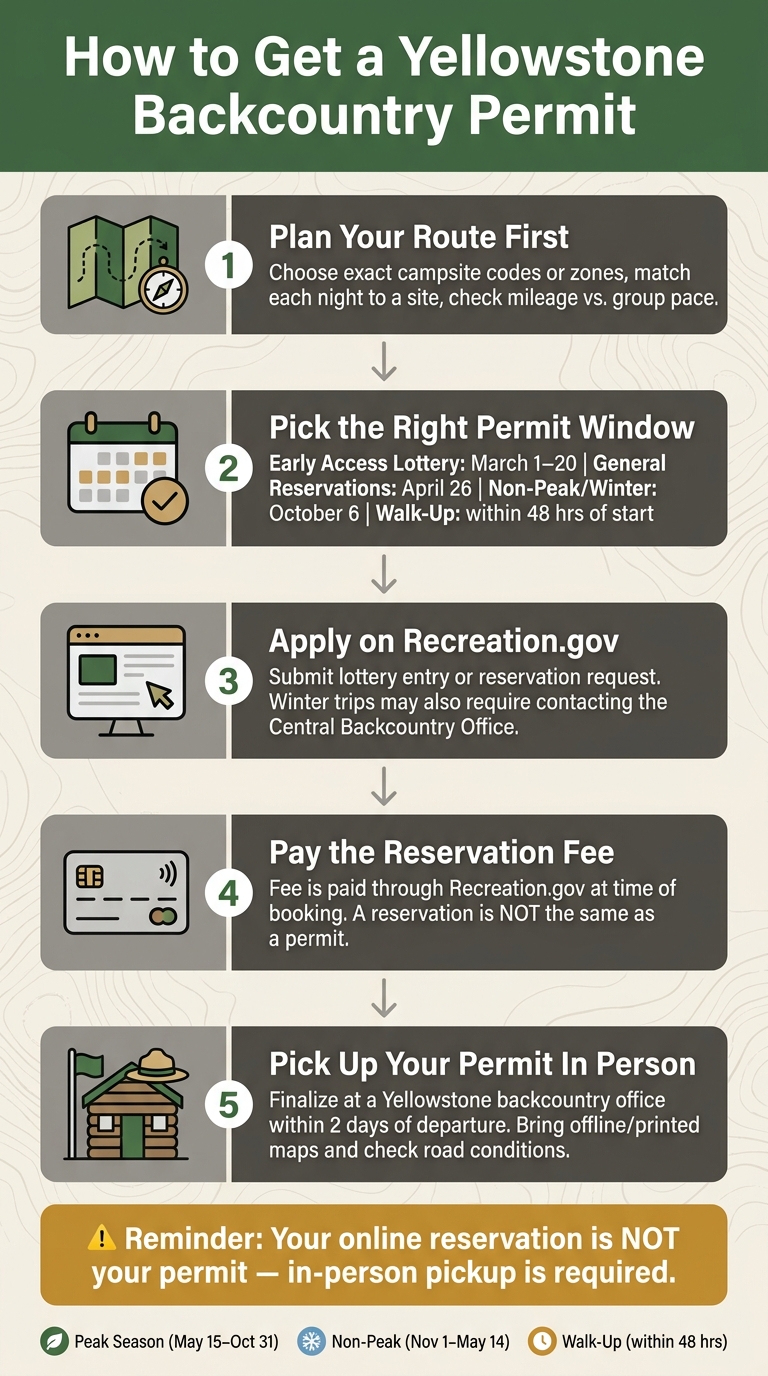
Yellowstone Backcountry Permit: Step-by-Step Planning Guide
Once you’ve locked in your dates and campsites, there are just a few things left before you head out.
Permit fees and payment basics
Yellowstone backcountry permits include a reservation fee, and you pay it through Recreation.gov when you book.
How to pick up or finalize your permit
A reservation is not the same thing as a permit. For peak-season trips, you need to finalize the permit in person at a Yellowstone backcountry office within 2 days of departure.
After that’s done, run through a short final check so nothing slips through the cracks at the last minute.
Key steps to get a Yellowstone backcountry permit
Here’s the quick checklist:
- Confirm permit needs and trip type.
- Match dates, campsites or zones, and group size.
- Reserve through Recreation.gov.
- Pick up your permit in person at a backcountry office within 2 days of departure.
- Check conditions, download offline maps, and review road status before departure.
FAQs
What if my itinerary changes after booking?
If your itinerary changes, you’ll need to cancel your current Yellowstone backcountry permit and book a new one. Once a permit is issued, it can’t be changed.
That rule exists because permits are linked to specific trailheads and campsite zones. So if you’re trying to rework your trip, check Recreation.gov for cancellations. You can also ask at a park visitor center about first-come, first-served walk-up permits.
Which permit option is best for my trip?
The best permit comes down to your trip, your group size, and whether you’re bringing a service animal. For most travelers, the standard backcountry permit is the one you need to reserve a campsite.
If you’re backpacking with a service dog, you’ll need two permits:
- The standard backcountry permit
- The required Guide/Service Animal Permit (Yell 470)
Yellowstone assigns permits by trailhead, which can make a big difference when you’re trying to book. A route with lighter traffic may have better availability.
How early should I arrive to pick up my permit?
For Yellowstone peak season permits, from May 15 through October 31, you need to pick up your permit in person at a park backcountry office within two days of your trip start date.
Be there by 11:00 AM on your scheduled start date. If that won’t be possible, mark your reservation as a late arrival in Recreation.gov at least one week in advance so it doesn’t get canceled.