
Winter transforms national parks into snowy wonderlands but also leads to road closures for safety. Many high-elevation roads become hazardous due to icy conditions, snowdrifts, and avalanche risks. Parks like Glacier, Yellowstone, Yosemite, and Acadia restrict access to key roads for months, while Isle Royale completely closes from November to mid-April. However, these closures open up opportunities for winter activities like snowshoeing, cross-country skiing, and guided snowmobile tours.
To enjoy parks during winter:
- Check road and weather conditions on the National Park Service website or app.
- Prepare your vehicle with winter gear like tire chains and a full gas tank.
- Pack smart: Layered clothing, insulated boots, and emergency supplies are crucial.
- Explore alternative access: Many parks convert closed roads into trails for skiing or snowshoeing.
Winter park visits require preparation but offer serene landscapes and unique adventures. Stay informed, respect closures, and plan ahead for a safe, memorable trip.
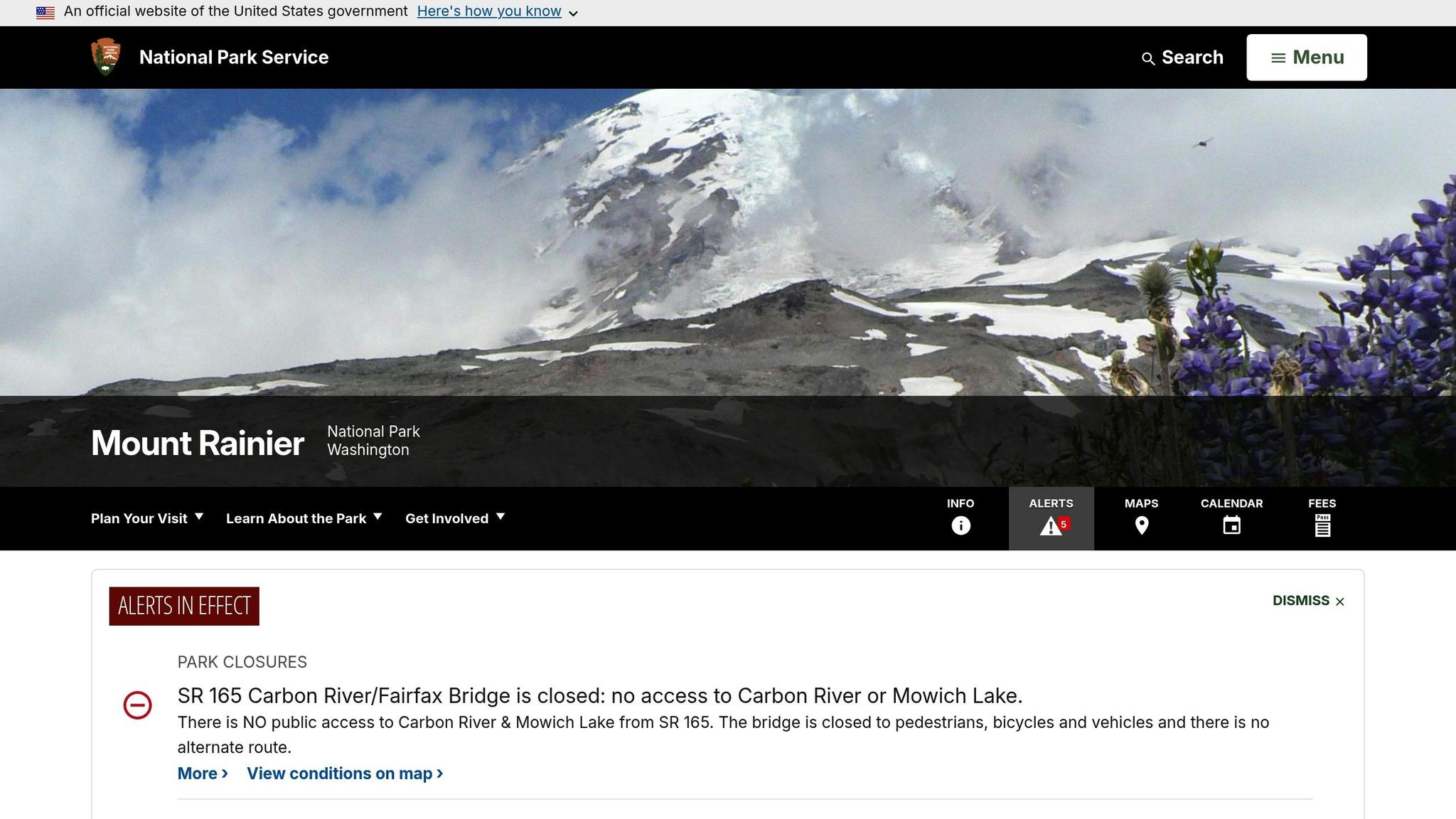
Exploring Mount Rainier in Winter | Scenic Drive from Longmire to Paradise Visitor Center
Isle Royale National Park: The Only Park That Closes Completely in Winter
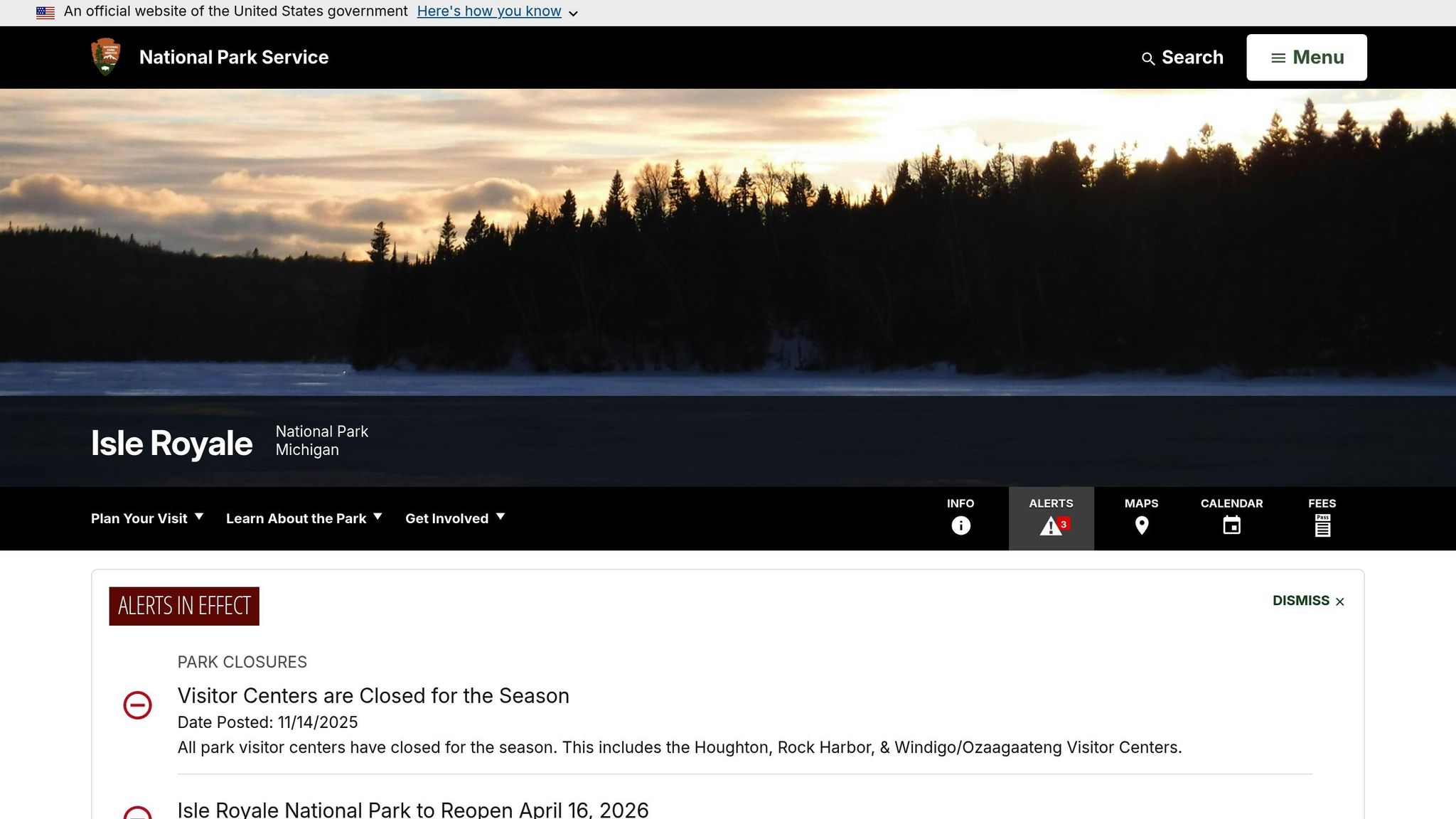
Isle Royale stands out as the only U.S. national park that completely shuts down during winter. From November 1 to April 15, the park, along with its surrounding islands extending 4.5 miles into Lake Superior, is entirely off-limits to visitors.
The reason? Brutal winter weather makes it impossible to access. This remote archipelago spans 850 square miles, including 658 square miles of water, and is reachable only by ferry, seaplane, or private boat. But once winter hits, Lake Superior unleashes sub-zero temperatures, storm surges, and ice flows that wreak havoc on docks and infrastructure.
"This seasonal closure is necessary for the safety and protection of visitors and emergency responders due to extreme weather conditions." – Superintendent’s Compendium, Isle Royale National Park
Unlike parks like Denali or Gates of the Arctic, which allow limited winter access for the adventurous, Isle Royale’s complete lack of roads makes year-round access impossible. Trails quickly disappear under heavy snow and ice, leaving the island entirely inaccessible.
Still, the park’s mainland headquarters in Houghton, Michigan, remains active during the closure. While the Houghton Visitor Center is closed from November 1 to April 14, park staff are available at 482‑0984 to assist with trip planning, permits, or fee payments. Even though the islands are closed, Lake Superior waters remain open for navigation.
This total winter shutdown highlights the unique challenges of accessing Isle Royale during the colder months, setting the stage for alternative strategies discussed in the next section.
National Parks with Major Winter Road Closures

Winter Road Closures Timeline for Major U.S. National Parks
When winter sets in, many national parks shut down key roads for months at a time, with closures lasting anywhere from a few weeks to up to eight months, depending on the elevation and weather. Knowing which roads are closed – and when – can help you avoid unnecessary detours and frustration.
Acadia National Park
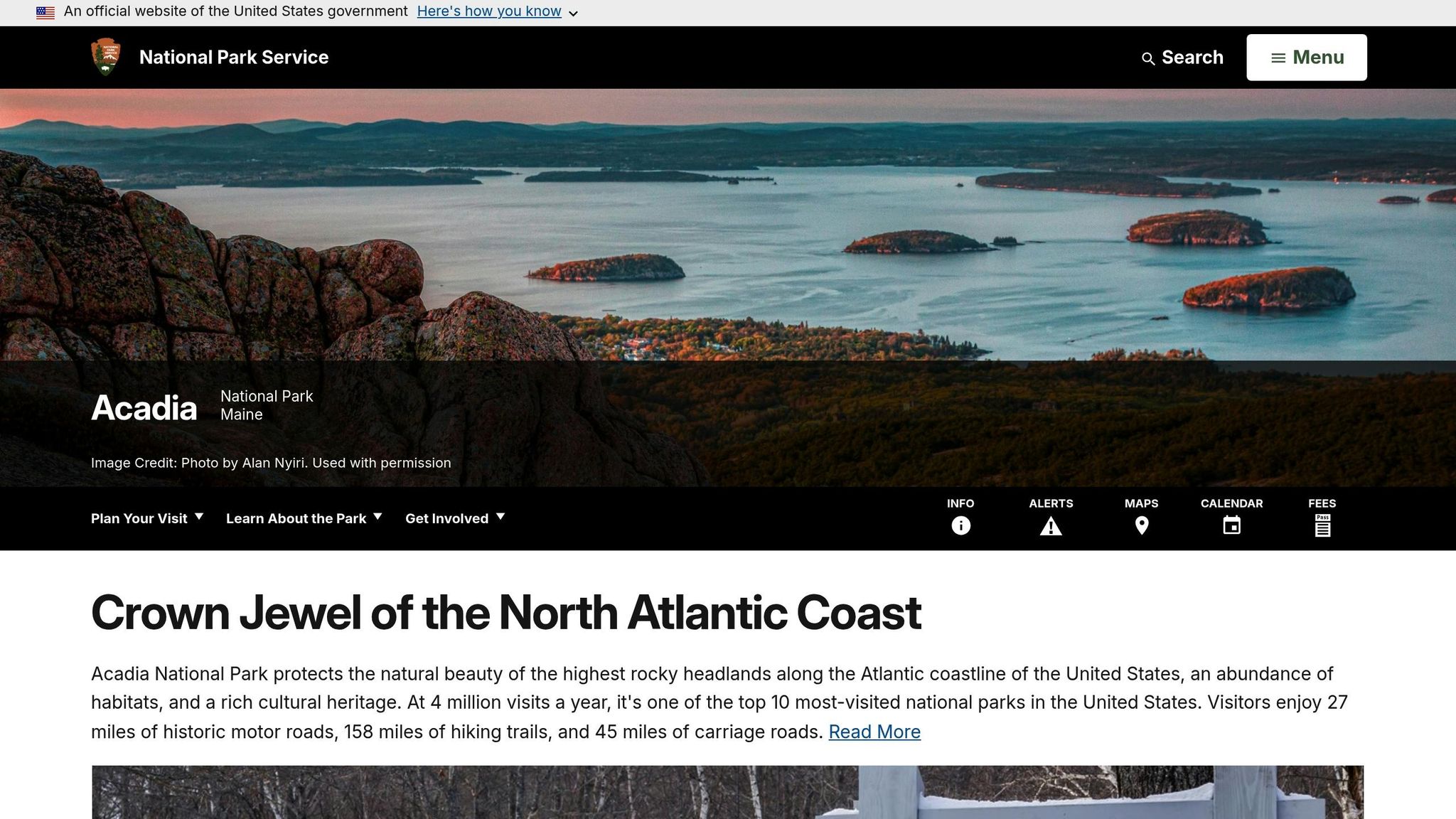
In Acadia, the Park Loop Road and the summit road to Cadillac Mountain are closed to vehicles from December 1 to April 14. But don’t let that stop you from visiting! These closed sections are perfect for winter activities like cross-country skiing and snowshoeing. Plus, the main park entrance and visitor facilities stay open year-round, so you can still enjoy other parts of the park.
Glacier National Park
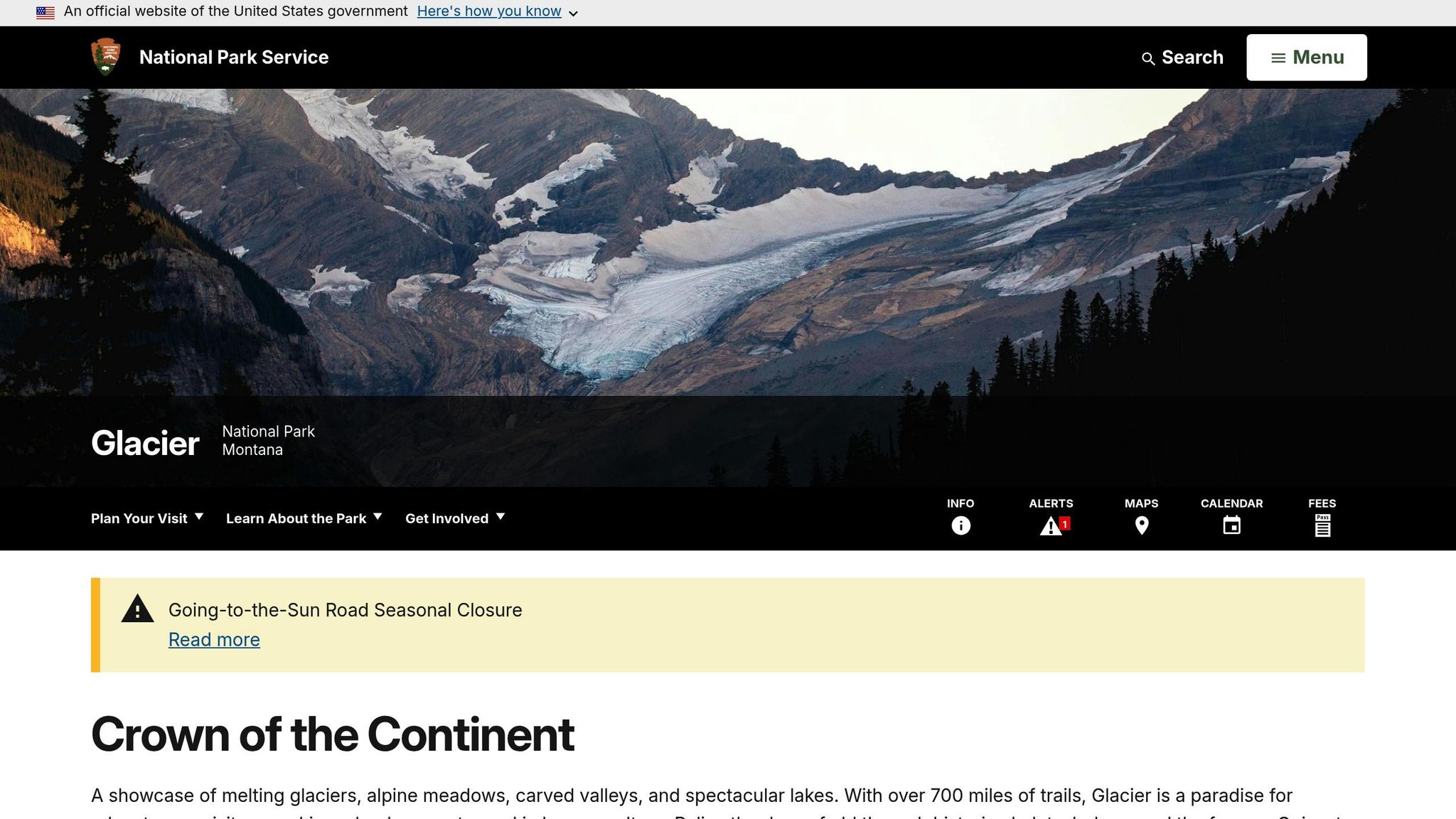
The famous Going-to-the-Sun Road shuts down by the third Monday of October. Spanning 50 miles and crossing the Continental Divide at Logan Pass, this engineering marvel doesn’t fully reopen until late June or early July. While a short section from West Glacier to Lake McDonald Lodge is plowed, the rest becomes a snowy wilderness. Visitors can explore the unplowed sections on skis or snowshoes, but only experienced winter adventurers should attempt it due to the high avalanche risk.
Grand Canyon National Park
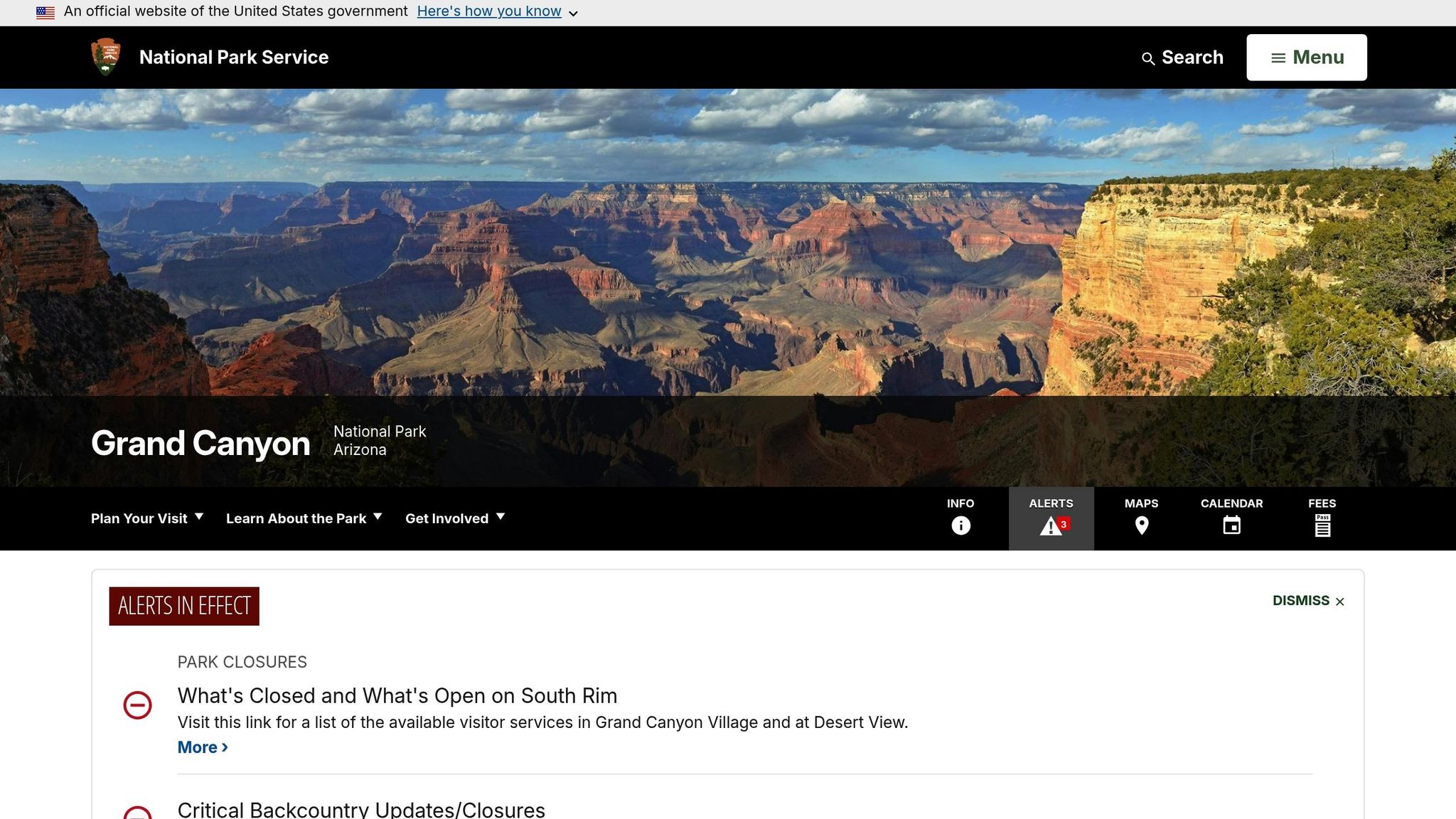
The North Rim of the Grand Canyon closes completely to vehicles by December 1 and remains inaccessible until mid-May. Snow accumulation at the 8,000-foot elevation makes Highway 67 impassable during winter. Unlike partial closures in other parks, the North Rim completely restricts vehicle access. Meanwhile, the South Rim stays open year-round. Interestingly, during winter, Hermit Road on the South Rim opens to private vehicles from December 1 through February because shuttle services pause for the season.
Yellowstone and Yosemite National Parks
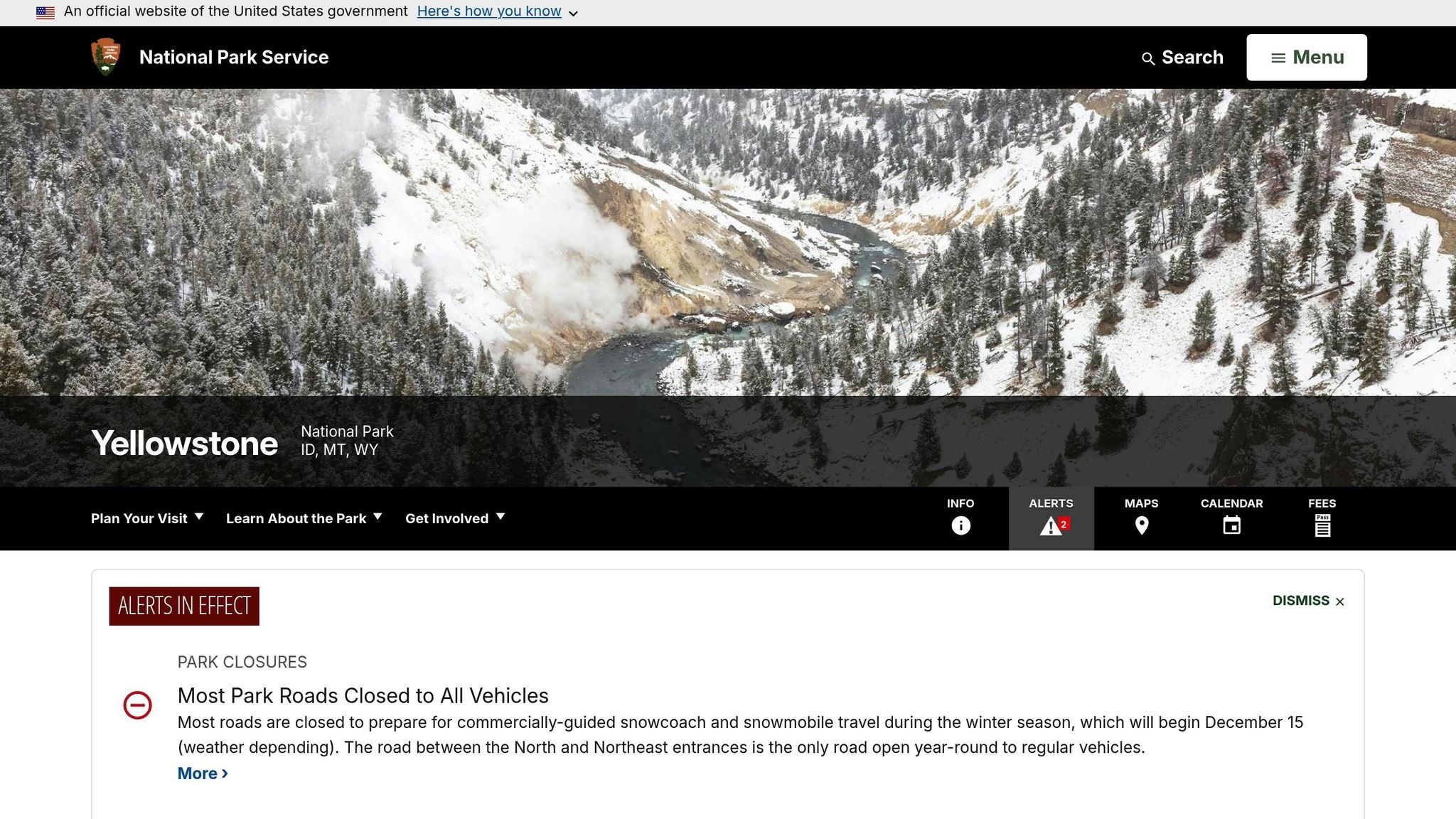
In Yellowstone, most interior roads close to regular vehicles in early November to prepare for the oversnow season. From mid-December to mid-March, these roads reopen exclusively for guided snowcoaches and snowmobiles. The only route open to regular cars all winter is the northern road connecting the North and Northeast entrances.
Similarly, Yosemite shuts down Tioga Road (Highway 120) and Glacier Point Road in November, with closures lasting until late May or early June. Mariposa Grove Road also closes around November 30, reopening by April 15. When Tioga Road is closed, travelers face an eight-hour detour to reach the park’s eastern side via northern routes.
These closures highlight the importance of planning ahead and considering alternative ways to enjoy these parks during the winter months.
sbb-itb-00512f3
Winter Activities and How to Access Parks When Roads Are Closed
Winter road closures don’t have to mean the end of your national park adventures. Many parks transform snow-covered roads into trails, opening up opportunities for hiking, cross-country skiing, and snowshoeing. These snowy paths often lead to breathtaking overlooks, tunnels, and sweeping vistas, giving visitors a unique way to experience the parks.
Take Glacier National Park, for example – visitors can explore the unplowed sections of the Going-to-the-Sun Road. Similarly, Bryce Canyon‘s spur roads to Fairyland Point and Paria View become accessible for winter recreation at elevations of around 8,000 feet. If you’re venturing out in icy conditions, gear like crampons or traction cleats can make all the difference. These activities provide a safe and exciting way to enjoy the parks, even when vehicles can’t access the roads.
For those who prefer a more guided experience, some parks offer designated winter routes. Voyageurs National Park features 110 miles of groomed snowmobile trails and ice roads, allowing vehicles under 7,000 lbs to travel at speeds up to 30 mph. Pictured Rocks National Lakeshore also converts its unplowed roads into snowmobile trails, available from December 1 to March 31. In Yellowstone, non-commercial snowmobile trips require a special permit through their Non-Commercially Guided Snowmobile Access Program.
If snowmobiling isn’t your thing, Yellowstone offers heated, guided snowcoach tours along oversnow routes from mid-December to mid-March. For a more intimate experience, Glacier National Park hosts ranger-led snowshoe walks. Authorized concessioners in Yellowstone also provide transport to iconic spots like Old Faithful, even when temperatures dip between 0°F and 20°F.
Winter parks also bring unique activities into the mix. Frozen lakes in parks like Voyageurs and Rocky Mountain are perfect for ice fishing and ice skating. Adventurers can try ice climbing on the Blue Ridge Parkway, which spans 469 miles and becomes a prime ice-climbing destination in the southern U.S.. For a once-in-a-lifetime experience, head to Denali for dog sledding. Winter’s stark beauty – marked by bare trees and fresh snow – also makes wildlife spotting easier. Keep an eye out for deer, turkeys, and a variety of bird species.
These winter activities not only make the most of seasonal conditions but also highlight the importance of preparation when navigating parks during road closures.
How to Plan Your Winter National Park Visit
Checking Road and Weather Conditions
Before heading out to a national park in winter, it’s smart to check official resources for the latest updates. The National Park Service website (nps.gov) has a "Current Conditions" or "Alerts" section for each park, where you can find real-time information about road closures, hazards, and facility statuses. For a broader look at alerts across all parks, visit nps.gov/planyourvisit/alerts.htm[20].
Another helpful tool is the free NPS App, which allows you to download park maps and guides for offline use – perfect for areas with spotty or no cell service. Many parks also have recorded phone lines for up-to-date road and weather information. For instance, Yosemite National Park offers updates at 209/372-0200 (press 1, then 1), while Rocky Mountain National Park provides its conditions at 970-586-1222.
Weather is just as critical as road conditions. For accurate, park-specific forecasts, head to weather.gov, the National Weather Service’s official site. They emphasize:
"If a winter related Advisory is issued, be aware. If a Winter Storm or Blizzard Warning is issued, take action."
Visitor centers are another great resource for trail conditions and potential hazards. Some parks even provide "24-hour vestibules" when the main visitor center is closed. Always have a backup plan in case weather disrupts your outdoor plans – indoor options like park museums or visitor center films can save the day. Use these updates to fine-tune your gear and packing choices.
What to Pack for Winter Trips
Packing the right gear can make or break your winter park adventure. Start with a three-layer clothing system: a moisture-wicking base layer (wool or synthetic), an insulating middle layer (fleece or wool), and a windproof, waterproof outer shell with a hood. Skip cotton – it traps moisture and loses its warmth when wet, increasing the risk of hypothermia. Don’t forget waterproof insulated boots, wool socks, gaiters, and warm accessories for your head and hands.
For icy trails, traction devices like crampons that fit over your shoes are a must, especially in areas prone to sudden freezing. Sunglasses and SPF sunscreen are equally essential – snow reflects UV rays, which can cause snow blindness or burns, even on overcast days.
Your vehicle needs its own winter prep. Pack an emergency kit with items like a shovel, ice scraper, tire chains (check park requirements), jumper cables, and sand or kitty litter for traction if you get stuck. Keep your gas tank full to prevent fuel line freezing, use freeze-resistant windshield wiper fluid, and ensure all tires (including your spare) are properly inflated. Many parks have limited fuel stations in winter, so it’s wise to fill up at least 50 miles before entering.
Hydration and navigation are equally important. Insulated water bottles keep your drinking water from freezing, and staying hydrated is crucial since cold, dry air speeds up dehydration. Pack high-calorie snacks like nuts, jerky, or granola to fuel your body in the cold. While downloading park maps for offline use is helpful, always carry a paper map and compass as a backup – cold weather can drain phone batteries fast. Lastly, leave a detailed trip plan with someone outside the park before you go.
| Category | Essential Items |
|---|---|
| Clothing | Wicking base layers, wool socks, waterproof parka, gloves/mittens, warm hat, gaiters |
| Safety & Navigation | Paper maps, flashlight/headlamp (extra batteries), whistle, emergency blanket, first aid kit |
| Vehicle Kit | Shovel, ice scraper, tire chains, sand/litter, jumper cables, blankets, full gas tank |
| Health & Personal | SPF sunscreen, lip balm, hand warmers, insulated water bottle, high-energy snacks |
Conclusion
Winter turns national parks into stunning snow-covered landscapes, but visiting during this season requires thorough preparation. Road closures, while inconvenient, are critical safety measures to protect visitors from dangerous conditions. Many parks are located far from emergency services, and winter weather can significantly delay response times. Breaking down in a remote area, where temperatures can plummet to 15°F or lower, can quickly lead to life-threatening situations.
To make your winter park visit both safe and enjoyable, advance planning is key. Start by checking the National Park Service website for official alerts, as conditions can change quickly. Ensure your vehicle is equipped for winter travel, and pack an emergency kit with essentials like a shovel, sand or cat litter for traction, extra blankets, and high-energy snacks. These steps can make all the difference in an emergency.
Driving on closed roads is not only dangerous but also comes with steep penalties, including fines and costly towing. Many of these roads are converted into snowmobile trails, so staying off them is essential. Instead, embrace alternative ways to explore. Parks like Acadia and the Blue Ridge Parkway open closed roads for activities like snowshoeing, cross-country skiing, and hiking. These options provide a chance to experience the parks in a whole new way.
Cell service in many parks is limited, so download maps in advance and share your itinerary with someone you trust. Winter in national parks offers a rare opportunity to enjoy peaceful solitude, breathtaking scenery, and unique wildlife encounters. By respecting closures and coming prepared, you can make the most of these unforgettable experiences. Whether you’re snowshoeing, skiing, or joining a guided tour, the beauty of the parks in winter is well worth the effort.
FAQs
How do I find real-time winter road closure updates for a park?
For the most up-to-date information on road closures, check the official National Park Service (NPS) website. You can visit the alerts page for general updates or navigate to the specific park’s road status page for detailed information. Many parks share regular updates on closures, hazards, and current road conditions, helping you stay informed and plan your trip accordingly.
Can I hike or ski on closed park roads in winter?
Closed park roads during winter are usually off-limits for hiking or skiing unless they’re specifically marked for winter activities like snowmobiling. However, certain roads, like Sand Point Road at Pictured Rocks, are plowed and remain accessible for winter recreation. Be sure to review local park rules and conditions to know what’s allowed.
What winter gear do I need for driving to a national park?
When heading to a national park in winter, make sure you’re dressed to handle the cold. Opt for layered, windproof, and insulated clothing to stay warm and protected. Start with a windproof outer layer, add insulating items like wool sweaters, and don’t forget warm socks. Gloves or mittens, a hat, and sturdy snow or hiking boots are essential for keeping extremities warm. Accessories like a scarf and face coverings are also key to shielding yourself from biting winds and snow.