
Visiting Rocky Mountain National Park in winter offers a peaceful escape with snow-covered landscapes, quiet trails, and abundant wildlife. From November to May, the park transforms into a serene destination perfect for activities like snowshoeing, cross-country skiing, and wildlife spotting. Key highlights include:
- Snowshoeing and Skiing: Explore trails like Bear Lake or Kawuneeche Valley. Rentals are affordable, with snowshoes starting at $10/day.
- Wildlife Viewing: Spot elk, moose, and bighorn sheep in lower elevations like Moraine Park or Horseshoe Park.
- Family-Friendly Sledding: Hidden Valley offers a sledding hill with facilities.
- Multi-Day Trips: Plan a weekend in Grand Lake with snowshoeing and sunrise wildlife walks.
Always check weather, road conditions, and avalanche forecasts before heading out. Visitor centers provide updates, safety tips, and gear recommendations. Winter in the Rockies is quieter and more accessible, making it an ideal time for a memorable adventure.
Winter Activities Guide for Rocky Mountain National Park: Costs, Locations & Safety Tips
1. Winter Activities
Cross-Country Skiing, Sledding, and Backcountry Adventures
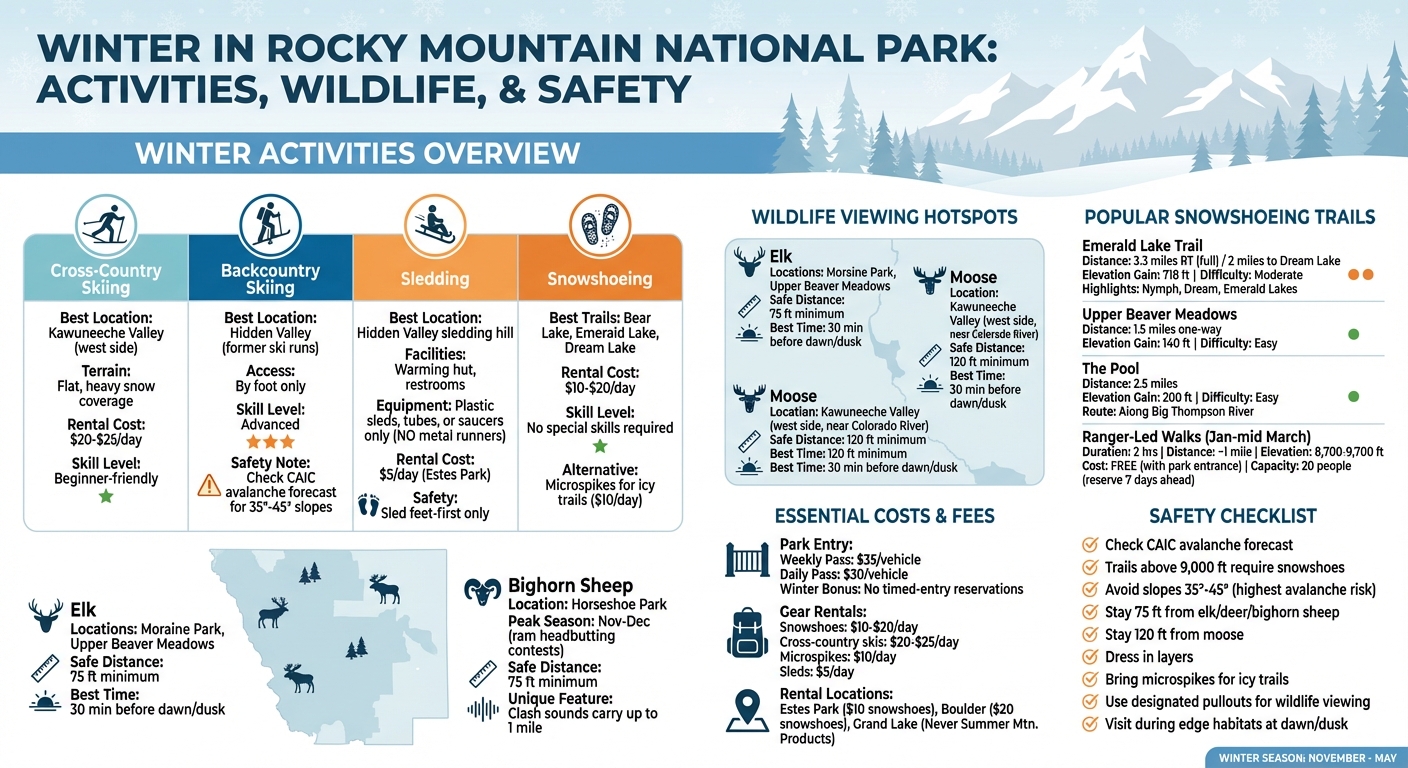
Rocky Mountain National Park transforms into a winter wonderland, offering activities like cross-country skiing, backcountry skiing, and sledding. On the park’s west side, Kawuneeche Valley stands out for cross-country skiing, thanks to its flat terrain and heavy snow coverage. Over in Hidden Valley, you’ll find backcountry skiing opportunities on former commercial ski runs, now accessible only by foot. Hidden Valley also features a designated sledding hill, complete with a warming hut and restrooms. To keep it safe, sledding is restricted to plastic sleds, tubes, or saucers – leave the metal runners at home – and always sled feet-first. If you didn’t bring your own sled, rentals are available in Estes Park for about $5 per day.
For those seeking a more tranquil winter experience, snowshoeing is a perfect choice. It’s easy to pick up and doesn’t require any special skills. Trails like Bear Lake, Emerald Lake, and Dream Lake provide breathtaking views of frozen landscapes. On well-packed paths, such as those leading to Alberta Falls or Mills Lake, snowshoes might not even be necessary – microspikes (available for rent at $10 per day) work well on icy trails. If you need gear, rentals are affordable: snowshoes typically cost $10 to $20 per day, cross-country ski kits range from $20 to $25, and microspikes run about $10.
Before heading out, always check the CAIC avalanche forecast, especially if you’ll be near slopes between 35° and 45°, as these are the most hazardous. And remember to steer clear of established ski tracks to ensure everyone’s safety.
2. Wildlife Spotting
Elk, Moose, and Bighorn Sheep in Lower-Elevation Meadows
Winter brings wildlife to lower elevations, offering a better chance to see them against the snowy landscape. Elk are the stars of the season, with herds of 600 to 800 gathering in spots like Moraine Park and Upper Beaver Meadows. Their tan coats stand out against the snow, and you might even catch them wandering through Estes Park. These areas provide excellent opportunities for wildlife enthusiasts.
If you’re hoping to see moose, head to the west side of the park, particularly the Kawuneeche Valley near the Colorado River. Moose thrive in the cold, wet conditions there. Meanwhile, Horseshoe Park is the place to be in November and December, where you can witness bighorn sheep rams in dramatic headbutting contests. The sound of their clashes can carry for up to a mile.
For the best viewing experience, plan to arrive at least 30 minutes before dawn or dusk and focus on "edge" habitats, where forests meet open meadows. Bring binoculars or a spotting scope for a closer look. Keep a safe distance – at least 75 feet from elk, deer, and bighorn sheep, and 120 feet from moose. If an animal notices you – by changing direction, staring, or moving away – you’re too close and should back away immediately. If you’re viewing from your car, always use designated pullouts rather than stopping in the road.
3. Snowshoeing Trails
Beginner-Friendly Routes with Customizable Distances
Snowshoeing offers a peaceful and immersive way to explore the Rockies in winter. If you’re starting out, the Emerald Lake Trail is a great choice. You can adjust the distance to suit your pace: the full route is a 3.3-mile round trip with a 718-foot elevation gain, passing stunning alpine lakes like Nymph, Dream, and Emerald. Not ready for the full trek? You can turn around at Dream Lake for a shorter 2-mile round trip.
"Snowshoeing is a fun activity that all ages can enjoy! Just strap on a set of snowshoes over your waterproof boots and you are ready to hit the trails." – National Park Service
For an even easier option, try Upper Beaver Meadows, which gains just 140 feet over a 1.5-mile one-way route. Another mellow choice is The Pool, a 2.5-mile trail along the Big Thompson River with a gentle 200-foot elevation gain. Want to learn from the pros? From January through mid-March, you can join ranger-led snowshoe walks. These two-hour guided outings cover about a mile at elevations between 8,700 and 9,700 feet. They’re free with your park entrance fee, but spots are limited to 20 people, so make sure to reserve up to seven days in advance.
If you don’t own snowshoes, rentals are affordable – around $10 in Estes Park or $20 in Boulder. Hiking poles are also a smart addition for extra balance. Before heading out, check the Colorado Avalanche Information Center for conditions, especially on slopes over 30°. Keep in mind, trails above 9,000 feet almost always require snowshoes, and popular spots like Bear Lake can get crowded on weekends.
sbb-itb-00512f3
4. Multi-Day Adventures
The Grand Lake Winter Weekend
For a multi-day adventure in the Rockies, consider the Grand Lake Winter Weekend itinerary on the park’s west side. You can stay in either Grand Lake or Granby, as both towns provide plenty of lodging options and gear rentals.
Day 1 (Saturday):
Kick off your trip at the Kawuneeche Valley Visitor Center to get the latest trail and weather updates. Then, drive the 12-mile stretch of Trail Ridge Road that’s open during winter to reach the Colorado River Trailhead. From there, strap on your snowshoes and head to either the Holzwarth Historic Site or Big Meadows for a peaceful backcountry trek.
Day 2 (Sunday):
Start your day early with a sunrise wildlife walk on the Coyote Valley Trail, a prime spot for seeing moose, elk, and coyotes in their natural habitat. Afterward, spend some time exploring the charming shops in Grand Lake or fit in a few shorter hikes before wrapping up your weekend.
"When the snow falls, the whole park is transformed into a winter wonderland." – Visit Grand County
Make sure you’re well-prepared with the right gear and permits. Snowshoes or cross-country skis can be rented at Never Summer Mountain Products in Grand Lake since rentals aren’t available within the park. Entry fees are $35 per vehicle for a weekly pass or $30 for a daily pass. Wilderness permits must be obtained in person at park entrance stations.
Ranger-Led Snowshoe Hike: Discover the Secrets of Rocky Mountain National Park ❄️
Conclusion
The itineraries above highlight the incredible winter experiences waiting for you in the Rockies.
Winter transforms the Rocky Mountains into a quiet, almost magical wonderland. From late October to late May, the landscape shifts dramatically – meadows are blanketed in snow, alpine lakes freeze over, and wildlife becomes easier to spot against the snowy backdrop. These seasonal changes make every winter activity feel special, whether you’re trekking along a trail or embarking on a multi-day backcountry adventure. Best of all, winter visits come with a bonus: no need for timed-entry reservations.
Whether you’re trying snowshoeing for the first time or gearing up for an extended ski trip, preparation is key. Check weather and avalanche reports before heading out, dress in layers, and bring essentials like microspikes. If you don’t have all the gear, no worries – gateway towns like Estes Park and Grand Lake offer affordable rental options.
"When prepared for the cold weather and conditions, it’s easy to enjoy solitude and the natural sounds of the park while out on a winter wilderness adventure." – National Park Service
Winter also opens up unique experiences you won’t find in other seasons. Imagine walking along iconic roads like Trail Ridge Road, closed to vehicles but perfect for a peaceful stroll. You can move at your own pace, watch moose and elk foraging in snow-covered valleys, and soak in the rare quiet of the Rockies.
For the latest tips and resources, check out The National Park Guide or stop by a visitor center. Your winter adventure in the Rockies is ready when you are.
FAQs
What are some fun winter activities for families in Rocky Mountain National Park?
Winter in Rocky Mountain National Park is a fantastic choice for families seeking a mix of adventure and relaxation. One of the most popular activities is snowshoeing, with trails like Bear Lake, Dream Lake, and Emerald Lake providing stunning views and peaceful snowy landscapes. Snowshoe rentals are available in nearby Estes Park for about $10–$20 per day, making it an accessible way to enjoy the outdoors.
For a more traditional winter pastime, head to Hidden Valley for sledding. Once a ski hill, this gentle slope is perfect for kids. Sled rentals can also be found in Estes Park, and there’s even a warming hut open on weekends to keep everyone cozy. Families can also take advantage of ranger-led programs, such as guided snowshoe hikes or wildlife talks, where kids can learn about winter animals like elk, moose, and bighorn sheep.
For those craving a bit more action, cross-country skiing is an excellent option. Beginner-friendly trails like Coyote Valley offer a great workout paired with breathtaking scenery. Plus, keep your eyes peeled for wildlife – elk and moose often wander through the valleys during the winter months, turning your outing into an exciting learning opportunity. With so many activities to choose from, your family is sure to create unforgettable winter memories!
What’s the best way to safely watch wildlife in the park during winter?
To enjoy wildlife viewing in winter safely, stick to marked trails and always keep at least 25 feet between you and the animals. If you want a closer view, bring along binoculars or a telephoto lens – this way, you can observe without causing any disturbance. Keep noise to a minimum, resist the urge to feed or approach wildlife, and bundle up in warm, layered clothing to stay comfortable in the cold.
Before heading out, check the latest trail, road, and avalanche conditions, along with any park alerts. A quick stop at the park’s visitor center can be a great way to get updated safety tips and advice. If you’re navigating icy or snowy paths, make sure to wear traction devices like microspikes to keep your footing secure.
What should I know about renting gear for snowshoeing and cross-country skiing?
Renting gear for winter adventures in the Rocky Mountain parks is both practical and saves you the trouble of lugging around heavy equipment. Popular spots like Estes Park, Grand Lake, and Granby have rental shops stocked with everything you’ll need for activities like snowshoeing and cross-country skiing. Snowshoe rentals typically cost between $6 and $20 per day, while cross-country ski packages are around $30 per day. Many shops also offer discounted rates for kids.
Snowshoe rentals often come with poles, and some places even include extra gear like gaiters or microspikes to help with icy trails. Cross-country ski packages generally include skis, boots, and poles, but you can also rent individual items if needed. To avoid any last-minute disappointments – especially during peak holiday weeks – it’s smart to call ahead or book your gear online. That way, you can hit the trails sooner and skip the waiting around.