
If you want to see more wildlife, go at dawn or dusk – not midday. In most national parks, the slowest hours are about 10:00 AM to 3:00 PM, while the strongest viewing windows are usually the 2 hours before and after sunrise and sunset.
Here’s the short version:
- Nocturnal animals are most active after sunset through early night
- Diurnal animals are easiest to spot from sunrise to about 10:00 AM
- Crepuscular animals peak at dawn and dusk
- Heat, crowds, and bright light often push animals into cover
- You must stay at least 100 yards from bears and wolves
- You must stay at least 25 yards from other wildlife
If I were planning a park day, I’d do it like this:
- Before sunrise: get to a meadow edge, riverbank, or open pullout
- Early morning: watch for movement while it’s cool and quiet
- 10:00 AM–3:00 PM: switch to drives, visitor centers, or a break
- Late afternoon to sunset: head back out for another strong window
- After dark: watch quietly, use no flash, and follow posted closures
Many park animals are not strictly day or night animals. They move most in low light because it’s cooler, calmer, and less crowded. That’s why golden hour often gives you the best odds.
Quick Comparison
| Type | Main active time | Best time to watch | What affects sightings most |
|---|---|---|---|
| Nocturnal | Night | After sunset to early night | Darkness, quiet, moonlight, low traffic |
| Diurnal | Day | Sunrise to about 10:00 AM | Heat, crowd levels, open feeding areas |
| Crepuscular | Dawn and dusk | Around sunrise and sunset | Cool air, soft light, fewer people |
Bottom line: I’d skip the middle of the day for wildlife watching and plan around sunrise, sunset, and park distance rules.
sbb-itb-00512f3
Best Times to Watch Nocturnal Wildlife
After Sunset Through Early Night
Sunset through early night is usually the best time to watch nocturnal wildlife. As the light drops and the air cools, many night-active animals come out to feed.
That window changes with the seasons. In summer, hot daytime weather can delay visible movement until later in the evening. In cooler months, animals often start moving sooner after sunset. Fall brings another clue for visitors: the elk rut. During that period, bugling can help you find herds before you spot them.
Moonlight matters too, and often more than people think. On full moon nights, predators like wolves and coyotes often hunt more, while prey animals such as bison and elk may stay out grazing longer into the night.
Conditions That Help You Spot Nocturnal Animals
When you get there, patience beats motion. Sit quietly for 20 to 30 minutes. A lot of animals will come back out once they no longer see you as a threat. Move slowly, pause often, and skip perfumes or scented deodorants, which can scare wildlife off.
Light is another big factor. Artificial light can alert or confuse animals. Turn off your camera flash, and don’t use spotlights or laser pointers, which are banned in many parks. Use a headlamp only when you’re walking in or out.
It also helps to check the rules before you leave. Look at posted quiet hours and any area closures on the official National Park Service website. Some meadows or trails may be closed at night to protect nesting or sensitive species. Stick to designated pullouts and use open roads only.
Daylight species follow a different rhythm, peaking after sunrise.
Best Times to Watch Diurnal Wildlife
Diurnal wildlife follows the same pattern of light and temperature that shapes the rest of the park day. The difference is timing: the best viewing usually starts at dawn. From sunrise to about 10:00 AM, you’ll usually have the best odds, especially before heat and traffic build.
Sunrise Through Late Morning
Dawn is when diurnal animals are easiest to see. They’re out moving, feeding, and using open ground before the day heats up. In Yellowstone‘s Lamar Valley, wolves are often easiest to spot before 8:00 AM, while grizzlies are often seen from sunrise to about 9:00 or 10:00 AM. If you want a realistic chance of seeing either one, get to your viewing spot before 6:00 AM.
Timing matters, but so does location. Forest edges, meadows, and riverbanks tend to draw the most activity. Animals move into these open areas to feed and drink, then slip back into cover as temperatures climb.
After mid-morning, it makes sense to change your plan. Focus on shaded edges, water sources, or pause and come back in the late afternoon.
How Heat and Crowds Affect Daytime Activity
As the morning warms up, animals pull back from open areas and get much harder to spot. Between 10:00 AM and 3:00 PM, large mammals usually move into denser timber or shaded ground to conserve energy and regulate body temperature. Crowds make this even tougher. By mid-morning, popular pullouts are full, road noise picks up, and animals that were visible at dawn have often already moved deeper into cover.
A smart move is to use midday for other park activities, then return to wildlife-viewing areas later in the day.
In cooler, high-elevation, or shaded parks, some species stay active longer. If you’re out during warmer hours, put your attention on riverbanks, alpine meadows, and other transition zones.
Nocturnal vs. Diurnal: Key Differences at a Glance
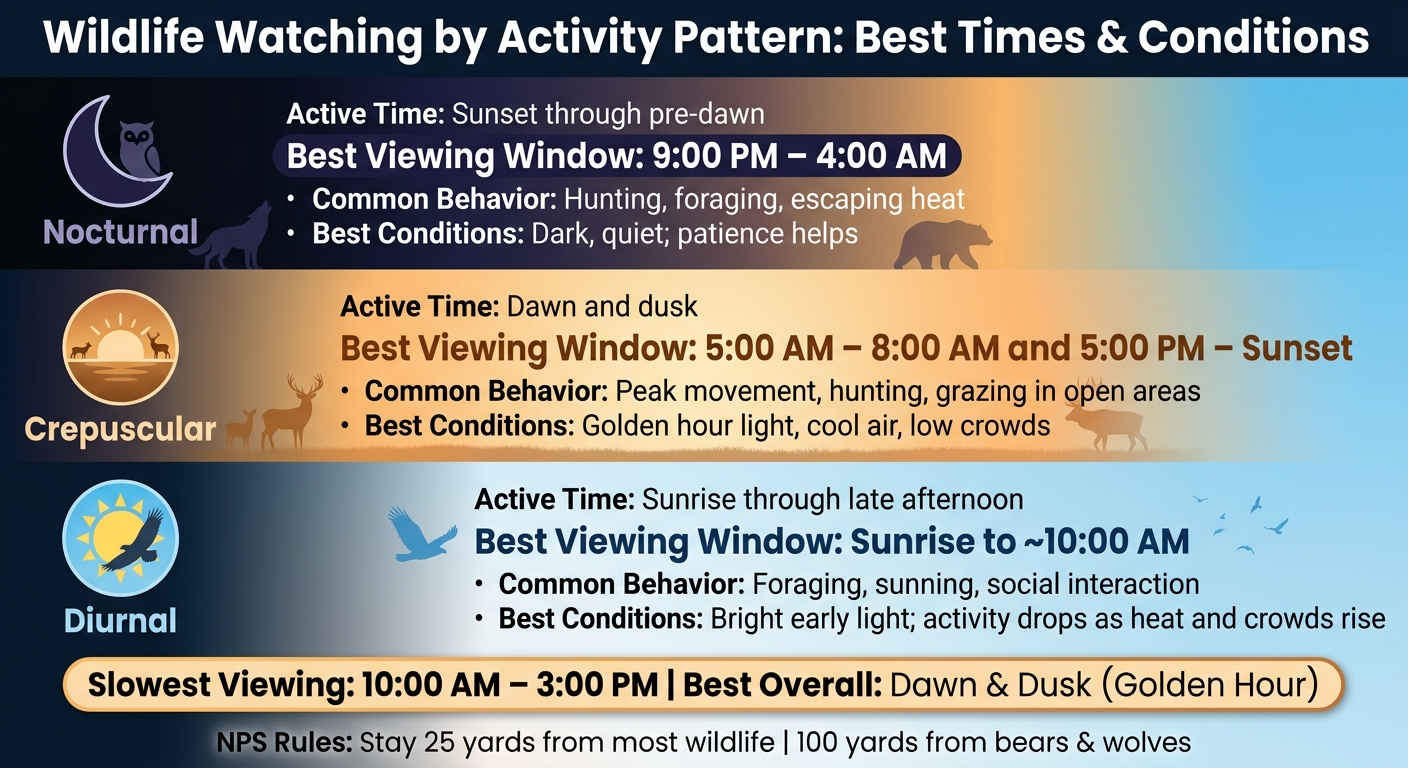
Wildlife Watching by Activity Pattern: Best Times & Conditions
Many national park species are crepuscular, which is why dawn and dusk often offer the best chance of a sighting. If you know an animal’s activity pattern, you can time your visit better and get into position before it slips back into cover.
Here’s the difference at a glance.
Side-by-Side Viewing Comparison
| Activity Pattern | Active Time | Common Behavior | Best Viewing Window | Best Conditions |
|---|---|---|---|---|
| Nocturnal | Sunset through pre-dawn | Hunting, foraging, escaping heat | 9:00 PM – 4:00 AM | Dark, quiet; patience helps |
| Crepuscular (overlap) | Dawn and dusk | Peak movement, hunting, grazing in open areas | 5:00 AM – 8:00 AM; 5:00 PM – sunset | Soft "golden hour" light; cool air; low crowds |
| Diurnal | Sunrise through late afternoon | Foraging, sunning, social interaction | Sunrise to about 10:00 AM | Bright early light; activity drops as heat and crowds rise |
Use these time windows to sketch out a simple viewing schedule.
How to Plan Your Visit Around Wildlife Activity
Use those time windows to shape your park day.
A Simple Viewing Schedule for Most Visitors
Get there before sunrise and set up near a meadow edge, riverbank, or forest clearing. In some parks, wolf activity is highest before sunrise. From 10:00 AM to 3:00 PM, shift to visitor centers, scenic drives, or a break. Then head back out about two hours before sunset for another strong viewing window, especially for species that move most at dawn and dusk. Check closures and sunrise times before you leave.
Conclusion: Time Your Visit to Match Animal Activity
Nocturnal animals are best watched after dark, diurnal animals are most active from sunrise through late morning and again in late afternoon, and dawn and dusk offer the highest overall payoff for most visitors. Once your timing is set, keep your viewing low-impact.
NPS rules generally require you to stay at least 25 yards from most wildlife and 100 yards from bears and wolves. Here’s a simple check: hold your thumb at arm’s length with one eye closed. If your thumb doesn’t fully cover the animal, back up. 8x or 10x binoculars help you watch natural behavior without getting too close.
Stay still and watch. Ask a ranger about recent sightings.
FAQs
What if I can only visit at midday?
If midday is your only option, plan for fewer wildlife sightings. Most large mammals and other dawn-and-dusk animals bed down then to stay out of the heat. That said, you can still get lucky. Black bears, for example, may show up in forested areas.
Midday usually works better for visitor centers, thermal basins, or hikes. It’s also a good window to scout places for evening wildlife watching. Check access points, look for water edges, and note habitat features that animals may use later in the day.
How do seasons affect wildlife viewing times?
Seasons change wildlife viewing times because they affect migration, mating, and feeding.
In spring, you’re more likely to spot newborn animals and migratory birds returning for the season. Summer gives you longer daylight hours, which helps, but there’s a catch: many animals slow down or hide during the hottest part of the day.
Fall is often busy in the animal world. You might hear elk bugling during mating season, and many species spend more time eating as they prepare for winter. In winter, animals like wolves and bison can stand out more clearly against the snow, which makes them easier to see.
Animal activity also shifts with temperature and food supply, so the best viewing times can change from one season to the next.
What gear helps me watch wildlife safely?
Give animals plenty of space: stay at least 100 yards from bears and wolves, and 25 yards from other wildlife. Binoculars (8×42 or 10×42) and a spotting scope on a tripod let you watch from a safe distance without bothering them.
If you’re in bear country, keep bear spray where you can grab it fast. For night viewing, use a red-light headlamp. Thermal imaging is handy for scanning large areas, and digital night vision can help you identify species.