
Planning a camping trip? Here’s what you need to know about campground opening schedules in U.S. national parks:
- Opening Dates Vary: Campgrounds open based on factors like weather, snowpack, and maintenance. Lower-elevation parks often open earlier, while higher-elevation sites may wait until late spring or summer.
- Regional Differences: For example, Blackwoods Campground in Acadia opens May 1, 2026, while Tuolumne Meadows in Yosemite may not open until late May or later, depending on snow.
- Weather Impacts: Snowpack levels, late storms, and road conditions can delay openings. High-elevation parks like Yellowstone and Yosemite are especially affected.
- Natural Events: Flooding and wildfires can lead to extended closures, as seen with Yellowstone’s Pebble Creek Campground, closed since 2022 and reopening in 2026.
- Check Updates: Always verify dates on the National Park Service website before your trip.
For reservations, use Recreation.gov and act quickly – popular sites fill up fast. For first-come, first-served spots, arrive early in the morning. Always have a backup plan for unexpected closures or full campgrounds.
Campground Opening Schedules by Region
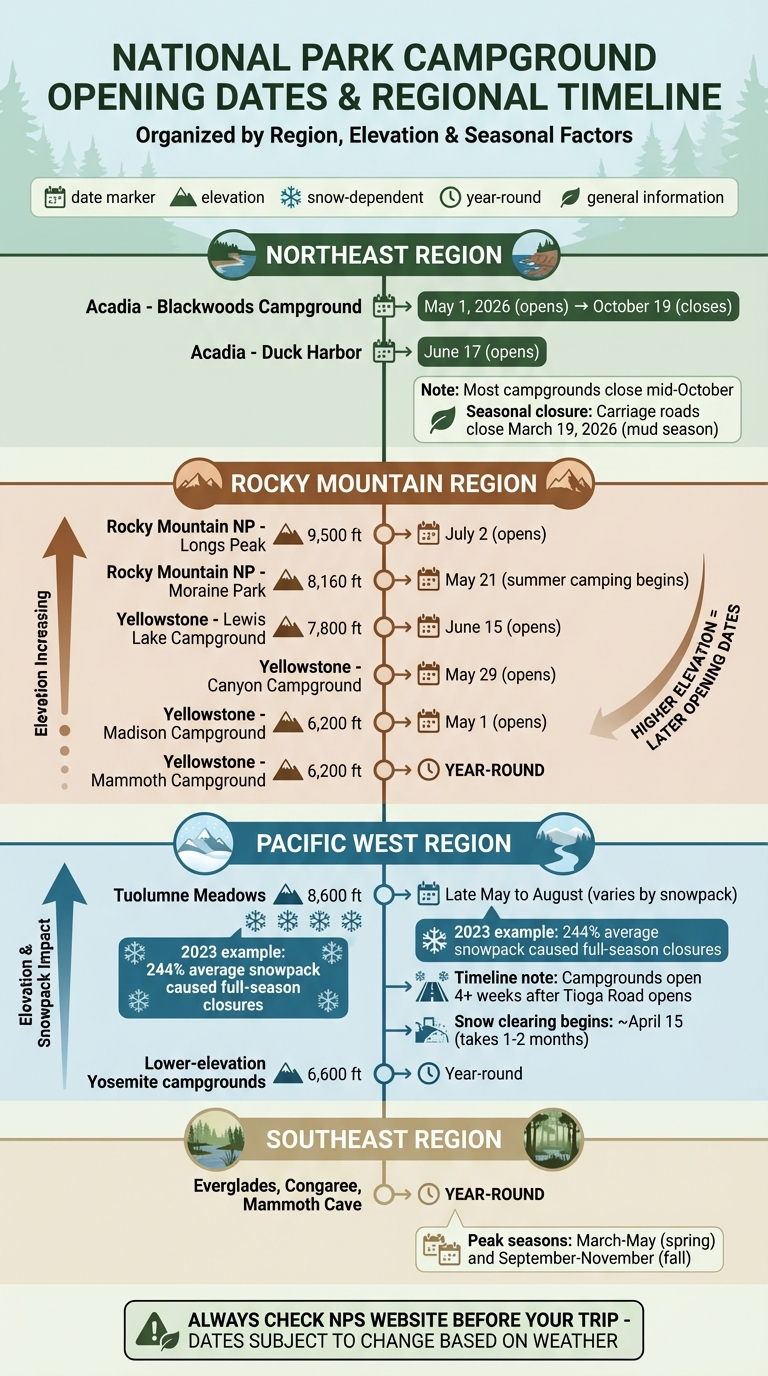
National Park Campground Opening Dates by Region and Elevation
Campground opening dates depend on factors like elevation and weather, with low-elevation parks typically opening earlier than those at higher altitudes. Use this guide to plan your camping trips according to each region’s schedule.
Northeast Region
In the Northeast, parks such as Acadia follow a spring-to-fall schedule. For example, Blackwoods Campground opens on May 1, 2026, while Duck Harbor’s island sites wait until June 17 to accommodate ferry access and seasonal preparations. Most campgrounds in this region close by mid-October, though Blackwoods remains open until October 19. However, spring can bring "mud season" closures to protect unpaved areas, like the March 19, 2026 closure of Acadia’s carriage roads during the thaw.
Rocky Mountain Region
Elevation plays a major role in the Rocky Mountain region. In Yellowstone, Mammoth Campground, located at 6,200 ft, is open year-round. Higher-altitude spots like Lewis Lake Campground (7,800 ft) don’t open until June 15. Other key dates include Madison Campground opening on May 1 and Canyon Campground on May 29.
At Rocky Mountain National Park, Moraine Park Campground (8,160 ft) begins summer camping on May 21, while Longs Peak Campground (9,500 ft) doesn’t welcome visitors until July 2. Winter camping is available at Moraine Park but with limited amenities.
Pacific West Region
Snowpack heavily influences the opening dates in parks like Yosemite and Sequoia. Lower-elevation campgrounds in Yosemite often operate year-round, but higher sites like Tuolumne Meadows (8,600 ft) may open as early as late May or as late as August, depending on snow conditions. For example, in 2023, Yosemite’s snowpack reached 244% of the average, causing several campgrounds – like Bridalveil Creek, Crane Flat, and White Wolf – to remain closed all season.
The National Park Service explains that campground openings often lag at least four weeks behind the opening of Tioga Road. Snow-clearing efforts for this road typically begin around April 15, requiring one to two months to complete.
Southeast Region
The Southeast offers year-round camping in parks like Everglades, Congaree, and Mammoth Cave, thanks to its mild winters. These parks see peak visitation during spring (March–May) and fall (September–November), when the weather is most pleasant. With fewer weather-related closures, booking windows in this region are generally more predictable.
Next, we’ll look at the factors that shape these varying campground schedules.
sbb-itb-00512f3
What Affects Campground Opening Dates
Knowing what determines campground opening schedules is key to planning your trips and avoiding unexpected closures. Three main factors come into play: weather conditions, road accessibility, and natural events like wildfires or flooding.
Weather and Snowpack
Snowpack levels, typically measured on April 1, are a major clue for when high-elevation campgrounds will open. Late-season storms in April and May can delay plowing efforts, even when snowpack levels are average. For example, Mount Rainier’s Paradise area receives around 643 inches of snow annually, requiring extended spring operations. Once roads are cleared, crews need about four weeks to address hazards and restore utilities before campgrounds can open.
After the snow is managed, road conditions become the next hurdle for campground readiness.
Road Clearance and Maintenance
Access roads must be cleared and maintained before campgrounds can open. In many high-elevation parks, plowing typically begins around April 15, but completing the process can take one to two months. Clearing snow is just the first step – crews also inspect conditions, remove hazards, and restore utilities to ensure the area is safe for visitors.
Delays can also arise from infrastructure projects. For instance, rehabilitation work on Yosemite’s Glacier Point Road kept Bridalveil Creek Campground closed through 2023. Similarly, a road failure on Mariposa Grove Road in 2023 pushed its opening back to May 25, despite its usual mid-April start. In some cases, major infrastructure issues lead to multi-year closures, such as Yosemite Creek Campground.
Wildfires and Other Natural Events
Natural events like wildfires and flooding can severely disrupt campground schedules. In 2018, the Ferguson Fire caused closures at Crane Flat Campground for 17 days (July 29–August 14) and Tamarack Flat for 13 days (August 3–15). Earlier, the 2013 Rim Fire forced early seasonal closures at both White Wolf and Yosemite Creek campgrounds. More recently, the Creek Fire in 2020 shut down Mariposa Grove Road for over a month, from September 6 to October 10.
Flooding can lead to even longer delays. For example, Yellowstone’s Pebble Creek Campground has remained closed since June 2022 due to flood damage, with reopening not expected until 2026. To avoid disruptions, always check the park’s official alerts page before your trip and consider refundable accommodations when visiting areas prone to wildfires or heavy spring snowmelt.
Being aware of these factors can help you plan your visit and steer clear of last-minute changes.
How to Book and Plan Your Camping Trip
Booking a campsite requires quick action and careful preparation, especially when dealing with high-demand locations. Recreation.gov is the go-to platform for reserving over 100,000 campsites across U.S. national parks and federal lands, but competition is intense, so you’ll need to act fast to secure a spot.
Reservation Windows and Booking Platforms
Most federal campsites open reservations on a 6-month rolling basis, with new dates becoming available daily at 10:00 AM Eastern Time (7:00 AM Pacific). Popular sites often sell out within minutes, so preparation is crucial. Make sure your Recreation.gov account is set up and verified ahead of time. Save your payment information in advance to streamline the process, as reservations are held for only about 15 minutes.
Reservation fees typically range between $6 and $10, with nightly rates for basic tent sites costing $15 to $35. Keep in mind that five major Yellowstone campgrounds – Bridge Bay, Canyon, Grant Village, Madison, and Fishing Bridge RV Park – require booking through a separate system. If your preferred dates aren’t available, you can use tools like Recreation.gov’s "Notify Me" feature or third-party apps such as Campnab or CampsiteTonight to monitor cancellations.
For campgrounds that don’t accept reservations, being prepared for early arrival is essential.
First-Come, First-Served Campgrounds
Many parks also offer first-come, first-served (FCFS) campgrounds, which are ideal for last-minute trips. However, these sites fill up quickly, especially during peak seasons. At high-traffic parks like Yosemite, FCFS spots are often gone by mid-morning in the summer. To improve your chances, aim to arrive between 8:00 AM and 10:00 AM and consider planning your trip for mid-week days, like Tuesday or Wednesday, instead of weekends.
Always have a backup plan in case your first choice doesn’t work out. Nearby national forests, Bureau of Land Management (BLM) lands, or private campgrounds can serve as alternatives. Check the park’s official website or contact the local ranger station for real-time updates. For example, Yellowstone’s Mammoth Campground operates on an FCFS basis only during the off-season (October 15 – April 1) and charges around $25 per night. Be sure to familiarize yourself with self-registration procedures before you arrive.
Conclusion
This guide has covered the schedules, key factors, and booking strategies for national park campgrounds. Planning ahead is crucial, as opening dates can vary due to unpredictable weather, snowpack levels, and natural events. In some cases, extreme weather has led to significant delays or even full-season closures at certain campgrounds.
For the most accurate and up-to-date information, rely on official sources like the NPS website and Recreation.gov. As Ray McPadden, Acting Superintendent at Yosemite National Park, put it:
Camping in this park is truly a magical experience, and we want to provide the opportunity for as many visitors as possible.
To improve your chances of securing a spot, set up your Recreation.gov account early, enable cancellation alerts, and consider backup options such as nearby national forests or BLM lands. These alternatives can be especially helpful during early-season openings or when campgrounds are fully booked. Before heading out, double-check campground specifics on NPS.gov, and pack essential backup supplies like extra water and a shovel to prepare for any surprises.
FAQs
How can I predict a campground’s opening date before it’s announced?
Predicting when a campground will open can feel like a guessing game, but keeping an eye on reservation trends and past patterns can make it easier. Many parks stick to a consistent schedule, often opening reservations about six months ahead of time. To stay informed, regularly check official park websites and reservation platforms for updates. Pay attention to details like weather-related opening dates, which can vary by location.
For extra help, use tools like booking alerts or reservation calculators. These can notify you when the reservation window is about to open, giving you a head start on planning your trip.
What’s the fastest way to grab a campsite when reservations drop?
If you want to snag a campsite before it’s gone, timing is everything. On Recreation.gov, campsite reservations open daily at 10 a.m. Eastern Time (7 a.m. Pacific Time), and they get booked fast.
Here’s how to improve your chances:
- Set an alarm to remind you when reservations open.
- Log into your account in advance so you’re ready to go.
- Refresh the page just before release time to ensure you’re seeing the latest availability.
Being prepared and acting quickly can make all the difference.
What are my best options if the campground I planned for is closed?
If the campground you planned to visit is closed, don’t worry – there are usually other options. Many parks offer multiple camping areas, some of which may be open seasonally or year-round. Start by checking the park’s official website for updates on closures, alternative locations, or any first-come, first-served spots that might be available.
Another option is to look into private campgrounds nearby, which often have availability. You can also use platforms like Recreation.gov to search for and reserve campsites in advance. By planning ahead and staying flexible, you’ll be better prepared to enjoy your trip without unnecessary stress.