
Volunteering in national parks is a rewarding way to contribute to preserving these cherished spaces. Each year, over 300,000 volunteers donate millions of hours to support park operations, maintain trails, protect wildlife, and assist visitors. Whether you’re interested in conservation, historical preservation, or visitor services, there’s a role for everyone. Plus, after 250 service hours, you can earn a free pass to federal recreation areas.
Key Points to Get Started:
- Explore opportunities on Volunteer.gov.
- Fill out the required application forms (OF301/OF301a).
- Training is provided, including safety briefings and role-specific preparation.
- Roles range from short-term events to seasonal commitments.
- Follow safety guidelines and Leave No Trace principles during your work.
Volunteering not only helps parks thrive but also allows you to gain new skills and connect with like-minded individuals. Ready to make an impact? Find your role today!
National Public Lands Day | Volunteers-in-Parks
Getting Started with Volunteering
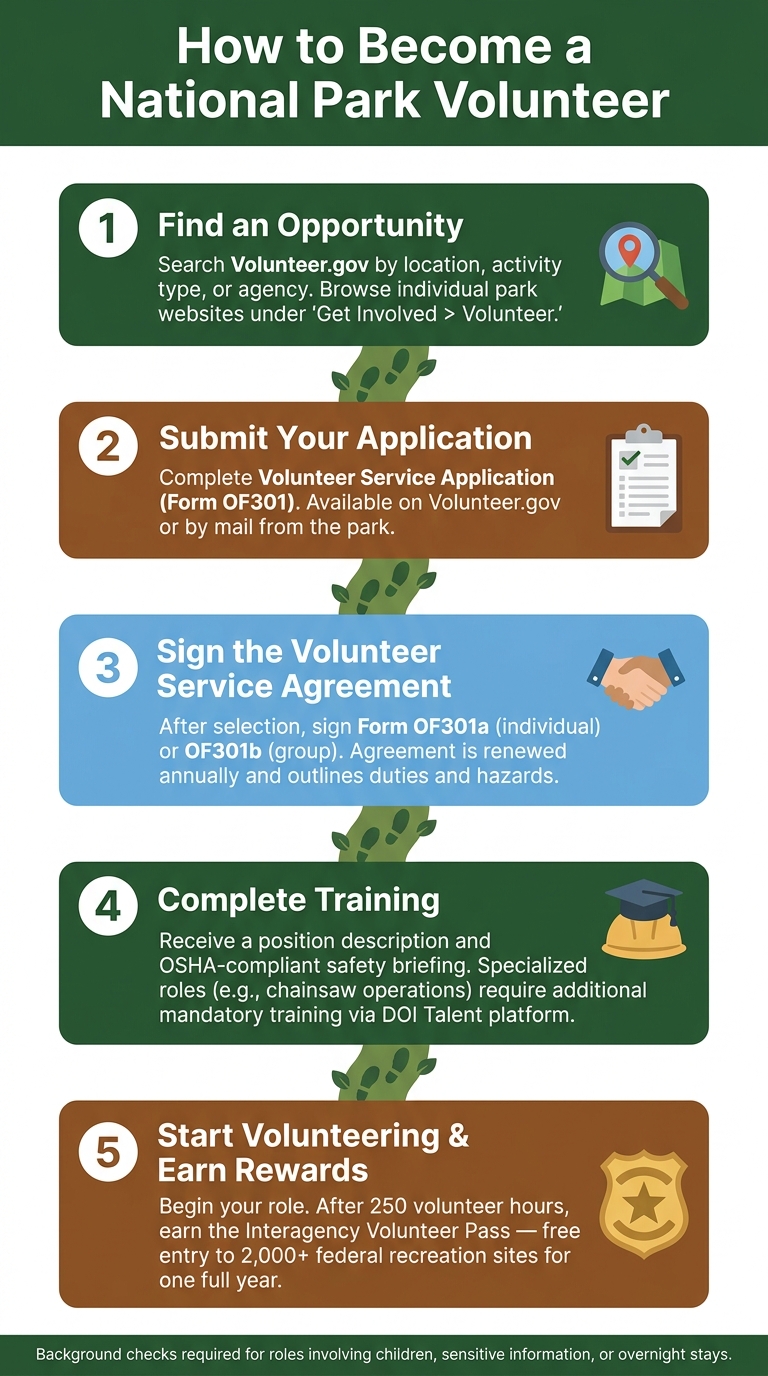
How to Become a National Park Volunteer: Step-by-Step Guide
Where to Find Volunteer Opportunities
A great place to begin is Volunteer.gov, the official federal site for finding volunteer roles. You can search by location, activity type, or agency, including opportunities with the National Park Service (NPS). If you’re looking for short-term commitments, the NPS Volunteer Events Calendar is a helpful tool for finding single-day service projects by state and date. Additionally, individual park websites often have a "Get Involved" > "Volunteer" section where you can explore specific opportunities and find contact information for coordinators. If you have unique needs, such as group visits or accessibility requirements, reaching out directly to the park’s volunteer coordinator is a good idea.
For more information about specific parks before committing, check out The National Park Guide, which can help you explore and narrow down your options.
Once you’ve chosen a role, follow the steps below to complete your application.
How to Apply
- Fill out the Volunteer Service Application (Form OF301). This form is available on Volunteer.gov or can be requested by mail from the park.
- After being selected, confirm your responsibilities and schedule with your supervisor. Then, sign a Volunteer Service Agreement – Form OF301a for individuals or OF301b for groups.
- Keep in mind that the agreement is renewed annually. It details your specific duties and outlines any potential job hazards.
"Volunteers may not serve without a signed and current volunteer service agreement." – National Park Service
Certain roles, particularly those involving children, sensitive information, or extended stays, may require a background check. It’s a good idea to ask upfront if this applies to your position. Also, note that most volunteer roles do not cover expenses like travel, meals, or personal equipment.
Once your application is complete, you’ll receive training to prepare you for your responsibilities.
Is Training Provided?
Yes, training is provided.
"The National Park Service (NPS) provides training for its volunteers to increase safety and support and enhance the Volunteers-In-Parks experience." – U.S. National Park Service
Before starting, you’ll receive a position description that outlines your duties, followed by a safety briefing that complies with OSHA standards. These safety protocols are the same as those required for paid NPS employees. Depending on your role, you might also receive a uniform, safety gear, or access to park property like keys.
For specialized roles, such as chainsaw operations, additional training is mandatory. Volunteers must complete the NPS "Introduction to Chainsaw Operations & Safety" course through the National Chainsaw Safety Program before participating in any hands-on work. Most training is offered via the DOI Talent platform, though some basic courses are accessible without needing an internal NPS network login.
Volunteer Roles and Responsibilities
Once you’re approved and trained, you’ll step into a specific volunteer role. The National Park Service (NPS) organizes these roles into a few main categories, each playing an important part in maintaining and enhancing the park system.
Conservation and Wildlife Roles
If you love nature, conservation roles might be your calling. Volunteers help by clearing trails, removing invasive plants, or planting native species to restore habitats. You can also join citizen science projects – no science degree required – to document wildlife or track environmental data. This information helps park managers make better long-term decisions.
For example, in 2019, nearly 500 volunteers planted 13,600 tree seedlings at the Flight 93 National Memorial. This reforestation effort aimed to create a living windbreak and improve wildlife habitats. These roles can range from one-day events to seasonal commitments, offering flexibility based on your availability.
Historical Preservation Roles
If history fascinates you, historical preservation roles might be a great fit. Parks with cultural or archeological significance rely on volunteers to help maintain and protect their heritage. Tasks might include repairing historic buildings, labeling artifacts, cataloging archives, or even assisting in archeological digs.
Some volunteers also participate in living history programs, dressing in period clothing and demonstrating traditional crafts like blacksmithing to engage visitors. At the Byrd Hammock National Register Site in Florida, 25 volunteers dedicated over 2,500 hours during one summer to help the Southeast Archeological Center with excavation, soil screening, and artifact documentation. Their efforts earned the project the Southeast Region’s Hartzog Park Volunteer Program Award.
Visitor Support Roles
Not all roles involve getting your hands dirty. If you enjoy meeting people, visitor support roles might suit you. Campground hosts handle reservations and ensure visitors follow site etiquette. Visitor center assistants greet guests, answer questions, hand out maps, and provide orientation. Interpretive guides lead tours or give educational talks on topics like geology or park history.
At Mount Rainier National Park, volunteers work as wilderness ranger assistants from mid-May to mid-October. They maintain remote trails and issue backcountry permits. These positions are often seasonal, lasting three to six months, and are ideal for retirees or anyone with a flexible schedule.
In addition to these main roles, the NPS values volunteers with specialized skills. Whether you’re a museum curator, photographer, electrician, or librarian, your expertise can make a meaningful impact on park projects that go beyond general duties.
sbb-itb-00512f3
What Volunteers Need to Know Before Starting
Before jumping into your role as a National Park Service (NPS) volunteer, there are a few important steps to complete. First, you’ll need to sign the Volunteer Service Agreement (OF301a) – this document makes your role official. As the NPS explains:
"The volunteer service agreement is a contract between the NPS and the volunteer. It identifies rights and responsibilities, time frames and commitments, and all requirements."
If your volunteer work involves sensitive tasks or requires overnight stays, you’ll also need to pass a background check. These measures ensure a safe and well-organized volunteer program.
Safety and Preparedness
Understanding your role is key to staying safe. Review your position description carefully – it will outline whether your duties involve light office tasks or more physically demanding jobs like trail maintenance. While the park may provide a volunteer vest or shirt, you’ll need to bring your own essentials. Think sturdy footwear, weather-appropriate clothing, sunscreen, and plenty of water. And if you notice any safety issues while volunteering, report them to your supervisor immediately rather than trying to address them yourself.
Leave No Trace Principles for Volunteers
As a volunteer, you’re expected to follow the seven Leave No Trace (LNT) principles – and sometimes to an even higher standard than regular visitors. These principles guide your actions to protect the environment: plan ahead, stick to durable surfaces, dispose of waste properly, leave natural items where you find them, minimize campfire impacts, respect wildlife, and be considerate of others. For example, if you’re working on trail maintenance or removing invasive plants, staying on designated paths prevents soil erosion and protects native vegetation. If you’re in an archaeological role, resist the urge to pocket artifacts or souvenirs. Every item must be officially documented and processed.
Volunteer Ethics and Conduct
When you wear your volunteer vest or uniform, you’re representing the National Park Service, and that comes with responsibility. Conduct training will cover essential topics like Equal Employment Opportunity (EEO) and anti-harassment policies – these guidelines aren’t optional. Always show respect for the land, its history, and the people you interact with. This professionalism is vital to the success of the program, which relies on the dedication of approximately 138,000 volunteers each year.
Choosing the Right Role and Understanding Your Impact
How Volunteer Work Makes a Difference
Volunteer hours lead to real, measurable results. For example, parks across the U.S. hosted 331.9 million visitors in 2024, with volunteers playing a big role in making those visits possible. Consider this: at the Byrd Hammock National Register Site, 25 VIPs contributed over 2,500 hours to support archaeological projects. Meanwhile, nearly 500 volunteers planted 13,600 seedlings at the Flight 93 National Memorial to help restore wildlife habitats through reforestation efforts. These numbers aren’t just statistics – they represent the direct impact of dedicated individuals giving their time.
"The work they do transforms the health and sustainability of natural communities; maintains the integrity of park facilities and trails; preserves the historic treasures… and creates opportunities for visitors to deepen their connection." – National Park Service
Matching Your Skills and Interests to a Role
The first step is assessing what you’re good at and what you enjoy doing. The National Park Service (NPS) offers a variety of opportunities for different skill sets – from photographers and archivists to electricians and dog handlers. If your expertise doesn’t match any listed openings, it’s worth contacting a park’s volunteer coordinator directly. As the NPS says:
"You never know how you could help the National Park Service until you ask!"
For creative individuals, the Artist-in-Residence program is a perfect match. If you’re passionate about nature and science, Citizen Science projects – like monitoring monarch butterflies at Indiana Dunes National Park – allow you to engage in ecological research. History enthusiasts might enjoy roles in programs like Trails & Rails, which focus on regional heritage. Physical roles, such as trail maintenance or working at entrance posts, require stamina, while library cataloging or lab work offers a more relaxed pace. To find roles suited to your skills and location, use the filters on Volunteer.gov.
Whether you’re looking for a niche role or starting with something simple, there’s a place for everyone, no matter your level of commitment.
How to Stay Involved Over Time
If you’re new to volunteering, start with a single-day event like National Public Lands Day (held on the fourth Saturday in September) or National Trails Day (first Saturday in June). These events let you try out different activities without a long-term commitment. From there, you can explore multi-week projects, seasonal roles, or Adopt-a-Trail programs, where you take responsibility for maintaining a specific trail year-round.
For those ready to dive deeper, consider becoming a campground host. These positions often include on-site housing or an RV pad in exchange for a 3- to 6-month commitment. Another incentive is the Interagency Volunteer Pass, which you can earn after contributing 250 volunteer hours across participating federal agencies. This pass grants free entry to over 2,000 federal recreation sites for a full year, and the hours can be spread out over multiple years.
No matter how you choose to get involved, there are opportunities to make a lasting impact while enjoying the beauty and history of national parks.
Conclusion
Final Thoughts on Volunteering
Volunteering in national parks plays a crucial role in protecting America’s natural beauty and historical landmarks. Whether it’s restoring ecosystems, cataloging artifacts, or assisting visitors, every effort contributes to the preservation of these cherished spaces. As the National Park Service eloquently states:
"Every hour contributed, every trail cleared, every visitor assisted, and every piece of data collected plays a vital role in preserving these magnificent places for future generations."
With over 100,000 Volunteers-In-Parks (VIPs) participating annually, there’s a vibrant community already making a difference. Plus, with most Americans living within 100 miles of a park, opportunities to contribute are closer than you might think. Even small commitments help uphold the rich tradition of volunteerism that keeps these parks thriving.
Resources to Help You Get Started
If you’re ready to dive in, there are plenty of resources to guide you. Start with Volunteer.gov, where you can search for opportunities by location, interest, or specific parks. To plan visits and learn more about individual parks, visit The National Park Guide. Additionally, explore the "Get Involved" sections on individual park websites for local contacts and upcoming events.
"Share a little time and make a big difference for national parks through the National Park Service’s Volunteers-In-Parks program." – National Park Service
FAQs
Can I volunteer as a beginner?
Yes! The National Park Service invites volunteers from all walks of life, regardless of their background or experience. Most roles don’t call for specific skills – just a positive attitude and a desire to learn. While certain technical positions might require some prior knowledge, many provide on-the-job training to help you succeed. To begin, check out opportunities on Volunteer.gov or visit the website of your nearest park. It’s your chance to contribute to the preservation of our incredible national parks!
Are volunteer expenses reimbursed?
Expense reimbursement varies depending on the specific park or program’s policy. Federal regulations permit parks to cover certain costs associated with volunteering, but the rules for what qualifies and any limits are determined by each site. If reimbursement is available, the details – such as conditions, types of expenses covered, and maximum amounts – will be included in your volunteer service agreement. Be sure to clarify these points with your local volunteer coordinator before beginning your service.
How do I track hours for the free pass?
To qualify for a Volunteer Pass, you need to complete 250 service hours with participating federal agencies. Make sure to report your hours to your volunteer supervisor and maintain your own records as well. You can use Volunteer.gov to track your hours across different activities. Once you hit the 250-hour mark, you’ll receive an email notification. After that, share your records with your volunteer coordinator to have your hours approved and to request your pass.