
Birdwatching in national parks offers a unique chance to observe hundreds of bird species in their natural habitats. This guide covers everything you need to know to make the most of your birding trips, including:
- Best parks and trails: Discover top spots like Point Reyes (400+ species), Everglades, and Olympic National Park.
- Essential gear: Binoculars (8×42 or 10×42), Merlin Bird ID app, eBird, and weatherproof notebooks.
- Timing tips: Spring (Feb–May) and fall (Aug–Dec) are ideal for migrations, with early mornings being the most active.
- Bird identification: Learn to spot birds using physical traits (beaks, colors, patterns) and behaviors (flight, calls).
- Ethical practices: Respect wildlife, avoid feeding birds, and stick to trails to protect their habitats.
Whether you’re a beginner or an experienced birder, this guide provides practical advice to enhance your experience while preserving nature.
Planning Your Birdwatching Trip
Gear You’ll Need for Birdwatching
Binoculars are the cornerstone of birdwatching. If you’re just starting out, consider models in the $150–$300 range with specifications like 8×42 or 10×42. The first number refers to magnification, while the second indicates the diameter of the objective lens in millimeters. An 8×42 pair is versatile and easier to handle, while 10×42 provides greater detail but might be harder to keep steady.
"A good pair of binoculars should remain the first weapon of choice." – Shashank Dalvi, Veteran Birder
Enhance your experience by downloading the Merlin Bird ID app, which allows offline access to regional bird packs. Combine it with eBird to track recent sightings and discover hotspots. Dress in neutral earth tones – greens, browns, and grays – to blend into the environment and avoid alarming birds. A weatherproof notebook is also useful for sketching or jotting down your observations.
Prepare for varying conditions by layering your clothing, and wear waterproof hiking boots to handle different terrains. Additional essentials include a LED headlamp, SPF 30+ sunscreen, bug spray, and a portable stool like the Helinox Speed Stool ($95). For distant birdwatching, a spotting scope with 20–45x magnification can be a game-changer.
Once your gear is sorted, the next step is choosing the best time for your birdwatching adventure.
When to Visit for the Best Birding
Spring (late February through early May) is the prime season for birdwatching. During this time, you’ll encounter resident birds, summer breeders, and migrating species, with late April to early May being the peak migration period. Arriving at sunrise is key to catching birds at their most active.
Fall migration (August through early December) offers spectacular sights, such as thousands of broad-winged hawks passing through in mid-September. Winter birding (December through February) may feature fewer species, but the leafless landscape makes spotting birds much easier. Save mid-day, when bird activity slows, for hiking or other activities.
How to Research Birds and Trails Before You Go
With your timing and gear in place, it’s time to map out your birdwatching route. Start by diving into local bird reports to identify the best trails and hotspots.
Check each national park’s official bird checklist, which is typically available on their .gov websites. Use eBird to explore recent sightings and locate productive trails, especially those near water, as these areas tend to attract more birds. Be sure to visit the park’s "Alerts" page to stay updated on trail closures or other access issues. For specific questions about rare species or bird behaviors, some parks provide contact information for their ornithologists or wildlife experts.
For even more guidance, visit the National Park Guide (https://thenationalparkguide.com), which offers tools to help you plan your trip and find the best wildlife trails.
sbb-itb-00512f3
Birding the Grand Canyon (South Rim Trail) in Arizona
Best National Park Trails for Birdwatching
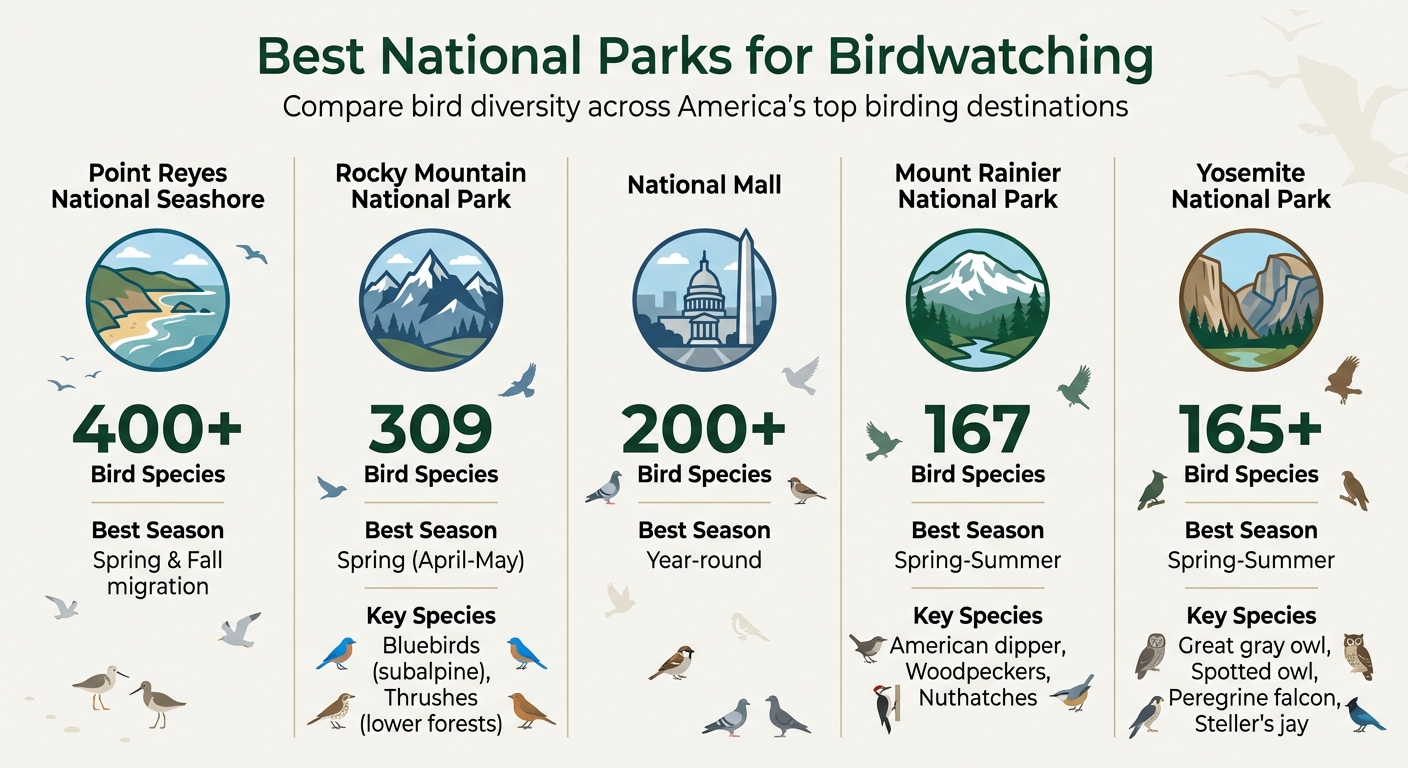
Top 5 National Parks for Birdwatching: Species Count and Best Seasons
Got your binoculars and field guide ready? Let’s dive into some of the most incredible national park trails where birdwatching takes center stage.
Mount Rainier National Park
Mount Rainier National Park is home to an impressive 167 bird species. Its rich mix of habitats, from the alpine meadows at Paradise and Sunrise to the lush areas near lakes, makes it a haven for bird enthusiasts. Keep an eye out for the American dipper, a fascinating bird often seen along the park’s cold, rushing streams. The surrounding woodlands also offer sightings of woodpeckers and nuthatches, making this park a must-visit for bird lovers.
Olympic National Park
Olympic National Park offers fantastic birdwatching opportunities, especially between April and October. The park’s diverse landscapes, including temperate rainforests and dramatic coastlines, cater to a wide range of bird species. The Hoh Rain Forest is a standout spot, offering year-round birding. Spring migration (April–June) brings an influx of breeding birds, while late summer at Hurricane Ridge often reveals fledgling Sooty Grouse, which are easier to spot than their adult counterparts. Coastal areas like Dungeness Spit are particularly exciting during the Tufted Puffin breeding season (June–August). And don’t miss early July, when songbird activity peaks. Fall migration is equally rewarding, bringing geese, ducks, grebes, loons, wintering gulls, and a variety of migrating songbirds.
Rocky Mountain National Park
Rocky Mountain National Park takes the crown with a whopping 309 recorded bird species. The park’s dramatic elevation changes create distinct habitats, each attracting different species. In the subalpine areas, bluebirds are a common sight, while lower-elevation forests are perfect for spotting thrushes. With such a variety of habitats and birds, this park is a treasure trove for birdwatching enthusiasts.
How to Identify Birds on the Trail
Observing Physical Features and Behavior
When identifying birds, start by noting their size, shape, and coloration. Compare the bird’s overall shape and size to familiar species like sparrows or crows. Pay attention to the beak, as its shape often reveals the bird’s diet. For instance, eagles and hawks have hooked beaks for tearing meat, woodpeckers use chisel-like beaks to drill into wood, ducks have flat beaks for straining food, and herons sport spear-like beaks for fishing.
Behavior is just as important as physical features. Watch how the bird moves – does it dive like a pelican or glide effortlessly through the air? The National Park Service advises, "The more silent you are as you move about the more birds you will see. Sometimes the best way to spot birds is to just sit, wait, and listen." Patience can reveal subtle details like eye-rings, wing bars, or tail notches that are key to identification.
Once you’ve gathered these observations, technology can help confirm your findings.
Using Apps and Field Guides
Bird identification apps, such as Merlin Bird ID, make it easier to identify species on the trail. The app’s "Sound ID" feature listens to bird calls and offers real-time suggestions, while "Photo ID" lets you snap a picture and receive immediate matches. If you can’t photograph the bird, the "Bird ID Wizard" asks simple questions about its size, color, and behavior to help narrow down the options. Additionally, apps using eBird data can provide location-specific checklists, showing which birds are likely in your area at a given time.
Even with these tools, it’s smart to carry a physical field guide or a printed park checklist. These traditional resources don’t rely on batteries or internet access, making them reliable backups.
Finding Rare and Regional Species
For those hoping to spot rare or elusive birds, a bit of strategy goes a long way. Quiet, remote areas such as forests and meadows often host less common species. Early mornings are usually the best time to find birds, as they are most active then. Tailor your search to the habitat – look for raptors perched on treetops or scan wetlands and beaches for shorebirds.
Yosemite National Park, home to over 165 bird species, is a great example of how location impacts birding. Rare species like the great gray owl, spotted owl, peregrine falcon, pileated woodpecker, and northern goshawk can sometimes be seen there. More common residents, such as the Steller’s jay, acorn woodpecker, and mountain chickadee, are easier to spot. To increase your chances, use park-specific bird checklists and consider joining guided birding tours led by local experts. These excursions often provide insights into where rare species are most likely to be found.
Conclusion: Getting the Most from Your Birdwatching Trip
Main Points to Remember
Birdwatching in national parks becomes a rewarding experience with the right preparation. Equip yourself with essentials like binoculars, a notebook, a field guide, and a checklist. Consider using apps like Merlin Bird ID and eBird to enhance your bird identification skills. Spring is ideal for observing nesting activity, while fall offers the excitement of peak migration. The National Park Service emphasizes the importance of patience: "The most important traits you need for birdwatching is patience. Practicing patience – the ability to wait quietly and mindfully – will improve your bird-watching greatly".
Explore diverse habitats, from treetops where raptors perch to wetlands bustling with wading birds. Sharpen your skills by observing bird calls, flight patterns, silhouettes, and behaviors. For example, Point Reyes National Seashore boasts over 400 species, while the National Mall shelters more than 200. These tips can help you make the most of your birdwatching adventures.
Protecting Birds and Their Habitats
Once you’re prepared, it’s crucial to adopt practices that protect birds and their environments. Avoid feeding wild birds to ensure they maintain their natural behavior. Don’t broadcast bird calls, as it can disturb and stress them, especially during nesting. Similarly, avoid using flashlights or spotlights at night, and always stick to designated trails to safeguard nesting areas.
To protect rare species, avoid posting their exact locations on social media, which can lead to overcrowding and harm their habitats. Instead, report unusual sightings directly to park ornithologists or through Wildlife Observation Cards. You can also contribute to conservation by recording your observations in citizen science apps. Taking these careful steps ensures that the incredible bird diversity in our national parks remains thriving for future generations.
FAQs
Which trail habitats produce the most bird sightings?
Wetlands, marshes, and wildlife refuges are some of the best places to spot birds. These habitats are teeming with life, offering plenty of food and shelter, which naturally draws in a diverse range of bird species.
How can I ID birds when I can’t see them clearly?
When you can’t spot birds, try identifying them by their sounds and calls instead. Familiarize yourself with common bird songs, and use mnemonics or descriptive cues to connect those sounds to specific species. This technique, known as birding by ear, is particularly helpful in low-visibility conditions and adds an exciting dimension to your birdwatching adventures.
What should I do if I spot a rare bird?
If you spot a rare bird while hiking in a national park, take note of key details such as its plumage, behavior, and the exact location of your sighting. Share this information with local birding groups or citizen science platforms to support ongoing research efforts. Remember to observe from a distance, stay quiet, and avoid disrupting the bird’s habitat to ensure its safety and preserve the natural surroundings.