
Yes, I can camp with seasonal allergies – but I need a plan before I leave. The biggest issues are pollen, mold, dust from stored gear, and campfire smoke. Pollen is often highest from 5:00 a.m. to 10:00 a.m., wet gear can start growing mold in about 48 hours, and people with a history of anaphylaxis should carry two epinephrine auto-injectors.
Here’s the short version:
- I check my allergy triggers and the pollen forecast before the trip.
- I pick a high, dry campsite instead of a damp low spot.
- I bring daily allergy meds, plus a rescue inhaler or epinephrine if I need them.
- I keep pollen out of my tent by changing clothes, wiping down, and sealing dirty gear.
- I treat smoke, insect stings, and breathing trouble as serious risks, not small annoyances.
Season matters too. Spring often means tree pollen. Summer brings grass pollen and early ragweed. Fall adds ragweed and mold from leaf litter. Winter shifts the problem toward dust mites and mold in enclosed shelters.
If I have asthma, severe sting reactions, or symptoms that affect sleep or breathing, I plan ahead before the trip instead of hoping for the best. The goal is simple: less exposure, fewer symptoms, and a safer trip.
How Allergy Triggers Change by Season
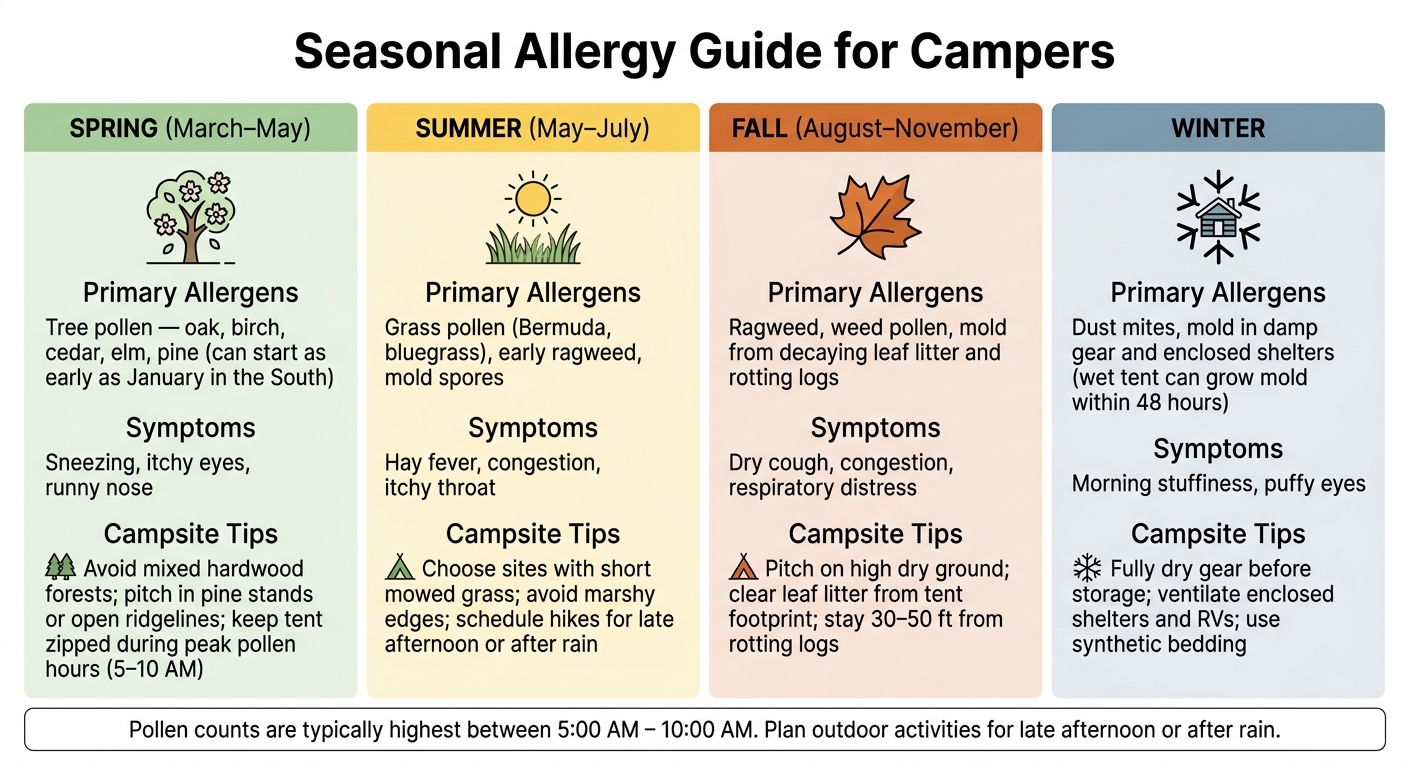
Seasonal Allergy Guide for Campers: Triggers, Symptoms & Campsite Tips
Allergy triggers shift through the year. That means your camping risk shifts too. The smart move is to line up your campsite, meds, and timing with the allergen that’s most common that season.
Spring and summer: tree, grass, and ragweed exposure
Spring, from March to May, is mostly about tree pollen. The main triggers are oak, birch, cedar, elm, and pine. In parts of the South, tree pollen can start as early as January.
If tree pollen sets you off, skip mixed hardwood forests when you can. Pine stands and open ridgelines are often a better bet.
Summer, from May to July, brings more grass pollen, especially Bermuda and bluegrass. Open meadows and grassy campsites can bump up exposure. By late July, ragweed starts showing up, and mold spores climb on humid nights.
Fall and winter: mold, damp gear, and enclosed shelters
By fall, from August to November, ragweed becomes the main problem. Decaying leaf litter and rotting logs also turn into mold hotspots. High, dry ground is your friend here. It also helps to clear leaf litter from under your tent.
Winter changes the picture. Most plants go dormant, so airborne pollen drops hard. The bigger issue moves indoors. In cabins, RVs, and other enclosed shelters, dust mites and mold tend to be the main triggers. And here’s the part many campers miss: a wet tent can start growing mold within 48 hours of storage.
Season-by-season risk table for campers
| Season | Primary Allergens | Typical Symptoms | Campsite Adjustments |
|---|---|---|---|
| Spring | Tree pollen (oak, birch, cedar, pine) | Sneezing, itchy eyes, runny nose | Avoid mixed hardwood forests; pitch in pine stands; keep tent zipped during peak pollen hours |
| Summer | Grass pollen, early ragweed, mold | Hay fever, congestion, itchy throat | Choose sites with short, mowed grass; avoid marshy edges |
| Fall | Ragweed, weed pollen, mold (leaf litter) | Dry cough, congestion, respiratory distress | Pitch on high, dry ground; clear leaves from under your tent; avoid rotting logs |
| Winter | Dust mites, mold (damp gear/shelters) | Morning stuffiness, puffy eyes | Ensure gear is fully dry before use; ventilate enclosed shelters; use synthetic bedding |
Use these seasonal patterns to pick your site and pack for the trigger you’re most likely to deal with.
sbb-itb-00512f3
Planning an Allergy-Smart Camping Trip
Turn your list of seasonal triggers into a simple travel plan before you head out.
Check your triggers, pollen outlook, and daily schedule
A board-certified allergist can confirm your triggers with skin or blood tests. Then, check pollen counts from the National Allergy Bureau or AAAAI 48 hours before departure. That part matters. General weather forecasts can be helpful, but they don’t tell you as much about what you’ll actually breathe in.
Use pollen counts to judge daily exposure, then build your schedule around them. That can help you pick a better departure time and a safer window for outdoor activity.
Schedule hikes for late afternoon or after rain, when counts are usually lower.
Choose campsites that limit pollen, mold, and dust
Once you’ve picked your timing, campsite choice becomes your next big way to cut exposure. Go for high, dry, well-drained ground. Skip low, damp areas, since pollen and mold often collect there overnight.
A few small setup choices can also make a big difference:
- Pitch your tent at least 30 to 50 feet from rotting logs and decaying organic material
- Clear leaf litter from the tent footprint before setup
- Face the tent door away from the wind to limit pollen and smoke
If your allergies are severe, an RV or cabin with sealed windows and air conditioning can lower exposure.
Use The National Park Guide to research park conditions
For park-specific conditions, look at the park’s landscape and vegetation before booking. Use The National Park Guide to review park landscapes, vegetation, and seasonal conditions before booking.
What to Pack and How to Set Up Camp
Pack medications and emergency supplies you can reach quickly
After you pick your campsite, pack for the exposure you still can’t avoid. Medications should come first.
Start nasal corticosteroid sprays 1 to 2 weeks before departure and take daily antihistamines at least 1 week before departure. Keep your rescue inhaler and epinephrine auto-injectors in a daypack or jacket pocket, not buried in your main bag.
Store epinephrine auto-injectors in an insulated pouch. Check expiration dates before you leave, and make sure at least one other person in your group knows where they are.
Set up your tent and sleeping area to reduce allergens
The aim is simple: create a sleeping space with as little exposure as possible.
Use a fully enclosed tent with intact mesh screens and a bathtub-style floor. Keep shoes and outer layers in the vestibule instead of bringing them into your sleeping area. Before bed, wipe down your face, neck, and arms with wet wipes, use a saline nasal rinse, and change into clean sleep clothes stored in a sealed bag.
Choose a synthetic sleeping bag instead of down. Synthetic fill dries faster, resists mold, and is less welcoming to dust mites. You can add zippered allergen-proof pillow encasements and a washable sleeping bag liner for one more layer between you and irritants.
A battery-powered HEPA filter can help cut airborne pollen and mold inside a sealed tent. Running it for 30 minutes before bed can reduce airborne pollen and mold spores by 80% to 90%.
Packing and campsite setup table
| Category | Essential Items | Action |
|---|---|---|
| Daily Symptom Control | Non-drowsy antihistamines (cetirizine, loratadine), nasal steroid spray, antihistamine eye drops | Start 1 to 2 weeks before departure; store in a waterproof bag |
| Asthma Support | Rescue inhaler (albuterol) with spacer, peak flow meter | Keep in your pocket or within arm’s reach at all times |
| Severe Reaction | Two epinephrine auto-injectors, written allergy action plan | Store in an insulated pouch; brief your group on the location |
| Campsite Hygiene | Wet wipes, saline nasal rinse, sealed dry bags for dirty clothes, portable HEPA filter | Use wipes and rinse nightly; run the filter before bed |
| Bedding Protection | Allergen-proof pillow encasements, synthetic sleeping bag liner, non-porous sleeping pad | Store clean bedding in sealed bags until setup |
| Skin & Contact Relief | Hydrocortisone cream, calamine lotion, hypoallergenic sunscreen | Apply for poison ivy or insect bite relief |
Even with the right gear, exposure can still creep in during hikes, meals, and campfires.
Managing Symptoms at Camp and Knowing When to Get Help
Reduce exposure during hikes, meals, and campfires
Once camp is set up, your day-to-day habits can make a big difference.
On high-pollen days, wear sunglasses and a wide-brimmed hat to help keep pollen out of your eyes and hair. If you’re walking through tall grass, tuck your pant cuffs into your socks to cut down on grass pollen exposure.
Campfire smoke isn’t an allergen, but it can make pollen symptoms hit harder. Sit at least 10–15 feet away from the fire and stay upwind whenever you can. Also skip treated wood, trash, and green wood, since they give off more irritating particulate matter. If you have asthma, keep your rescue inhaler with you any time smoke is around.
Meals need a little planning too. Store food in airtight containers so you don’t attract stinging insects, and wipe down picnic tables and your hands before eating. After a hike on a high-pollen day, change into clean clothes before bed. Then place the clothes you wore during the day in a sealed dry bag outside the sleeping area.
If symptoms start, it helps to know what to do before you’re in the moment.
Prepare for insect stings, asthma flare-ups, and severe reactions
Before you head out, print directions to the nearest urgent care or hospital. In remote camping areas, cell service can be spotty or fail altogether.
Tell your travel companions where your emergency meds are and how to use them, especially epinephrine auto-injectors. Here’s a quick guide:
| Symptom Type | Common Signs | What to Do |
|---|---|---|
| Mild Seasonal Allergy | Sneezing, itchy eyes, runny nose | Oral antihistamines, saline nasal spray, eye drops |
| Asthma Flare-up | Wheezing, chest tightness, shortness of breath | Use rescue inhaler (albuterol); move away from smoke or pollen source |
| Anaphylaxis | Throat tightness, swollen tongue, dizziness, rapid pulse | Administer an epinephrine auto-injector immediately, lay the person flat, call for emergency evacuation |
If anaphylaxis is suspected, don’t wait to see whether it passes. Give epinephrine right away. Campers with a history of severe reactions should carry two epinephrine auto-injectors, since one dose may not be enough if help is still hours away.
Conclusion: Key steps for more comfortable camping
With the right meds, a good campsite, and a clear emergency plan, most campers can keep seasonal allergies under control.
FAQs
How can I tell if my campsite is making my allergies worse?
Watch for persistent symptoms that begin after you arrive, like a stuffy nose, puffy eyes, sneezing, or chest tightness.
Your campsite could be the trigger if those symptoms feel worse than usual or show up most often around dense vegetation, standing water, blooming grasses, sleeping on the ground, or campfire smoke. Congestion, coughing, or wheezing near smoke can also be a sign that your allergies are getting worse.
What should I do if my allergy medicine is not enough at camp?
If your allergy medicine isn’t doing enough at camp, check the daily pollen count. If the first second-generation antihistamine hasn’t helped after 90 minutes, you can try a different one. For congestion that sticks around, use a saline rinse twice a day.
If you’re wheezing and don’t have an inhaler, move to a lower elevation and get evacuated. For anaphylaxis, use your epinephrine auto-injector right away, lie flat, and call emergency services. Stay away from campfire smoke.
Are cabins or RVs better than tents for allergy relief?
Yes. If you have severe allergies, a cabin or RV is often a better pick than a tent.
Why? Cabins and RVs usually have solid walls, air conditioning, and closed windows. That setup helps keep out pollen, mold, and dust.
Tents don’t block those triggers as well, so you’re more exposed. You can try to improve things by keeping the tent sealed and using a portable HEPA filter. That may help a bit.
But in most cases, an RV or cabin offers better protection.