
Sacred landscapes in U.S. national parks are deeply connected to Native American histories and spiritual practices. Over 800 sites within the National Park System hold spiritual importance for tribes, such as Devils Tower in Wyoming and Pipestone quarries in Minnesota. These lands are more than scenic spaces – they are vital to Indigenous traditions and identity. However, the creation of national parks often displaced Native communities, leaving a legacy of loss and ongoing challenges.
Key points to know:
- Sacred Landscapes: These are areas tied to Indigenous spirituality and history, often encompassing entire ecosystems.
- Historical Displacement: Tribes like the Shoshone and Blackfeet were removed from lands to establish parks like Yellowstone and Glacier.
- Preservation Efforts: The National Park Service works with tribes through co-stewardship agreements and initiatives like bison restoration and renaming offensive site names.
- Visiting Respectfully: Learn about the history, follow park rules, and honor Indigenous customs to ensure these spaces remain protected.
These landscapes represent both the resilience of Native cultures and the need for respectful exploration. By understanding their significance, visitors can help preserve these sacred sites for future generations.
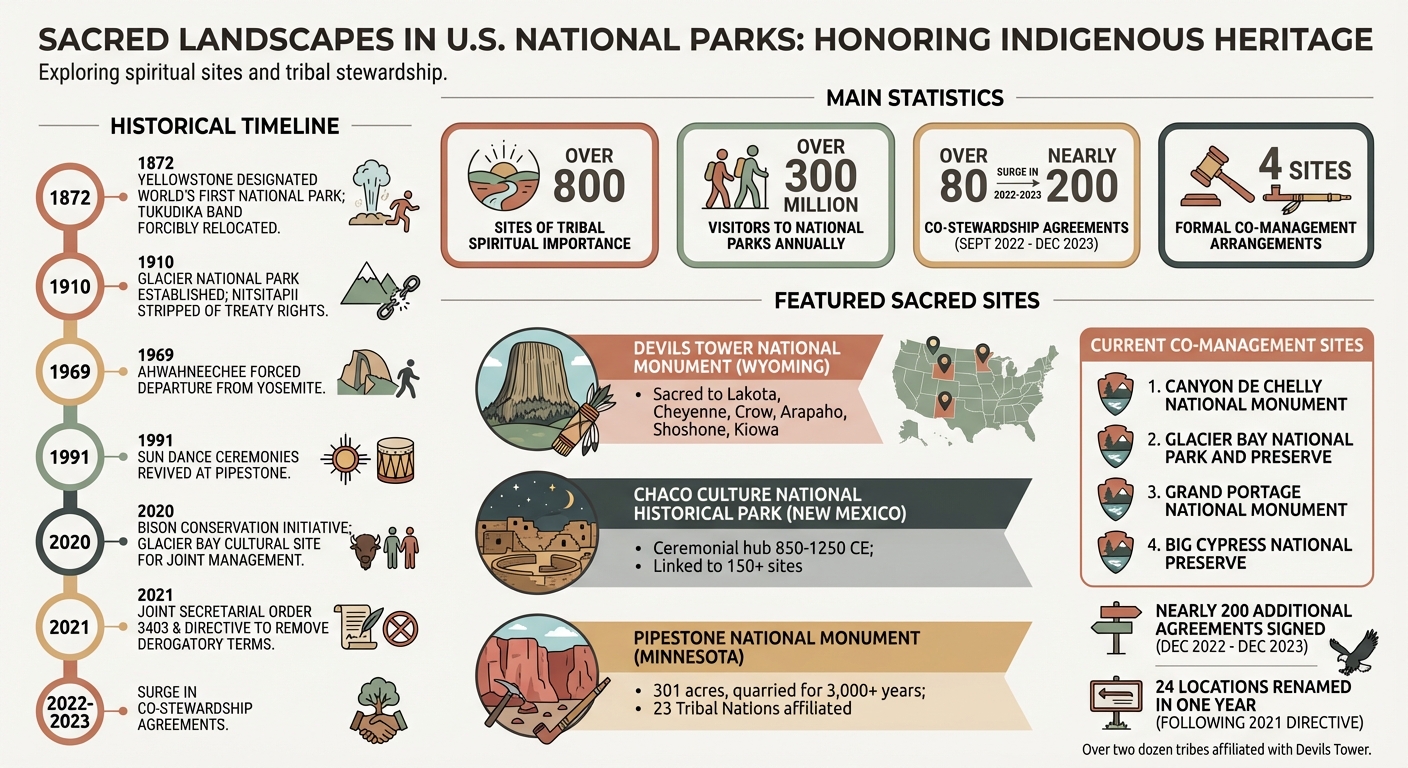
Sacred Landscapes in U.S. National Parks: Key Statistics and Timeline
Discovering Native American Sacred and Ceremonial Landscapes
History of Sacred Sites in National Parks
The story of sacred sites in America’s national parks is closely tied to the westward expansion and the displacement of Indigenous peoples. These lands, once deeply spiritual to Native communities, were transformed into symbols of American progress. This shift highlights how sacred spaces became contested grounds representing national identity.
The Impact of Manifest Destiny
During the 19th century, the concept of Manifest Destiny fueled the seizure of Indigenous lands, often to create national parks. Many settlers believed they had a divine right to expand across the continent, and the breathtaking beauty of places like Yosemite and Yellowstone was seen as evidence of this "heavenly" mission. These landscapes became tools to justify the removal of Native peoples for what settlers deemed a "civilized Christian society".
When Yellowstone was designated the world’s first national park in 1872, the Tukudika (Sheep Eater) band of Shoshone, who had lived there for generations, were forcibly relocated to a Wyoming reservation. Similarly, the establishment of Glacier National Park in 1910 stripped the Nitsitapii (Blackfeet) of treaty rights, cutting off access to traditional hunting and gathering grounds. In Yosemite, the Ahwahneechee (Miwok) faced economic pressures and restrictive policies that ultimately forced their departure by 1969.
Thomas S. Bremer, Associate Professor of Religious Studies at Rhodes College, notes: "The national parks, historic sites, battlefields and other sites of the National Park Service are sacred places in U.S. civil religion: the symbols, practices and traditions that make the idea of a nation into something sacred, seemingly blessed by a higher power".
Today, these landscapes are more than historical reminders of loss – they are also spaces where preservation and reconciliation efforts continue to unfold.
How National Parks Preserve History
While their histories are complex, national parks now play an important role in safeguarding sacred landscapes and their stories. The National Park Service has identified over 800 areas within its system as spiritually significant to Native American tribes. Legal protections now ensure that these "ethnographic landscapes" are preserved as sacred sites and ceremonial grounds. Collaborative initiatives also aim to support both cultural preservation and ecological balance.
For example, the Interior Department’s 2020 Bison Conservation Initiative, developed with the InterTribal Buffalo Council, helps restore bison herds from parks like Yellowstone and the Grand Canyon to Native lands, supporting traditional practices and nutrition. Another effort in February 2020 saw Glacier Bay National Park & Preserve designate a 150-acre cultural site for joint management with the Hoonah Indian Association, allowing tribal members to maintain cultural traditions while keeping areas open for public use, such as fishing and hiking.
Understanding these histories fosters a deeper respect for these sacred spaces and encourages responsible exploration by visitors today.
Major Sacred Landscapes in U.S. National Parks
These sacred landscapes within U.S. national parks serve as living testaments to the strength and continuity of Indigenous cultures. They preserve sites that have long been used for ceremonies, gatherings, and the extraction of vital resources.
Devils Tower National Monument
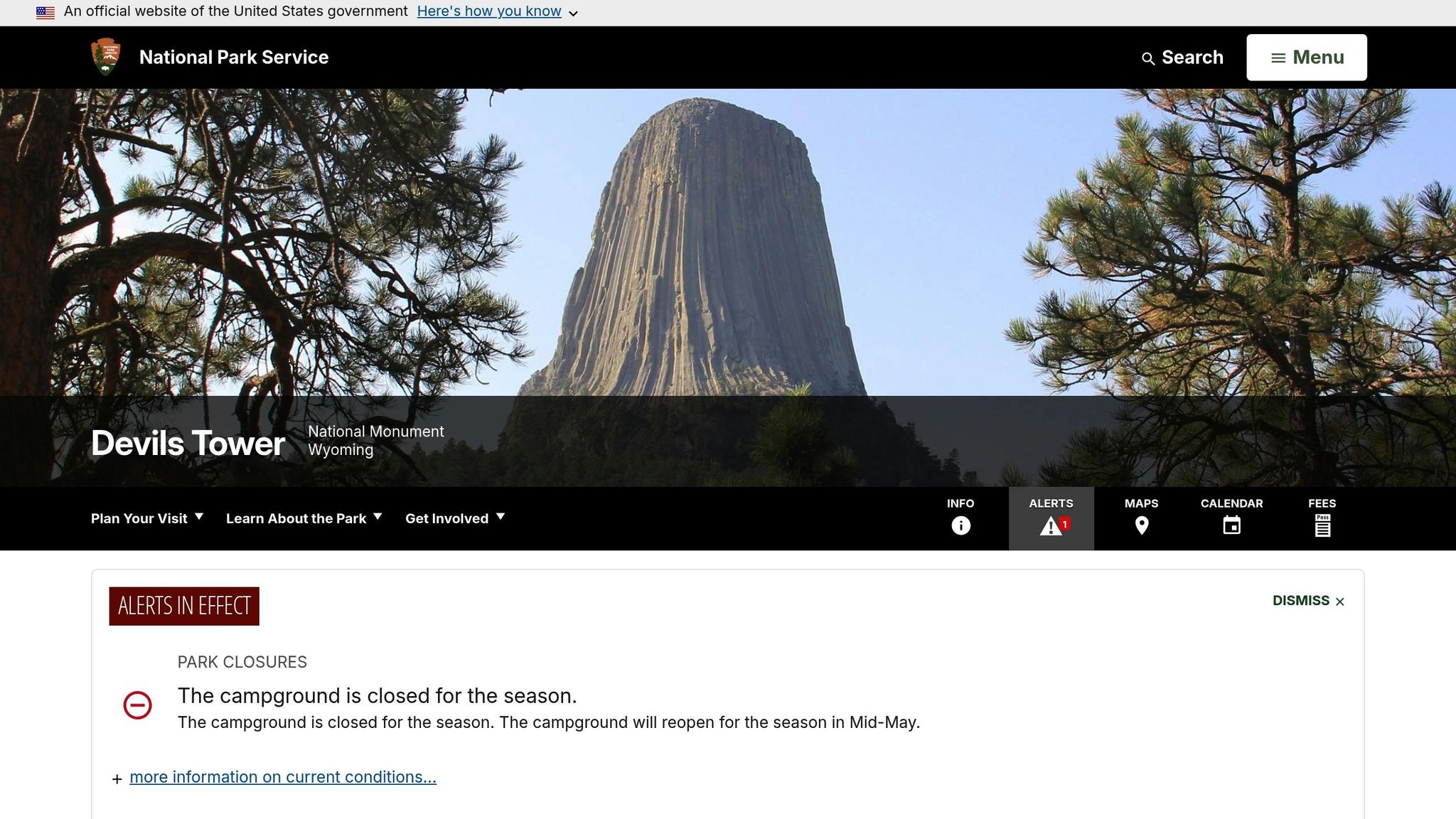
Devils Tower National Monument, known to many tribes as Mato Tipila (Bear Lodge), holds deep spiritual importance. Tribes such as the Lakota, Cheyenne, Crow, Arapaho, Shoshone, and Kiowa revere the site for its sacred significance. Its towering presence is not just a natural wonder but a focal point for cultural and spiritual practices.
Chaco Culture National Historical Park
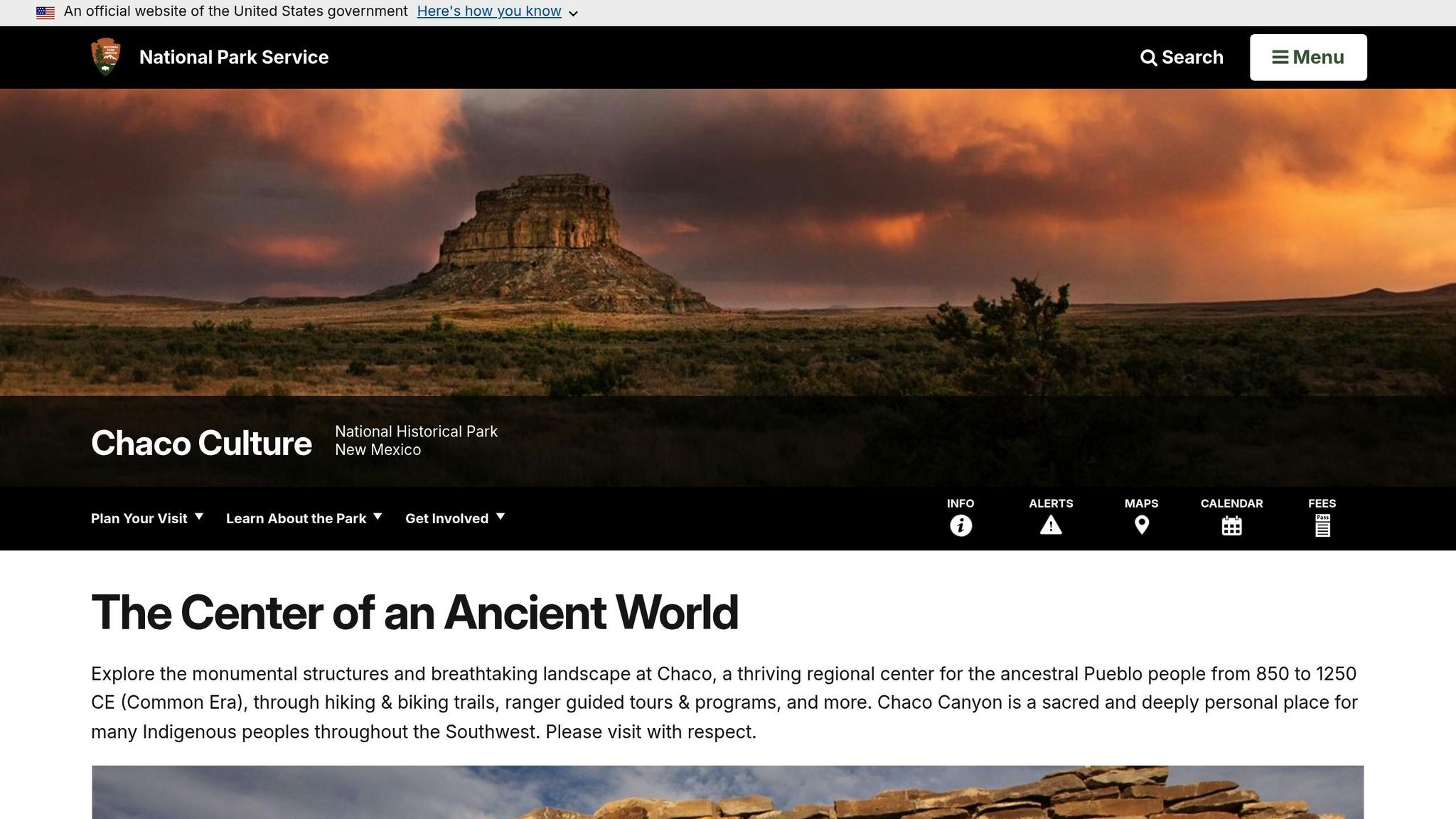
Chaco Canyon in New Mexico was a thriving ceremonial and administrative hub between 850 and 1250 CE. The ancestral Puebloan people constructed monumental structures like Pueblo Bonito, which were architectural marvels aligned with solar and lunar cycles and oriented to the cardinal directions. These structures served as venues for large-scale ceremonies and regional gatherings, with a network of prehistoric roads linking Chaco to over 150 surrounding sites.
Today, this site remains sacred to modern Southwest Tribes, including the Hopi, Pueblo peoples, and the Navajo Nation. For these communities, Chaco represents an ancestral homeland, central to their origins and ongoing ceremonial traditions.
Pipestone National Monument
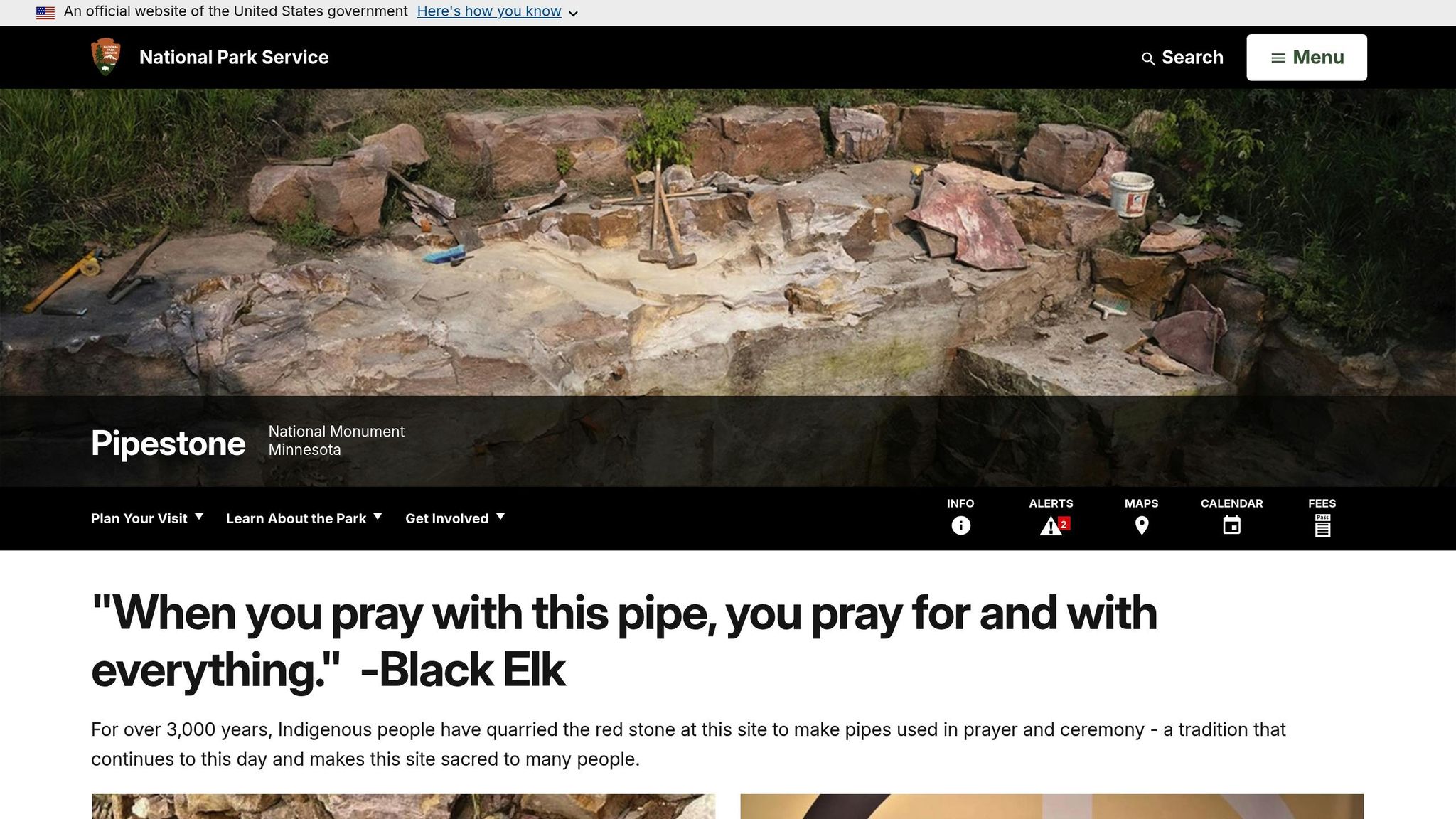
For over 3,000 years, Native Americans have quarried catlinite, or pipestone, from this 301-acre site in Minnesota. The stone, used to craft ceremonial pipes, carries profound spiritual and moral significance. As Chief Standing Bear eloquently described:
"All the meanings of moral duty, ethics, religious and spiritual conceptions were symbolized in the pipe".
The quarries were historically considered neutral ground, allowing tribes to gather the sacred stone in peace. Today, 23 Tribal Nations maintain consulting relationships with the monument, ensuring its traditions are respected. Only enrolled Native Americans are permitted to quarry the pipestone, preserving traditional methods. Additionally, the site hosts annual Sun Dance ceremonies – revived in 1991 – and features natural formations like the "Three Maidens", granite boulders believed to house spiritual guardians of the quarries. These efforts reflect a broader dedication to honoring and protecting Indigenous traditions across the national park system.
sbb-itb-00512f3
Challenges and Reconciliation Efforts
Access and Preservation Challenges
Access to sacred ancestral sites remains a significant issue, deeply rooted in historical forced removals. For example, the Shoshone people were displaced from Yellowstone, and the Blackfeet were removed from Glacier. These injustices continue to affect Indigenous communities today.
The National Park Service (NPS) faces a tough balancing act between preserving land for public recreation and respecting Indigenous cultural practices. Often, public access takes precedence over the needs for private ceremonies or traditional resource gathering. At Devils Tower, for instance, rock climbing disrupts a sacred site, prompting many Indigenous groups to call for a complete ban despite existing voluntary restrictions by the NPS.
Legal and administrative hurdles further complicate the situation. Federal agencies must tread carefully to avoid constitutional challenges that could arise from granting Indigenous groups preferential access to public lands. Additionally, past policies, economic pressures, and complex regulations have historically restricted tribes from maintaining cultural or physical ties within park boundaries.
These challenges highlight the pressing need for policies that prioritize Indigenous involvement in managing and preserving these lands.
Efforts to Amplify Native Voices
In recent years, the NPS has taken steps toward reconciliation, exemplified by over 80 co-stewardship agreements as of September 2022. Between December 2022 and December 2023, nearly 200 additional agreements were signed by the Department of the Interior with Tribes, Alaska Native Corporations, and other consortiums. Currently, four national park sites have formal co-management arrangements: Canyon de Chelly National Monument, Glacier Bay National Park and Preserve, Grand Portage National Monument, and Big Cypress National Preserve.
"All national parks are located on Indigenous ancestral lands and this policy will help ensure Tribal governments have an equal voice in the planning and management of them." – Chuck Sams, Director, National Park Service
Joint Secretarial Order 3403, signed in 2021, solidified this commitment by directing the Department of the Interior and Department of Agriculture to enhance Tribal co-stewardship. The NPS has also begun integrating Traditional Ecological Knowledge into park management practices. Examples include traditional fire management techniques and collaborative bison restoration efforts with the InterTribal Buffalo Council at Yellowstone and Badlands.
Several initiatives showcase this evolving partnership. At Acadia National Park, a research project with the Wabanaki Nations revealed that traditional sweetgrass harvesting benefits the plant’s growth. Mount Rainier National Park collaborated with the Nisqually Tribe on a five-year study of traditional plant gathering, while consultations with the Cowlitz Indian Tribe and Yakama Nation led to updated exhibits at the Ohanapecosh Visitor Center. Additionally, following Secretary Deb Haaland’s 2021 directive to remove derogatory terms from federal lands, 24 locations within the National Park System were renamed within a year.
How to Visit Sacred Landscapes Respectfully
Understanding the History and Traditions
Before visiting a sacred landscape, take some time to learn about the Indigenous peoples who have lived on and cared for these lands for thousands of years. For instance, researchers have found that the Pai people have been connected to the Grand Canyon region for an astonishing 20,000 to 25,000 years. Gaining insight into this spiritual connection can deeply influence how you approach and experience these places.
A great starting point is the National Park Service website. Parks like Devils Tower National Monument often include detailed "History & Culture" sections that provide ethnographic overviews, information on affiliated tribes, and sacred stories. Devils Tower, for example, is tied to over two dozen tribes, including the Lakota, Cheyenne, Crow, Arapahoe, Shoshone, and Kiowa. The Kiowa, in particular, refer to the formation as "Tree Rock" and associate it with their astronomical knowledge.
Once on-site, take advantage of opportunities to learn directly from experts. Attend ranger-led programs or visit cultural centers like the Desert View Tribal Welcome Center at the Grand Canyon. Such experiences highlight an important distinction: while many Western religions are rooted in time, Indigenous spiritual practices are deeply tied to place, with the land itself holding sacred significance. As Indigenous scholars Danelle Cooper, Treena Delormier, and Maile Taualii have expressed:
"Our environments are our cultural identities, origins, religions, and worldviews".
Equipped with this understanding, it becomes essential to respect the rules and customs that preserve the sanctity of these landscapes.
Following Park Rules and Boundaries
Respecting a sacred landscape begins with recognizing it as an active spiritual site. As Leigh Kuwanwisiwma of the Hopi people explains:
"The Hopi don’t see ruins as being ‘abandoned’ because the spiritual people still reside there. They’re still in our memory, still in our ceremonies".
This means avoiding any actions that could disturb or damage these spaces. Never touch, climb, or disrupt ancient structures, as these are fragile links to ancestral histories. Leave prayer offerings untouched, and avoid stacking or moving rocks, which often hold spiritual meaning in Indigenous traditions.
Stick to marked trails and respect all posted boundaries, even if they aren’t physically fenced. Some areas may be temporarily closed for tribal ceremonies, so check park websites for alerts before your visit. The National Park Service may also intentionally withhold specific details about culturally sensitive sites to protect them from harm. If maps seem vague, there’s likely a good reason. Additionally, honor voluntary guidelines, such as the June climbing ban at Devils Tower, which coincides with Indigenous pilgrimages and rituals.
Practice Leave No Trace principles. This includes not taking anything from the site – no pottery fragments, rocks, sand, or plants – as these items are vital for ongoing research and maintaining traditional connections. If you encounter ceremonies, observe quietly from a respectful distance, avoid taking photos, and ensure your presence does not disrupt the proceedings. By following these guidelines, you contribute to preserving these sacred places for future generations to appreciate and honor.
Conclusion
Sacred landscapes in America’s national parks represent much more than breathtaking scenery – they are profound records of identity, spirituality, and thousands of years of human connection with the land.
Across the country, numerous sites uphold Indigenous heritage, safeguarding the traditions of communities for whom land, spirituality, and life are deeply intertwined. As the National Park Service puts it, "Cultural landscapes reveal our relationship with place and strengthen our understanding of historic events, significant people, and patterns in American history".
These historical legacies play a pivotal role in reconciliation and cultural stewardship today. With over 300 million visitors each year, these landscapes serve as spaces for education and healing. In 2021, Secretary of the Interior Deb Haaland directed the removal of offensive slurs from federal lands, leading to the renaming of 24 places within the National Park System in just one year. As Haaland remarked, "Racist terms have no place in our vernacular or on our federal lands". Efforts like tribal co-management, the reintroduction of sacred species such as bison, and the inclusion of Native voices in ranger programs and exhibits demonstrate how national parks are evolving into spaces of shared narratives and mutual respect.
Visiting these sacred sites is an opportunity to engage with living traditions. These places remain vibrant and active, as a Hopi man, quoted by Joel Martin, expressed: "Our land, our religion, and our life are one".
Exploring these landscapes responsibly means acknowledging your role in their preservation. By adhering to park guidelines, respecting boundaries, and learning about the Indigenous histories tied to these lands, you contribute to safeguarding these invaluable sites for future generations. Your mindful visit helps protect the essence of these landscapes and the stories they carry. Balancing heritage preservation with public access remains one of the most important challenges – and promises – of America’s national parks. Keep reading for practical advice on how to visit respectfully and gain deeper insight into their history.
FAQs
How can I respectfully visit sacred landscapes in national parks?
To visit sacred landscapes in national parks respectfully, start by understanding their cultural and historical importance. Take time to research the traditions and beliefs associated with the site, and carefully follow any posted guidelines or restrictions. This might include staying out of restricted areas or refraining from specific activities that could disturb the site.
When you’re there, be mindful of your behavior. Keep noise levels low, avoid disruptive actions, and never touch sacred objects or structures. If photography is permitted, ensure it is done in a way that respects the site’s significance. For a richer experience, consider connecting with local communities or cultural stewards. They can provide valuable insights and help you better appreciate the heritage tied to the landscape.
Above all, approach these places with humility and respect. Your thoughtful actions not only preserve the site’s significance for future generations but also honor the spiritual connection these landscapes hold for the communities that cherish them.
What challenges do Indigenous communities face when accessing sacred sites in national parks?
Indigenous communities often encounter significant obstacles when trying to access sacred sites within national parks. For generations, land dispossession and policies that prioritize recreation or conservation over Indigenous rights have disrupted their connection to these spiritually important areas. While legal protections such as the American Indian Religious Freedom Act and Executive Order 13007 aim to safeguard these sites, enforcement tends to be inconsistent. This leaves many Indigenous communities struggling to maintain access to places central to their traditions and beliefs.
Tensions can also emerge when sacred sites overlap with spaces designated for public use, tourism, or even resource extraction. On top of that, concerns about keeping the locations of these sites confidential add another layer of complexity. Balancing the need for preservation with the continuation of spiritual practices is a delicate task. Although collaboration between tribes and federal agencies is gradually improving, progress is slow. Continued advocacy and a deeper respect for Indigenous sovereignty are essential to addressing these challenges.
How do national parks work with Native American tribes to preserve sacred sites?
National parks are working closely with Native American tribes through co-stewardship agreements to safeguard sacred sites and preserve cultural resources. These partnerships allow tribes to take on a more active role in managing these lands, protecting sacred areas, and integrating traditional practices into conservation efforts.
The National Park Service (NPS) has also implemented policies to deepen tribal participation. These policies emphasize consultation, shared decision-making, and acknowledgment of Native sovereignty. By doing so, they aim to respect the cultural and spiritual importance of these landscapes while building stronger, collaborative relationships with tribal communities.