
Nature-based solutions (NbS) offer a practical way to tackle infrastructure issues in parks, such as flooding, erosion, and stormwater management, while supporting ecosystems. These strategies use natural processes – like restoring wetlands, planting vegetation, or creating bioswales – to protect roads, trails, and utilities. Unlike traditional methods, NbS also provide added benefits like cooling, habitat creation, and improved water quality.
Key Takeaways:
- Green Infrastructure: Rain gardens and ponds manage stormwater and reduce heat. Example: NYC’s $68M Bluebelt project in Prospect Park.
- Living Shorelines: Use vegetation and natural features to reduce erosion and wave impact. Effective in low wave energy areas.
- Riparian Buffers: Vegetation along waterways stabilizes streambanks, reduces runoff, and manages heat stress.
- Challenges: Requires space, maintenance, and may not perform well under extreme conditions.
Example Projects:
- Canaveral National Seashore: Stabilized coastlines with mangroves and oyster mats.
- Acadia National Park: Repaired storm damage costing $1.5M in 2021.
NbS combine ecological benefits with infrastructure protection, but planning, maintenance, and collaboration are critical for success.
Nature-based Solutions & the Built Environment: Designing for Resilience, Drawdown, & Biodiversity
sbb-itb-00512f3
Types of Nature-Based Solutions
Park managers have several approaches to choose from when it comes to nature-based solutions (NbS). Each option serves unique environmental needs and challenges, making it essential to understand how they work and where they fit best. Below, we explore three key NbS types and how they address specific issues in park infrastructure.
Green Infrastructure
Green infrastructure relies on natural systems – like rain gardens and ponds – to handle water management and mitigate heat. These features slow down rainwater, filter it, and allow it to seep into the ground rather than rushing across paved surfaces, which often leads to overwhelmed drainage systems.
Take New York City’s Prospect Park, for example. In December 2025, the city’s Department of Environmental Protection (DEP) and NYC Parks launched a $68 million Bluebelt project. This initiative integrates rain gardens and ponds into the park’s drainage system, effectively lowering lake levels within 36 hours after storms.
"By using Prospect Park to manage stormwater, we’re turning one of Brooklyn’s most cherished public spaces into a powerful tool for climate resilience." – Rohit Aggarwala, Commissioner, NYC Department of Environmental Protection
From a financial perspective, green infrastructure makes a strong case. It is, on average, 50% more cost-effective than traditional engineered solutions and delivers 28% more added value, making it an appealing choice for park managers working with tight budgets.
Living Shorelines and Wetland Restoration
Living shorelines replicate natural coastal features, using native vegetation, seagrass beds, or oyster mats to stabilize land–water edges, reduce erosion, and create habitats. Unlike seawalls or other hard structures, these shorelines preserve the natural look of the coast while supporting biodiversity.
"A living shoreline maintains continuity of the natural land–water interface while reducing erosion and increasing habitat." – NOAA
In Florida, the National Park Service has implemented several successful projects. At Canaveral National Seashore, a 2018 restoration effort used mangroves, saltmarsh grass, and oyster mats to stabilize the eroding Silver Palm shell midden site. A year earlier, at De Soto National Memorial, mangrove and oyster beds were planted to guard the coastline against erosion and flooding. These projects highlight how living shorelines not only protect historic sites but also enhance local ecosystems.
However, living shorelines are most effective in low wave energy environments, such as estuaries. In areas with stronger wave action, hybrid solutions – combining vegetation with structures like rock sills or breakwaters – offer better results for stabilizing sediment and dissipating wave energy.
Riparian Buffers and Reforestation
Riparian buffers consist of trees, shrubs, and other vegetation planted along streambanks and waterways. These buffers, along with reforestation efforts, serve multiple purposes: they stabilize streambanks, reduce stormwater runoff, and lower ground temperatures. This makes them especially valuable for protecting park infrastructure like trails, roads, and utilities.
Risks That Nature-Based Solutions Address
Park infrastructure is increasingly vulnerable to climate-driven challenges: roads get washed out, trails erode, drainage systems overflow, and extreme heat damages pavement. Recognizing these threats underscores the importance of adopting nature-based solutions to ensure parks remain resilient over time.
Flooding and Erosion
Heavy rainfall events are becoming more frequent and severe. For example, in the Northeastern United States, annual rainfall rose by 16% between 1895 and 2010, and storms dropping 3 inches or more in a single day now occur once per year in some areas, compared to every 2 to 5 years in the past. This increase in rainfall intensity overwhelms culverts, destabilizes road embankments, and erodes trails.
The financial and environmental toll is significant. In June 2021, a localized storm near Sargent Mountain in Acadia National Park unleashed over 5 inches of rain in just 3 hours. The resulting damage included washed-out bridges, the closure of 10 miles of carriage roads, and the destruction of part of the historic Maple Spring Trail. Repairing the damage cost $1.5 million, excluding the expenses for environmental restoration.
"Without reliable data, resources, and funding, park managers may resort to replacing infrastructure in kind instead of proactively strengthening or upgrading infrastructure with climate-resilient designs." – Ian P. Armstrong, Lead Author and Researcher, USGS
But water-related challenges are just part of the story – rising temperatures add another layer of risk.
Heat Stress and Habitat Loss
Extended periods of heat weaken road pavement, speed up the wear on trail surfaces, and stress vegetation that stabilizes slopes. When tree cover is lost, the natural cooling effect vanishes, leaving both park infrastructure and visitors exposed to higher temperatures.
Tree canopies and vegetation play a critical role in mitigating these impacts. They reduce heat stress on paved surfaces, while roots stabilize soil to prevent shallow slope failures that can block roads or damage utilities. Reforestation and targeted planting not only help manage heat but also combat habitat fragmentation caused by landscape disturbances.
Compounding these issues, outdated drainage systems struggle to handle the increasing intensity of storms.
Stormwater and Drainage Problems
Drainage systems – such as culverts, ditches, and storm inlets – are some of the most vulnerable components of park infrastructure. During storms, debris can clog these systems, causing water to back up and spill across roads. This leads to washouts and waterlogged areas that can take months to repair.
Nature-based solutions like bioswales and permeable surfaces offer effective ways to manage stormwater. These methods slow runoff and allow water to seep into the ground, reducing the strain on drainage systems. With extreme rainfall in the Northeast U.S. increasing by about 60% since the 1950s, improving local stormwater management has become an essential part of park planning – not just an optional upgrade.
How to Plan and Apply Nature-Based Solutions
Turning assessments into actionable strategies is essential for creating resilient parks through nature-based solutions. A structured approach helps park managers transition from identifying issues to implementing practical, sustainable fixes.
Site Assessment and Hazard Mapping
Before diving into solutions, it’s important to understand the specific conditions of the site. This includes conducting field inspections, reviewing storm history, and using geospatial maps to identify areas most affected by flooding, erosion, or heat stress. Hazard mapping allows managers to focus on high-risk zones, particularly where infrastructure is vulnerable. For instance, if climate models predict heavier storms over the next 30 years, this data can guide decisions like resizing culverts or installing riparian buffers. The idea is to design solutions that address future challenges, not just current ones. This foundational step ensures the solutions require minimal upkeep in the long run.
Design and Maintenance Considerations
Nature-based solutions should be designed with durability and minimal maintenance in mind. As Resilient MA highlights:
"NBS can achieve multiple benefits, and can be increasingly self-sustaining through time, especially those strategies that protect or restore functioning ecosystems."
To ensure long-term success, it’s crucial to tackle the underlying issues rather than just addressing visible damage. Maintenance plans should cover routine tasks like managing vegetation, checking soil health, and grading inspections. Allocating budgets and planning for emergencies are also critical. A great example is the Town of Brookline, MA, which developed an Urban Forest Climate Resiliency Master Plan in FY2020. This plan outlined clear steps for managing tree canopies, budgeting, and emergency preparedness, offering a proactive rather than reactive approach. Additionally, training staff and involving the community can help maintain features like rain gardens and bioswales, ensuring they stay effective over time. Comparing and evaluating potential solutions in context is key to a smooth transition from planning to execution.
Comparison of Solution Types
The choice of solutions depends on the site’s conditions, available resources, and specific risks. Here’s a breakdown of major nature-based solutions and their applications:
| Solution Type | Best Site Conditions | Key Maintenance Needs | Primary Infrastructure Benefit |
|---|---|---|---|
| Green Stormwater Infrastructure (bioswales, permeable surfaces) | Urban or semi-urban areas with impervious surfaces | Vegetation management, soil health monitoring, grading inspections | Reduces runoff and protects drainage systems |
| Urban Forests / Tree Canopy | Areas experiencing heat stress or slope instability | Tree planting, pruning, and emergency response planning | Mitigates heat effects and stabilizes slopes |
| Living Shorelines | Coastal or lakefront park edges with erosion risk | Beachgrass planting, dune erosion monitoring, coastal vegetation upkeep | Reduces wave energy and shoreline erosion |
| Riparian Buffers / Stream Restoration | Streamside corridors at risk of flooding or erosion | Dam removal, culvert replacement, river channel reconstruction | Restores natural water flow and improves flood resilience |
Implementing these solutions successfully requires collaboration across departments and organizations. A standout example is the Coonamessett River Restoration Phase 2 in Falmouth, MA (FY2019). This project combined dam removal, culvert upgrades, and the reconstruction of 3,000 linear feet of river channel. Conservation teams, public works departments, and watershed associations worked together to ensure the designs were effective under both normal and extreme conditions.
Benefits and Tradeoffs of Nature-Based Solutions
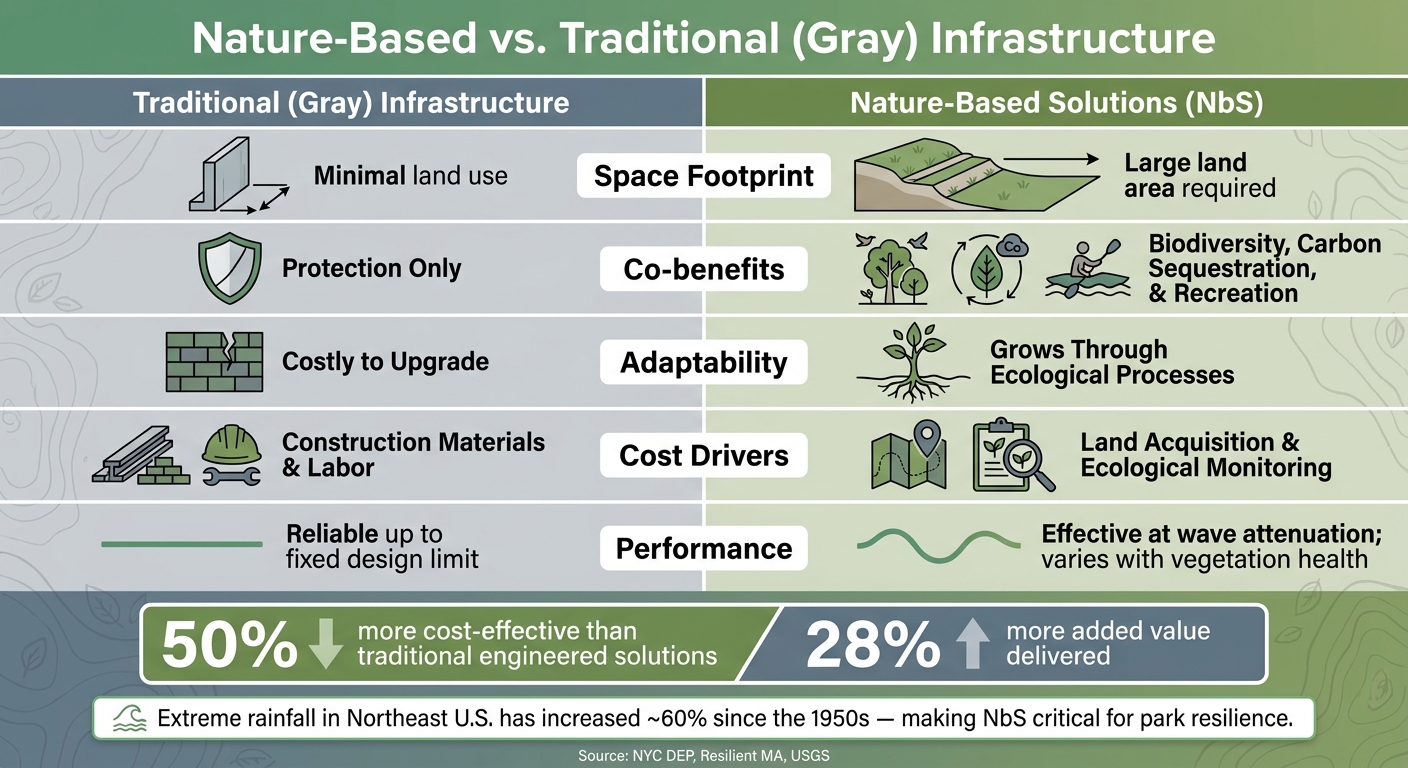
Nature-Based vs. Traditional Infrastructure: Key Differences & Benefits
Infrastructure and Ecological Benefits
Nature-based solutions offer a dual advantage: they protect park infrastructure while delivering environmental and community benefits. For instance, levee setbacks and similar designs help reduce the velocity and depth of floodwaters. This not only makes roads and trails more resilient but also reconnects rivers with their floodplains, creating opportunities for habitat restoration. Additionally, features like restored wetlands and riparian buffers act as natural water filters, recharge local water supplies, and become increasingly effective as they mature.
However, as promising as these solutions are, they come with their own set of challenges and limitations.
Tradeoffs and Constraints
One of the biggest challenges of nature-based solutions is the space they require. Take horizontal levees, for example. A design with a 1:100 slope provides excellent wave attenuation but demands significantly more land compared to a vertical concrete wall. In San Francisco Bay, such approaches reduced the risk of levee failure by up to 30% under a 1-meter (≈3.3 ft) sea-level rise scenario. However, the cost of land alone can account for more than half of the total project expenses.
Another limitation is performance under extreme conditions. Events like major hurricanes or rapid sea-level rise can overwhelm these solutions. For example, a 0.5-meter (≈1.6 ft) sea-level rise could turn what was once a 1-in-100-year wave event into something that happens 50 times more often. Neither nature-based nor traditional "gray" infrastructure can fully handle such extremes on their own.
Here’s a quick comparison of traditional and nature-based approaches to help park managers weigh their options:
| Feature | Traditional (Gray) Infrastructure | Nature-Based Solutions |
|---|---|---|
| Space Footprint | Minimal; vertical walls or steep embankments | Large; requires wide buffers and gentle slopes |
| Co-benefits | Single-purpose (protection only) | Multi-benefit (biodiversity, carbon, recreation) |
| Adaptability | Static; costly to upgrade | Dynamic; can grow through ecological processes |
| Cost Drivers | Construction materials and labor | Land acquisition and long-term ecological monitoring |
| Performance | Reliable up to a fixed design limit | Effective at wave attenuation; varies with vegetation health |
Another tradeoff to consider is the impact on different communities. For example, relocating a levee further from the riverbank can reduce flood risks for inland areas but may increase risks for riverfront properties or agricultural lands. It’s important to address these tradeoffs transparently during the planning process to balance priorities effectively.
Conclusion: Protecting Parks with Nature-Based Solutions
Nature-based solutions act as practical tools for managing infrastructure challenges in parks. When thoughtfully planned and maintained, they can help reduce flood damage, control erosion, handle stormwater, and lower surface temperatures. At the same time, they improve habitat quality and enhance the experience for visitors.
The secret is pairing the right solution with the specific problem. A park dealing with trail washouts, for instance, will have different needs than a coastal park battling shoreline erosion. Start by mapping out hazards and identifying vulnerable areas to create tailored solutions instead of relying on a generic approach.
Begin with small projects, like installing a vegetated swale to address runoff near a parking lot or restoring a short riparian buffer along an eroding stream. Track how these solutions perform after storms to measure their impact on erosion. This step-by-step approach minimizes risk while building valuable knowledge for future projects.
It’s also crucial to remember that nature-based solutions aren’t “set it and forget it” fixes. Vegetation takes time to establish, and challenges like sediment buildup or invasive species may arise. A proactive maintenance plan is key. By outlining this plan early and assigning clear roles to landscape, engineering, and operations teams, you can ensure these solutions remain effective for years to come.
Parks don’t have to choose between protecting infrastructure and preserving ecosystems. When designed with local conditions in mind and treated as long-term investments, nature-based solutions can strengthen park resilience while maintaining their natural beauty. It’s a win-win for both the environment and the people who enjoy it.
FAQs
How do I choose the right nature-based solution for my park site?
To choose the best nature-based solution (NbS) for your park, start by evaluating its specific resources, environmental conditions, and the priorities of the local community. Look at key elements such as the park’s location, soil composition, existing natural features, and the budget you have to work with. Engaging local stakeholders is essential – not only to promote fairness but also to shape solutions that genuinely reflect the community’s needs.
Make sure the project is compatible with the region’s ecological systems, enhances biodiversity, and contributes to climate resilience objectives. Finally, design solutions that are appropriately scaled to ensure they remain effective, adaptable, and impactful over the long term.
What maintenance do rain gardens, bioswales, and living shorelines need?
Rain gardens, bioswales, and living shorelines need consistent care to work effectively and stay in good condition over time. Essential tasks include clearing out trash and debris, monitoring the health of plants, and trimming or replacing vegetation when necessary. After storms, it’s especially important to remove sediment and debris from catch basins and pipes. Regular maintenance – like managing plants seasonally – not only preserves their ecological benefits but also helps them last longer, with lifespans typically ranging from 10 to 40 years.
When should a park use hybrid gray + nature-based infrastructure?
Parks in flood-prone, polluted, or urban heat-affected areas should consider integrating hybrid gray and nature-based infrastructure for stormwater management. This method blends conventional systems, such as sewers, with natural features like vegetation and permeable surfaces. It’s especially useful for retrofitting existing spaces or when traditional gray infrastructure isn’t enough to manage stormwater. The result? Better flood control, reduced pollution, and potentially lower maintenance costs over time.