
Want to make a difference in preserving America’s national parks? Many parks offer volunteer trail programs where you can help maintain trails, restore ecosystems, and support visitor experiences. From Yosemite to the Grand Canyon, these programs rely on dedicated volunteers to keep trails safe and accessible.
Here’s a quick overview of the top parks with trail volunteer programs:
- Yosemite National Park: Trail maintenance, wildfire prevention, and events like Yosemite Facelift (Sept. 23–27, 2026).
- Great Smoky Mountains National Park: Programs like Trails Forever and Adopt-A-Trail run from March to October.
- Rocky Mountain National Park: Seasonal opportunities include trail crews and invasive species removal.
- Acadia National Park: Flexible drop-in projects and special events like "Take Pride in Acadia Day."
- Zion National Park: Seasonal trail work, from restoring paths to removing debris.
- Grand Canyon National Park: Inner-canyon projects and restoration efforts from April to October.
- Olympic National Park: Backcountry and coastal cleanup opportunities during summer and fall.
How to Get Started: Visit Volunteer.gov or check the park’s website for application details. Tasks range from light trail cleanups to strenuous backcountry projects, so there’s something for everyone. Whether you have a day or a season to spare, your contribution matters.
2009 Acadia Natl. Park Volunteer Trail Project
How Volunteer Trail Programs Work in National Parks
The Volunteers-In-Parks (VIP) program oversees all volunteer efforts for the National Park Service (NPS), including trail stewardship. These programs are typically run by the Maintenance or Resource Management divisions and offer options tailored to different levels of commitment. Whether you’re ready for a long-term project or just have a day to spare, there’s a role for you.
If you join a Trail Crew, you’ll collaborate with NPS staff on tasks like building stone steps, constructing timber bridges, or widening narrow trails. For a more ongoing commitment, the Adopt-A-Trail program allows small groups to maintain specific trail sections. If you’re looking for something short-term, one-day Service Days are perfect for activities such as picking up trash or clearing basic trail obstructions.
Be prepared for physically demanding work. Regular tasks include clearing fallen trees, improving drainage systems to prevent erosion, trimming overgrown vegetation, and repairing retaining walls. For example, at Denali National Park, volunteers recently spent a day hauling brush, shifting rocks, and restoring a 2–4 mile stretch of trail.
Volunteers must be at least 16 years old (minors need supervision) and in good physical condition. Expect to hike 3–5 miles while carrying provided tools. Proper gear is essential: wear sturdy, closed-toe boots, long pants, and bring plenty of water.
To get started, visit Volunteer.gov or check the "Get Involved" section of the specific park’s page on nps.gov. Keep in mind that application timelines vary. For example, New River Gorge National Park only reviews applications twice a year, in March and September. Apply early, as structured trail crew spots tend to fill up fast.
"Supporting your favorite park can be as simple as picking up a single piece of trash during your stay, or as intense as a three-month-long commitment in the field or the visitor centers." – New River Gorge National Park & Preserve
1. Yosemite National Park
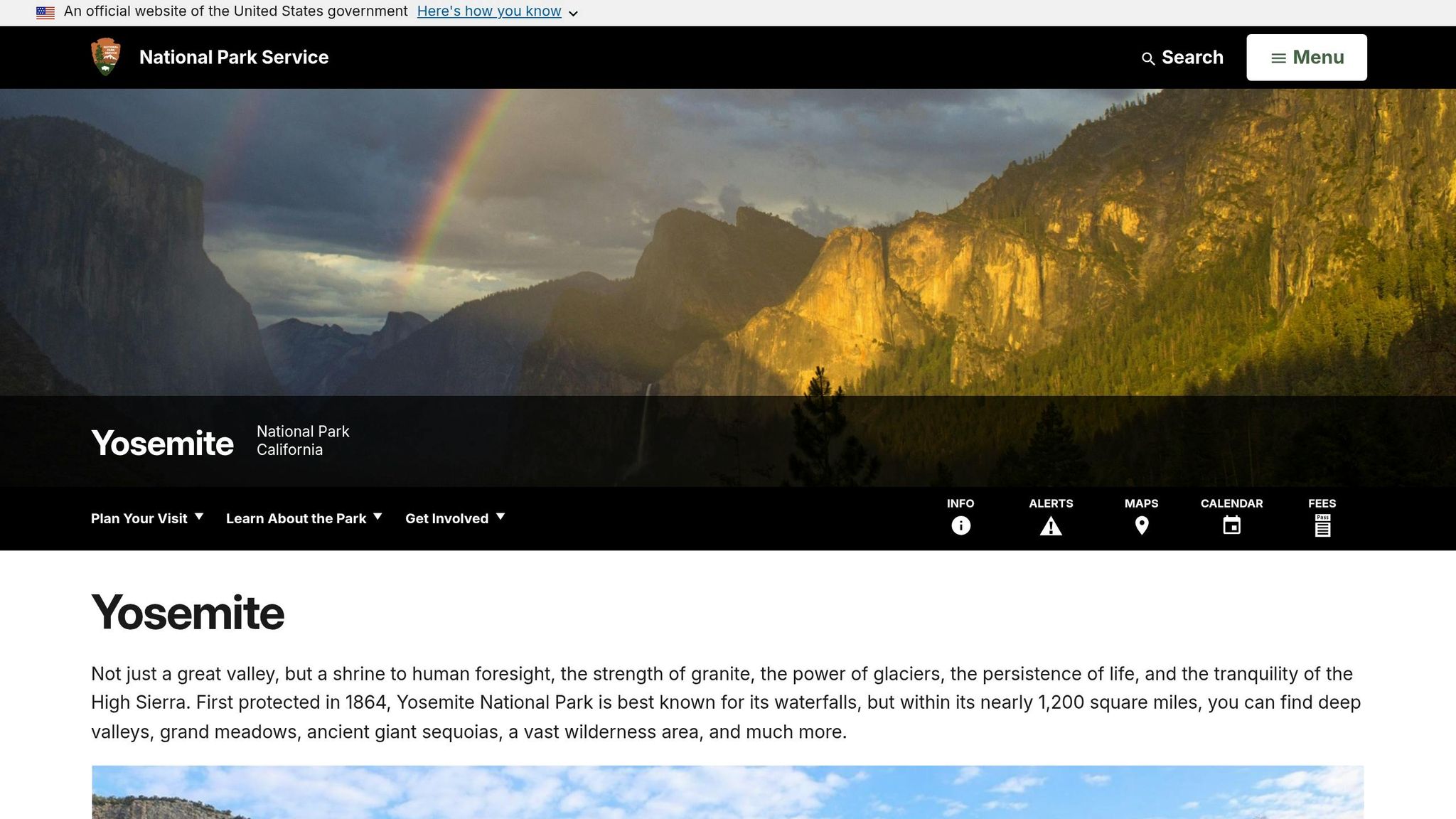
Yosemite National Park’s volunteer program offers hands-on opportunities for trail maintenance and conservation, showcasing the dedication of thousands of helpers each year. In 2018 alone, over 13,000 volunteers contributed more than 128,000 hours of service, valued at approximately $3.2 million.
Volunteer Season Availability
The main season for volunteering spans from April to October, with most group projects concentrated between May and October. Off-season opportunities are limited. A standout event is the Yosemite Facelift, a five-day cleanup held every September. In 2026, it will take place from September 23–27. Since its launch in 2004, this event has removed over 1 million pounds of trash from the park.
Typical Trail Maintenance Tasks
Volunteers tackle a variety of tasks, such as:
- Building granite steps and boardwalks
- Shaping trails to redirect water runoff
- Clearing overgrown vegetation
- Stabilizing trails by repositioning crushed rock
Another key focus is wildfire prevention, which involves thinning young trees and removing excess brush, essential in the fire-prone Sierra Nevada region.
Physical Difficulty Level
Trail work can be physically demanding. Volunteers might hike up to 2 miles on steep, uneven terrain while carrying tools or heavy materials like stones and soil. Fitness requirements vary by project, so it’s important to review descriptions before signing up.
"At 72 I found the work challenging, yet rewarding. The people on my ‘crew’ were incredible and alone made the trip worthwhile." – Jeff B., Volunteer
How to Sign Up
Choose a program that fits your schedule. Here’s a quick overview:
| Program | Sign-up Method | 2026 Dates |
|---|---|---|
| Work Week Crews | Yosemite Conservancy application (opens Jan.) | Closed for 2026 |
| Group Projects | NPS Project Catalog lottery | Lottery ended Mar. 2, 2026 |
| Litter Clean-Ups | Drop-in, no registration needed | June 15, July 2, Aug. 18, 2026 |
| Yosemite Facelift | Online registration or drop-in | Sept. 23–27, 2026 |
| Partner Projects | Apply via partner website (PCTA, AHS, Conservation VIP) | Varies |
The Work Week Crews, organized with the Yosemite Conservancy, cost $565 per person. This fee covers a week of camping and catered meals. Scholarships are available for those needing financial assistance. For drop-in litter cleanups and the Yosemite Facelift, meet at the Exploration Center in Yosemite Village. Be sure to wear long pants and closed-toe shoes, and bring water and snacks.
2. Great Smoky Mountains National Park
Great Smoky Mountains National Park relies heavily on its dedicated volunteers to maintain its impressive 848 miles of trails. With several programs designed to suit varying levels of commitment, there’s a way for almost anyone to get involved.
Volunteer Season Availability
The park’s trail programs operate primarily from March through October, with the busiest period running from May to October. For example, the Trails Forever program offers "Working Wednesdays" from July 9 to October 15, while the Rocky Top Trail Crew focuses on high-altitude sections of the Appalachian Trail during September and October. Even during the quieter winter months, tasks like fence removal are scheduled to take advantage of reduced trail traffic. These seasonal schedules ensure that volunteers can contribute to a wide variety of maintenance activities throughout the year.
Typical Trail Maintenance Tasks
Volunteers in the Trails Forever program take on challenging projects like stone masonry, building foot logs, constructing retaining walls and staircases, and installing drainage systems such as waterbars and check dams. Meanwhile, the Adopt-a-Trail program involves volunteers hiking their assigned trail four to five times annually to monitor for hazards, fallen trees, signage issues, and even wildlife activity. Since much of the park is classified as wilderness, all maintenance is done manually using tools like shovels, axes, Pulaskis, and sledgehammers.
"Trail work is hard, physical labor. It involves working with hand tools and getting dirty is guaranteed." – Appalachian Trail Conservancy
Physical Difficulty Level
Be prepared for a workout! Volunteers often face a 3–4 mile hike over steep, uneven terrain just to reach their worksite. For more remote Trails Forever projects, the hike can be as long as 10 miles. Once on-site, a typical workday involves 6–8 hours of demanding physical labor. Volunteers should wear long pants and sturdy, closed-toe boots – sandals are strictly prohibited.
How to Sign Up
All programs require registration. Here’s how you can get involved:
- Trails Forever Program: Held on Wednesdays from 8:00 a.m. to 2:00 p.m. Contact Crew Supervisor Josh Shapiro at Josh_Shapiro@nps.gov or call 865-436-1586.
- General Trail Maintenance and Smokies Service Days: Reach out to Volunteer Coordinator Adam Monroe at adam_monroe@nps.gov or call 828-497-1949.
Most programs require volunteers to be at least 16 years old, and those under 18 must have adult supervision. For the Adopt-a-Trail program, participants must be 18 or older.
| Program | Season | Commitment |
|---|---|---|
| Trails Forever | May – October (Wednesdays) | Weekly, 8:00 a.m. – 2:00 p.m. |
| Adopt-a-Trail | March – October | 4–5 hikes per year |
| Rocky Top Trail Crew | September – October | 8-day sessions |
| Smokies Service Days | Summer – Fall | Select Saturdays |
3. Rocky Mountain National Park
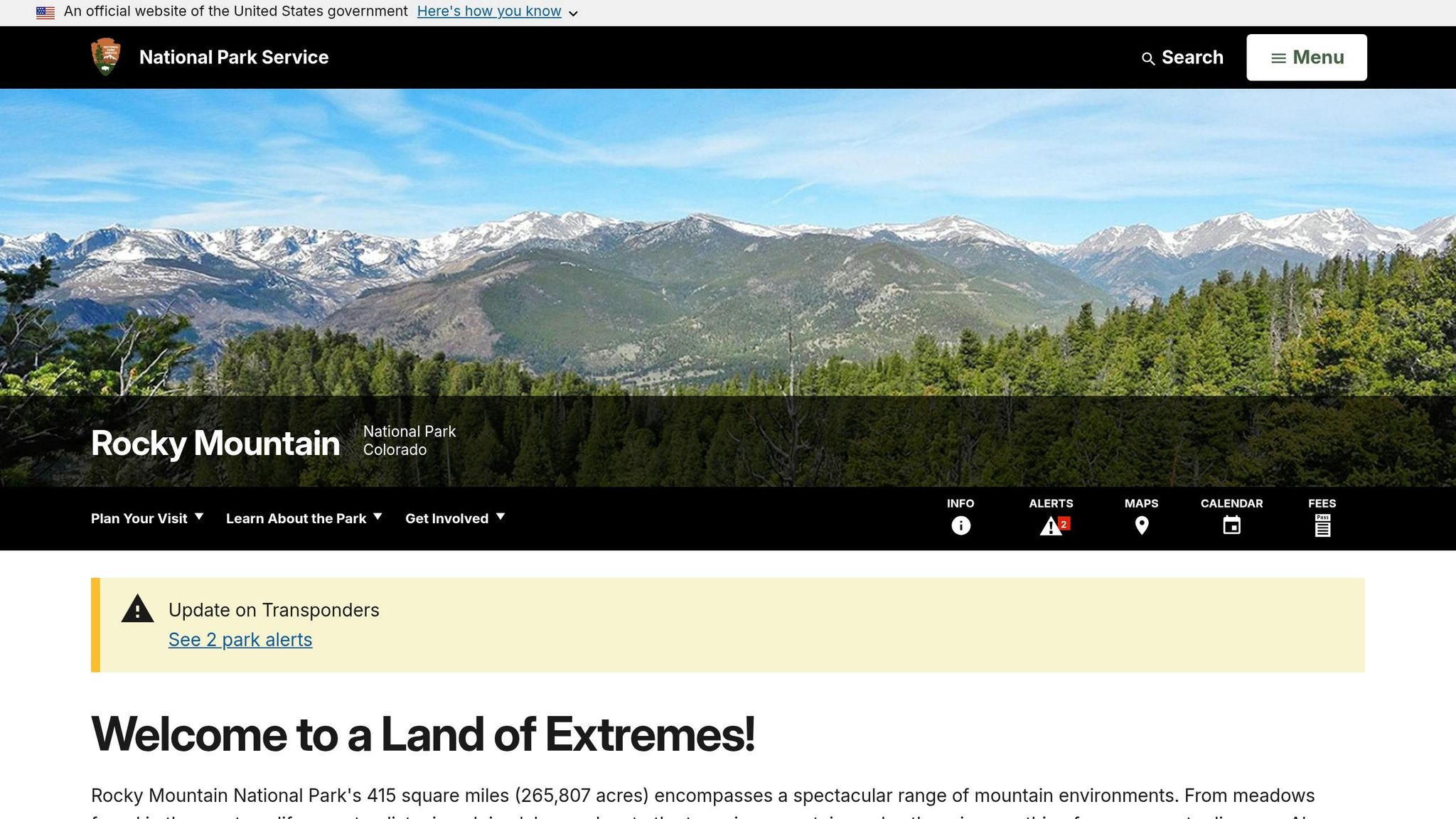
Rocky Mountain National Park boasts an impressive 350 miles of trails, supported by a dedicated team of volunteers. In 2025, over 900 individuals contributed their time, while around 1,700 volunteers collectively logged 105,000 hours annually.
Volunteer Season Availability
The main volunteer season runs from late May through early August, with additional opportunities extending until mid-October for those on specialized crews. The Rocky Mountain Conservancy Conservation Corps operates an 11-week program from May 26 to August 6, 2026, with an extended season through October 16, 2026. For those interested in shorter commitments, one-day events are held from June through September, such as invasive species removal efforts on June 17, 19, 23, and 25. Prefer something year-round? The "Road Hogs" group works every Monday, contributing approximately 5,000 hours annually to the park.
Typical Trail Maintenance Tasks
Trail maintenance is hands-on and physically demanding. Volunteers handle tasks like trail construction and repair, clearing fallen trees, building drainage structures, and addressing erosion damage. Some crews specialize in crosscut bucking to remove large logs, while others focus on invasive species removal through manual pulling or herbicide application. Native plant revegetation is another key activity.
Two notable teams, the Moraine Crew (Eastside trails) and the Kawuneeche Crew (Westside trails), work full-time schedules, Monday through Thursday, often managing pack animals like mules and llamas to transport supplies into remote areas. These roles require a significant level of physical effort.
Physical Difficulty Level
Volunteering here isn’t for the faint-hearted. Tasks are performed at elevations ranging from 8,500 to over 12,000 feet, where even moderate activity can feel more challenging due to the altitude. Many projects involve multi-day backcountry "hitches", lasting anywhere from four to eight days in rugged, isolated terrain.
"RMFI stewardship days are considered moderately strenuous or strenuous depending on project site and location. All workdays involve working in the outdoors for multiple hours with tools and often involve a walk or hike to and from the worksite." – Rocky Mountain Field Institute
Volunteers must wear sturdy, closed-toe work boots and long pants. Open-toed shoes are not allowed under any circumstances.
How to Sign Up
For those seeking long-term or recurring roles, check Volunteer.gov for National Park Service listings. Short-term events are coordinated through the Rocky Mountain Conservancy website, with registration often managed via Eventbrite. You can also contact the park’s volunteer office directly at romo_information@nps.gov or call 586-1330. The Conservation Corps program is specifically for adults aged 18–30 and fills up quickly – applications for the 2026 season closed by May, so planning ahead is crucial.
With such a range of opportunities, Rocky Mountain National Park offers plenty of ways to get involved in trail stewardship, whether you’re looking for a one-day project or a season-long commitment.
4. Acadia National Park
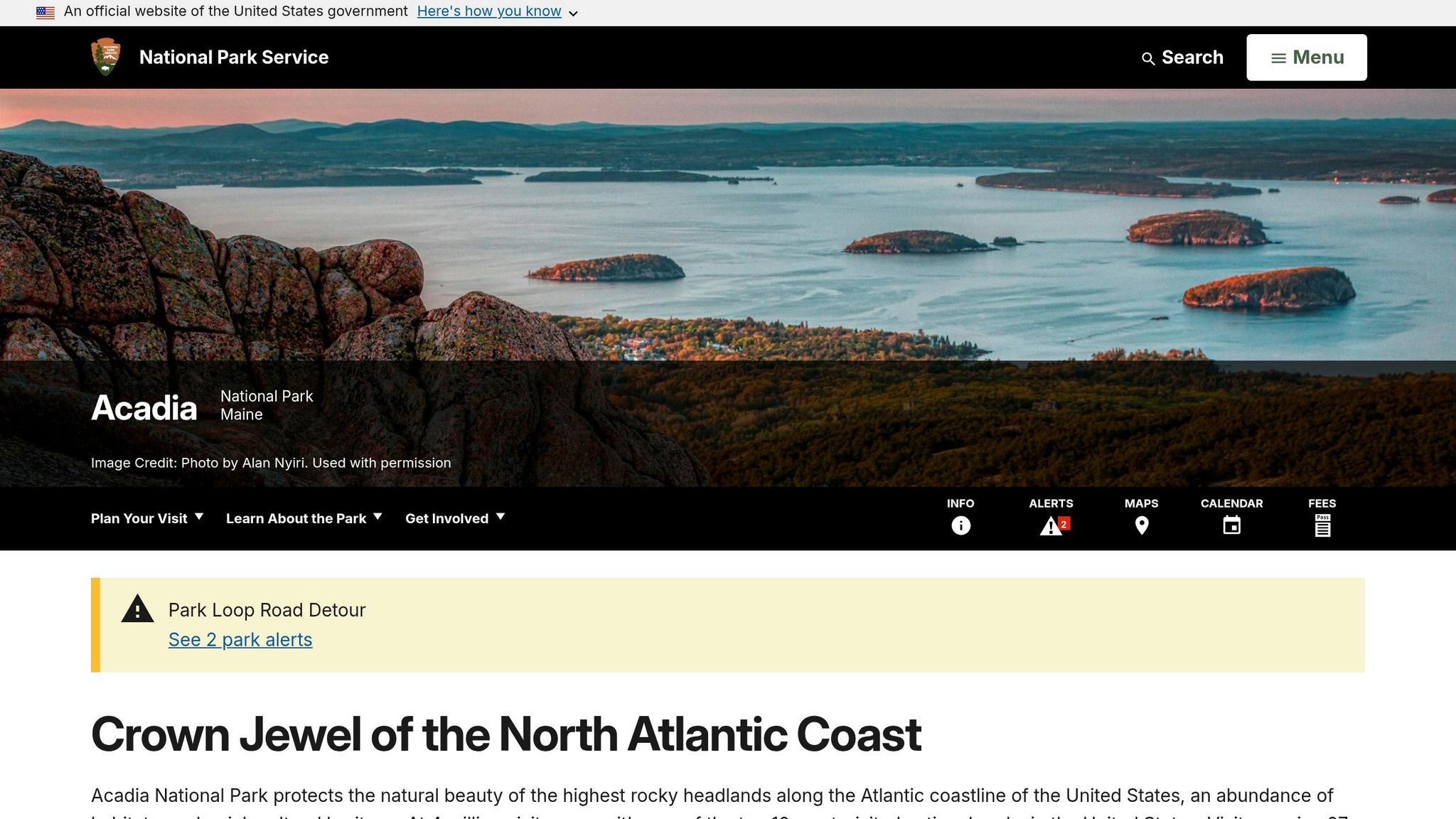
Acadia National Park in Maine boasts 125 miles of hiking trails and a 45-mile carriage road system, both of which are kept in excellent condition thanks to dedicated volunteers. In 2025 alone, 1,491 volunteers contributed an impressive 44,764 hours to the park. These efforts are essential in preserving the park’s beauty and ensuring its accessibility for future visitors.
Volunteer Season Availability
The primary volunteer season runs from June through mid-October, with drop-in projects available on Tuesdays, Thursdays, and Saturdays from 8:15 AM to 12:15 PM. Outside the regular season, the park hosts "Take Pride in Acadia Day" on the first Saturday of November. This event attracts over 400 volunteers who come together for a single day of carriage road maintenance. The flexible schedules make it easy for volunteers to get involved in hands-on trail work.
Typical Trail Maintenance Tasks
Volunteers tackle a variety of tasks, including trimming overgrown vegetation with loppers and hedge trimmers, clearing leaves and debris from drainage ditches, spreading gravel with wheelbarrows, and building or repairing bog walks to protect delicate ecosystems. Carriage road maintenance involves activities like weeding, raking, and fixing fences.
The "Save Our Summits" (SOS) program is one of the park’s more demanding initiatives. Starting on June 24, 2026, volunteers will hike routes such as the Sargent Route (4.2 miles, 1,040 ft elevation gain) or the Penobscot Route (4.33 miles, 1,086 ft elevation gain), carrying soil bags weighing 5–20 pounds to help restore vegetation on mountain peaks. In a previous season, SOS volunteers carried a total of 5,049 pounds of soil to summit areas. The physical demands of these tasks vary, making some programs more intense than others.
"I see the impact of our Friends’ efforts every time I walk the trails and ride the carriage roads. From both a park manager’s and park lover’s view, I am deeply grateful to Friends of Acadia and the volunteer work they support." – Jim Vekasi, Former Chief of Maintenance, Acadia National Park
Physical Difficulty Level
Drop-in stewardship projects are moderately challenging, while the Save Our Summits program is more strenuous. Participants in SOS hikes cover over 4 miles with significant elevation gain while carrying additional weight. Volunteers are advised to wear sturdy, closed-toed hiking boots and long pants tucked into light-colored socks to reduce the risk of tick exposure.
How to Sign Up
For drop-in stewardship, no prior registration is required. Volunteers can simply arrive at the Hulls Cove Storage Facility, near the Hulls Cove Visitor Center, at 8:15 AM on any scheduled day. The Save Our Summits program, however, requires advance registration through the Friends of Acadia website. Registration opens on a rolling basis two weeks before each scheduled hike. Groups of five or more should contact the Friends of Acadia Stewardship Coordinator to register in advance. Seasonal volunteer positions are typically posted on Volunteer.gov in August for the following year. For additional information, reach out to the Friends of Acadia Field Office at 207-288-3934 or the ANP Volunteer Coordinator at 207-288-8716.
sbb-itb-00512f3
5. Zion National Park
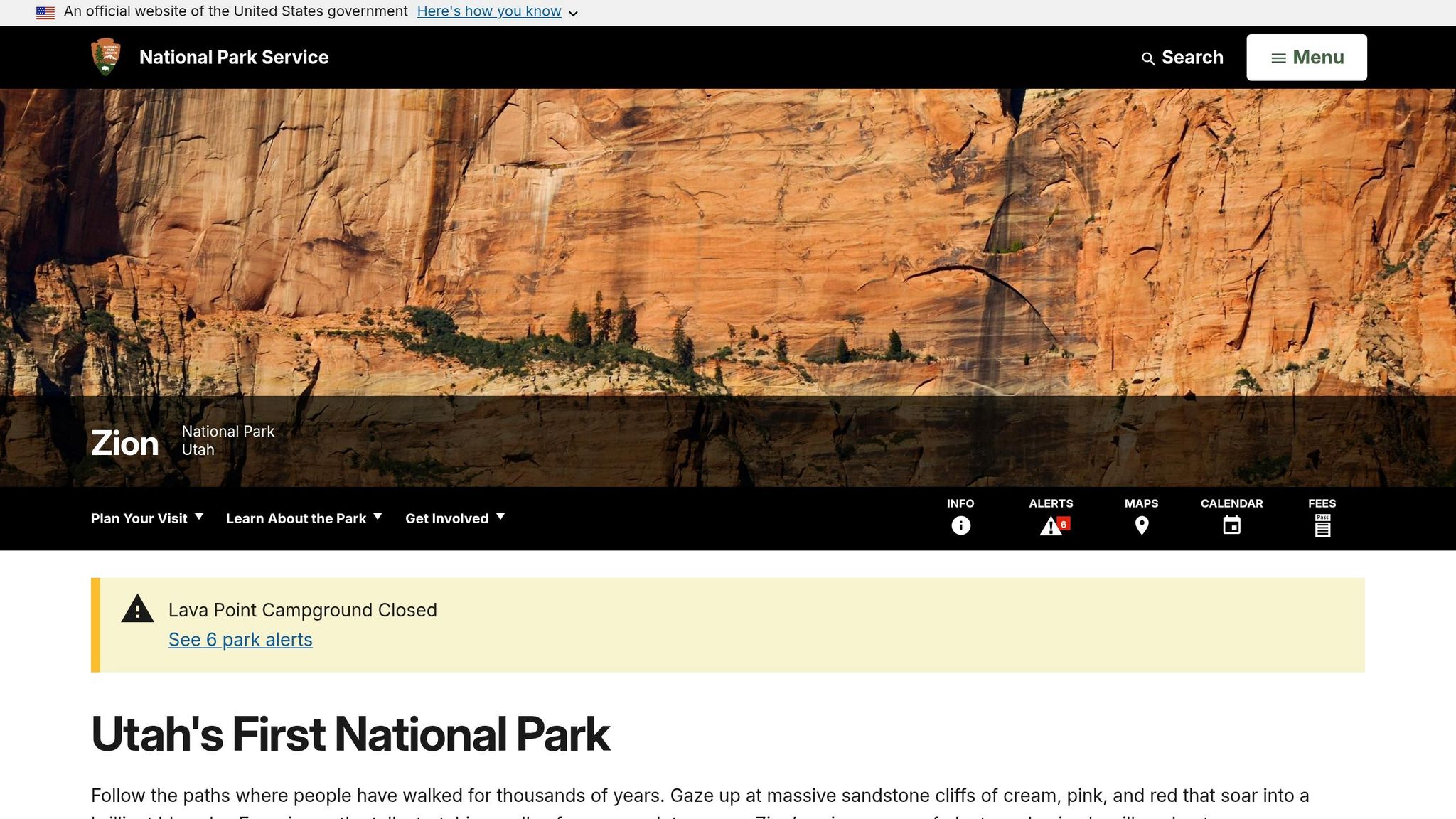
Zion National Park in Utah boasts over 90 miles of trails, and volunteers are crucial to keeping them in great shape. In 2025, the Zion Forever Project contributed a staggering $4,732,847 to the park, covering 47% of its annual operating budget. This funding, paired with volunteer efforts, ensures Zion remains accessible to visitors all year long.
Volunteer Season Availability
Timing is everything at Zion. The summer heat in the Utah desert can be brutal, making spring and fall the ideal seasons for trail work. International volunteers often step in during the winter months (November through March), while Search and Rescue (SAR) team members are typically onboarded in winter and spring. General trail maintenance positions are posted as needed, so opportunities aren’t always available year-round. These seasonal windows allow for a variety of essential maintenance tasks to be completed.
Typical Trail Maintenance Tasks
The work at Zion is as diverse as the landscape itself. Volunteers help restore barren areas by planting native grasses, cacti, and trees. They also trim vegetation that blocks trail markers and clear sand from paths like the Riverside Walk to ensure they remain wheelchair accessible. Another key task is picking up litter and "micro-trash", which is vital for protecting wildlife, including the California condor. In 2021 alone, maintenance teams removed over 2,500 tons of rockfall and flood debris from park infrastructure. Volunteers should be prepared for physically demanding tasks across a variety of roles.
"Volunteers play a vital role in the preservation of Zion National Park and are involved in most aspects of park operations." – Zion National Park Service
Physical Difficulty Level
Trail work at Zion is no walk in the park – it’s tough. Volunteers should expect to dig through rocky ground and handle heavy tools like sledgehammers. SAR team applicants face even more rigorous requirements, including passing an "arduous work capacity test" (commonly known as a pack test) and attending mandatory monthly training sessions. While most trail maintenance roles are physically challenging, they don’t require the same level of fitness testing as SAR positions.
How to Sign Up
To get involved, visit volunteer.gov to check for current openings. You can apply directly through the site or download an application from the Zion NPS website. Completed applications can be emailed or mailed to 1 Zion Park Blvd., Springdale, UT 84767. Local residents can also reach out to the Volunteer Coordinator for exclusive opportunities. For more information, call 435-772-0184.
6. Grand Canyon National Park
The Grand Canyon’s volunteer programs play a big role in preserving this iconic destination. With millions of visitors each year, maintaining the park’s trails and backcountry requires a massive effort. In 2015 alone, 1,504 volunteers contributed 86,577 hours of their time, an effort valued at over $2 million. This level of commitment is only possible through careful coordination of volunteer efforts.
Volunteer Season Availability
Trail volunteer work at the Grand Canyon is typically busiest from April through October, when groups like the Grand Canyon Trust organize most conservation trips. The Grand Canyon Hikers & Backpackers Association (GCHBA) focuses on specific week-long service projects in March (Indian Garden) and October (Bright Angel Campground). For those interested in the Preventive Search and Rescue (PSAR) program, the season runs through summer and into fall. Some specialized projects, like riparian restoration at Lees Ferry, even start as early as February.
Typical Trail Maintenance Tasks
Volunteers take on a variety of tasks, from spreading gravel on trails and clearing brush to cleaning irrigation channels and performing "dam busting" in Bright Angel Creek to improve water flow. Other jobs include painting benches, signs, and fences, as well as repairing boundary fences to protect sensitive areas from livestock. Conservation work involves removing invasive plants, planting native species like grasses and willows, and restoring springs.
In one notable example, volunteer Emma Norton worked alongside backcountry rangers in September 2018 to replace outdated food storage boxes with larger, wildlife-safe versions at Bright Angel, Indian Garden, and Cottonwood Campgrounds. These new containers were flown in by helicopter, and Norton’s efforts earned her the Girl Scout Gold Award.
These tasks highlight the physical and logistical challenges volunteers often encounter.
Physical Difficulty Level
Volunteering at the Grand Canyon is no walk in the park – especially for inner-canyon projects with the GCHBA. These projects demand a 10-mile hike with a 5,000-foot elevation change, all while carrying personal gear. Once there, volunteers tackle tasks using shovels, hoes, and wheelbarrows on rugged terrain, often camping for a week. For those seeking less intense options, the Grand Canyon Trust offers moderate day trips, but the most impactful work tends to be in the strenuous category.
How to Sign Up
If you’re ready to get involved, head to volunteer.gov to explore current National Park Service (NPS) opportunities. For GCHBA service trips, reach out to Project Coordinator Rob Jones at wildvagabond@yahoo.com.
"Tasks are specified by the NPS and volunteers of the GCHBA supply the enthusiasm and help do the work." – Rob Jones, GCHBA Project Coordinator
To participate in a Grand Canyon Trust trip, a $25 membership is encouraged. Volunteers typically enjoy waived park entrance fees during their service period.
7. Olympic National Park
Olympic National Park in Washington State offers a wide variety of ways to get involved, making it a standout destination for volunteers. From the rugged backcountry trails to the untamed Pacific coastline, there’s something for everyone. Opportunities range from citizen science projects to hands-on trail work, accommodating different fitness levels and schedules.
Volunteer Season Availability
Volunteer opportunities vary by season. Backcountry trail and monitoring work is busiest from July through August, once snow clears from higher elevations. Front-country roles, such as campground hosting, typically run from mid-May through September. If you’re interested in shoulder-season events like visitor center cleanups or coastal debris removal, those usually happen in spring and fall. For more specialized programs, such as marmot monitoring, applications open on Feb. 2 and close by June 1. These seasonal windows make it easy to find a project that fits your schedule.
Typical Trail Maintenance Tasks
The tasks for trail maintenance volunteers are as diverse as the park itself. Crews working with the Washington Trails Association (WTA) tackle projects like building turnpikes in wet areas, raising trail surfaces, and clearing brush – all using hand tools. For example, in June 2026, a WTA crew led by Alan Carter Mortimer worked in the Bogachiel River Valley, hiking 1.5 miles to their basecamp and putting in 8–9-hour days on uneven terrain.
Other volunteers participate in the Adopt-A-Trail program, focusing on basic maintenance, learning to use tools, and reporting trail conditions to the park’s official crew. Coastal cleanup events are also popular, like the Spring Coastal Cleanup on April 25, 2026, which aims to remove marine debris from the park’s coastline to help protect wildlife.
"Does maintaining hiking trails in the Olympic wilderness sound like a good day’s work to you? Hard workers are needed!" – Olympic National Park Service
Physical Difficulty Level
Volunteering at Olympic National Park isn’t for the faint of heart. Programs like marmot monitoring involve backpacking 5–20 miles with steep elevation gains, often navigating rocky, off-trail terrain. Front-country roles require a minimum 32-hour weekly commitment during the summer. Volunteers should also be ready for unpredictable weather, including rain and freezing temperatures.
How to Sign Up
Getting involved is straightforward, but planning ahead is key. For most opportunities, you can email the Olympic National Park Volunteer Office at olym_volunteer@nps.gov. Group programs like "Vacation Volunteers-In-Parks" require reaching out at least two months in advance since spots fill up quickly. Open positions are also listed on volunteer.gov.
If trail work parties are more your style, check the Washington Trails Association website for upcoming dates. Local high school students can join the Adopt-A-Trail Youth Crew, but they’ll need to complete mandatory training, which can be arranged through the park’s Volunteer and Youth Office. Active volunteers often enjoy perks like waived park entrance and backcountry camping fees during their service.
Comparison Table
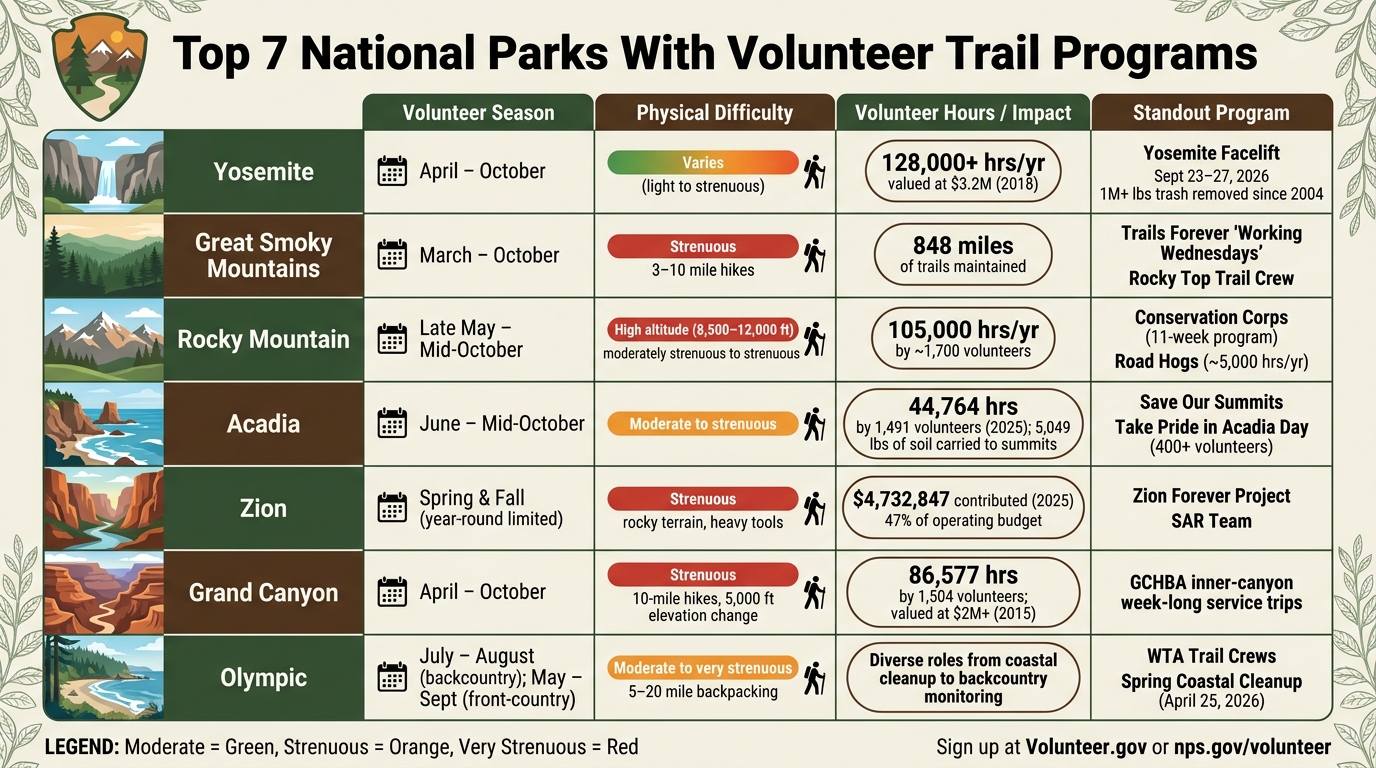
Top 7 National Parks With Volunteer Trail Programs: Side-by-Side Comparison
Compare key aspects of volunteer trail programs at seven national parks below.
| National Park | Volunteer Season | Physical Difficulty | Common Tasks |
|---|---|---|---|
| Yosemite | April–October (majority May–October) | Varies | Trail maintenance & restoration |
| Great Smoky Mountains | Adopt-A-Trail: March–October; Trails Forever: May–October | Strenuous (3–4 mile hikes) | Trail maintenance & restoration |
| Rocky Mountain | Seasonal (check official website) | Varies | Trail maintenance & restoration |
| Acadia | Seasonal (check official website) | Every ability level | Trail maintenance & restoration |
| Zion | Seasonal (check official website) | Varies | Trail maintenance & restoration |
| Grand Canyon | Seasonal (check official website) | Varies | Trail maintenance & restoration |
| Olympic | Seasonal (check official website) | Varies | Trail maintenance & restoration |
Volunteer projects can range from single-day activities to season-long commitments, depending on the park. For the most up-to-date opportunities, visit Volunteer.gov.
If you’re new to trail work, Acadia offers tasks suitable for all ability levels. On the other hand, Great Smoky Mountains provides more challenging hikes for those seeking a physical test. Each park has unique opportunities, but all rely on the hard work of volunteers to maintain safe, beautiful trails for everyone. Use this guide to help you find a park that fits your skills and availability.
Conclusion
The parks highlighted here owe much of their charm and safety to the hard work of volunteers. From Yosemite to the Smokies, Rocky Mountain to Acadia, and Zion to the Grand Canyon and Olympic, these iconic trails depend on regular maintenance to stay accessible and enjoyable. Without this ongoing effort, the trails would quickly fall into disrepair.
"Supporting your favorite park can be as simple as picking up a single piece of trash during your stay, or as intense as a three-month-long commitment in the field or the visitor centers." – New River Gorge National Park and Preserve
This flexibility means anyone can pitch in, whether you have a few minutes or a few months to spare.
If you’re ready to get involved, check out volunteer.gov or nps.gov/volunteer for opportunities that fit your schedule. Many parks also partner with Friends groups, such as Friends of the Smokies, which organize trail crews and one-day service events. For a great starting point, consider participating in National Trails Day each June – it’s a perfect way to experience trail work without a long-term commitment.
FAQs
Do volunteer trail programs provide training and tools?
Many volunteer trail programs make it easy for participants to get involved by offering training and providing the tools needed for the job. For instance, the Great Smoky Mountains’ “Adopt-a-Trail” program includes training in Leave No Trace principles, tool safety, and trail maintenance, along with an informational packet to guide volunteers. Similarly, initiatives like “Trails Forever” and New River Gorge’s “Adopt-A-Trail” program supply tools, safety gear, and on-site instructions. These programs also cover hand-tool maintenance and offer the chance to work alongside experienced crews, ensuring volunteers feel prepared and supported.
Are lodging, meals, or fees involved when volunteering?
Lodging, meals, and fees vary depending on the program. Many projects run by the National Park Service don’t charge participants, but independent organizations might have fees – for example, some trips can cost around $425. Volunteers are typically responsible for bringing their own food and water. Housing isn’t always provided; while some parks may offer limited camping spots or dormitory-style options, others expect volunteers to handle their own accommodations.
What should I do if I’m not fit for strenuous trail work?
If heavy-duty trail work feels like too much, consider roles that align better with your capabilities. For instance, collecting native seeds is a less demanding option, involving activities like walking on level ground. When exploring programs, review the physical requirements for each role and reach out to the park’s volunteer office to discuss what might suit you best. Parks often provide a range of tasks designed to match various fitness levels.