
Getting a permit for a multi-day hike can be tough but is essential for protecting nature and ensuring your safety. Permits limit overcrowding, preserve fragile ecosystems, and help park officials track hikers in case of emergencies. Here’s what you need to know:
- Why Permits Matter: They manage visitor numbers, reduce environmental damage, and enhance safety.
- Types of Permits: Wilderness permits, quota-based permits, timed entry permits, and recreation permits.
- Challenges: High demand (e.g., less than 3% approval for John Muir Trail permits), complex application systems, and changing rules by season or park.
- How to Succeed:
- Plan and research early (6+ months ahead).
- Be flexible with dates and routes.
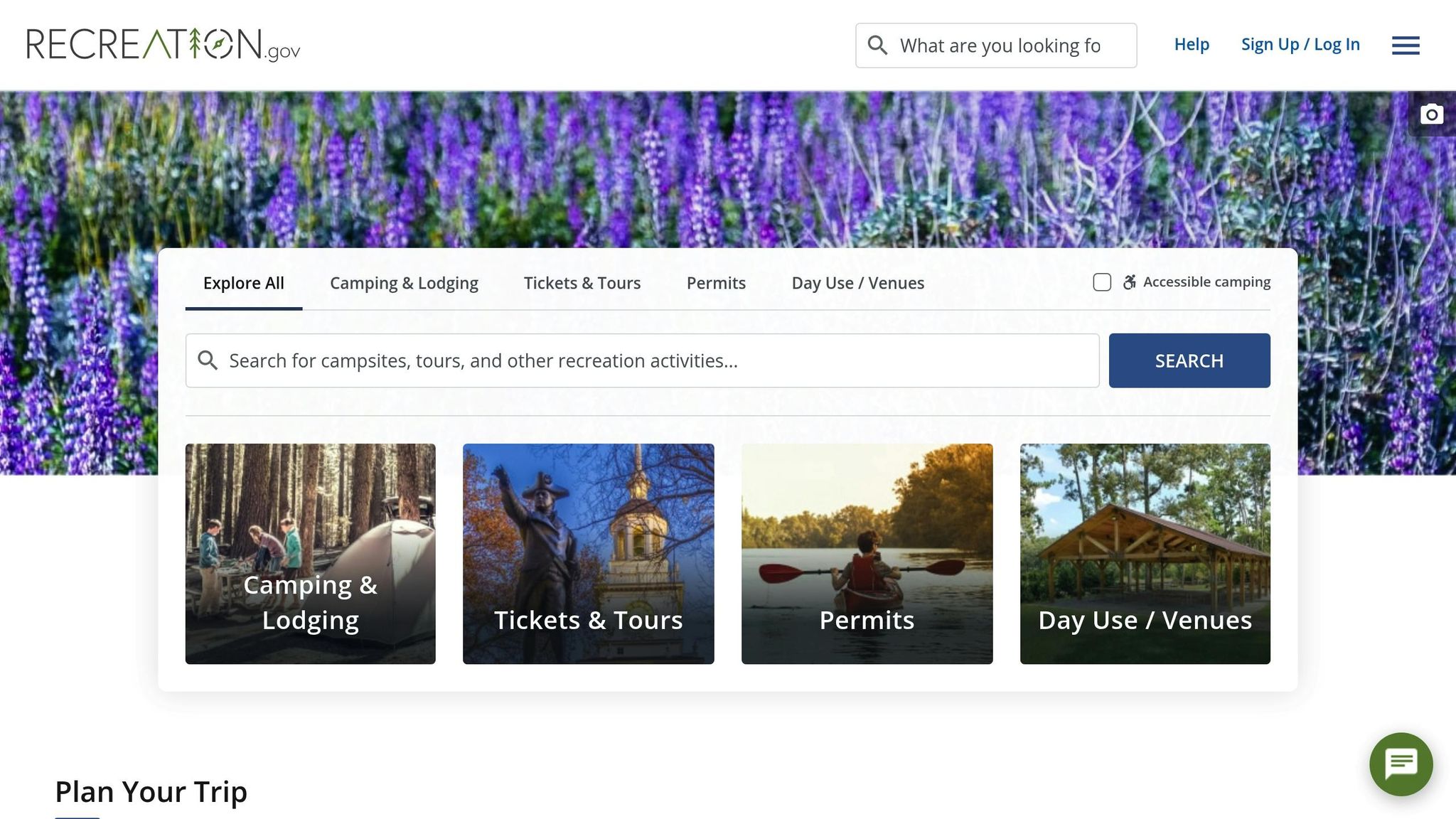
- Use official resources like Recreation.gov.
- Double-check rules for group size, camping, and Leave No Trace principles.
Permits are not just paperwork – they’re vital for preserving trails and ensuring future generations can enjoy the wilderness. Start early, stay informed, and follow the rules for a smooth hiking experience.
How to Book Backcountry Permits on Recreation.gov (Early Access Secrets)
Permit Requirements Explained
Multi-day hiking permits play a crucial role in protecting natural areas, managing visitor numbers, and ensuring safety. By implementing these systems, parks and wilderness areas can maintain the delicate balance needed to preserve the outdoor experience for everyone.
The environmental toll of unrestricted access can be overwhelming. Take Zion National Park‘s The Subway trail as an example – without a permit system, up to 4.5 million footprints could trample the area annually. Instead, access is limited to just 60 hikers per day, safeguarding the fragile ecosystem. This represents less than 1% of Zion’s total yearly visitors.
As DSettahr highlights, permits help prevent issues like soil erosion, water contamination, and wildlife disturbances. They also address social challenges, such as overcrowding and conflicts between user groups, ensuring that your time in the backcountry retains the peaceful solitude you’re seeking.
On top of that, permits enhance safety. By tracking hikers, park officials can respond quickly during emergencies – a critical improvement as trail-related injuries have risen in recent years.
Types of Permits
There are several types of hiking permits, each tailored to specific needs and locations:
- Wilderness Permits: These are the most common for multi-day hikes, covering overnight stays in designated wilderness areas. They often specify entry and exit dates, group size, and sometimes exact camping spots.
- Quota-Based Permits: Designed to limit the total number of visitors in high-demand areas. For example, on the John Muir Trail, fewer than 3% of wilderness permit applications are approved due to overwhelming demand, with most permits allocated through a lottery system.
- Timed Entry Permits: These regulate when hikers can begin their trips, spreading out trail usage throughout the day or season. Rocky Mountain National Park used this system between 2020 and 2022 to reduce congestion at entry points and parking areas.
- Recreation Permits: Required for specific activities or heavily trafficked trail sections. In 2021, Zion National Park introduced permits for Angels Landing to reduce crowding and improve the overall visitor experience.
Some trips may even require multiple permits – such as one for camping overnight and another for accessing a particular trail section. Knowing which permits apply to your route is essential for a smooth and enjoyable adventure.
Permits by Location
While the goals of permit systems are consistent, the rules and requirements can vary widely depending on the location. Many national parks, like Zion, design their permits to protect sensitive landscapes. For instance, permits for The Subway and Angels Landing limit foot traffic to preserve these iconic trails. As Jeff Bradybaugh, Superintendent of Zion National Park, explains:
"Permit systems for wilderness have helped preserve the qualities of solitude and minimize resource impacts".
Successfully navigating these systems requires thorough research and early preparation. What works in one park may not apply to another, so it’s important to familiarize yourself with the specific rules of your destination well in advance. Proper planning ensures you’ll have the permits you need for a hassle-free trip.
Common Permit Application Problems
Getting multi-day hiking permits can feel like navigating a labyrinth. Even experienced hikers often run into roadblocks as permit systems become increasingly intricate in response to the growing popularity of backcountry adventures. These challenges stem from the dual purpose of these systems: protecting natural areas and ensuring visitor safety.
High Demand and Limited Spots
The intense competition for permits is a common issue, especially on iconic trails like the John Muir Trail. For example, in the Grand Canyon, roughly 75% of applicants seeking permits for the three popular corridor trails are unsuccessful. Similarly, nearly half of the applicants for Mount Rainier‘s Wonderland Trail permits face disappointment.
Certain destinations, like Yosemite, see a significant concentration of demand. About 10% of Yosemite’s trails account for 80% of all trail usage. Social media and word-of-mouth recommendations often drive hikers toward these famous routes, creating a scarcity of permits during peak seasons. While the purpose of permits is to preserve these landscapes and enhance the wilderness experience, it doesn’t make the process any less frustrating for hikers who find themselves competing against thousands of others for just a handful of slots.
This high demand is further complicated by the complexity of the application systems.
Complex Application Systems
Each park has its own permit system, complete with unique deadlines, rules, and procedures. Some parks rely on lotteries, others operate on a first-come, first-served basis, and many combine these approaches depending on the trail and time of year.
For instance, permits for the Trans-Catalina Trail require quick action when they become available online in early January through Recreation.gov. This setup forces hikers to be ready and online at the exact moment permits are released, adding to the pressure.
Rules and requirements also vary widely. Some parks have strict group size limits or demand detailed itineraries months in advance, while others allow more flexibility. Certain trails may require separate permits for different sections, while others bundle everything together. Payment methods, cancellation policies, and the level of detail required – such as emergency contact and medical information – also differ from park to park. The result? A confusing and often overwhelming process for many hikers.
Changing Rules and Seasonal Differences
Park regulations frequently change, making it essential to verify the latest requirements – even if you’ve visited the same area before. Many parks adjust their systems based on the season, trail usage, or environmental concerns, and these changes often come with little notice.
Take Yellowstone National Park as an example. During its peak season (May 15 to October 31, 2024), permits are available through an Early Access Lottery and a general sales period on Recreation.gov. In the off-season (November 1 to May 14, 2024), permits are also available on Recreation.gov, but starting October 6, 2024.
Rocky Mountain National Park adds another layer of complexity with its temporary timed entry permit system, which runs from May 26 to October 22, 2024. Permits for this system become available starting May 1, 2024, via Recreation.gov.
Zion National Park’s Angels Landing permits highlight how new regulations can emerge. Hikers now need a permit for any portion of Angels Landing, available through seasonal lotteries or day-before lotteries on Recreation.gov.
Even vehicle access rules can shift. For example, Acadia National Park requires vehicle reservations for Cadillac Summit Road from May 22 to October 27, 2024, with reservations opening on February 22, 2024, through Recreation.gov.
These frequent updates mean that research done a few months prior may already be outdated. Parks modify their systems to address usage trends, environmental concerns, and infrastructure needs, often with little advance notice to hikers.
Some hikers manage to work around these challenges by finding alternative entry points. For example, Ariella Nardizzi opted for Cottonwood Pass as her starting point for the John Muir Trail. However, this kind of flexibility demands thorough research and a deep understanding of alternative routes – information that can be hard to find and changes often.
Knowing these obstacles is the first step toward navigating the permit process successfully.
sbb-itb-00512f3
How to Get Permits Successfully
Getting permits for multi-day hiking routes might seem daunting, but with the right strategy, it’s entirely doable. It all comes down to careful planning, acting on time, and staying flexible.
Research and Plan Early
The key to securing permits starts well before your trip. If you’re planning to hike during peak season, begin your research at least six months ahead of time. This gives you plenty of time to understand the application process and prepare for key dates.
Map out your route, including daily distances and designated campsites. Many parks require a detailed itinerary, so this step is crucial.
Timing is everything when it comes to applications. For example:
- Grand Teton National Park: Permit reservations for trips between May 1 and October 31 open at 8:00 a.m. Mountain Time on January 7, 2025.
- Yosemite National Park: 60% of wilderness permit reservations are distributed through a lottery system starting at 12:01 a.m. Pacific Time on Sundays, up to 24 weeks (168 days) before your trip.
- Glacier National Park: Early-access backcountry permit lotteries occur on March 1, 2025, for groups of 9–12, and March 15 for groups of 1–8.
Being flexible with your dates and route can make a big difference. Consider proposing multiple dates, exploring less popular areas, or planning your trip during the off-season. If you’re determined to visit a specific park, you can also secure any available permit and then request changes to your itinerary when picking it up.
Once you’ve finalized your timeline and route, gather all the necessary details for your application.
Gather Required Information
Accuracy matters when filling out permit applications. Mistakes can lead to rejections, and even small changes in visitor plans can cause discrepancies in reported data – studies show over-reporting of total persons by 8% and visitor nights by 23%.
Before applying, make sure you’ve compiled key details like:
- Group size
- Route plans with designated campsites
- Emergency contacts
- Alternate itineraries
Some parks may also ask for additional documentation, such as medical information or proof of experience for technical routes. For example, Yosemite requires detailed technical data for wilderness big wall climbing permits. These permits, while free and not subject to quotas, require you to specify nightly camp locations and maintain continuous travel conditions. Leaving the wilderness during your climb invalidates the permit.
Double-check park-specific requirements, including group size limits, which vary widely. Organizing all your information in a master document can save time and ensure you’re ready to apply as soon as reservations open.
Use Official Resources
Once you’ve gathered all the necessary details, stick to official channels to secure your permit. The main platforms include Recreation.gov for most federal park permits and individual park websites for location-specific updates.
Create a Recreation.gov account ahead of time and get familiar with the platform. When reservation day arrives, synchronize your clock with official NIST time, pre-navigate to your desired trail or backcountry area, and be ready to click “Book these dates” the moment reservations open. Pay attention to the time zone listed on the reservations page and adjust accordingly.
For the most up-to-date permit requirements and reservation details, visit the National Park Service website (NPS.gov). Individual park websites are also great for seasonal updates and specific procedures.
Need additional resources? Check out The National Park Guide (https://thenationalparkguide.com) for permit details and trail recommendations. For broader planning tools, the USGS Store offers topographic maps and the America the Beautiful National Parks Pass (priced at $80 annually), which covers entrance fees to all national parks. If you’re unsure which pass is right for you, their Pass Wizard tool can help.
Lastly, always carry a printed copy of your permit while in the park. Digital copies might not be accessible in areas with poor cell service. Stay informed by checking official sources regularly, as park rules and requirements can change.
Rules and Regulations for Multi-Day Routes
Once you’ve secured your permit, it’s crucial to follow the outlined rules to avoid fines, eviction, or harm to the environment.
Permit Dates and Usage Rules
Wilderness permits come with specific conditions that must be followed. Typically, permits are valid only for the entry date and trailhead listed on the permit. You must begin your trip on the assigned date and at the designated starting point; any changes require a new reservation. Permits are non-transferable, meaning only the person named on the permit can use it. For example, in areas like Inyo National Forest, selling or transferring permits is strictly prohibited. If you need to adjust your entry date, you’ll usually have to make an entirely new reservation. Some places, such as Yellowstone, require a separate reservation each time you leave your vehicle and start at a new trailhead. Additionally, in popular areas, your itinerary might limit you to specific campsites. Always carry a printed copy of your permit, as cell service in wilderness areas is often unreliable.
After ensuring your permit details are in order, it’s important to review group size and camping guidelines.
Group Size and Camping Rules
Group size limits are enforced to reduce environmental impact and maintain the wilderness experience for everyone. Most national parks cap group sizes at 12–15 people. However, some areas have stricter rules. For instance, the Adirondack High Peaks Wilderness limits overnight camping groups to eight people, while Shenandoah National Park allows no more than 10 people in backcountry groups. Exceeding these limits can lead to penalties. For example, a 16-member Boy Scout group in the Adirondack High Peaks Wilderness was fined and evicted for violating group size rules. If your group is too large, you’ll need to split into smaller subgroups and maintain a specific distance between them.
Camping regulations also dictate where you can set up camp. These rules often require maintaining a set distance from water sources, trails, and proper waste disposal.
"Voluntary reduction of group size when traveling in wilderness areas is always encouraged as a hedge against resource damage." – U.S. Forest Service
Finally, respecting Leave No Trace principles and safety guidelines is essential to protecting these natural spaces.
Leave No Trace and Safety Rules
Leave No Trace principles offer a guide to preserving wilderness areas. Start by planning ahead: know the local regulations, check the weather, and prepare for potential hazards. Minimize waste by repackaging food and organizing meals carefully. Stick to established trails and use designated campsites to avoid damaging the environment.
Always pack out your trash. For human waste, follow proper disposal methods, such as burying it in catholes 6–8 inches deep and at least 200 feet from water, trails, or campsites. In heavily trafficked areas, you may need to pack out all human waste. Avoid disturbing natural or historical objects, and use camp stoves instead of building fires whenever possible. If fires are allowed, keep them small and use existing fire rings, but note that campfires may be banned during certain seasons.
Respect wildlife by keeping a safe distance and properly storing your food. Be considerate of others by keeping noise levels low.
"Leaving no trace is everyone’s responsibility." – Scouting America
Additionally, always be prepared for emergencies. Carry a first aid kit, communication devices, and let someone know your itinerary and expected return date. Leave No Trace principles are supported by organizations like the National Park Service, US Forest Service, and Bureau of Land Management, ensuring that wilderness areas remain unspoiled for future generations.
Conclusion
Getting through the maze of multi-day hiking permits and regulations takes some effort, but it’s worth it. Start planning early – at least four months ahead of your trip – and be ready to adjust your plans. Permits aren’t just paperwork; they play a big role in protecting the wilderness for future generations and keeping you safe.
Permits exist to manage the number of hikers on trails. This helps prevent overcrowding, protects delicate ecosystems, and ensures that authorities are aware of your presence in remote areas for safety reasons.
To improve your chances of securing a permit, stay flexible with your travel dates, group size, and even your choice of destination. Popular trails, like the John Muir Trail, have success rates of less than 3%, so having a backup plan isn’t just smart – it’s essential.
Once you’ve got your permit, stick to the rules. These guidelines are based on scientific research about how many people a trail can handle without causing damage. Skipping the permit process can lead to hefty fines and legal trouble. Worse, it might push authorities to enforce stricter regulations or even close trails, which impacts everyone.
FAQs
How can I improve my chances of getting a permit for popular multi-day hiking trails?
Securing a permit for popular hiking trails can feel like a race, but a few smart strategies can improve your odds. Start by applying as early as possible – many permits open months ahead and are snapped up fast. Being flexible with your travel dates or trail choices can also work in your favor, especially since permits are often distributed based on trailhead quotas.
Stay vigilant by regularly checking official park websites for updates, cancellations, or last-minute openings. Acting quickly when opportunities arise can be the key to success. Another tip? Plan your visit during off-peak times when demand is lower. This can significantly boost your chances of getting the route you want.
How do permits impact planning and preparation for multi-day hikes?
Permits are a key part of planning multi-day hikes, ensuring both the protection of natural areas and a balanced flow of visitors on popular trails. For many destinations, you’ll need a wilderness permit to stay overnight. These permits often come with specific rules about group sizes, designated camping spots, and allowed routes, so mapping out your trip in detail is essential.
Depending on the trail, permits might be available on a first-come, first-served basis, or they may need to be reserved months in advance. Always check the guidelines for your chosen destination to avoid unexpected hiccups or fines. Being prepared not only keeps you in line with the rules but also makes your hike more enjoyable and stress-free.
What should I do if park rules change after I’ve already gotten my permit?
If the park updates its rules after you’ve already secured your permit, contact the park’s administration or visitor center right away. They’ll provide the latest information and explain how these changes might impact your plans.
Be sure to comply with any new guidelines or requirements they share. Staying updated and adaptable can help your trip go off without a hitch, even with unexpected adjustments.