
Junior Ranger programs, offered by the National Park Service (NPS), are free activities designed to engage kids with the natural and historical wonders of over 400 parks across the U.S. Participants complete fun tasks like scavenger hunts, puzzles, and wildlife observation to earn a badge or certificate. These programs encourage families to connect with nature while learning about conservation, geology, history, and more. Activities are tailored for kids aged 5 to 14, but anyone can join.
Key Points:
- Pick up free activity booklets at park visitor centers or download them online.
- Complete tasks based on the park’s unique features (e.g., fossils at Mammoth Cave, stargazing at Joshua Tree).
- Earn rewards like badges or patches after a swearing-in ceremony with a park ranger.
- Programs are self-guided, making them flexible for family schedules.
Whether you’re visiting Yellowstone or a smaller local park, Junior Ranger programs add an engaging educational layer to your outdoor adventures.
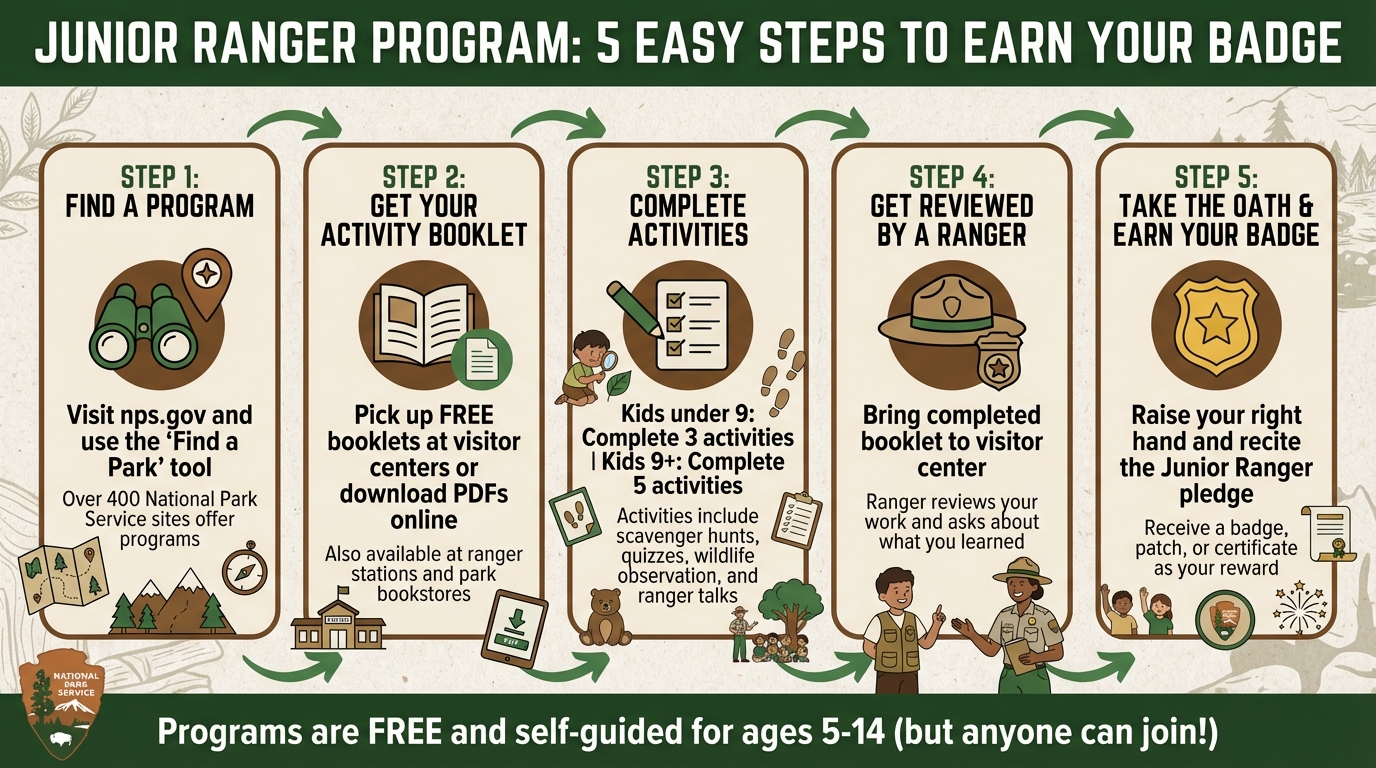
How to Complete a Junior Ranger Program in 5 Steps
How to Get Started
Finding Junior Ranger Programs
With over 400 National Park Service sites offering Junior Ranger programs, it’s likely you’ll find one near your next vacation spot – or even closer to home. These programs are designed to engage kids in exploring and learning about the natural and historical treasures within the parks.
To locate a program, head to the official National Park Service website (nps.gov) and use the "Find a Park" tool. Individual park pages provide specific details about their Junior Ranger activities. Many parks also highlight special Junior Ranger Day events on their calendars, so keep an eye out for those.
When you visit a national park, make the visitor center your first stop. Ask a ranger about the Junior Ranger program, and they’ll guide you toward the activity booklets and explain the activities available for different age groups. This is where the adventure begins!
Getting Activity Booklets
Junior Ranger activity booklets are free and can usually be picked up in person at visitor centers, ranger stations, or park bookstores. These booklets are packed with fun activities that help kids connect with the park’s unique features.
You can also download PDF versions of the activity booklets from the park’s "Kids & Youth" section online. Previewing them before your visit can help you plan ahead and get a sense of what’s involved.
Keep in mind that most parks don’t mail out materials since the programs are designed to be completed on-site. However, many parks offer National Theme booklets that explore topics like paleontology, space exploration, or night skies. These can often be downloaded and completed across multiple visits, adding an extra layer of excitement to the experience.
sbb-itb-00512f3
Activities and Requirements
What Kids Do in the Program
Activity booklets are packed with interactive tasks that help kids uncover the unique features of each park. These include scavenger hunts, crosswords, drawing challenges, and quizzes, all designed to guide families to the park’s hidden treasures.
Many programs also encourage kids to connect directly with park rangers through talks, guided tours, or even interviews. Outdoor activities often involve hiking along specific trails or boardwalks, where kids use their observation skills to spot local wildlife and plants. Some programs even offer "Training Camp" scenarios, teaching kids how to safely interact with wildlife and understand conservation practices.
The educational focus varies widely depending on the park. For example, kids might dive into geology and thermal features at Yellowstone, learn about cultural history and archaeology at Bandelier, or study ecosystem preservation across diverse landscapes. Some programs go a step further with themed booklets that explore topics like space exploration or wildland firefighting in more detail.
After completing these fun and educational tasks, kids move on to the final steps to earn their Junior Ranger reward.
How to Complete the Program and Earn Rewards
The program is designed to suit different age groups. Children under 9 complete three activities, while those 9 and older are tasked with finishing five. Many booklets include visual icons to help kids identify which activities are required for their age group.
Once all activities are done, kids bring their completed booklet to a visitor center, where a ranger reviews their work. Afterward, participants take the Junior Ranger pledge and are officially sworn in as Junior Rangers. To celebrate their achievement, they receive a badge, patch, or certificate. As the National Park Service explains: "As a special thank you for your participation, the National Park Service will award you a Junior Ranger badge or a similar keepsake".
The Swearing-In Ceremony
Completing the Program
Finishing the program is the exciting final step of the Junior Ranger journey. After completing all the activities in the booklet, kids take their work to a park ranger at a visitor center, nature center, or a designated Junior Ranger station. The ranger reviews their completed booklet and might ask about their favorite activity or what they learned during their visit. This one-on-one interaction adds a personal touch, making the experience even more memorable. Some parks even take this step up a notch by hosting ceremonies in stunning outdoor locations, like Acadia National Park, where Ranger Julie Flores leads these special events. Be sure to check the visitor center or ranger station schedule to see what’s available.
What Happens During the Ceremony
After the review, the real highlight begins: the swearing-in ceremony. Kids raise their right hand and recite an oath, pledging to protect the park’s resources, keep learning about nature, and share their knowledge with others. Each park has its own unique version of the oath. For example, at Joshua Tree National Park, the promise goes like this:
"As a Junior Ranger, I promise to protect, preserve, and respect the desert landscape of Joshua Tree National Park. While at home, I will learn about the natural world and I will share what I learn with my friends and family. I will teach others how to enjoy national parks responsibly."
This moment turns the visit into more than just a fun outing – it becomes a celebration of learning and a commitment to conservation. Don’t forget your camera! Rangers often capture this proud moment, creating a keepsake to remember the day.
Tips for a Better Experience
Planning Your Visit
Before heading out, check the park’s website. The "For Kids" section on nps.gov/kids is a great place to discover programs, kid-friendly trails, and story-hour events. Many parks even allow you to download and print Junior Ranger booklets, which can keep kids entertained during the trip.
Be prepared! Pack essentials like water, snacks, sunscreen, bug spray, hats, and an extra outfit – because dirt happens. It’s also a good idea to contact the visitor center ahead of time to ensure they have physical Junior Ranger badges available, as most parks don’t mail them out later.
When planning activities, skip long guided tours that don’t allow for breaks. Frank Barrows, Superintendent at Fort Stanwix National Monument, offers this reassurance for parents:
"I think there is a misperception that you have to be into camping, hiking, or adventure sports to enjoy visiting national parks with your kids, when in fact, parks are closer than you might think and you don’t have to be Bear Grylls to enjoy them".
Once you’re at the park, keeping kids engaged is the secret to making the trip memorable.
Keeping Kids Engaged
Let your kids take the lead! Have them spot trail markers or locate your position on a park map. Superintendent Barrows even suggests “pretending not to know the way” to give kids a sense of independence.
Interactive activities like scavenger hunts can make the experience more fun. Try challenges like finding items for every letter of the alphabet or counting specific animals and insects along the trail. Encourage creativity by having kids draw, take photos, or jot down what they notice. These activities not only keep them focused but also discourage them from picking flowers or disturbing the environment. If Junior Ranger booklets seem too advanced, don’t hesitate to adapt the activities or work as a family team to complete them.
Engagement is key, and exploring multiple parks can add even more excitement to your family adventures.
Trying Programs at Different Parks
With over 400 national parks to choose from, each one offers unique programs tailored to its natural surroundings, history, and geology. Families can also try National Theme programs such as Cave Scientist, Night Skies Explorer, or Archeologist, which connect learning across various parks.
Most people in the U.S. live within an hour of a national park, making it easy to visit multiple locations and collect badges along the way. Each park provides different activities, from writing poems to studying fossils or learning Native names for local plants. This variety ensures that every visit feels fresh and exciting. Be sure to stop by the visitor center at each park to pick up activity booklets and learn about badge opportunities.
We’ve Earned 200+ Junior Ranger Badges! – Our Best Tips & Tricks
Conclusion
Junior Ranger programs provide families with a free and engaging way to explore over 400 National Park Service sites, offering opportunities to dive into history, science, and the natural world. These programs transform a simple park visit into an interactive learning experience where kids can examine fossils, learn Native plant names, and discover what makes each park special.
While badges and certificates are fun keepsakes, the real treasure lies in the connections formed – with nature and with family. Designed by the National Park Service to welcome people of all ages and abilities, these programs ensure everyone can embark on this educational journey.
Each visit brings something new, whether it’s delving into cave science or marveling at the night sky. The swearing-in ceremony adds a meaningful touch, inspiring kids to protect these incredible places for generations to come.
Make your next park trip unforgettable. Pick up a free Junior Ranger activity booklet at your nearest visitor center and start your adventure today!
FAQs
Can my child do Junior Ranger activities if we only have a short visit?
Yes, your child can absolutely take part in Junior Ranger activities, even during a short visit. Many of these programs are designed to be flexible, making it easy to fit them into a limited schedule. Park staff are usually happy to recommend activities that work well for shorter visits, so your child can still have a fun and enriching experience.
What if the visitor center is closed when we finish the booklet?
If the visitor center happens to be closed when you complete the booklet, don’t worry – you can still finish the Junior Ranger program. Just complete all the activities on your own and hold onto your completed booklet. Once the center reopens, you can stop by to claim your badge or certificate. Make sure to keep the booklet in a safe spot until then!
Can kids earn a badge without doing the program on-site?
Kids can earn a Junior Ranger badge even if they can’t visit a park in person. The National Park Service has a virtual program where children can complete activities online, like observing nature or tackling fun missions. Many parks also offer activity booklets that kids can work on independently at home. Once they finish the required tasks, they can receive their badge by mail, making it easy for families to join in from anywhere.