
Junior Ranger programs are educational activities available at over 400 National Park Service sites across the U.S. These programs, which started in the 1930s, are designed for kids (and people of all ages) to learn, explore, and earn badges by completing fun activities. By August 2025, 331 parks had active programs, including online options for those unable to visit in person. States like Alabama, Georgia, and North Carolina also run similar programs in their state parks, offering unique activities tied to local history and nature.
Here’s what you need to know:
- How It Works: Pick up an activity booklet, complete tasks, and earn a badge.
- Virtual Options: Some parks offer online activities, certificates, and badges.
- State Programs: Many states have their own Junior Ranger programs with local themes.
- Free Participation: Booklets and badges are provided at no cost.
Junior Ranger programs are a simple way for families to connect with nature, learn about history, and enjoy outdoor adventures.
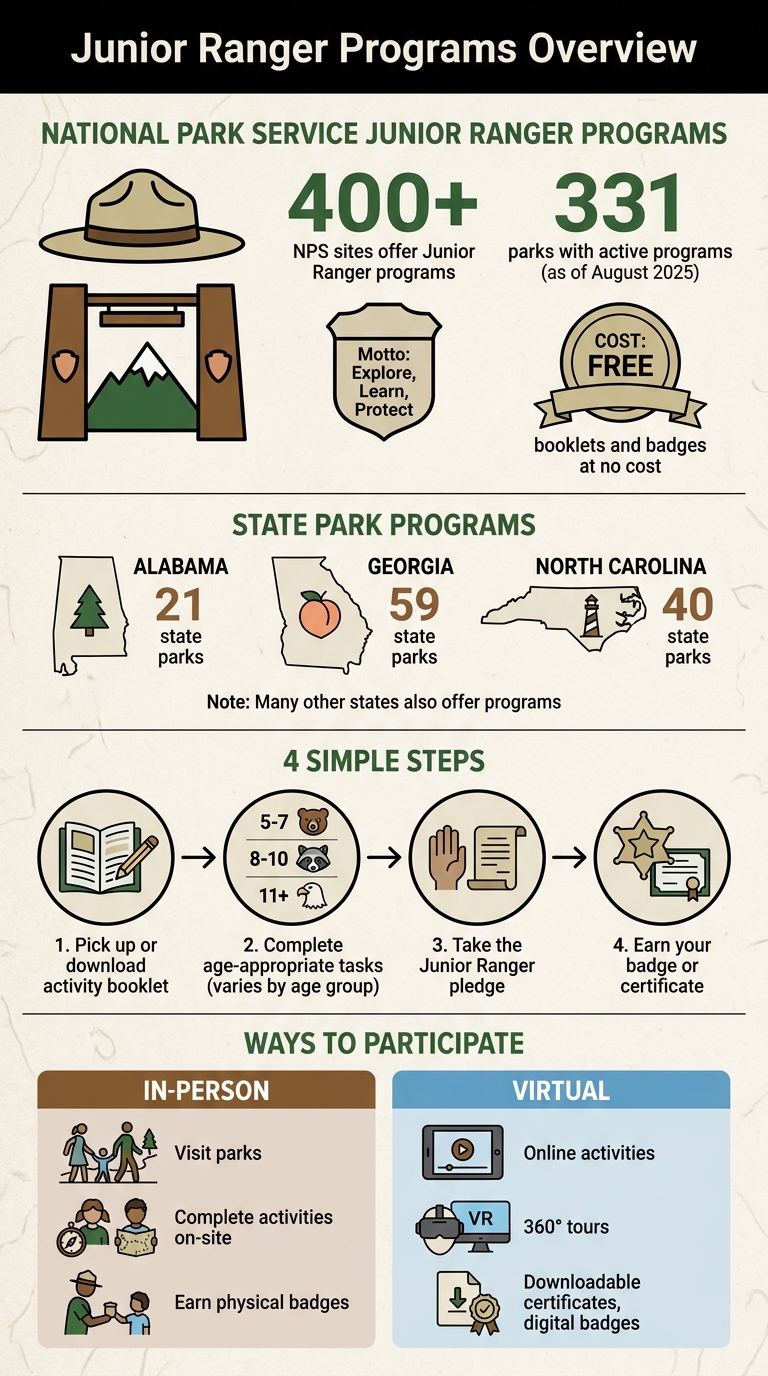
Junior Ranger Programs Statistics: National and State Park Participation by State
Junior Ranger Program at the National Parks – all parks
sbb-itb-00512f3
National Park Service Junior Ranger Programs
The National Park Service (NPS) runs Junior Ranger programs at over 400 locations, offering activities tailored to a wide range of sites – from national parks and monuments to historic landmarks and coastal areas. As of August 2025, at least 331 parks have dedicated Junior Ranger pages with clear instructions for families looking to participate.
"Nearly every park in the system has a Junior Ranger page. Find out what each park has to offer." – National Park Service
Finding a program is simple. Families can use the NPS state filter tool on the official Parks With Junior Ranger Programs portal at nps.gov to search by location. Each park’s page outlines specific offerings, activity requirements, and themed programs like Junior Ranger Angler or Junior Ranger Night Explorer. Before visiting, it’s smart to check the park’s website for details, as many parks feature unique activities that reflect their geological, historical, or ecological highlights.
The Junior Ranger motto – Explore, Learn, Protect – serves as the foundation for these programs, helping visitors connect with nature and history. For those unable to visit in person, these experiences extend to online platforms.
Virtual Junior Ranger Options
For families who can’t make it to a park, virtual Junior Ranger programs provide an engaging alternative. Many NPS sites now offer activities that can be completed entirely online, including games, 360° virtual tours, downloadable booklets, and even digital badges.
Take Pictured Rocks National Lakeshore, for example. Its virtual program includes activities like Web Detective (answering questions using the park’s website) and Nature’s Notes (writing nature-themed haikus). The requirements vary by age: children ages 5–7 complete two activities, those 8–10 complete three, and participants 11+ complete four or more. Afterward, participants watch a video with Ranger Zach to take the Junior Ranger pledge and receive a downloadable certificate and badge (Source: NPS Pictured Rocks National Lakeshore, July 2024).
In January 2021, the NPS introduced a special virtual program for the 59th Presidential Inauguration. This initiative allowed kids across the country to earn a Presidential Junior Ranger badge by exploring 360° tours of Washington, D.C. monuments, participating in virtual ranger-led activities, and collecting a digital passport stamp. Parks like Joshua Tree and Yosemite also offer virtual options alongside their on-site programs.
Junior Ranger Programs by State
State park programs carry on the national Junior Ranger tradition while offering activities that reflect local heritage, ecosystems, and wildlife. Many state park systems across the country have developed their own Junior Ranger programs, often inspired by the National Park Service model but with a local twist. Here’s a look at how some states are enriching family adventures with these programs.
Alabama
Alabama State Parks offer Junior Ranger programs at all 21 of their parks. These programs use an Adventure Guide to lead participants through activities like hiking, swimming, biking, paddling, fishing, and camping. While the program is primarily aimed at kids aged 5–12, it’s open to participants of all ages. Families can also take part in the Passport Challenge, which encourages visits to every park. Options include both ranger-led events and self-guided activities.
Georgia
Georgia State Parks host Junior Ranger programs at 59 locations statewide. Each park provides activity books filled with missions focused on local wildlife, history, and recreational opportunities. While the program is often associated with kids aged 6–12, state park guidelines make it clear that anyone can join and earn certification as a Junior Ranger. Participants who complete their booklets are rewarded with free badges to celebrate their accomplishments.
North Carolina
North Carolina features a Junior Ranger program spanning 40 state parks. Using an acorn point system tied to educational standards, children aged 6–12 earn patches as they complete activities. The program is designed for families and organized groups, such as scouts, schools, and homeschool cooperatives, making it accessible to a wide range of participants. Other states also offer similarly diverse Junior Ranger opportunities.
How to Plan Your Junior Ranger Trip
Downloading Resources in Advance
Before heading out on your trip, you can print Junior Ranger booklets directly from most parks’ websites. The National Park Service has an alphabetical directory where nearly every park has a dedicated Junior Ranger page. Similarly, the Bureau of Land Management offers a central hub where you can find Junior Ranger books on various topics like Native Plants or Wildlife and Habitats.
Make sure to download the right booklet for your child’s age. Many parks offer tiered programs tailored for different age groups, such as 5–8, 9–12, and even older participants. Always check the park’s official website to ensure you’re using the most up-to-date version of the booklet. These simple steps can help you prepare ahead of time and make your visit more enjoyable.
Visiting Multiple Parks in One Trip
Once you’ve got your resources ready, why not visit multiple parks during your trip? This can add more excitement and educational opportunities for your family. For instance, some specialty badges, like the Junior Civil War Historian badge, require activities at three different parks. National theme programs – such as Spaceflight Explorer, Paleontologist, or Underwater Explorer – let kids explore their interests across several National Park Service locations.
If you’re planning a regional trip, consider combining state and national parks. Take Georgia as an example: it offers Junior Ranger programs at 59 state park locations, making it easy to weave state and national park visits into your itinerary. Be sure to check each park’s website for booklet availability before you go. For parks in remote areas, some even offer mail-in options where kids can complete activities during a short visit and receive their badges by mail.
Conclusion
Junior Ranger programs provide families with an easy and engaging way to enjoy the outdoors while offering enriching educational experiences. With more than 400 National Park Service sites and a variety of state park programs – including Alabama’s 21 state parks, Georgia’s 59 state parks, and North Carolina’s puzzle patch system – there’s no shortage of opportunities to participate.
These programs go beyond earning badges. They encourage kids to develop a sense of responsibility for the environment by practicing Leave No Trace principles, strengthen family connections through shared activities, and promote the benefits of outdoor physical activity. As the National Park Service highlights, these programs help families connect with the people, places, and stories that make up the park system.
Best of all, participation is free. Activity booklets and badges are provided at no cost. Some states even include additional benefits – for instance, Florida’s Junior Ranger membership card offers one free vehicle entry (for up to eight passengers) to any state park in the system.
FAQs
Where can I find the Junior Ranger booklet for a specific park?
You can grab a Junior Ranger booklet by reaching out to the park directly or heading over to the National Park Service website. Many parks even provide downloadable activity booklets online. Be sure to check with the specific park for details and availability.
How do virtual Junior Ranger programs work if we can’t visit?
Virtual Junior Ranger programs offer families a chance to dive into the wonders of national parks right from home. Through engaging online activities – like observing nature, tackling quizzes, or working on creative projects – kids can explore and learn about these incredible spaces. Many of these activities come with downloadable sheets, making it easy for kids to complete tasks on their own or with a little help.
Once participants finish the program, they’re rewarded with a virtual badge and certificate, adding a sense of achievement to the experience. It’s a fun and educational way to connect with national parks, especially when visiting in person isn’t an option.
Can teens and adults earn Junior Ranger badges too?
Yes, teens and adults can absolutely earn Junior Ranger badges! Although the program is mainly aimed at children, it warmly encourages people of all ages to join in. It’s a fantastic way for families to explore, learn, and connect with parks together, making it both fun and educational for everyone involved.