
Island Packers Cruises is your ticket to the Channel Islands National Park, a collection of five remote islands off California’s coast. Here’s what you need to know:
- Access: The only public ferry service to the islands, operating from Ventura and Oxnard harbors.
- Camping: Campsites are available on Anacapa, Santa Cruz, Santa Rosa, and San Miguel Islands. Santa Barbara Island service is currently suspended.
- Travel Times: Trips range from 1 hour (Anacapa, Santa Cruz) to 4+ hours (San Miguel).
- Costs: Ferry fares vary by island and age group. For example, a trip to Santa Rosa costs $138 for adults.
- Gear: Strict weight limits apply – 60 lbs per person, with additional allowances for longer stays.
- Permits: Both ferry and campsite reservations are required, with additional permits for certain islands.
Prepare for stunning wildlife, rugged terrain, and a true wilderness experience. Pack carefully, follow weight restrictions, and check seasonal schedules to make the most of your adventure.
Channel Islands Camping: Ultimate Packing & Trip Guide
sbb-itb-00512f3
Ferry Services and Island Destinations
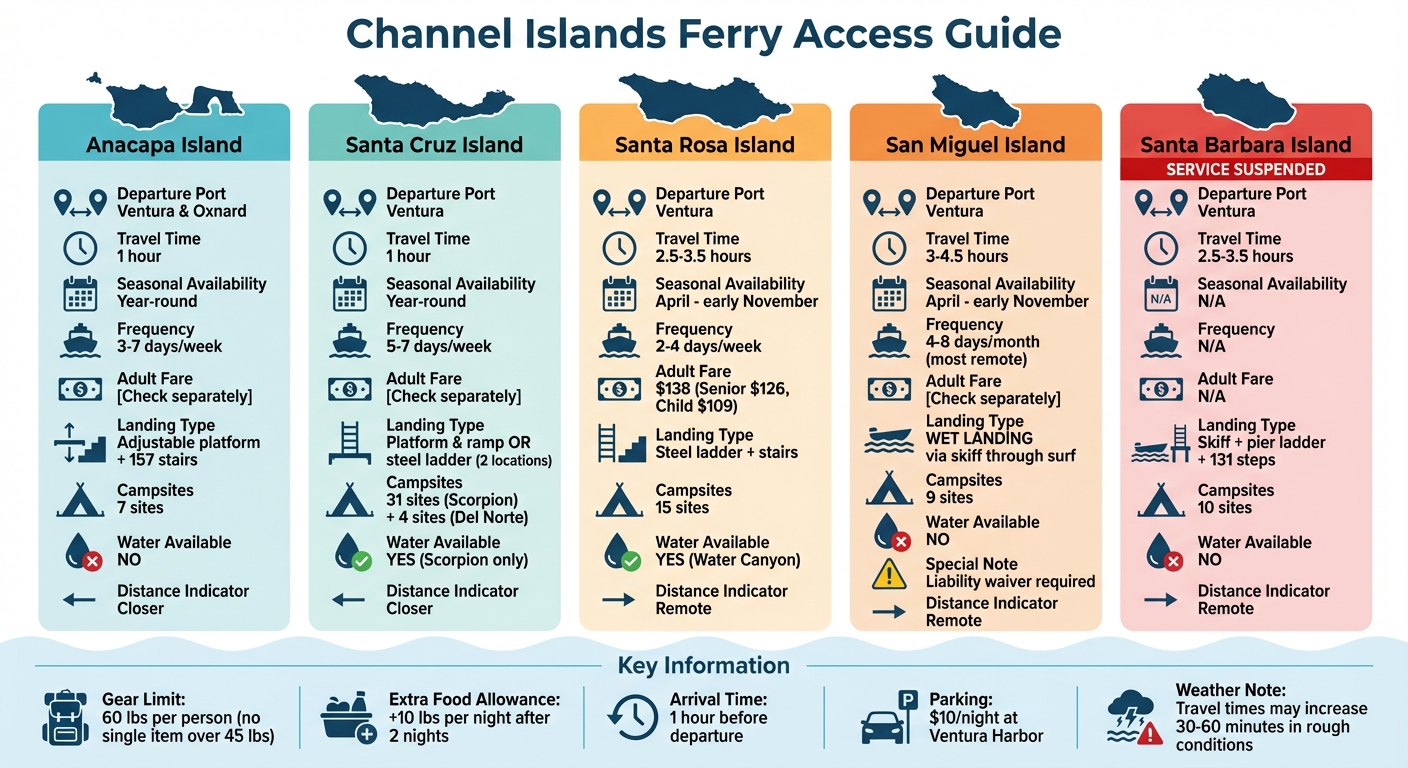
Channel Islands Ferry Guide: Travel Times, Costs, and Seasonal Availability
Departure Ports and Routes
Island Packers operates ferries from two main departure points: Ventura Harbor, where their headquarters are based, and Channel Islands Harbor in Oxnard. Most trips, including those to Santa Cruz, Santa Rosa, San Miguel, and Santa Barbara Islands, leave from Ventura Harbor. However, Anacapa Island stands out as it can be reached from both Ventura and Oxnard harbors.
The ferry schedule changes depending on the season and destination. Anacapa and Santa Cruz Islands are accessible year-round. Anacapa ferries run 3–7 days per week, while Santa Cruz operates 5–7 days weekly. On the other hand, Santa Rosa and San Miguel Islands are seasonal destinations, typically open from April through early November. Santa Rosa sees 2–4 trips per week, whereas San Miguel – the most remote of the islands – offers service only 4–8 days per month. Unfortunately, Santa Barbara Island ferry service is currently on hold due to severe dock damage. This schedule sets the stage for the unique camping experiences that await on each island. Let’s take a closer look at what each island has to offer and how long it takes to get there.
Island Destinations Overview
Each island offers a distinct camping adventure, shaped by its travel time and accessibility. Anacapa Island, just an hour from the mainland, greets visitors with a climb of 157 steps to reach its summit. Santa Cruz Island, also an hour away, is the most visited and provides two landing options for campers: Scorpion Cove, which features 31 campsites, and Prisoners Harbor, the gateway to Del Norte’s 4 campsites.
The more remote islands demand longer journeys. Santa Rosa Island lies about 3 hours offshore, while San Miguel Island takes 4 hours to reach and involves a challenging skiff landing directly on the beach. When ferry service to Santa Barbara Island resumes, travelers can expect a 3-hour crossing. Travel times may increase by 30 minutes to an hour depending on weather and sea conditions.
| Island | Departure Port | Travel Time | Seasonal Availability |
|---|---|---|---|
| Anacapa | Ventura & Oxnard | 1 hour | Year-round (3–7 days/week) |
| Santa Cruz | Ventura | 1 hour | Year-round (5–7 days/week) |
| Santa Rosa | Ventura | 2.5–3.5 hours | April – early November (2–4 days/week) |
| San Miguel | Ventura | 3–4.5 hours | April – early November (4–8 days/month) |
| Santa Barbara | Ventura | 2.5–3.5 hours | Service Suspended |
Fares, Permits, and Booking Information
Ferry Fares for Campers
Ferry prices vary based on your destination and age group. For trips to Santa Rosa Island, the cost is $138 for adults (ages 13–54), $126 for seniors (55+), and $109 for children (ages 3–12). Infants under three can ride for free, but you must still make a reservation for them. Prices for Anacapa and Santa Cruz Islands differ, so check those separately. If you’re planning to park overnight at Ventura Harbor, expect to pay $10 per night, and don’t forget to display the required permit visibly.
Once you’ve reviewed fares, it’s time to focus on the necessary permits to complete your reservation.
Required Permits and Forms
With fares confirmed, make sure you have all the required permits and forms in place. You’ll need to secure both ferry and campsite reservations before your trip. It’s important that your Island Packers booking matches the details of your Recreation.gov reservation. Keep in mind, you must book your ferry transportation before reserving a campsite. Campsite reservations on Recreation.gov can be made up to six months in advance, and you’ll need to provide your ferry departure dates and times during the process.
Certain islands have additional permit requirements. For instance, if you’re camping on the western 76% of Santa Cruz Island, which is managed by The Nature Conservancy, you’ll need to request a landing permit at least 10 business days before your trip through nature.org/cruzpermit. San Miguel Island also requires special permits and a liability waiver due to its history as a former bombing range. Escorted visitors must arrange this via email with the park, while private boaters can pick up the necessary forms at the Nidever Canyon trailhead. For travelers with service dogs, a health screening form must be submitted to both Island Packers and the NPS Chief Ranger before visiting Santa Cruz, Santa Rosa, or San Miguel Islands.
How to Book Your Ferry
Once you’ve sorted out fares and permits, you’re ready to book your ferry. To simplify the process, open both the Island Packers website and Recreation.gov in separate browser windows. This will help you check availability on both platforms before finalizing your bookings. Remember, Island Packers requires your campsite reservation details before you board.
Plan to arrive at the harbor at least one hour before your departure time to allow enough time to load your gear – hatches close 15 minutes before the ferry leaves. If you’re not ready to board 30 minutes before departure, your trip may be canceled without a refund. Between November and May, rough ocean conditions can sometimes delay pickups, so pack an extra two days’ worth of food just in case. Note the gear restrictions: no single item can weigh more than 45 lbs, and your total gear limit is 60 lbs per person (not including water). For trips longer than two nights, you’re allowed an additional 10 lbs of food per night.
Camping Access by Island
Anacapa Island
Getting to Anacapa Island takes about an hour by ferry, with trips running year-round, typically three to seven days a week. Once you arrive, you’ll disembark using an adjustable platform and climb 157 stairs to reach the plateau. The campground is about a half-mile from the landing area and includes seven sites, but there’s no potable water available. If you’re planning to visit between April and mid-August, be prepared for the Western Gulls nesting season, which brings constant noise, thick guano, and a lack of shade.
Santa Cruz Island
Santa Cruz Island offers two main landing points. Scorpion Anchorage, the easier of the two, is about an hour away by ferry and uses an adjustable platform and ramp for access. Prisoners Harbor, on the other hand, involves a longer trip – 1.5 to over 2 hours – and requires climbing a steel-rung ladder to disembark. The Scorpion Canyon campground is the island’s largest, with 31 campsites and a flat, half-mile walk from the dock. Unlike Anacapa, potable water is available here, making it a convenient choice for first-time campers. Ferry service to both locations operates year-round.
Santa Rosa Island
Santa Rosa Island is more remote and operates seasonally from April to early November. The ferry ride takes about three hours from Ventura. Once you arrive, you’ll climb a steel-rung ladder at the lower dock and then ascend stairs to access the island. The campground, located 1.5 miles from the landing, is on mostly flat terrain and features 15 sites with potable water available at Water Canyon. Strong winds are common here, with gusts reaching up to 30 knots, so it’s a good idea to bring a low-profile tent and extra stakes. The island’s remote setting adds to the wilderness experience.
San Miguel Island
San Miguel Island is known for its challenging access. Ferry service is seasonal, requiring a four-hour trip from Ventura. All landings here are “wet,” meaning you’ll transfer to a skiff that beaches through the surf, leaving your feet and lower legs wet. From the beach, there’s a steep, one-mile hike with a 400-foot elevation gain to reach the nine-site campground. There’s no potable water, so plan to bring one gallon per person per day. Additionally, visitors must sign an “Acknowledgement of Danger” liability waiver due to the island’s past as a bombing range. Weather conditions can change quickly, and high swells may delay ferry pickups, so packing extra food is a must.
Santa Barbara Island
Currently, ferry trips to Santa Barbara Island are suspended due to dock damage. When service resumes, access will involve transferring to a skiff, climbing a pier ladder, and walking a quarter-mile with 131 steps to reach the island’s top. The campground has 10 sites but no potable water, so campers will need to bring their own supply.
Tips for a Successful Camping Trip
Planning an island camping trip involves more than just securing reservations and arranging ferry rides. A little extra preparation can make all the difference in ensuring a smooth and enjoyable experience.
What to Pack for Island Camping
Camping on the Channel Islands is strictly backpack-only, meaning you’ll need to carry everything to your campsite and pack it all out when you leave. Island Packers has specific weight restrictions: no single item can exceed 45 lbs, and the total gear allowance is 60 lbs per person (excluding water). If you’re staying longer than two nights, plan for an additional 10 lbs of food per night.
Pack clothing that can handle the island’s variable weather. Layering is key – bring lightweight clothes for warm afternoons, long sleeves, fleece for chilly mornings, a windbreaker, and waterproof outerwear for wet landings. Sturdy, non-slip hiking shoes are a must, and if you’re heading to San Miguel Island, consider old tennis shoes or reefwalkers for navigating its wet, slippery beach.
Before you pack, inspect your gear to avoid accidentally bringing invasive species. Certain items are prohibited, including live plants, soil, cut flowers, firewood, and corrugated cardboard. Starting September 2, 2025, wagons will no longer be allowed; only small folding carts that fit inside your pack will be permitted. Additionally, Island Packers does not transport rubber rafts, generators, windsurfers, stand-up paddleboards, or surfboards over 8 feet in length.
For safety, store stove fuel separately from your other gear – it will be placed in a special container on the boat. Lithium batteries and e-cigarettes should stay in your day pack, not with overnight gear. Since most islands lack potable water, bring one gallon per person per day. Water is only available at Scorpion Canyon on Santa Cruz Island and Water Canyon on Santa Rosa Island. To avoid uninvited wildlife visitors, store food in mouse-proof containers.
Once your gear is ready, you’ll be better equipped to handle the island’s unpredictable weather and wildlife.
Weather and Wildlife Preparation
Proper preparation goes beyond packing – it also means being ready for weather delays and encounters with the local wildlife. From November to May, ocean conditions can disrupt return trips, so always pack extra food just in case. If storms are forecasted, Island Packers may adjust schedules and arrive a day early. Keep an eye on island bulletin boards or check with a ranger for updates on departure day. Be prepared to load gear one hour before departure – arriving less than 30 minutes before boarding time means you won’t be allowed on the vessel.
Wildlife encounters are part of the experience. From April to mid-August, western gulls become particularly aggressive during nesting season. The protected island fox is another resident, and to keep them safe, pets are not allowed on the islands. Service dogs require prior approval from the National Park Service, along with health screenings and vaccinations to prevent the spread of disease. On San Miguel Island, stick to designated trails and follow ranger escorts beyond the ranger station. This precaution is due to unexploded ordnance left from the island’s history as a bombing range.
Ferry Experience and Drop-Off Process
The ferry ride to the Channel Islands is more than just transportation – it’s an experience in itself. Island Packers vessels are equipped with restrooms and a galley offering limited food and drinks. Captains often narrate the journey, sharing insights about the Santa Barbara Channel and pausing to point out wildlife like dolphins and whales. As Local Guide Diane Petrilla shared:
The captain and crew cared deeply about passengers seeing some of the amazing sea life in the channel, and were extremely knowledgeable about it.
Landing conditions vary depending on the island. For Anacapa, Santa Cruz, and Santa Rosa, you’ll need to climb steel-rung ladders from the boat to the pier. On San Miguel, the process involves transferring to a skiff that beaches through the surf. Be prepared to get your feet and lower legs wet – use waterproof bags to keep your gear dry during these landings. Personal carry-on items must fit completely under the bench seats, similar to airline size restrictions.
Conclusion
Island Packers Cruises operates as the official National Park Service concessionaire, offering the only public boat transportation to all five islands within Channel Islands National Park. With over a million tours under their belt, their crew expertly navigates the Santa Barbara Channel while also managing logistics for island camping trips.
When planning your trip, it’s essential to coordinate your ferry and campsite reservations. Start by booking your ferry, as space is limited and fills up quickly. Be sure to review boarding requirements ahead of your departure.
The ferry ride itself is more than just transportation – it’s part of the adventure. Captains often pause along the way to highlight sightings of dolphins, whales, and other marine life, sharing fascinating details about the channel’s ecosystem. Their commentary adds an extra layer of enjoyment to the journey.
Keep in mind that island camping is a primitive experience. You’ll need to bring all your supplies, including about one gallon of water per person per day, along with extra food in case of delays. There are no stores or facilities on the islands, so preparation is key.
The Channel Islands provide a rare opportunity to explore California’s untouched wilderness. With the dependable service of Island Packers Cruises and thoughtful preparation, your adventure into this pristine environment promises to be both seamless and unforgettable.
FAQs
What are the camping gear and weight limits for trips to the Channel Islands?
Camping on the Channel Islands means embracing a minimalist approach. You’ll need to pack light and carry all your gear backpack-style since there are no stores or campfires permitted on the islands. To make things easier, gear must adhere to specific size and weight restrictions, so thoughtful planning is key. Before heading out, review the detailed packing guidelines provided by Island Packers to ensure you’re fully prepared.
Focus on bringing only the essentials for a self-reliant adventure in this stunning and isolated national park!
How can I reserve a campsite and ferry for camping at Channel Islands National Park?
To camp at Channel Islands National Park, you’ll need to take care of two key steps: securing a campsite reservation and booking your ferry ride. Start by reserving your campsite through the official system – availability is limited, and spots tend to fill up fast, especially during busy seasons. Once your campsite is confirmed, you can arrange your ferry transportation with Island Packers. Make sure to provide them with your campsite details when booking.
It’s a good idea to reserve your ferry tickets early, as Island Packers doesn’t operate daily trips to every island. Also, review their camping gear guidelines and complete any necessary permits or release forms required for specific islands. A little extra planning will go a long way in making your camping adventure smooth and enjoyable!
What should I pack for camping on the Channel Islands?
When camping on the Channel Islands, being prepared for the shifting weather and unique wildlife is key. During the day, temperatures can be warm, but evenings often bring a chill. Pack lightweight, layered clothing to stay comfortable – think moisture-wicking base layers, insulating layers, and a waterproof jacket to handle cooler nights or unexpected rain. Also, don’t overlook sun protection. Bring sunscreen, sunglasses, and a hat to shield yourself from the sun while enjoying outdoor activities.
The islands are home to animals like foxes and seabirds, so it’s crucial to store your food securely. Use wildlife-proof containers to keep animals at bay and follow Leave No Trace principles to protect both the wildlife and your gear. Since the islands are remote and lack stores or fire facilities, you’ll need to pack all your essentials, including enough food, water, and camping gear. Nights can be especially cool on Santa Rosa Island, so plan accordingly to ensure a comfortable and safe camping trip.