
America’s national park lodges offer more than just a place to stay – they represent over a century of architectural and historical significance. Built between the 1890s and 1920s, these lodges introduced "parkitecture", using local materials to blend with their surroundings. Many were constructed by railroad companies to attract travelers to the West, and today they stand as enduring symbols of design and history. Here’s a quick look at 10 iconic lodges:
- Old Faithful Inn (Yellowstone): World’s largest log structure, built in 1903–04, featuring a 500-ton rhyolite fireplace.
- Lake Yellowstone Hotel (Yellowstone): Oldest operating hotel in the park, dating back to 1891, with Colonial Revival elegance.
- Glacier Park Lodge (Glacier): Known for its massive Douglas-fir columns and Swiss chalet-inspired design.
- El Tovar Hotel (Grand Canyon): Luxury accommodation since 1905, located just 20 feet from the South Rim.
- Bright Angel Lodge (Grand Canyon): Affordable lodging with a "Geologic Fireplace" showcasing canyon rock layers.
- Crater Lake Lodge (Crater Lake): Stunning views from the caldera rim, rebuilt after structural challenges.
- Many Glacier Hotel (Glacier): Swiss chalet design, lakeside setting, and a four-story lobby.
- Zion Lodge (Zion): The only lodge within Zion National Park, rebuilt in 1937 after a fire.
- Ahwahnee Hotel (Yosemite): Combines rustic and Art Deco styles, offering views of Half Dome and Yosemite Falls.
- Timberline Lodge (Mount Hood): A WPA project from the 1930s, known for its 90-foot stone chimney and year-round skiing.
These lodges are more than accommodations – they connect visitors to nature and history. Many feature rustic designs, avoid modern distractions, and require booking months in advance due to high demand.

Historic National Park Lodges Comparison: Architecture, Features, and Designations
National Parks Revealed | Episode 2 | National Parks Lodges and Inns
1. Old Faithful Inn, Yellowstone National Park
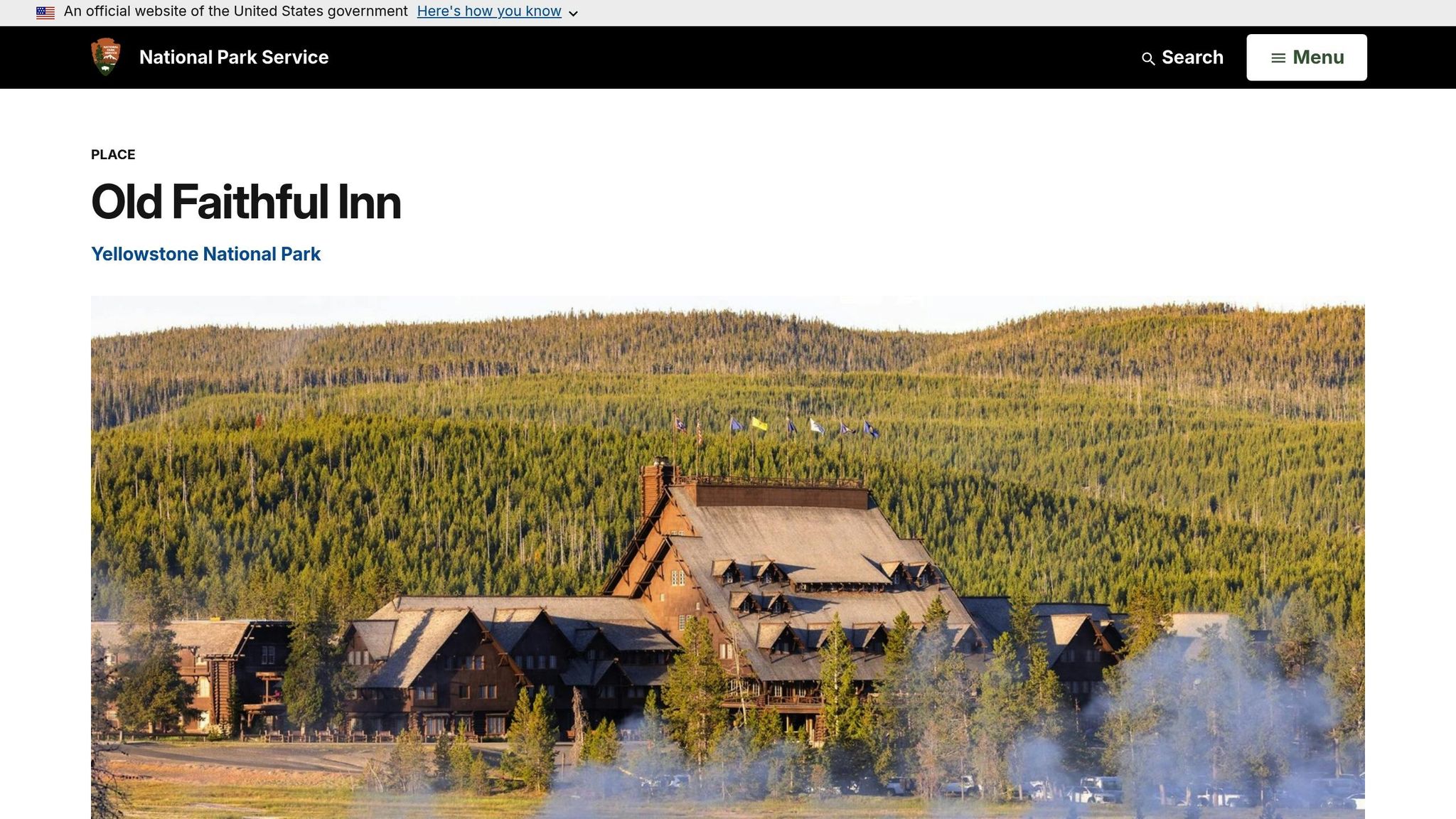
Built during the winter of 1903–04, the Old Faithful Inn stands as the world’s largest log structure and a hallmark of National Park Service rustic architecture. Designed by architect Robert Reamer, the original "Old House" was crafted from lodgepole pine logs and rhyolite stone, both sourced locally from the Yellowstone area. The inn was commissioned to replace the Upper Geyser Basin Hotel.
The inn’s centerpiece is its stunning seven-story lobby, featuring a massive 500-short-ton rhyolite fireplace that towers 85 feet high. Originally, this fireplace boasted eight hearths, though only two remain today due to seismic damage. The rustic aesthetic is further enhanced by wrought iron details, including the front door and a unique chimney clock. Reamer’s design even incorporates a thoughtful touch: he rotated the building 90° so the entrance porch perfectly frames the iconic eruptions of Old Faithful. Over the years, expansions in 1913 and 1927 stretched the structure to nearly 700 feet in length.
"The inn combines rugged materials and organic motifs in a way that expresses both frontier sensibilities and elegance." – National Park Service
Recognized as a National Historic Landmark since 1987, the Old Faithful Inn continues to capture hearts. In 2007, the American Institute of Architects ranked it among America’s favorite buildings. Between 2004 and 2008, a major restoration project reinforced the inn with steel to improve its seismic resilience, a necessity after the 1959 earthquake reduced the fireplace’s hearths.
Staying true to its historic roots, the inn offers guest rooms without televisions, radios, or air conditioning, preserving its timeless charm. Open seasonally from early May to mid-October, the lodge also provides access to nearby outdoor boardwalks for exploring the surrounding geothermal wonders. Its rich history and enduring design make it a standout among historic lodges.
2. Lake Yellowstone Hotel, Yellowstone National Park
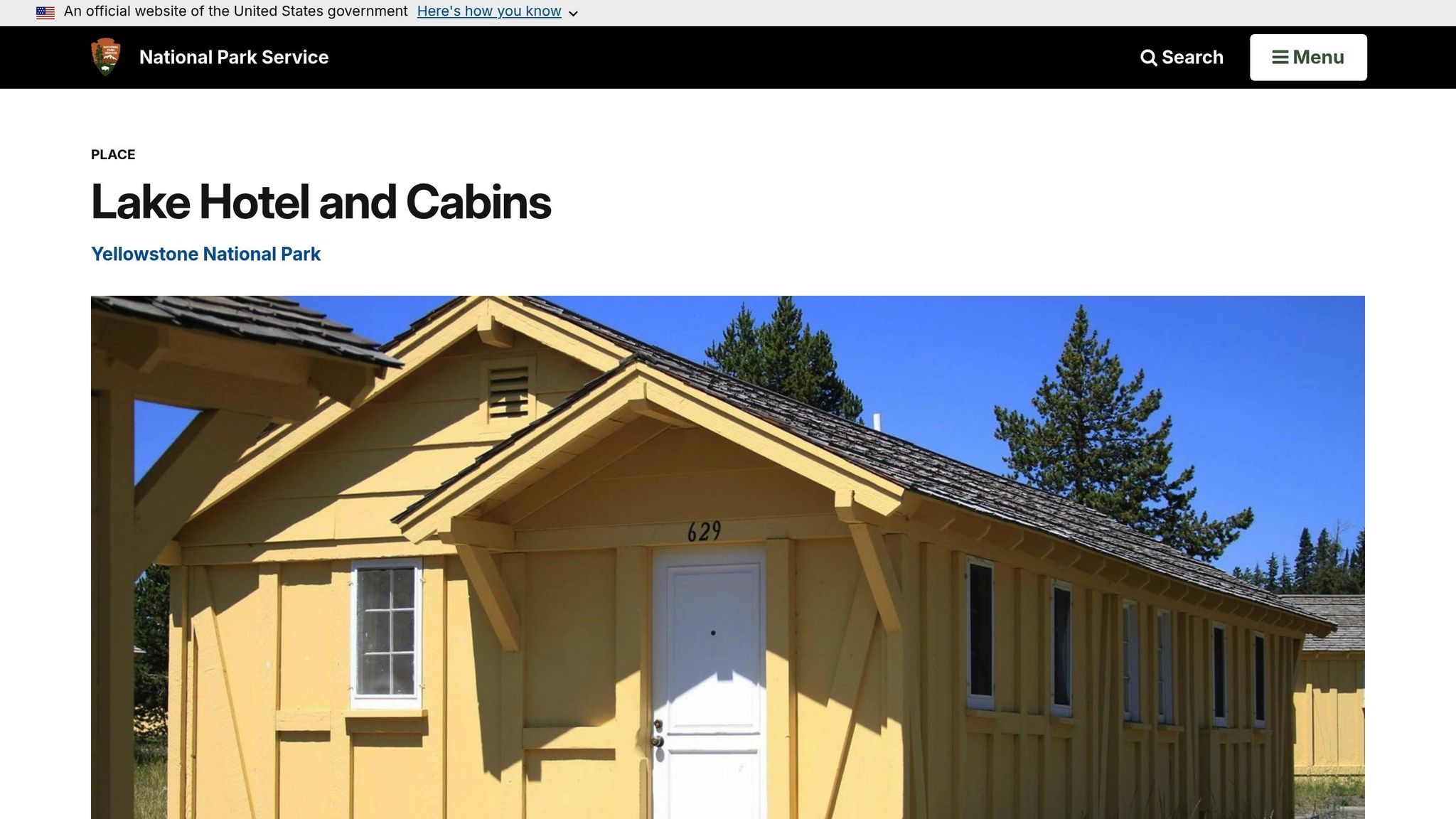
Situated on the northern edge of Yellowstone Lake, the Lake Yellowstone Hotel holds the title of the oldest operating hotel in Yellowstone National Park, welcoming guests since 1891. Initially designed by architect N.L. Haller, the hotel took on a new identity in 1903 when Robert Reamer, the creative mind behind the Old Faithful Inn, gave it a refined Colonial Revival makeover. Unlike the rugged log cabins typical of many park lodges, Reamer’s vision brought elegance with Ionic columns, porticoes, and ornate balconies, giving the hotel its distinguished, stately appearance.
The hotel’s Sunroom, also known as the Reamer Lounge, continues to blend historic charm with breathtaking natural beauty. Designed to showcase sweeping views of Yellowstone Lake, it’s the perfect spot to watch the sunrise or sunset. From mid-June through early August, summer evenings come alive with the music of a live string quartet. This tradition brings guests together in a warm, communal atmosphere. As Rick Hoeninghausen, Director of Sales and Marketing for Yellowstone National Park Lodges, puts it: "It’s one of my favorite things about the hotel – it brings people together. People recount the day’s adventures and amazing experiences with the string quartet backing you up." Today, the hotel hosts more than 90,000 visitors each year.
"She is the Grand Old Lady of the Lake. The hotel that has stood in a national park longer than any other, anywhere."
- Leslie Quinn, Interpretive Specialist
Recognized for its historical significance, the hotel was added to the National Register of Historic Places in 1991 and became a National Historic Landmark in 2015. A $28 million renovation in 2014 modernized the accommodations by reducing the number of rooms to 153, each now featuring private bathrooms. In 2017, the hotel also earned the Green Seal Gold certification for its commitment to sustainability.
Guest rooms maintain their timeless appeal by avoiding modern distractions, encouraging visitors to fully appreciate the surrounding natural beauty and connect with one another. Back in 1893, a stay at the hotel cost just $4 per day, a stark contrast to today’s rates, which range from $149 for Frontier Cabins to $629 for the luxurious Presidential Suite. Despite the changes, the Lake Yellowstone Hotel remains a beloved destination, steeped in history and charm.
3. Glacier Park Lodge, Glacier National Park
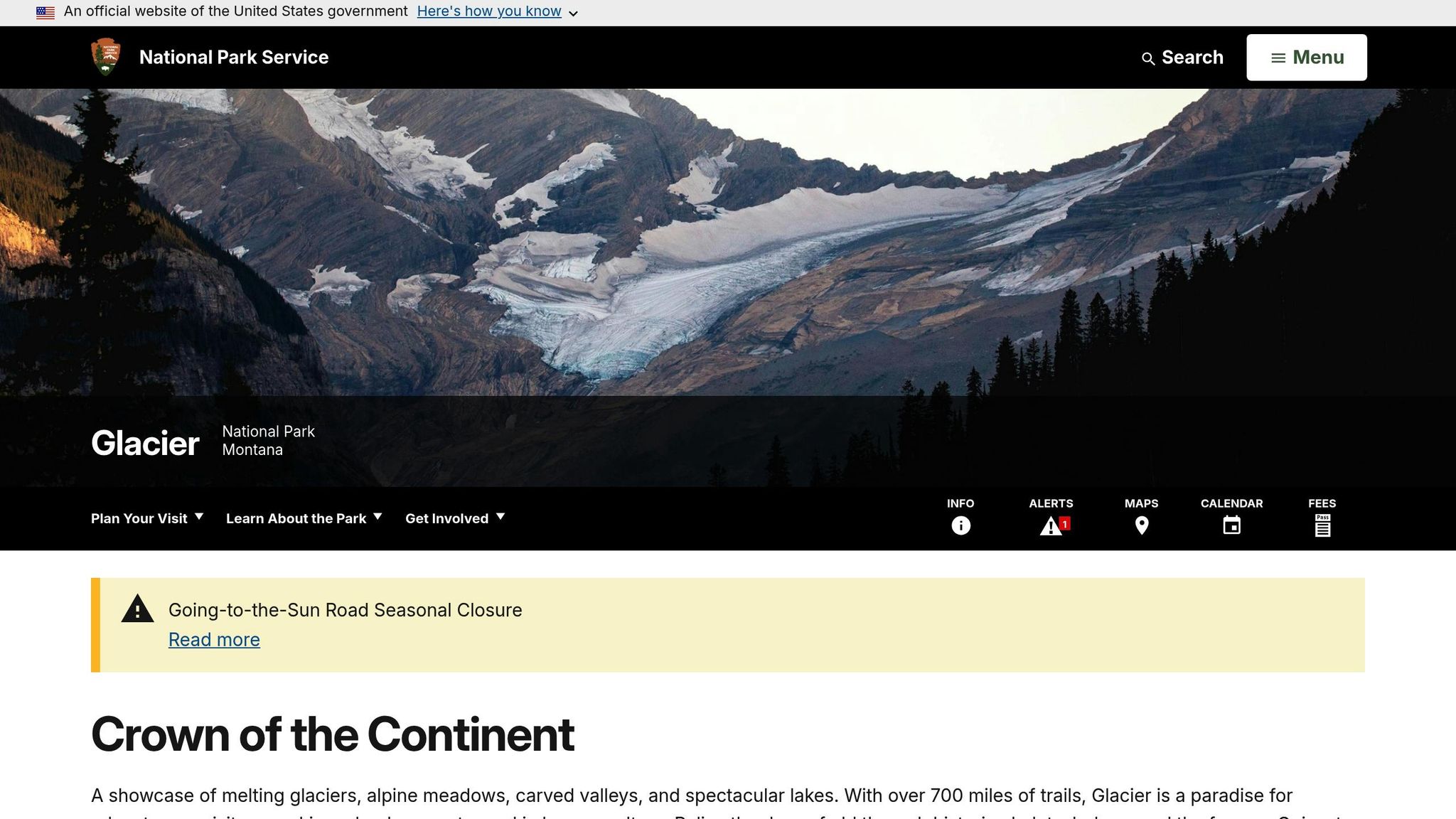
Glacier Park Lodge, located in East Glacier Park, Montana, opened its doors in 1913 after an intense 15-month construction period. Built by the Glacier Park Company, a branch of the Great Northern Railway, it was the brainchild of Louis W. Hill, who envisioned it as the gateway to the "American Alps." Constructed at a cost of about $500,000, the lodge was the first of several grand hotels designed to entice rail passengers to explore the newly established Glacier National Park. Its unique design and architecture set the tone for what would become a signature style in the region.
A standout feature of the lodge is its stunning three-story lobby, supported by 60 towering Douglas-fir columns, each standing 40 feet tall and measuring 36–42 inches in diameter. These trees, harvested from the Pacific Northwest, were approximately 800 years old at the time. Transported by rail to Montana, they became the backbone of the lodge’s iconic design. Known to the Siksiká people as Omahkoyis, or "Big Tree Lodge", the structure sits on 160 acres purchased from the Blackfeet Indian Reservation. The lodge’s interior layout takes inspiration from a Christian basilica, while its exterior reflects Swiss chalet-style architecture, complete with log-columned porticos and deep eaves.
"The lodge acted as a grand entry to the wilderness, as most visitors came by train from the east." – National Park Service
Tradition plays a big role at Glacier Park Lodge. Visitors arriving on Amtrak’s Empire Builder train are welcomed by bellhops dressed in classic railway uniforms and transported in vintage 1960s Aerobus Checker station wagons. The lodge introduced Montana’s first golf course in 1928, a nine-hole course that remains a favorite among guests. Additionally, a seasonal tipi village on the lawn and exhibits of Indigenous artifacts pay tribute to the lodge’s connection with the Blackfeet Nation.
While Glacier Park Lodge is not officially listed on the National Register of Historic Places, experts consider it eligible for inclusion. The National Park Lodge Architecture Society has awarded it a "Superior Classification II" rating, highlighting its outstanding example of National Park Rustic style. Today, the lodge features 161 guest rooms and operates from late May through mid-September, continuing to serve as a grand gateway to Glacier National Park.
4. El Tovar Hotel, Grand Canyon National Park
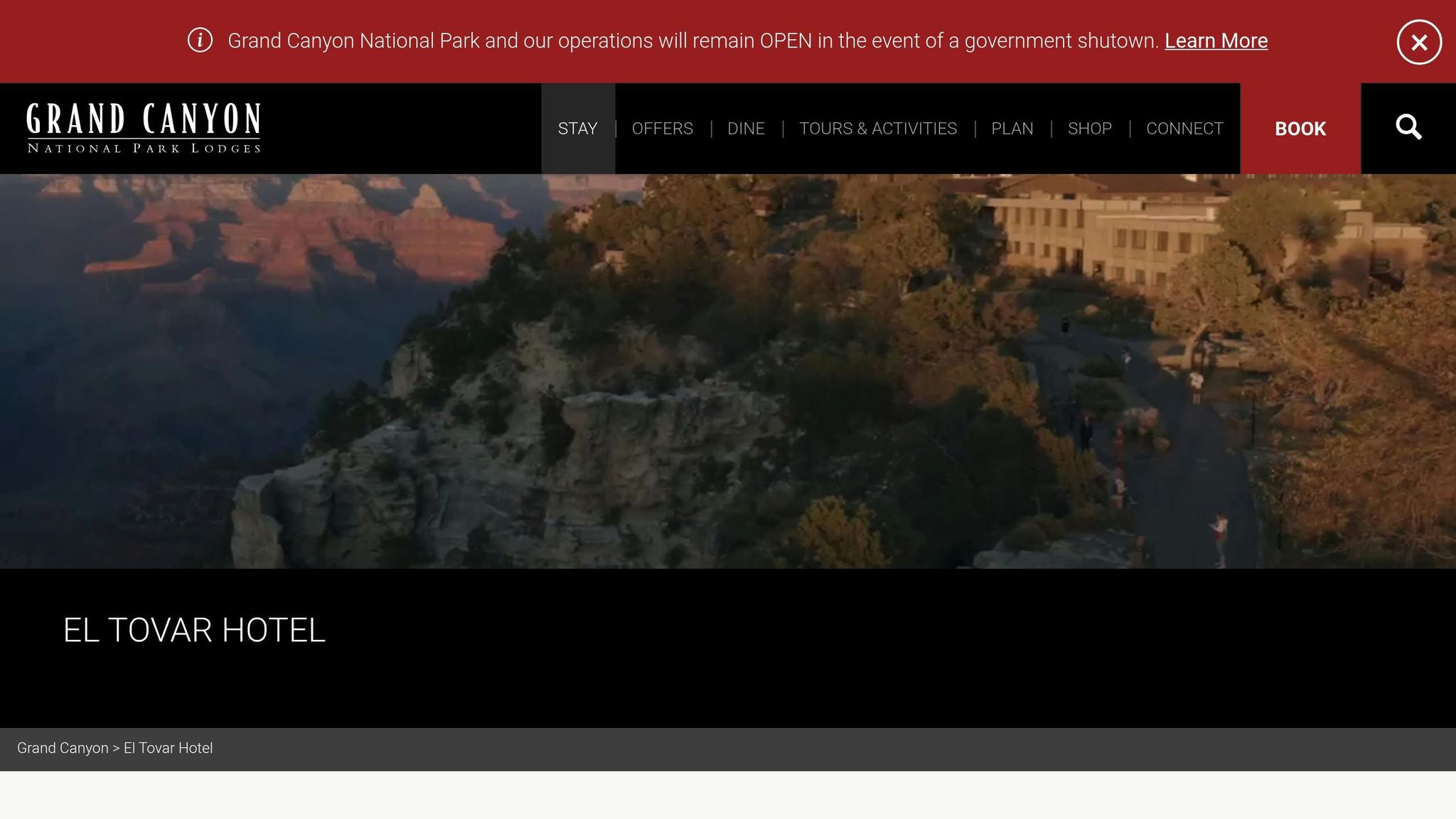
Perched just 20 feet from the South Rim of the Grand Canyon, El Tovar Hotel has been welcoming guests since January 1905. Built as the first luxury accommodation in the area, it was constructed before the Grand Canyon even became a national park. Designed by architect Charles Whittlesey for the Atchison, Topeka, and Santa Fe Railway, the hotel cost about $250,000 – a significant investment at the time. It was created to serve affluent tourists traveling on the newly completed railway spur from Williams, Arizona, and quickly became a symbol of elegance in the rugged landscape.
The hotel’s design combines elements of a Swiss chalet, a Norwegian villa, and a Scandinavian hunting lodge, all wrapped in a Victorian aesthetic. Constructed with local limestone and Oregon pine, the first floor features log-slab siding with notched corners, while a central turret – originally housing a large water tank – rises four stories high. Inside, Mary Colter’s original decor, including Navajo rugs, mounted animal trophies, and Arts and Crafts-style furnishings, still adorns spaces like the famous "Rendezvous Room."
"The structure was conceived as a cross between a Swiss chalet and Norwegian villa in an effort to accommodate the elite of that era." – National Park Service
When it first opened, the hotel boasted modern amenities for its time. A major renovation in 1983 updated the property, adding private bathrooms and reducing the number of rooms from 103 to 78. Thanks to the building’s historic construction on sloping terrain, no two rooms are identical, and the structure ranges in height from two to four stories.
El Tovar earned a spot on the National Register of Historic Places in 1974 and was later recognized as a National Historic Landmark on May 28, 1987. Today, it holds the distinction of being the oldest operating hotel in Grand Canyon National Park. Managed by Xanterra Parks and Resorts, the hotel’s dining room offers breathtaking views of the canyon, though reservations are essential to secure a table.
5. Bright Angel Lodge, Grand Canyon National Park
Bright Angel Lodge, completed in 1935, stands as a testament to architect Mary Jane Colter’s vision for affordable lodging along the Grand Canyon’s rim. Its roots stretch back to 1896, when James Thurber established a modest wood-frame hotel and tent camp at the head of the Bright Angel Trail. This rich history provides the foundation for the lodge’s architectural and cultural significance.
Colter’s design mirrors a pioneer settlement, blending seamlessly into the canyon landscape with materials like local Kaibab limestone, hand-adzed logs, and adobe. Her work also preserved two key historical structures: the Buckey O’Neill Cabin, the oldest continuously standing building on the South Rim, and the Red Horse Station, which served as the park’s post office for two decades. Today, the lodge offers 90 accommodations, including historic rim-side cabins and rooms with shared baths, catering to a range of visitors.
One standout feature is the history room’s "Geologic Fireplace", an impressive recreation of the canyon’s rock layers. Built with stones sourced from the canyon itself, the fireplace showcases the geological timeline – from the ancient 1.7 billion-year-old Vishnu Schist at its base to the 270 million-year-old Kaibab limestone at the top.
"Colter had all of the stone gathered or cut from the canyon walls and brought up by pack mules for her project… a historic, scientifically accurate, and powerful re-creation of the Grand Canyon’s natural environment." – National Park Service
In 1982, the lodge was added to the National Register of Historic Places, bypassing the typical 50-year age requirement due to its exceptional importance. Just a few years later, on February 18, 1987, it became part of the Grand Canyon Village National Historic Landmark District. Situated at the Bright Angel Trailhead, the lodge offers visitors unparalleled access to one of the park’s most popular hiking routes and breathtaking views along the Rim Trail.
6. Crater Lake Lodge, Crater Lake National Park
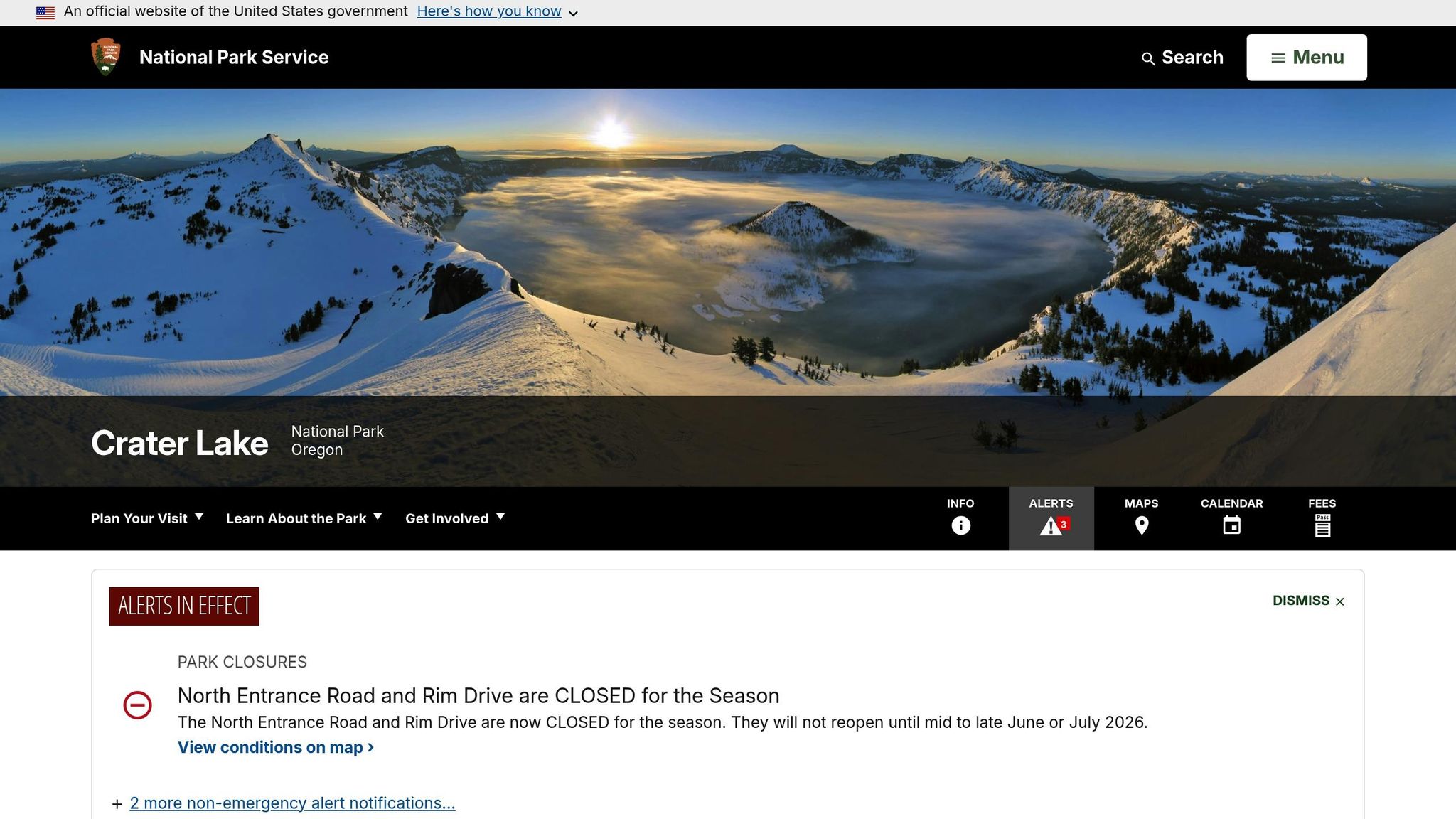
Crater Lake Lodge officially opened its doors on July 3, 1915, after journalist William Gladstone Steel spent two decades campaigning for its creation. Construction began in 1907, with the foundation completed in 1909. By 1924, the West Wing was added, increasing the room count to 105 by 1929. However, the original structure faced serious challenges. The use of undersized beams and lime-based mortar proved inadequate against the region’s heavy snow and harsh weather conditions.
"The original construction used undersized beams that couldn’t support the weight of winter snows, and a lime-based mortar that couldn’t weather the harsh environment." – National Park Lodge Architecture Society
By the 1940s, the building’s structural integrity had deteriorated to the point that cables and blocks were required to keep it standing. Safety concerns led to its closure in 1989. Between 1991 and 1994, the lodge underwent a $15 million reconstruction, reopening in 1995 with a modernized, earthquake-resistant interior while maintaining its 1920s exterior charm. Today, the lodge features 71 guest rooms with private baths, a major improvement from the original 50-square-foot rooms with shared facilities.
The lodge is a classic example of the National Park Rustic style, characterized by rubble stone masonry on the first level, unpeeled logs, and sturdy timber framing. Its chalet-style roof, complete with shed dormers, was designed to handle the heavy snowfall typical of the Cascade Mountains. Inside, the Great Hall boasts a massive native stone fireplace and Ponderosa pine details, evoking the feel of a European hunting lodge. Guests can relax on the veranda in rocking chairs while enjoying breathtaking views from nearly 1,000 feet above Crater Lake, the deepest lake in the United States at almost 2,000 feet deep.
After its extensive restoration, Crater Lake Lodge became a shining example of National Park Rustic architecture. It was listed on the National Register of Historic Places in 1981, joined the Rim Village Historic District in 1997, and became part of Historic Hotels of America in 2012. The National Park Lodge Architecture Society recognizes it as a "Criterion Classification I" property, the highest distinction for national park lodges. Open seasonally from mid-May to early October, the lodge offers unparalleled access to the caldera rim and remains the centerpiece of Rim Village.
sbb-itb-00512f3
7. Many Glacier Hotel, Glacier National Park
Many Glacier Hotel, built in 1914–15 by the Great Northern Railway, officially opened its doors on July 4, 1915. At the time, it was Montana’s largest hotel and earned the nickname "Gem of the West" from the railway company. Louis W. Hill, a railway magnate, envisioned the hotel as the centerpiece of his effort to market Glacier National Park as the "American Alps", encouraging travelers to embrace the slogan, "See America First". The hotel’s design reflects a unique blend of architecture and nature, following the era’s distinctive parkitecture style.
Architect Thomas D. McMahon designed the five-story structure in the Swiss Alpine Chalet style, incorporating Pacific Coast Douglas fir and locally sourced timber. Its gabled roofs, exposed beams, and Swiss-patterned balconies sit atop a stone foundation, with the wood superstructure blending seamlessly into the rugged surroundings. The roofline even mimics the dramatic angles of the nearby mountain peaks, reinforcing its connection to the natural landscape.
The hotel stretches along Swiftcurrent Lake’s eastern shore, covering nearly a quarter mile. It features interconnected buildings housing 214 guest rooms and a stunning four-story lobby. The lobby is a centerpiece in itself, with a massive stone fireplace, Japanese lanterns, and a striking double helix staircase. Originally, it also displayed Blackfeet pictographs and animal pelts, showcasing both the local heritage and the Great Northern Railway’s global influence.
8. Zion Lodge, Zion National Park
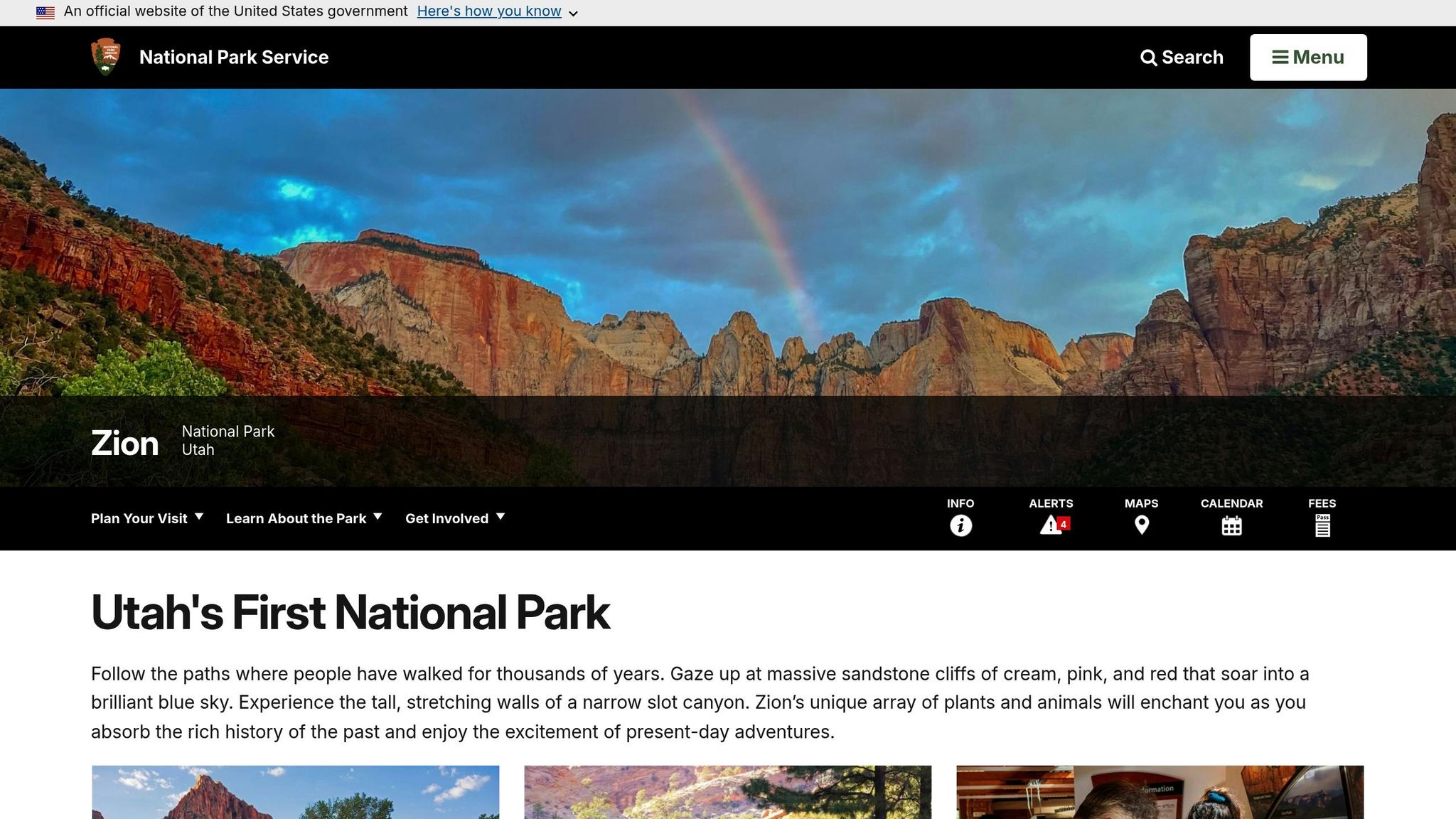
Zion Lodge was originally developed by the Utah Parks Company, a subsidiary of the Union Pacific Railroad, as part of an effort to boost passenger rail traffic to southwest Utah’s national parks. Designed by architect Gilbert Stanley Underwood, the lodge was built between 1924 and May 1925 in the National Park Service Rustic style. Unlike other lodges that used whole logs, Zion Lodge featured a "studs-out" construction with milled lumber – a design influenced by the granaries of early Mormon settlers in the area.
The construction of the lodge required 265,000 board feet of lumber, which was transported using the Cable Mountain Draw Works. Underwood’s design aimed to complement the narrow canyon’s natural beauty rather than overshadow it. To achieve this, the lodge incorporated a green roof and local stone to blend seamlessly with its surroundings. After a fire in 1966, a new prefabricated lodge was built in just 108 days. In 1990, a remodel restored the structure to reflect its original historic appearance.
Zion Lodge stands out for its thoughtful design that integrates with the park’s dramatic landscape. It is the only lodging located within Zion National Park, situated in the heart of Zion Canyon. The National Park Service describes it as offering "unparalleled views of the towering sandstone cliffs found throughout Zion National Park". The lodge features 76 rooms, six suites, and 40 historic cabins.
As the park’s central hub, Zion Lodge provides the only on-site dining options, including the Red Rock Grill and the seasonal Castle Dome Café. It also serves as shuttle stop #5 on the Zion Canyon Shuttle Bus route. Guests staying overnight enjoy exclusive permits to drive their private vehicles on the restricted Zion Canyon Scenic Drive. Several popular hiking trails, such as the Emerald Pools, Grotto Trail, and Sand Bench Trail, are conveniently located just across the road.
Zion Lodge holds a spot on the National Register of Historic Places and is a member of Historic Hotels of America. Since 1935, it has hosted ranger-led activities, including patio talks and evening programs. As the park’s only in-park accommodation, reservations should be made well in advance.
9. Ahwahnee Hotel, Yosemite National Park
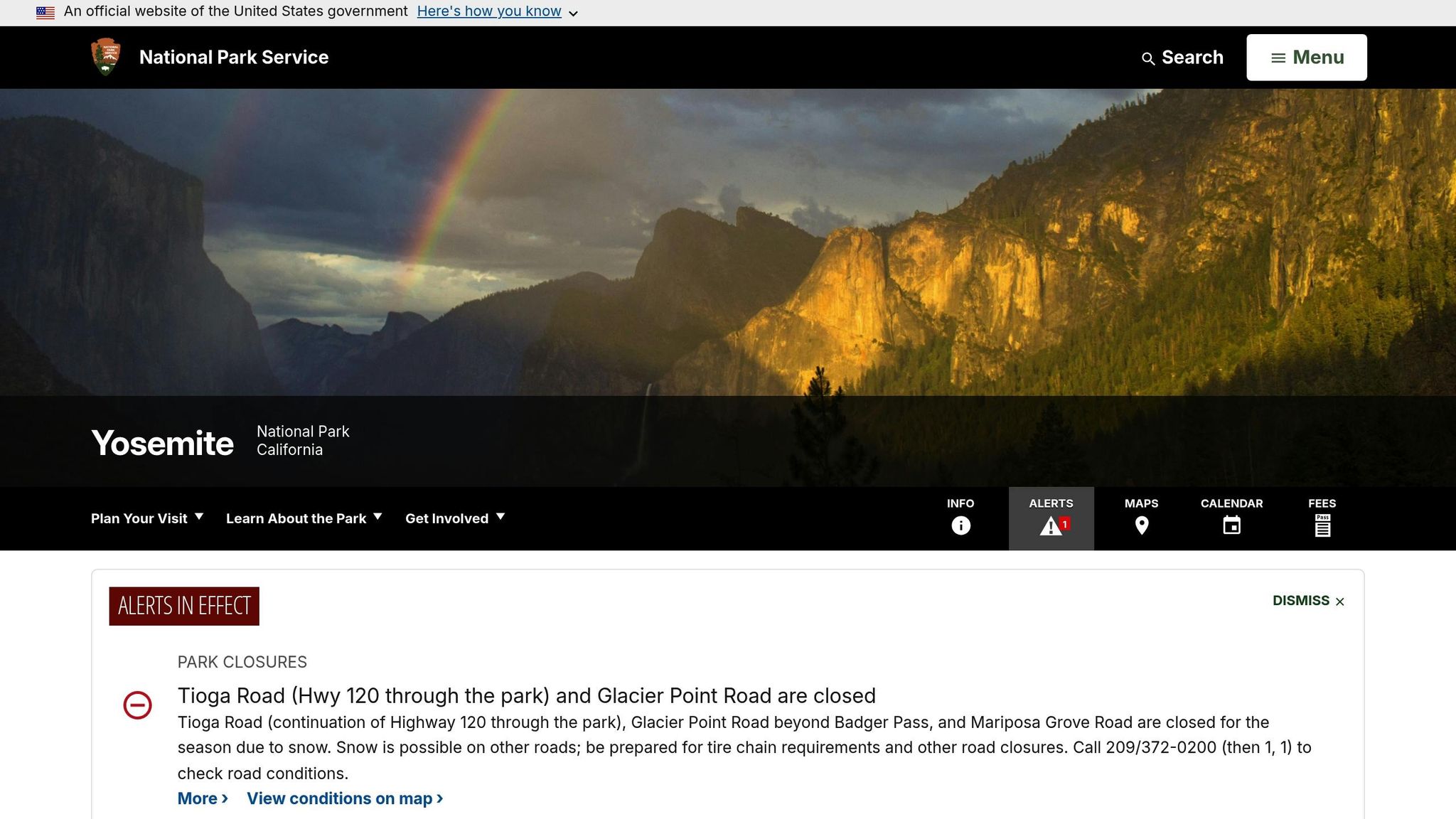
The Ahwahnee Hotel officially opened its doors on July 16, 1927, after nearly a year of construction that began on August 1, 1926. Stephen T. Mather, the first director of the National Park Service, envisioned the hotel as a way to draw affluent and influential guests whose backing would be essential for the growth of the fledgling park system. Architect Gilbert Stanley Underwood designed the 150,000-square-foot structure in the National Park Service Rustic style, blending Art Deco, Native American, and Arts and Crafts influences. The ambitious project required 5,000 tons of granite, 1,000 tons of steel, and 30,000 feet of timber, ultimately costing about $1.25 million – nearly double the initial estimate.
Though it appears rustic, the hotel’s design prioritizes fire safety. The exterior siding and structural timbers are actually made of concrete, molded and stained to mimic redwood. Even the massive beams in the Grand Dining Room, which spans 130 feet in length with a soaring 34-foot ceiling, are hollow and reinforced with steel cores for added fire resistance. This focus on fireproofing was crucial, given the hotel’s remote location in a forested area.
Nestled at the eastern end of Yosemite Valley, beneath the Royal Arches rock formation, the Ahwahnee offers breathtaking views of Half Dome, Glacier Point, and Yosemite Falls. The site, once home to the native Miwok people, takes its name – Ahwahnee – from the indigenous word for the valley. The Y-shaped hotel features 97 rooms in its main building and an additional 24 cottages, creating a setting steeped in both natural beauty and history.
The Ahwahnee earned a spot on the National Register of Historic Places in 1977 and was declared a National Historic Landmark on May 28, 1987. During World War II, from 1943 to 1945, the U.S. Navy converted the hotel into a convalescent hospital for veterans. Over the years, it has welcomed numerous prominent figures, including Queen Elizabeth II, Presidents Kennedy and Obama, Walt Disney, and Steve Jobs. Its interiors, particularly the Great Lounge and the striking red elevator doors, even inspired Stanley Kubrick’s vision of the Overlook Hotel in the 1980 film The Shining.
A significant seismic retrofitting project, funded through the Great American Outdoors Act, was set to be completed by winter 2024 at a cost of $31.6 million to $35 million. Project Manager Randal Corral highlighted the delicate balance required for such work:
"With seismic work at a National Historic Landmark building, our goal is to preserve the Ahwahnee’s original charm and character. This is a delicate dance between modern engineering and historic preservation".
Today, the Ahwahnee hosts approximately 100,000 overnight guests annually and welcomes an additional 300,000 visitors for dining and special events.
10. Timberline Lodge, Mount Hood National Forest
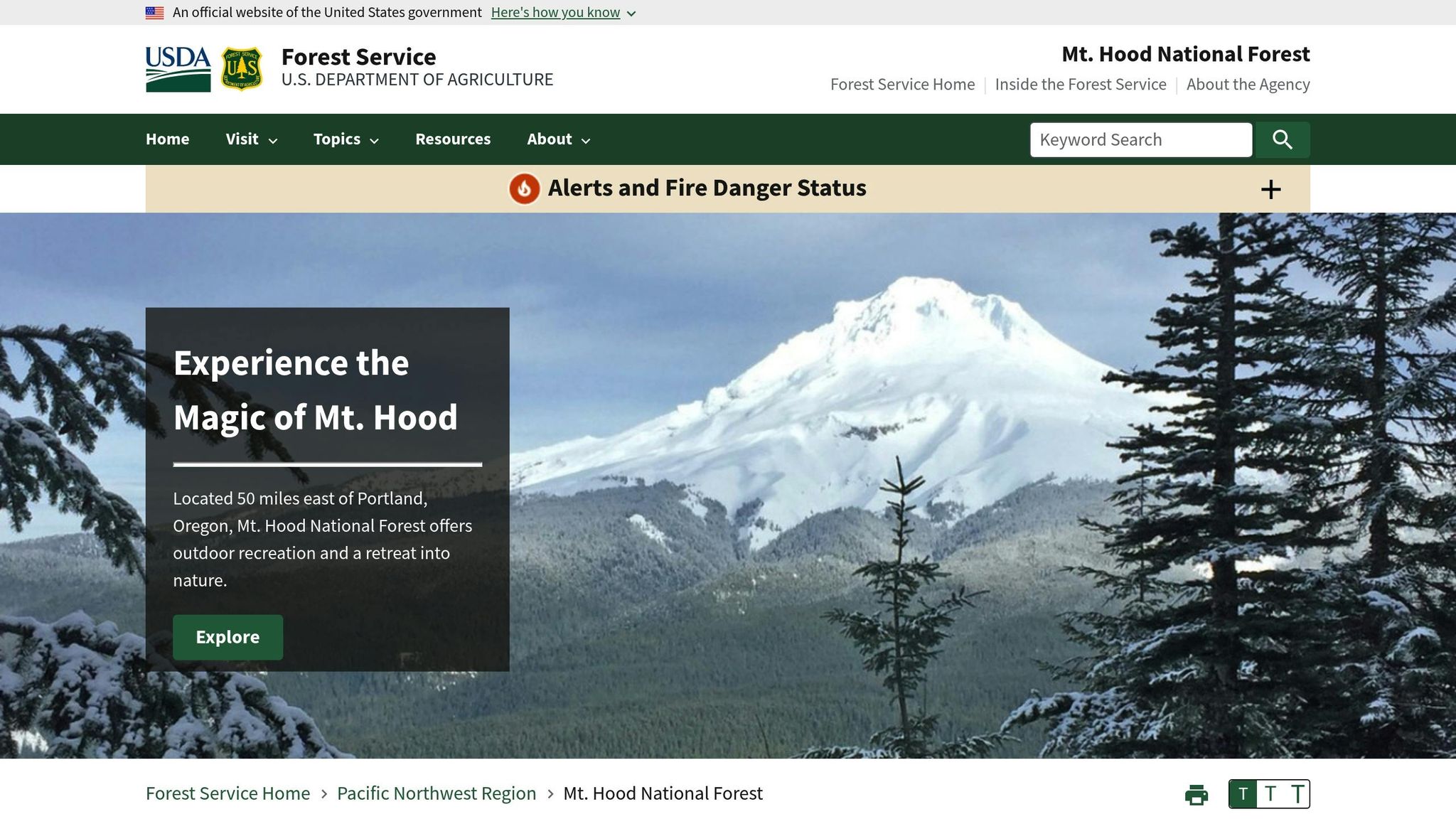
Perched at 6,000 feet on the south slope of Mount Hood, about 60 miles east of Portland, Oregon, Timberline Lodge is a striking testament to Depression-era resilience and craftsmanship. Built between 1936 and 1938 as a Works Progress Administration (WPA) project, it provided jobs for 500 workers during an 18-month period. President Franklin D. Roosevelt himself dedicated the lodge on September 28, 1937, as a tribute to the skill and effort of the WPA. The lodge officially opened its doors on February 4, 1938.
The 55,000-square-foot lodge was designed by architect Gilbert Stanley Underwood in the Rustic Cascadian style, a hallmark of national park architecture. Its centerpiece is a hexagonal "head house" with a towering stone chimney that stretches 90 feet high and spans 14 feet in diameter, featuring six fireplaces. Builders used local materials, including rubble masonry and Oregon woods like cedar, Douglas fir, hemlock, and ponderosa pine. To keep costs low, they creatively incorporated repurposed items such as cedar poles, tire chains, and railroad rails. This resourceful approach gave the lodge its rugged yet refined character.
After a period of decline that led to its closure in 1955, Timberline Lodge was brought back to life thanks to Richard L. Kohnstamm, whose family still manages the property today. Recognized for its historical and architectural significance, it was added to the National Register of Historic Places in 1973 and became a National Historic Landmark on December 22, 1977. Now welcoming nearly 2 million visitors each year, the lodge boasts the longest skiing season in the United States, operating year-round.
Timberline Lodge’s appeal extends beyond its history. It gained cinematic fame as the exterior of the Overlook Hotel in Stanley Kubrick’s The Shining (1980). Inside, visitors can admire original murals, intricate wood carvings, and hand-forged ironwork that reflect Depression-era artistry. Adding to its charm, the lodge is home to two resident St. Bernards, Bruno and Heidi, who delight guests of all ages. This blend of rich history, creative craftsmanship, and cultural significance ensures Timberline Lodge remains a beloved icon of America’s national park legacy.
Lodge Comparison Table
Each historic lodge offers a unique charm and experience. Below is a table summarizing their construction dates, architectural styles, standout features, and historic designations. Use this side-by-side comparison to find the lodge that best matches your interests.
| Lodge Name | Year Built | Architectural Style | Standout Features | Historic Designation |
|---|---|---|---|---|
| Old Faithful Inn | 1903–1904 | National Park Service Rustic | World’s largest log building, seven-story lobby, 500-ton rhyolite fireplace | National Historic Landmark, NPLAS Classification I |
| Lake Yellowstone Hotel | 1891 | Colonial Revival | Bright yellow facade, white ionic columns, sunroom with nightly string quartet | Historic designation |
| Glacier Park Lodge | 1913 | Swiss Chalet/Rustic | Massive lobby supported by 40-foot Douglas fir columns | Historic designation |
| El Tovar Hotel | 1905 | Norwegian Villa/Rustic | Located on the Grand Canyon’s South Rim, features a fine dining restaurant | National Historic Landmark, NPLAS Classification I |
| Bright Angel Lodge | 1935 | National Park Service Rustic | Geological fireplace showcasing canyon layers | Historic designation |
| Crater Lake Lodge | 1915 | National Park Service Rustic | Stunning views of Crater Lake from the Great Hall | NPLAS Classification I |
| Many Glacier Hotel | 1915 | Swiss Chalet | Four-story lobby with a scenic lakeside setting in Glacier National Park | Historic designation |
| Zion Lodge | 1925 (rebuilt 1937) | National Park Service Rustic | The only lodge within Zion National Park, surrounded by iconic red rock cliffs | Historic designation |
| Ahwahnee Hotel | 1927 | National Park Service Rustic | 24-foot ceilings, stained glass windows, and breathtaking Yosemite Valley views | NPLAS Classification I |
| Timberline Lodge | 1936–1938 | Rustic Cascadian | WPA-era craftsmanship, 90-foot stone chimney, and year-round skiing | National Historic Landmark (1977) |
Lodges with the NPLAS Classification I distinction, such as The Ahwahnee, Crater Lake Lodge, El Tovar, and Old Faithful Inn, represent the pinnacle of historic design. If you value architecture, these should be high on your list. For history buffs, Lake Yellowstone Hotel, built in 1891, is the oldest, while Timberline Lodge showcases the craftsmanship of the Depression era.
Conclusion
Staying at one of these historic national park lodges is about so much more than just finding a place to sleep. These lodges offer a chance to immerse yourself in nature, marvel at the unique "parkitecture" that harmonizes with the wilderness, and take a journey back in time to the 19th and 20th centuries.
This blend of history and natural beauty creates a connection to the parks that’s hard to match. The lodges’ prime locations – whether overlooking the Grand Canyon’s rim or within view of Yellowstone’s Old Faithful – offer a level of access and scenery you simply can’t get outside the park. Many of these lodges intentionally forgo modern conveniences like TVs and Wi-Fi, making them perfect for a digital detox and some much-needed quiet reflection. That said, this rustic charm also means accommodations can be basic, and some may lack features like air conditioning.
Planning ahead is key. Reservations often need to be made 6 to 12 months in advance, as most lodges operate seasonally from late May through mid-October. Dining reservations, such as those for the El Tovar Dining Room, should be secured at least a month ahead.
Each lodge tells its own story, whether it’s the grandeur of Old Faithful Inn, the Colonial Revival elegance of Lake Yellowstone Hotel after its $28 million renovation, or the Depression-era craftsmanship of Timberline Lodge. These properties are more than just places to stay – they’re living pieces of America’s history.
For more tips on planning your visit and detailed insights into the parks, check out The National Park Guide at https://thenationalparkguide.com.
FAQs
What is ‘parkitecture,’ and how does it shape the design of national park lodges?
‘Parkitecture’ is an architectural style introduced by the National Park Service, aimed at creating structures that naturally blend into their environments. By using locally sourced materials like stone and wood, along with handcrafted details, this design approach mirrors the distinct beauty of each park. The result? Buildings that feel like an extension of the landscape, fostering a seamless connection between nature and architecture.
National park lodges built in this style exude a rustic charm that draws inspiration directly from the surrounding scenery. Take, for instance, Yellowstone’s Old Faithful Inn, crafted from lodgepole pine and rhyolite stone, or Yosemite’s Ahwahnee Hotel, designed to echo the grandeur of its stunning backdrop. These iconic lodges don’t just provide a place to stay – they immerse visitors in the natural wonder of the parks, enhancing their overall experience.
Which historic lodge offers the most stunning views and unique features in its national park?
The Old Faithful Inn, located in Yellowstone National Park, is a true marvel with its stunning views and rich history. Built between 1903 and 1904, this inn holds the title of the largest log structure in the world and is recognized as a National Historic Landmark. Step into its grand lobby, and you’ll be greeted by a massive stone fireplace and a handcrafted copper clock, both of which add a touch of rustic elegance to its warm, inviting atmosphere. Its proximity to the iconic Old Faithful geyser means guests are treated to unforgettable sights of Yellowstone’s geothermal wonders and the surrounding wilderness.
Other iconic lodges worth mentioning include El Tovar at Grand Canyon National Park, which sits right on the canyon’s edge, offering breathtaking views, and The Ahwahnee in Yosemite National Park, known for its luxurious design and sweeping vistas of Yosemite Valley. While each of these lodges has its own charm and unique experiences, the Old Faithful Inn continues to captivate visitors with its extraordinary blend of history, architecture, and natural splendor.
When should I book a stay at a historic national park lodge?
To snag a reservation at one of the historic national park lodges, you’ll want to plan 6 to 12 months ahead. These lodges are incredibly sought after, particularly during peak travel seasons, and spots fill up fast.
This is especially true for well-known destinations like Yellowstone, the Grand Canyon, and Glacier National Park. Reservations for these iconic spots can sell out quickly, so your best bet is to book as soon as reservations open – sometimes as early as a year in advance.