
Want to experience Indigenous traditions in U.S. national parks? From crafts and storytelling to dance and music, parks like Yellowstone and the Grand Canyon host events that honor Native heritage. These gatherings connect visitors to the deep history of the lands and the communities that have lived there for thousands of years.
Key Highlights:
- Yellowstone Tribal Heritage Center (May 25–Oct 3, 2026): Daily presentations by artists from 27 tribes, featuring beadwork, storytelling, and more.
- Grand Canyon Cultural Demonstration Program: Watch artists create traditional crafts like silversmithing and basket weaving, with March 2026 highlights including Hopi Kachina carving.
- Voices of Yellowstone Festival: A week-long event near Yellowstone with teepees, art markets, and guided tours (some activities require registration).
Tips for Visitors:
- Respect customs: Stand during ceremonies, avoid touching regalia, and follow the MC’s guidance.
- Plan ahead: Check for parking, accessibility options, and event-specific rules.
- Pack wisely: Bring water, sun protection, and cash for crafts or donations.
These events go beyond entertainment – they’re a chance to learn directly from Indigenous voices while supporting their efforts to preserve traditions.
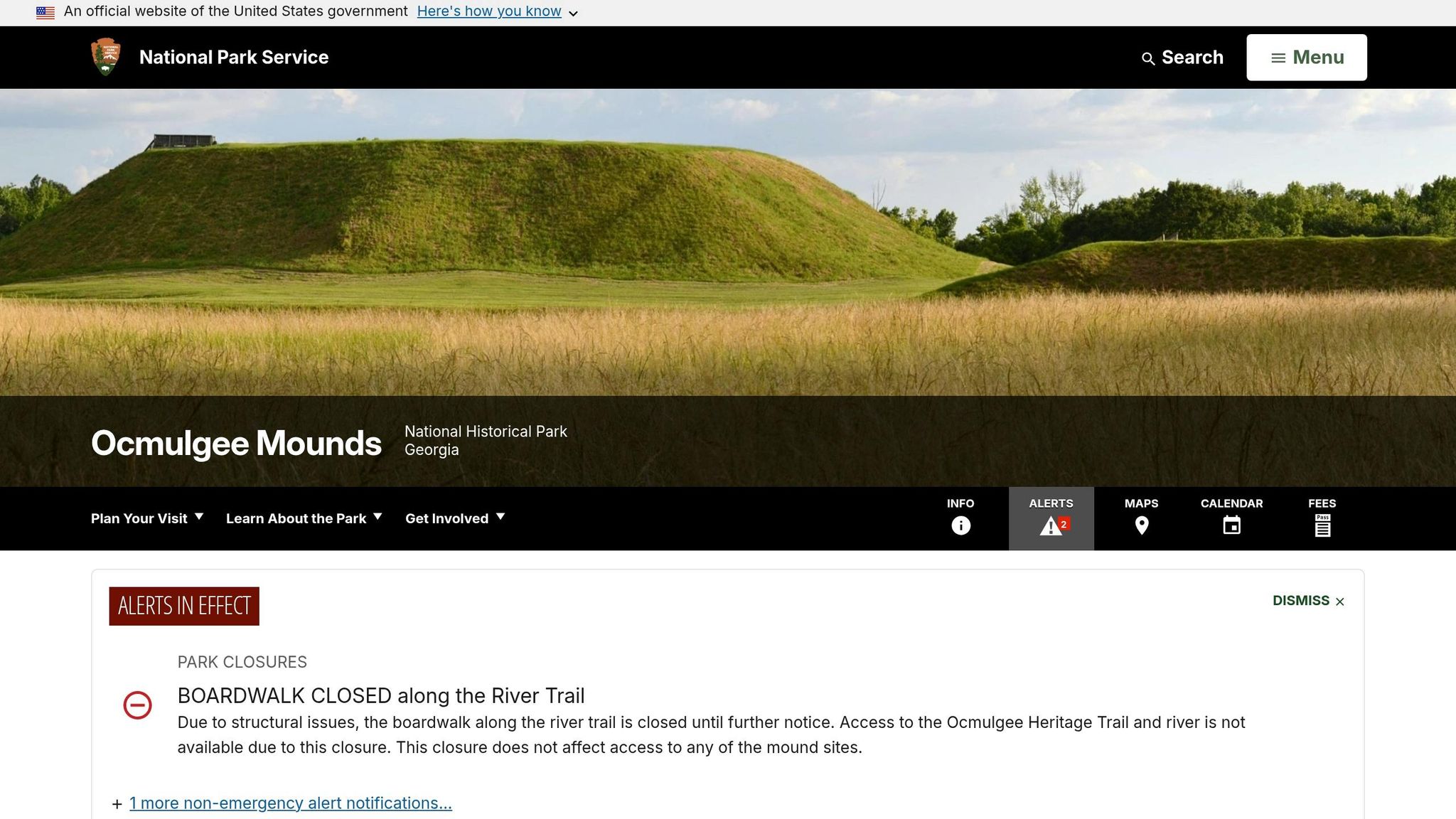
Ocmulgee Mounds hosts 33rd annual Ocmulgee Indigenous Celebration
sbb-itb-00512f3
Major Indigenous Events in National Parks
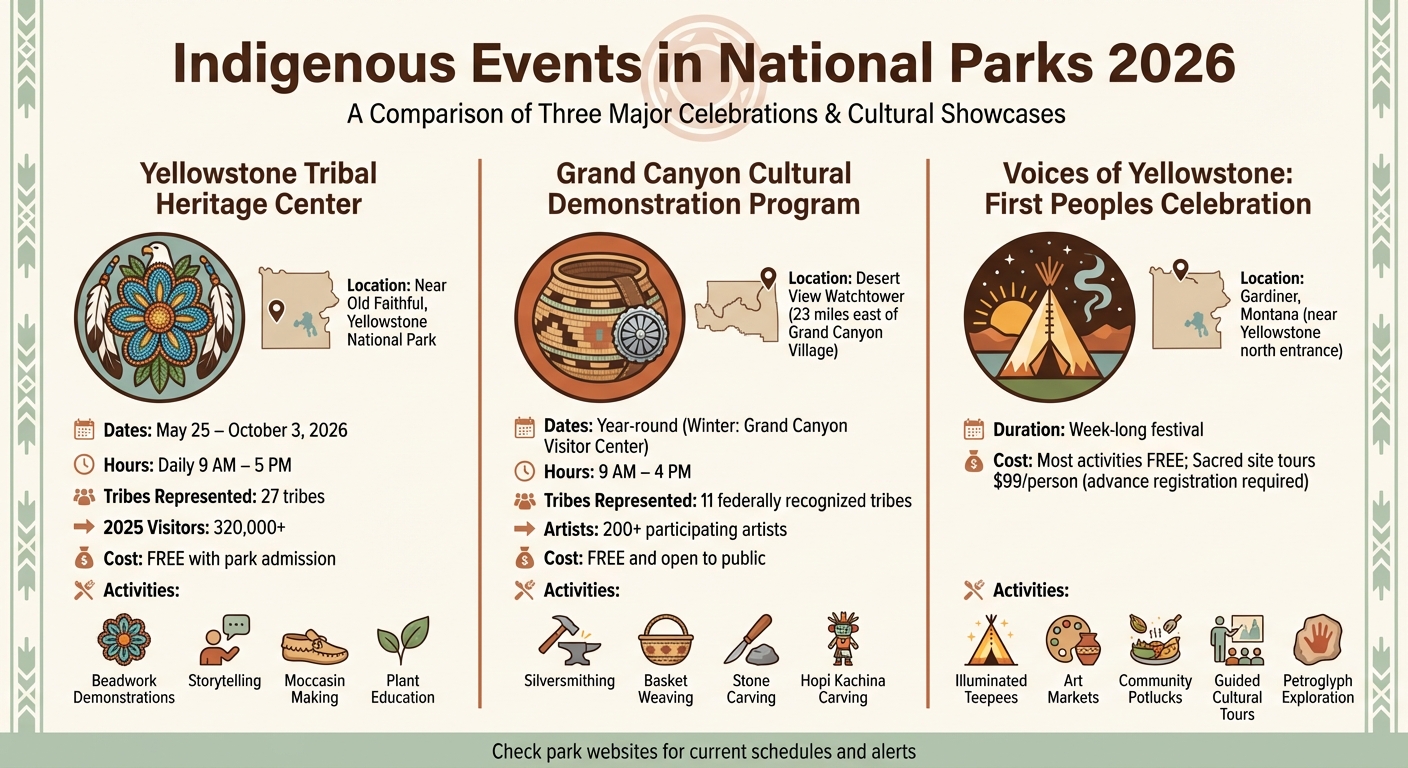
Major Indigenous Events in National Parks: Dates, Locations, and Admission Costs 2026
Across U.S. national parks, Indigenous celebrations bring visitors closer to tribal traditions through the work of artists, storytellers, and cultural experts.
Grand Canyon Cultural Demonstration Program
The Desert View Watchtower, located 23 miles east of Grand Canyon Village, is the main venue for live cultural demonstrations. From 9:00 a.m. to 4:00 p.m., visitors can watch Indigenous artists practice traditional crafts like silversmithing, yucca basket weaving, stone carving, and Hopi Kachina carving. During the winter months (January and February), these demonstrations move to the Grand Canyon Visitor Center on the South Rim.
This program, which began in 2014 with just four participants, now features over 200 artists from 11 federally recognized tribes. Scheduled artists for March 2026 include Darren Seweyestewa (Hopi silversmithing, March 3–5), Jimmy Yawakia and Duran Gasper (Zuni stone carving, March 10–11), and Curtis Naseyowma (Hopi Kachina carving, March 24–25). These events are free and open to the public.
"The craft has been in the family since my dad started 50 years ago. He learned the basics from his uncle… and from there went on to start his business." – Bryan Joe, Navajo Beader and Silversmith
Yellowstone National Park offers similar opportunities to experience Indigenous culture through art, tradition, and storytelling.
Yellowstone Tribal Heritage Center Events
The Tribal Heritage Center, located near Old Faithful, is open daily from 9 a.m. to 5 p.m. during the summer season (May 25–October 3, 2026). This space, a collaboration between the National Park Service and Yellowstone Forever, features presenters from 27 tribes connected to the Yellowstone region.
In 2025, over 320,000 visitors engaged with 33 presenters from 19 different tribes at the center. Activities include demonstrations of beadwork, traditional storytelling, moccasin making, and education on natural plant uses. Early presenters for the 2026 season include Carrie Moran McCleary (Little Shell Chippewa, May 25–30) showcasing Fierce One Doll construction, Jack Gladstone (Blackfeet, June 1–6) sharing songs and stories, and River Webb (Nez Perce/Meskwaki, June 15–20) teaching beadwork techniques. All presentations are free with park admission.
These events highlight not just the artistry of Indigenous cultures but also their importance in preserving traditions for future generations.
Voices of Yellowstone: First Peoples Celebration
The Voices of Yellowstone festival, held in Gardiner, Montana, near Yellowstone’s north entrance, extends these cultural experiences beyond park boundaries. This week-long event features illuminated teepees, native art markets, community potlucks, and guided cultural tours. Most activities are free, though sacred site tours require advance registration at $99.00 per person.
The festival emphasizes hands-on learning, offering opportunities to explore petroglyphs, participate in traditional food preparation, and understand the spiritual connections to the landscape.
Tips for Attending Indigenous Events
Preparation and Etiquette
When attending Indigenous events, it’s important to respect traditions and customs. For instance, the dance arena is considered sacred – never walk across it. Instead, use the perimeter to move around. During the Grand Entry, as well as Flag Songs, prayer songs, and veteran honors, stand up and remove your hat as a sign of respect.
"Respecting tribal customs and traditions ranks as the most important rule of etiquette to remember." – Tim Trudell, Member of the Isanti Dakota
Dancers’ attire should always be referred to as regalia. These items often carry deep spiritual or familial meaning, so avoid touching them or asking to do so. If an eagle feather falls, do not pick it up – this requires a special ceremony to recover. Similarly, remain silent during ceremonies and avoid recording them. The drum, often called the heartbeat of the event, is highly symbolic. Never touch the drums or drumsticks, and avoid sitting in the front row, as it’s reserved for dancers.
Pay close attention to the Master of Ceremonies (MC), who will guide attendees on when to stand, when photography is allowed, and when intertribal dances are open to the public. Photography is strictly forbidden during prayers, honor songs, and certain ceremonies, so always ask for permission before taking pictures of individuals outside the arena. Dress modestly – long pants or skirts and shirts that cover your shoulders are recommended. Avoid wearing anything that imitates Indigenous regalia or includes stereotypical imagery.
Logistics and Accessibility
Once you’ve familiarized yourself with proper etiquette, plan the logistics of your visit for a smooth experience. Many large events provide off-site parking to protect archaeological sites. For example, during the Ocmulgee Indigenous Celebration in September 2025, air-conditioned shuttles and an ADA-accessible bus ran every 15 minutes from the Macon Bibb County Health Plaza.
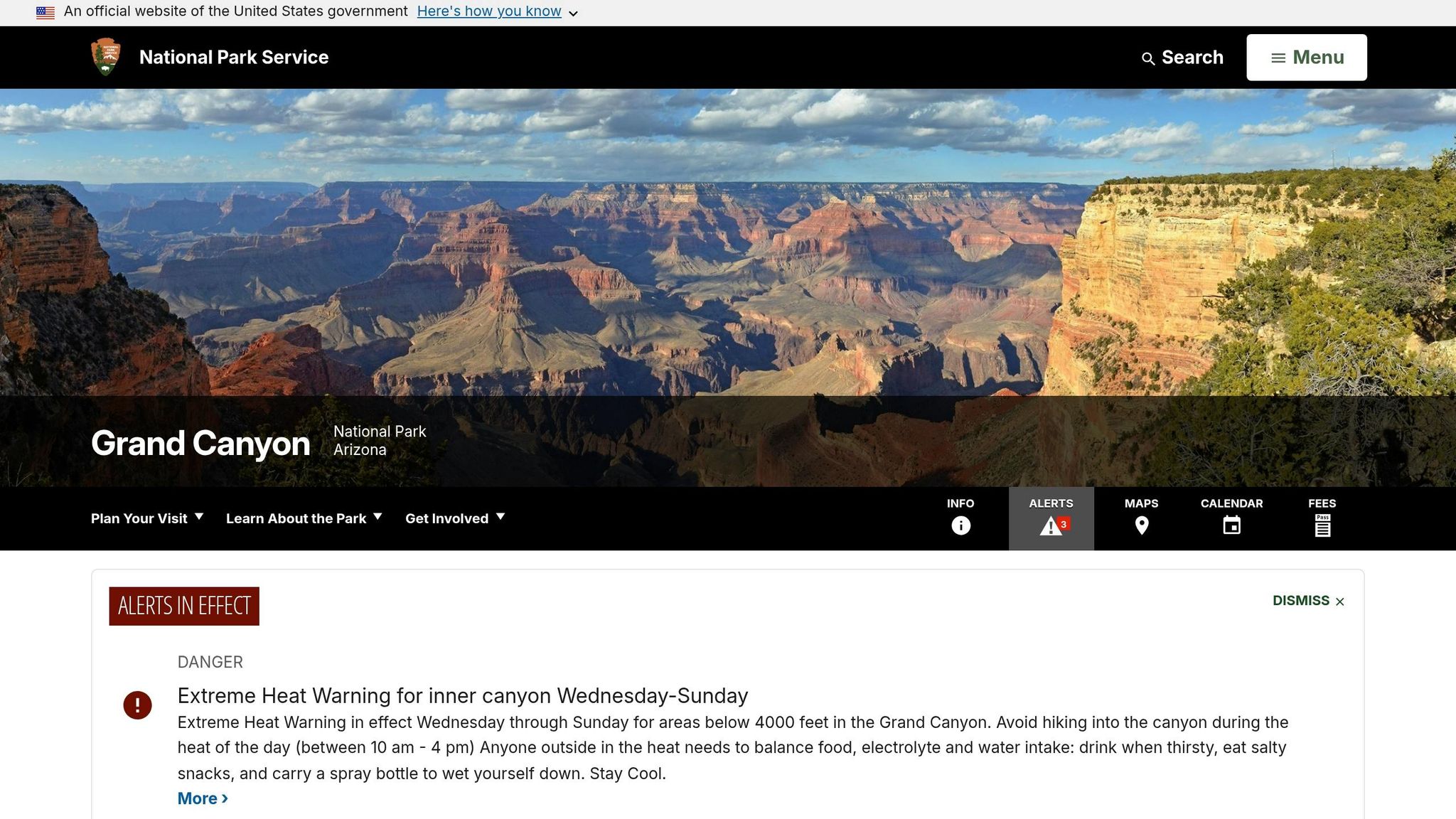
Most events prioritize accessibility, offering ADA-compliant transportation and designated seating areas. These efforts help ensure that all visitors can enjoy the event while respecting its cultural significance. At the Voices of Yellowstone event in August 2025, for instance, cultural tours were limited to small groups of 12 people to create an intimate and educational experience. While general admission to many events is free, specialized activities like guided tours may cost around $99 per person and typically require advance booking. Always check the park’s official website for any "Alerts In Effect", which might include road closures or extreme weather warnings.
What to Pack and Bring
Proper preparation can make all the difference when attending these events. Bring a folding chair or blanket for seating, but make sure it doesn’t obstruct the view of the arena. Stay hydrated by bringing plenty of water, and pack sun protection like hats and sunglasses. In hotter climates, such as desert parks like the Grand Canyon, balance your water intake with salty snacks or electrolytes to prevent dehydration.
Keep small bills on hand in case a "Blanket Dance" takes place. This is a respectful way for attendees to contribute to a cause or individual. Be mindful of event rules – alcohol, drugs, and smoking are prohibited. If you plan to bring a pet, check the event’s pet policy. While most events only allow service animals, some, like the Ocmulgee Indigenous Celebration, permit well-behaved dogs on leashes no longer than 6 feet. Lastly, carry cash or cards to purchase authentic handicrafts from artisans. It’s important to note that bartering or haggling over prices is considered disrespectful.
Indigenous Events Near National Parks
These events go beyond the boundaries of national parks, offering a deeper connection to Indigenous traditions and celebrations in the surrounding regions.
Gathering of Nations Powwow
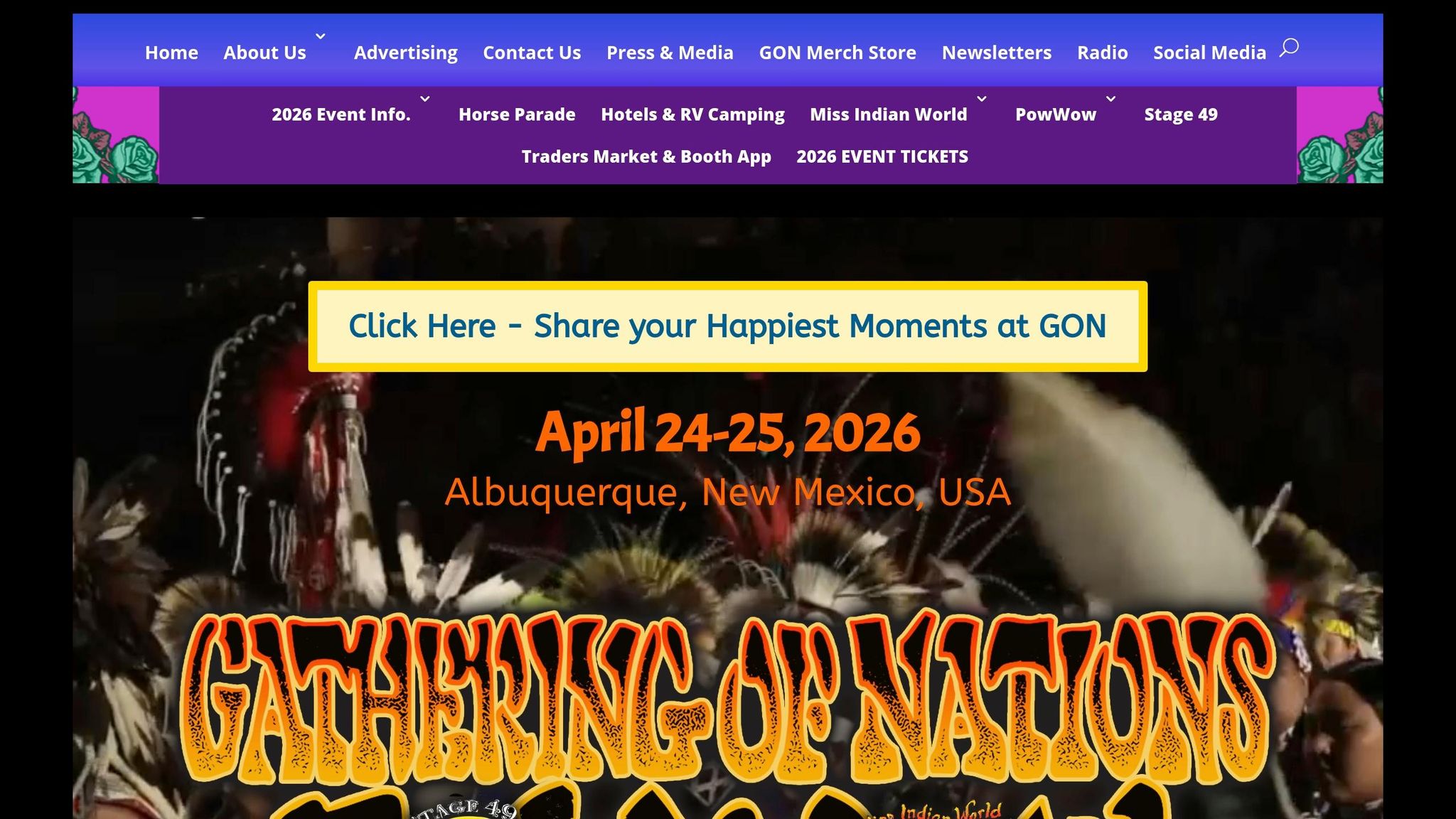
The Gathering of Nations Powwow in Albuquerque, New Mexico, is one of the largest events of its kind, attracting over 105,000 attendees each year. Featuring more than 3,000 dancers from over 565 U.S. tribes and 220 Canadian tribes, it’s a vibrant showcase of culture and tradition. The 2026 event, scheduled for April 23–25, marks its final year, aptly titled "The Final Dance". Competitors vie for more than $200,000 in prizes across 34 categories.
Ticket options include:
- One-day admission: $25.00
- Two-day wristbands: $45.00
- VIP reserved seating: $90.00 (includes access to a special lounge).
Tickets go on sale starting October 1, 2025, so planning ahead is a must. The event also generates a significant $24 million boost for Albuquerque’s economy. While in the area, consider exploring Petroglyph National Monument and other nearby Southwest parks.
Route 66 Indigenous Centennial Experiences
The Gallup Inter-Tribal Indian Ceremonial, held at Red Rock Park in Gallup, New Mexico, celebrates its 104th anniversary in 2026, running from July 31 to August 9. Events include an "Open to the World" rodeo, juried art shows, and traditional night performances. Admission prices are as follows:
- General admission: $15.00
- Exhibit Hall Opening Night: $27.85.
Located along historic Route 66, this event is an excellent starting point for visiting nearby El Malpais National Monument and Chaco Culture National Historical Park. Other Route 66 highlights include downtown parades, Richardson Trading Post, and the Navajo Code Talker mural. Don’t miss the Indian Traders Market, where you can find authentic Native American crafts like Navajo rugs, Zuni jewelry, and Hopi katsinas. For a complete schedule, check the official event e-newsletter.
National Museum of the American Indian Events

The National Museum of the American Indian hosts events featuring Indigenous National Park Service staff, offering insights into the histories of local parks. During Native American Heritage Month in November, many parks and nearby museums enhance their programming with performances, festivals, and storytelling. These events provide a richer understanding of Indigenous cultures and their deep connections to the ancestral lands now preserved within the National Park System.
Conclusion
Indigenous events offer a fresh perspective on the landscapes we often take for granted. These celebrations highlight that the beauty of our national parks stems from generations of Indigenous stewardship – not from the myth of untouched wilderness. As Derek DesRosier, General Manager of Sun Tours, puts it:
"We want people to understand that they can travel through a national park and it looks the way it looks because of our connection and our protection and our stewardship".
In recent years, Indigenous-led tourism has seen an extraordinary revival. Between 2017 and 2020, there was a 230% growth in tourism businesses owned by American Indian, Alaska Native, and Native Hawaiian communities. This expansion allows Native voices to reclaim their stories after generations of external interpretations. Stacey Simmons, Director of Operations at Kodiak Brown Bear Center, emphasizes:
"Indigenous tourism is exciting to me because we get to control the narrative. We know what we should be sharing, and we know what things we shouldn’t that are sacred to us".
This resurgence is about more than preserving traditions – it strengthens communities. By attending these events, you contribute directly to essential services like food banks, scholarships, language preservation programs, and elder care. The National Park Service is also moving toward more inclusive land management, with at least 80 cooperative agreements established with Tribes as of 2022.
When participating in these experiences, it’s crucial to approach them with respect for sacred boundaries. Indigenous guides decide what stories and traditions are shared, ensuring their communities’ heritage is honored. Remember, places like Yellowstone (connected to 27 Tribes) and the Grand Canyon (home to 11 contemporary Tribes) are far more than scenic destinations – they are ancestral homelands and places of prayer. Listening and learning with an open heart is the best way to honor these spaces and the people who have cared for them for countless generations.
FAQs
How do I find official schedules and last-minute changes?
For the most current schedules and alerts regarding Indigenous events, it’s best to visit the official National Park Service (NPS) websites. You can check the NPS Event Calendar or the specific page for the park you’re interested in. These sites are updated frequently and include information about any last-minute changes. To ensure accuracy, review the event details as close to your visit date as possible.
What etiquette rules do visitors most often get wrong?
Visitors sometimes fail to recognize the importance of honoring sacred traditions, respecting cultural protocols, and staying within designated land boundaries. A common misstep is unknowingly trespassing or disregarding proper etiquette at events like powwows – ceremonial gatherings that hold deep significance in Indigenous culture. It’s essential to follow any provided guidelines and approach both the land and the culture with genuine respect.
How can I support artists without being disrespectful?
Supporting Indigenous artists in a respectful way can begin with attending cultural events held at national parks and other community gatherings. These events often provide an opportunity to engage with their work and learn about their traditions firsthand. When you’re there, take the time to listen carefully, ask thoughtful questions, and always respect boundaries – like refraining from taking photos unless you’ve been given explicit permission.
One meaningful way to show appreciation is by purchasing artwork or crafts directly from the artists or through official events. This not only supports their livelihood but also ensures the authenticity of the pieces. Above all, approach these interactions with humility and gratitude, acknowledging their vital role as keepers of cultural heritage.