

When visiting national parks, being prepared for emergencies is non-negotiable. Medical help is often far away, and cell service is unreliable. A well-stocked first aid kit can help you handle common injuries like blisters, sprains, or severe bleeding while waiting for rescue. Here’s what you need:
- Wound Care: Bandages (various sizes), sterile gauze, antiseptic wipes, triple antibiotic ointment, and moleskin for blisters.
- Trauma Supplies: Tourniquet, hemostatic gauze, SAM splint, and pressure dressings.
- Medications: Pain relievers (acetaminophen, ibuprofen), antihistamines, EpiPen for severe allergies, loperamide for diarrhea, and oral rehydration salts.
- Tools: Trauma shears, tweezers, irrigation syringe, multi-tool, and a notepad with a waterproof pencil.
- Safety Gear: Nitrile gloves, CPR mask, space blanket, and waterproof storage.
Customize your kit based on group size, trip length, and specific park conditions (e.g., altitude, insect-heavy areas). Regularly check expiration dates and ensure you know how to use every item. Proper preparation ensures you’re ready for any situation.
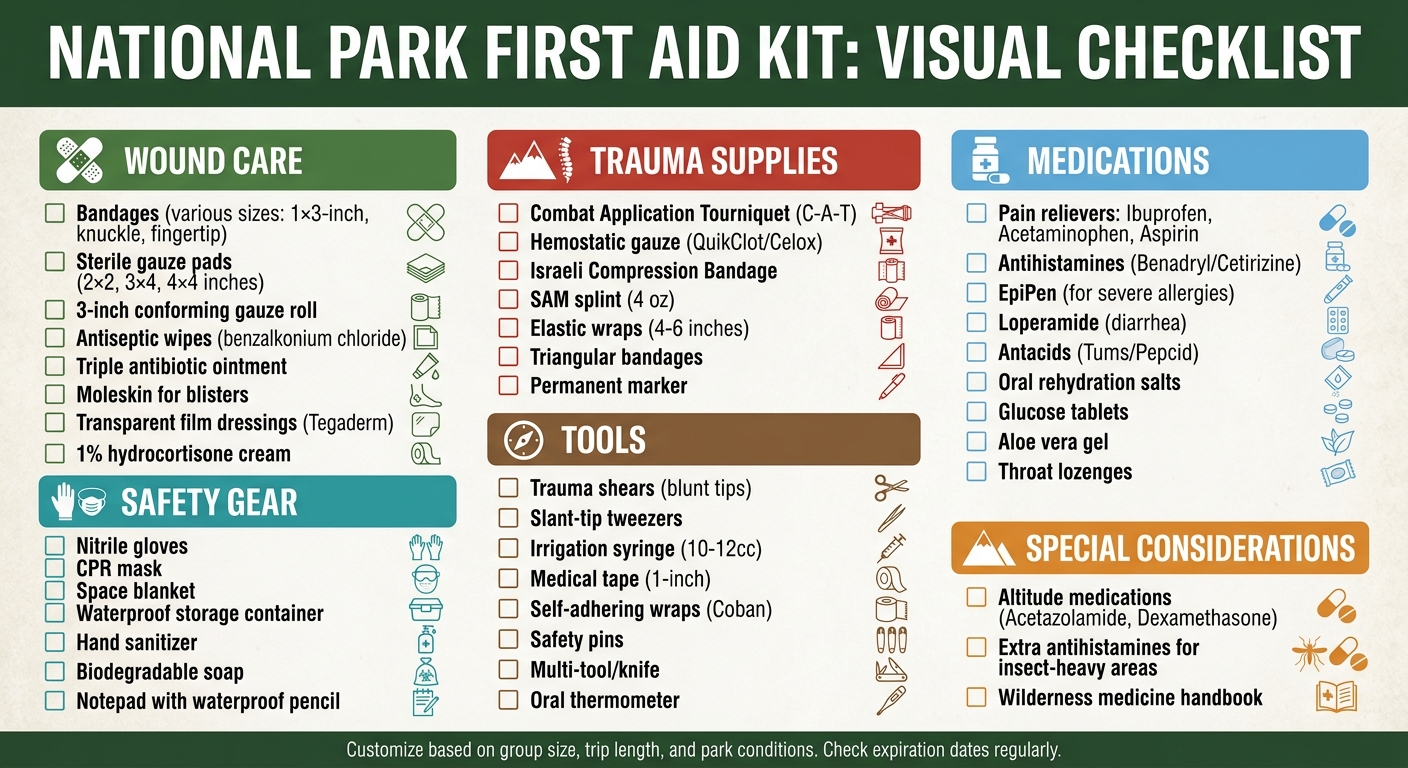
Complete First Aid Kit Checklist for National Park Trips
Wound Care and Bandaging Supplies
Bandages and Gauze
Your kit should cover a variety of adhesive bandages, ranging from the standard 1×3-inch fabric strips to specialty shapes like knuckle and fingertip bandages. Go for waterproof options with strong adhesive to ensure they stay put, even in wet or active conditions.
For larger injuries, stock sterile gauze pads in sizes like 2×2, 3×4 (non-stick), and 4×4 inches. These are perfect for cleaning and covering wounds. A 3-inch roll of conforming gauze is handy for keeping dressings securely in place. For blisters, transparent film dressings such as Tegaderm or hydrogel-based pads like Second Skin provide excellent protection by acting as a "second skin." Make sure to store all sterile dressings in waterproof plastic bags for added safety.
Once the wound is covered, proper cleaning and protection are the next steps.
Antiseptics and Ointments
Cleaning a wound right away is crucial to prevent infection. Benzalkonium chloride wipes are a great option – they disinfect effectively without the sting of alcohol-based alternatives. Skip hydrogen peroxide, though, as ViTAC Solutions explains:
Hydrogen peroxide kills healthy cells along with bacteria, damaging tissue and slowing healing.
For wounds at higher risk of infection, povidone-iodine solution provides stronger disinfection.
Include single-use packets of triple antibiotic ointment to protect cuts, scrapes, and minor burns from infection. For blister care, tincture of benzoin is essential. Sean Nelson, author of Backpacking Mastery, highlights its importance:
That benzoin is the secret weapon. It makes tape and bandages actually stick to sweaty, dirty skin. Without it, you’ll be re-applying dressings constantly.
Add moleskin or Leukotape to prevent blisters by reducing friction, and pack 1% hydrocortisone cream for relief from poison ivy, oak, or insect bites.
Finally, make sure you have the right tools to secure dressings and handle emergencies.
Bandaging Tools
The right tools make dressing wounds safer and more efficient. Trauma shears with wide, blunt tips are perfect for cutting clothing or bandages without causing accidental injury. An irrigation syringe (10cc to 12cc) is a must for flushing debris from wounds with controlled pressure.
To secure dressings, pack 1-inch cloth or hypoallergenic medical tape. Self-adhering wraps like Coban are excellent for joints or areas with hair since they stick to themselves rather than skin. Safety pins are versatile and can be used to secure triangular bandages or create makeshift slings. High-quality slant-tip tweezers are another essential – they’re perfect for removing splinters, ticks, or debris. Sarah Buer from NOLS advises:
You should never pack anything in a first aid kit that you don’t know how to use.
sbb-itb-00512f3
How to Create a BACKPACKING FIRST AID KIT | HIKING ESSENTIALS For Hikers & Backpackers
Trauma and Emergency Supplies
When you’re deep in the wilderness, far from help, injuries like severe bleeding or fractures demand immediate attention. Your emergency supplies should be tailored to the challenges of remote trails and unpredictable terrain. A well-prepared first aid kit can stabilize someone until professional help arrives or evacuation becomes possible.
Bleeding Control Items
For severe bleeding, basic wound care won’t cut it – you’ll need specialized tools. A Combat Application Tourniquet (C-A-T), priced around $33, is considered one of the quickest and most effective ways to stop arterial bleeding in limbs. However, for wounds in areas where a tourniquet can’t be applied – like the groin, neck, or torso – hemostatic gauze treated with QuikClot or Celox can speed up clotting up to five times faster than regular gauze.
Other essentials include pressure dressings, such as the Israeli Compression Bandage, which applies constant pressure to wounds, and compressed or rolled gauze, ideal for packing deep cuts to control bleeding. Don’t forget a permanent marker to note the time a tourniquet is applied – a critical detail for medical teams later on.
Compact bleeding control kits, weighing about 15 oz and measuring 7 × 5 × 2.5 inches, are perfect for hiking packs. These vacuum-sealed kits typically cost between $72 and $80. Of course, having the right supplies is only half the equation – proper training in wilderness first aid or "Stop the Bleed" techniques is crucial to using them effectively.
Fracture and Sprain Supplies
A SAM splint is a lightweight, waterproof tool for stabilizing broken bones or injured joints. Weighing just 4 oz, this foam-and-aluminum splint can be molded to suit injuries ranging from forearms to ankles. Sean Nelson, author of Backpacking Mastery, emphasizes its importance:
For remote trips, immobilizing a potential fracture can mean the difference between self-evacuation and waiting for rescue.
To secure the splint or provide compression for sprains, pack elastic wraps (4–6 inches wide). Triangular bandages, or cravats, are another versatile addition – they can be used to create slings for shoulder or arm injuries. For smaller injuries, finger splints are helpful for stabilizing hand or finger fractures.
Keep these trauma supplies in an easily accessible spot, like a side pocket or the top lid of your pack, so you can act quickly in an emergency.
Tweezers and Medical Shears
Medical shears with blunt tips are essential for cutting through clothing quickly, while slant-tip tweezers are ideal for removing debris from wounds. Store these tools in waterproof containers to ensure they’re ready when needed. In emergencies, speed matters – having sharp, reliable tools on hand can save precious time when applying trauma pads or tourniquets.
Medications and Treatments
After assembling wound care and trauma supplies, the next step is to focus on medications for managing pain, allergies, and digestive issues while on the trail. A well-rounded first aid kit should include both over-the-counter options and any personal prescriptions to address common health challenges in remote settings.
Pain Relief and Allergy Medications
For pain management, pack ibuprofen, acetaminophen, and aspirin to cover various levels of discomfort. It’s crucial to note that for injuries involving bleeding, acetaminophen is the safer choice, as NSAIDs (like ibuprofen and aspirin) can impair platelet function and increase bleeding risks. Acetaminophen provides effective pain relief without affecting blood clotting.
To handle allergic reactions – whether from insect stings, plants like poison ivy, or seasonal allergens – carry antihistamines such as diphenhydramine (Benadryl) or cetirizine. For severe allergic reactions, an epinephrine auto-injector (EpiPen) is essential. According to FAACT:
Epinephrine is the single most important drug in the anaphylaxis emergency kit. It will rapidly act to reverse any and all signs of anaphylaxis, but most importantly low blood pressure, poor heart rate, poor circulation, swelling, and asthma/bronchoconstriction
. If someone in your group has a history of severe allergies, ensure everyone knows how to use the EpiPen in case of an emergency where the affected individual cannot self-administer.
Digestive and Hydration Medications
Digestive troubles can often arise from drinking untreated water or adjusting to trail food. To prepare, include loperamide for diarrhea and antacids like Tums or Pepcid for heartburn or indigestion. Dehydration is another common issue, so pack oral rehydration salts to replenish electrolytes efficiently. For low blood sugar from overexertion or to assist someone with diabetes, include glucose tablets.
Sunburn Relief and Personal Medications
Topical treatments are equally important for addressing skin issues like sunburn. Pack aloe vera gel or spray for soothing sunburned skin and minor burns. Throat lozenges can help alleviate respiratory irritation at high altitudes, while a small tube of hydrocortisone cream is useful for treating skin irritations beyond sunburn.
Lastly, ensure you bring any prescription medications specific to your group’s needs. This may include albuterol inhalers for asthma, acetazolamide for preventing altitude sickness, or glucagon injections for severe hypoglycemia.
Medication Storage and Maintenance
Keep all medications in their original, clearly labeled containers to avoid confusion during emergencies. Regularly check expiration dates – according to the American Red Cross:
first aid kit contents do expire and lose effectiveness over time
. Use a waterproof container to protect pills from moisture, and if you’re transferring liquids into smaller bottles to save weight, label them clearly with a waterproof marker.
Tools and Safety Equipment
A well-rounded first aid kit isn’t just about medications and wound care – it also needs practical tools and protective gear. These items help you manage emergencies safely and maintain hygiene, especially in remote park settings.
Personal Protective Equipment
Nitrile gloves are a must-have for any first aid kit. They’re a safer choice than latex gloves, as they reduce the risk of allergic reactions for both you and the person receiving care. As NOLS points out:
Minimize cross-contamination with nitrile gloves
A CPR mask is another essential item. It creates a protective barrier during resuscitation, safeguarding both the rescuer and the patient. Also, pack a heat-reflecting space blanket, which can be a lifesaver in preventing hypothermia or providing emergency shelter. These lightweight foil sheets are incredibly useful in worsening conditions.
These protective items complement your wound and trauma supplies, ensuring you’re prepared for a wide range of emergencies.
Multi-Purpose Tools
Adding versatile tools to your kit boosts your readiness. A multi-tool or knife is invaluable for both gear repairs and medical tasks. Another useful tool is an oral thermometer, which helps monitor temperature changes that could indicate heat exhaustion or hypothermia.
For keeping records, include a small notepad and waterproof pencil. Alternatively, "Rite-in-the-Rain" paper is a great option – it stays readable even in wet conditions. Documenting patient vitals and symptoms (using SOAP notes) provides critical information for search and rescue teams or medical professionals during an evacuation. As Sarah Buer, a Wilderness First Responder at NOLS, advises:
You should never pack anything in a first aid kit that you don’t know how to use
Consider enrolling in Wilderness First Aid training to learn how to effectively use these tools.
Hygiene and Waste Disposal
Hygiene is crucial for preventing infections and maintaining a safe environment during emergencies. Pack hand sanitizer and biodegradable soap to ensure cleanliness when clean water isn’t accessible. Always sanitize your hands before treating wounds to minimize the risk of infection.
Include medical waste bags for disposing of contaminated items like used gauze, gloves, and bandages. This keeps harmful materials out of the park and prevents them from being mixed with regular trash.
To keep your hygiene supplies organized and easy to access, store them in a dry, labeled container. The American Alpine Institute highlights the importance of organization:
Organized, clearly labeled packaging ensures rapid access to emergency gear
Using clear plastic bags or color-coded compartments can help anyone in your group quickly locate what’s needed.
Special Considerations for National Parks
Altitude and Insect Treatments
National parks often come with their own set of challenges, especially when it comes to the environment. If you’re heading to high-altitude destinations like the Rocky Mountains or Denali, it’s smart to pack medications for altitude sickness. Prescription options such as Acetazolamide (Diamox), Dexamethasone, and Nifedipine can help manage Acute Mountain Sickness (AMS). Be sure to consult your doctor well in advance to obtain these medications.
To combat dehydration and altitude sickness, consider adding oral rehydration salts to your kit. For more extreme situations, some high-altitude expeditions carry a Gamow bag – a portable hyperbaric chamber that can be a lifesaver for severe AMS cases.
Insect-heavy parks require a different set of supplies. Diphenhydramine (Benadryl) is indispensable for treating allergic reactions to bites and stings. If you or someone in your group has severe allergies, an EpiPen is a must-have. As the FAACT explains:
Epinephrine is the single most important drug in the anaphylaxis emergency kit. It will rapidly act to reverse any and all signs of anaphylaxis
. To further manage bites, include hydrocortisone cream and antiseptic wipes to clean and soothe affected areas.
Once you’ve gathered the appropriate medications, make sure to store them properly to ensure they’re effective when you need them most.
Weatherproof Storage
Your first aid supplies need protection from the elements. Moisture, heat, and extreme temperatures can quickly degrade medications and other items in your kit. Use a waterproof container or dry bag to store everything securely. For extra protection, double-bag soft items like gauze and bandages in zip-lock bags. Liquid ointments can be repackaged into small, wide-mouth containers to prevent leaks.
Heat can also shorten the lifespan of adhesive products like medical tape, so it’s a good idea to check expiration dates regularly – especially if you store your kit in a hot environment like a car or garage.
Pre-Made Kits and Customization
No two trips are the same, so your first aid kit should reflect the specific conditions of your adventure. For mountain parks, include altitude sickness medications. If you’re visiting areas with lots of insects, pack extra antihistamines. Winter excursions might call for cold-weather-specific supplies. The Red Cross emphasizes:
Your first aid kit should be as unique as your hiking excursion. By tailoring your hiking first aid kit to the climate, number of people, terrain, remoteness and length of your adventure, you are taking a proactive step toward your safety
.
For additional peace of mind, consider including a wilderness medicine handbook. It can help you recognize symptoms of serious conditions like HAPE (High-Altitude Pulmonary Edema) or HACE (High-Altitude Cerebral Edema). By customizing your kit to address the specific challenges of your destination, you’ll be better prepared to handle emergencies in any national park.
Conclusion
Having a well-stocked first aid kit can make all the difference when you’re exploring a national park. Whether it’s handling minor scrapes or addressing more serious injuries, every item in your kit plays an important role when you’re far from medical help. That’s why the National Park Service includes a first aid kit among the "10 Essentials" – it’s a cornerstone of wilderness safety.
Keeping your kit up to date is just as important as packing it. Conduct routine checks – ideally every few months – to ensure nothing has expired or deteriorated. As the American Red Cross points out, "first aid kit contents do expire and lose effectiveness over time". Using expired items could compromise your ability to respond effectively in an emergency.
Before heading out, inspect your kit thoroughly. Replace anything that’s been used, expired, or damaged. Check that medications are still within their expiration dates, bandages are adhesive, and nothing has been compromised by leaks or moisture. To keep gauze and other soft items safe from humidity, seal them in plastic bags. Including a laminated checklist in your kit can help you track what needs replacing after each trip.
Customize your kit based on your destination. A quick hike in Yellowstone may call for different supplies than a multi-day trek in Denali’s backcountry. Think about the terrain, weather, and potential risks – whether that means packing altitude-sickness medications, antihistamines for insect-heavy areas, or treatments for cold weather. Combining regular maintenance with destination-specific planning ensures you’re prepared for any situation.
Finally, remember that knowing how to use your first aid kit is just as important as having one. Every item in your kit is a vital part of staying safe and enjoying your national park adventure to the fullest.
FAQs
How big should my first aid kit be for my trip?
Your first aid kit should be small enough to carry easily but still include all the basics. A common size is roughly 7 inches high, 2.88 inches wide, and 9.25 inches deep, with a weight of about 1.5 pounds. You can adjust this depending on how long your trip is and any specific requirements you might have.
What’s worth adding for kids or pets on the trail?
For children, pack essentials like antihistamines or an EpiPen if they have severe allergies. Add child-specific first aid items, such as bandages with fun designs or liquid pain relievers. For pets, include pet-safe first aid supplies, like wound care sprays or tweezers for tick removal. Always tailor your kit to individual needs to stay prepared and ensure everyone’s safety.
Which items require training to use safely?
Items such as trauma shears, tweezers, and rescue masks demand proper training to ensure safe and effective use. Experts advise against including tools in your first aid kit if you’re unfamiliar with how to use them. Enrolling in a Wilderness First Aid course can teach you how to handle these tools correctly and respond to injuries with confidence during emergencies.