
Accessible trailhead shuttles make national parks easier to enjoy for visitors with mobility challenges. These shuttles connect key spots like visitor centers, parking areas, and trailheads, offering features such as wheelchair ramps, securement spaces, and service animal accommodations. Drivers are trained to assist with boarding, and reservations can be made to ensure specific needs are met. Shuttle schedules vary by season, so planning ahead is key. Check park websites or visitor centers for the latest updates, and prepare essentials like mobility aids and offline maps to enhance your trip. Accessible shuttles open up nature for everyone to experience.
Accessibility Features and Services
Wheelchair Access and Mobility Features
Trailhead shuttles are designed with accessibility in mind, offering features that cater to wheelchair and mobility device users. Most shuttles come equipped with wheelchair lifts or ramps and designated securement spaces for mobility devices. Priority seating is clearly marked near accessible entrances, making it easier for users to board and disembark. These thoughtful additions ensure a smooth and straightforward experience, allowing passengers to transition effortlessly from the shuttle to the trail.
Service Animal Policies
Service animals are welcome in accordance with the Americans with Disabilities Act (ADA) and National Park Service guidelines. This means trained service dogs – and in some cases, miniature horses – are allowed anywhere visitors are permitted. It’s important to note that only properly trained service animals qualify for these access rights. Emotional support, therapy, comfort, or companion animals do not have the same public access privileges. No special paperwork is required for service animals, and staff may only inquire about the specific tasks the animal is trained to perform.
Accessible Boarding Help
Drivers play a key role in ensuring a comfortable and accessible boarding process. They are trained to assist passengers with mobility devices, including operating wheelchair lifts and securing devices in designated areas. For manual wheelchair users, drivers can provide assistance with boarding and exiting the vehicle. If needed, they may also offer curb-to-door help when conditions make curb access difficult. Passengers can request additional assistance while booking to ensure their specific needs are met.
Booking and Reservation Guidelines
How to Reserve Accessible Shuttle Seats
To reserve accessible shuttle seats, it’s important to communicate your accessibility needs right from the start. If you use a wheelchair, let the service provider know whether you’ll need a ramp or lift for boarding. Additionally, mention if a service animal will be traveling with you.
Taking these steps helps ensure your booking process goes smoothly, setting the stage for an enjoyable and accessible visit to the national park. Be sure to check out the shuttle schedules and fare information in the following section.
Shuttle Schedules, Routes, and Costs
Operating Hours and Seasonal Availability
Shuttle schedules vary based on the season, adapting to changes in daylight, visitor demand, and weather conditions. Take Grand Canyon National Park as an example, where shuttles run on a detailed seasonal timetable. During the fall season (September 6–November 30, 2025), the Village (Blue) Route operates daily from 7:00 AM to 9:00 PM. Early morning and late evening buses arrive every 15 minutes, while mid-day service is more frequent, with buses every 10 minutes. The Kaibab Rim (Orange) Route starts at 6:00 AM and continues until one hour after sunset, with buses arriving approximately every 15 minutes.
Understanding these routes and schedules is essential for planning your visit effectively.
sbb-itb-00512f3
Planning Tips for Accessible Travel
Preparing for Your Trip
To make the most of your accessible shuttle experience in national parks, a little preparation goes a long way. Here are some steps to help you get ready:
Reach out to the park directly at least 48 hours before your visit to confirm the availability of accessible shuttles and discuss any specific accommodations you might need. Park accessibility coordinators can share updates on equipment status, potential service interruptions, and alternative transportation options if shuttles aren’t available.
Pack essential mobility aids and backups. Be prepared for unpredictable weather by bringing extra batteries, portable chargers, protective covers, and non-slip gloves. These can make a big difference when navigating the park.
Arrive early at shuttle stops to allow extra time for boarding assistance. Accessible shuttles typically require 5-10 additional minutes for safe boarding, so plan accordingly.
Download offline maps and park resources to ensure you can locate shuttle stops, restrooms, and barrier-free trail connections even when cell service is spotty or unavailable.
Double-check your reservation details – including pickup times, route numbers, and any assistance requests – at least 24 hours before your trip. Keep confirmation numbers and the park’s accessibility contact information handy in case you need quick assistance.
Staying organized and informed will help ensure a smoother experience as your trip approaches.
Staying Updated on Accessibility Services
As your visit draws closer, staying informed about accessibility services is key. Use these tools to keep up-to-date:
Check official park websites, sign up for alerts, and follow social media channels for real-time updates on shuttle services, route changes, and temporary adjustments to accessibility features. Most parks have a dedicated accessibility section under the "Plan Your Visit" tab, where they post service alerts.
Visit The National Park Guide (https://thenationalparkguide.com) for a centralized resource on accessibility information across multiple parks. This site offers practical tools to help visitors with mobility needs compare accessible options and plan their trips more effectively.
Stop by park visitor centers when you arrive to get the latest updates on shuttle schedules and accessibility services for that day. Visitor center staff can provide printed accessibility maps, share current shuttle wait times, and recommend less crowded routes based on real-time conditions.
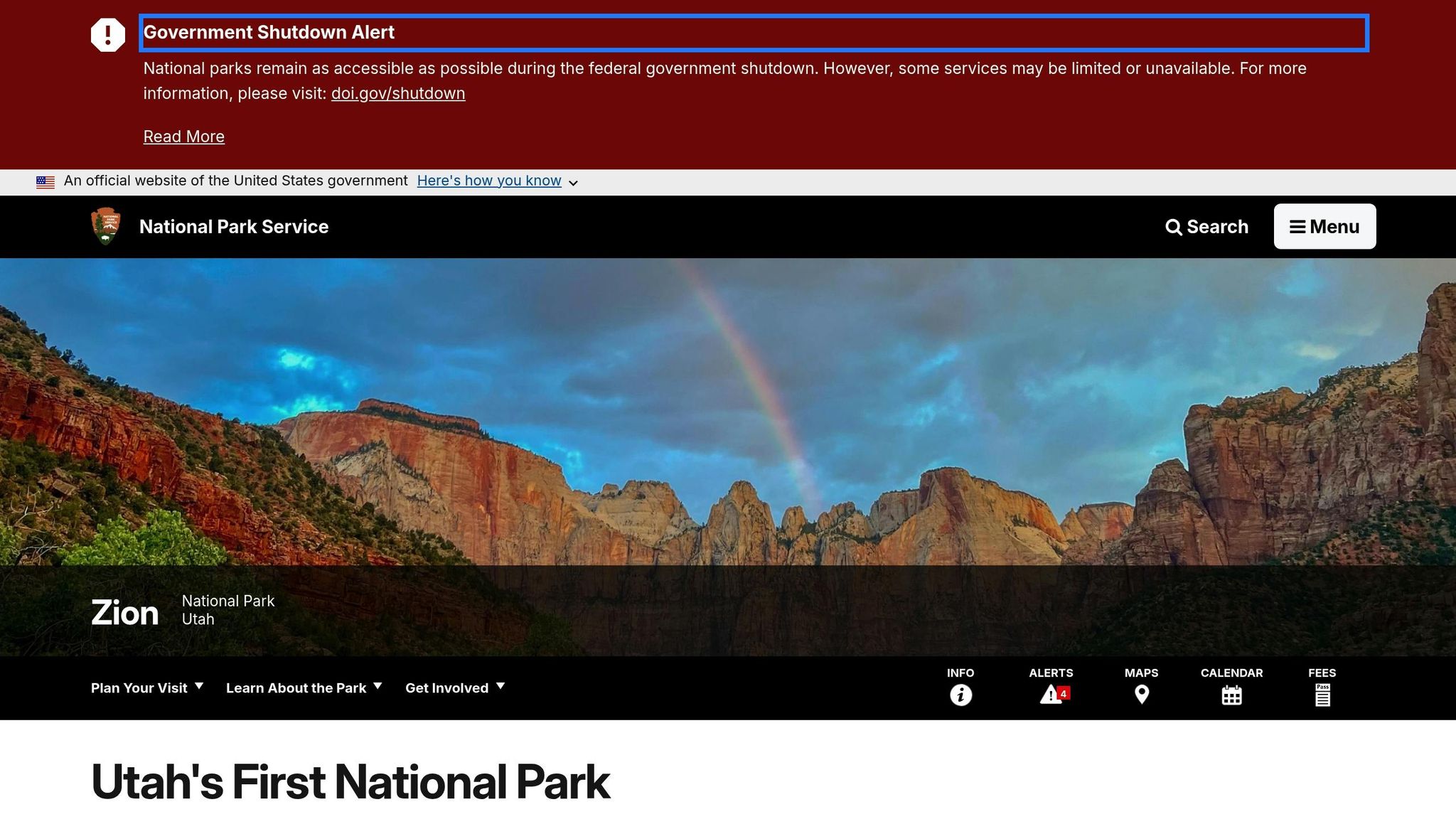
Wheelchair Accessibility at Zion National Park (Audio Described)
Conclusion and Key Takeaways
Accessible trailhead shuttles bridge the gap between parking areas and park trails, ensuring that mobility challenges don’t stand in the way of enjoying nature.
To have a hassle-free experience, start with solid planning: make reservations early and confirm any specific service needs with the park. Keep an eye on updates – weather, mechanical issues, or seasonal changes can impact shuttle availability. The park’s website or visitor center is your best source for up-to-date information.
Pricing depends on the park. Some shuttles are free, while others may charge a fare, so it’s worth checking directly with the park for cost details.
Many shuttles are equipped with features that make travel more convenient and inclusive. These include priority boarding, audio announcements, companion seating, and trained staff ready to assist. They also accommodate service animals and mobility equipment, ensuring a smoother journey for everyone.
Beyond individual convenience, accessible shuttles bring broader benefits. They help reduce traffic in busy park areas and reinforce the idea that outdoor spaces should be open to all. By investing in accessibility, parks send a clear message: national parks are for everyone to enjoy.
As these programs grow and improve, with better shuttle features and expanded routes, accessible outdoor adventures are becoming more available across the national park system.
FAQs
How can I make sure a trailhead shuttle meets my accessibility needs?
When booking a trailhead shuttle, it’s important to communicate your specific accessibility needs directly with the provider. Whether you require a wheelchair-accessible vehicle or extra assistance, make sure to share these details during the reservation process.
Reaching out to the provider ahead of time allows you to confirm they can accommodate your requirements and arrange everything in advance. Taking this step ensures your trip goes smoothly and you can fully enjoy your visit.
What should I do if the accessible shuttle service is disrupted or not working as expected?
If you run into problems with an accessible shuttle, reach out to the transportation provider immediately to report the issue. They are generally required to fix the problem promptly or arrange an alternative accessible option for you.
If the matter isn’t resolved, you can escalate it by filing a complaint. For general accessibility issues, contact the U.S. Department of Justice’s ADA Information Line at 1-800-514-0301. For air travel-related concerns, reach out to the Department of Transportation’s Office of Aviation Consumer Protection at 1-800-778-4838. Under the ADA, providers must either repair accessibility features quickly or offer a suitable alternative while repairs are underway.
What are some tips for using accessible shuttles in national parks during busy seasons?
To get the best experience with accessible shuttles during busy times, it’s smart to arrive early. Shuttles tend to fill up fast, so getting there ahead of time increases your chances of securing a seat. Plus, starting your day early means fewer crowds and more time to enjoy your destination.
Another tip? Take the shuttle to your destination but consider walking back. This way, you won’t have to worry about missing the last shuttle of the day, and it can make your visit a lot less stressful. A little planning and keeping track of shuttle schedules can go a long way in making your day run smoothly.