
Dining at historic national park lodges offers more than just food – it’s an experience steeped in history, architecture, and regional flavors. These dining rooms, like El Tovar at the Grand Canyon, The Ahwahnee in Yosemite, and Old Faithful Inn in Yellowstone, combine breathtaking views with meals inspired by local ingredients such as bison, trout, and huckleberries. Many lodges also preserve decades-old recipes, like The Ahwahnee’s famous boysenberry pie.
Key points:
- Architectural charm: Iconic designs like Yosemite’s Art Deco-inspired Ahwahnee or Yellowstone’s rustic Old Faithful Inn.
- Regional menus: Dishes featuring local ingredients, with options for various dietary needs.
- Planning tips: Reservations are often required, especially for dinner, and can be booked months in advance.
- Budget options: Cafeterias and grab-and-go meals are available for more affordable dining.
Dining at these lodges is more than a meal – it’s a chance to connect with the history and natural beauty of America’s national parks.
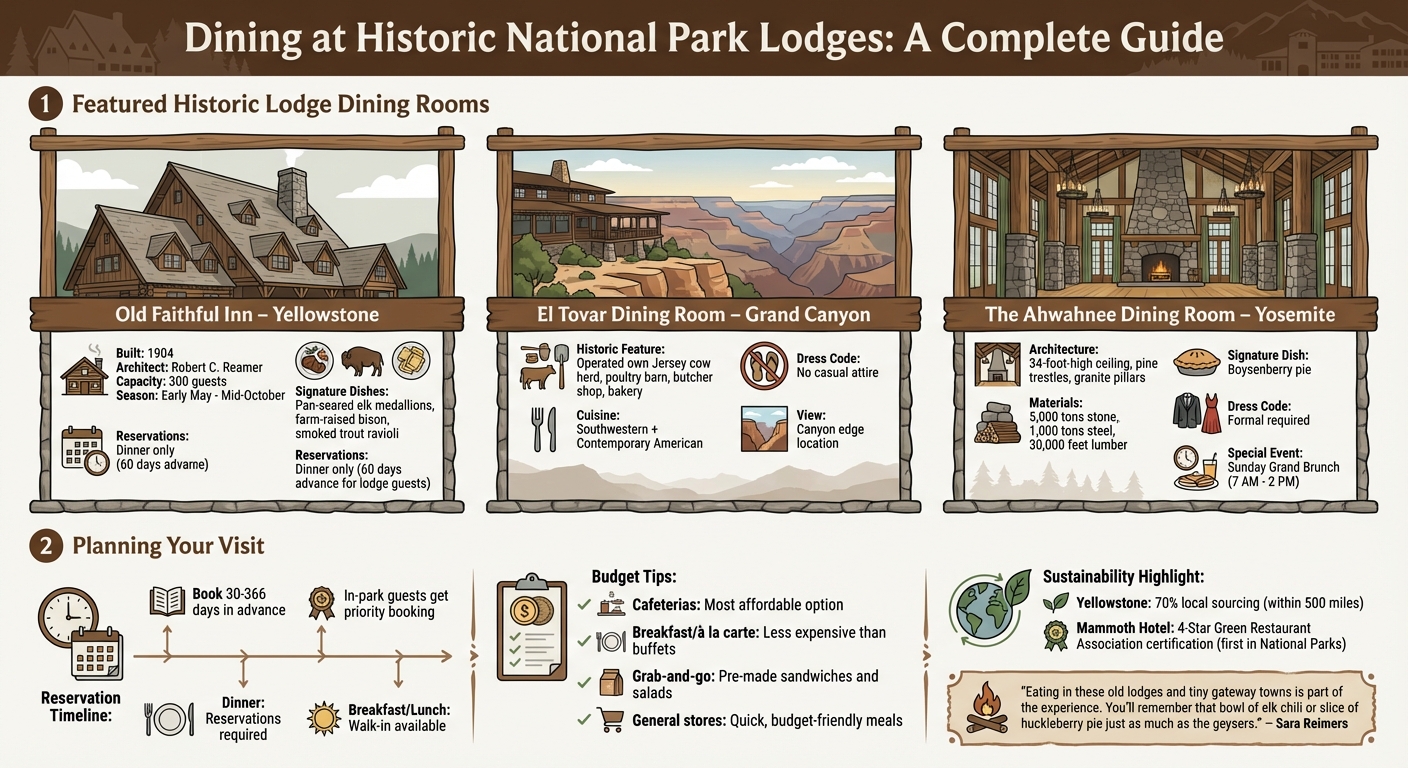
Guide to Dining at Historic National Park Lodges: Featured Locations and Planning Tips
The History of National Park Lodges
Lodge Architecture and Development
In the early 1900s, railroads like the Northern Pacific, Union Pacific, Santa Fe, and Great Northern invested heavily in building grand hotels in remote wilderness areas to attract passengers. One standout example is the Old Faithful Inn, constructed between 1903 and 1904. This iconic structure became the largest log building in the world, boasting a 76-foot-high lobby, a steeply pitched roof, electric lighting disguised as candlesticks, and steam heat – all designed to appeal to wealthy travelers. However, the high costs of these luxurious amenities meant that only a select few could afford to visit.
This style of architecture, later called "parkitecture" or NPS Rustic Style, emphasized the use of local materials like stone and timber to blend seamlessly with the natural surroundings. A prime example is the Grand Canyon Lodge, which was rebuilt in 1936–1937 after a fire destroyed the original 1928 structure. The lodge incorporated native Kaibab Limestone and ponderosa pine to harmonize with the dramatic canyon landscape. Meanwhile, Yosemite’s Ahwahnee Lodge, built during the prosperous 1920s, took a more eclectic approach. It combined Art Deco, Native American, Middle Eastern, and Arts & Crafts influences, using 5,000 tons of stone, 1,000 tons of steel, and 30,000 feet of lumber to create a striking design.
Stephen Mather, the first director of the National Park Service, recognized the importance of high-quality accommodations and dining facilities in gaining public support for the parks. The "See America First" campaign successfully encouraged Americans to explore domestic parks instead of traveling abroad, with these grand lodges serving as major attractions.
This architectural tradition not only influenced the design of the lodges but also set the tone for the dining experiences that would become an integral part of their charm.
How Dining Reflects Lodge Heritage
Dining at these lodges became more than just a meal – it was an event. The dining rooms were designed to be central gathering spaces, where meals were elevated into cultural experiences. Guests could enjoy live string quartets, dancing, and grand architectural settings that emphasized social interaction and elegance.
Given the remote locations of many lodges, self-sufficiency was a necessity. For example, the El Tovar Dining Room, which opened in 1905, operated its own herd of Jersey cows, along with a poultry barn, butcher shop, and bakery to provide fresh, high-quality meals. At Many Glacier Hotel, a hydro-electric plant was built to power operations in its isolated setting. The Fred Harvey Company, known for employing the famous Harvey Girls, brought a level of refinement and professionalism to wilderness dining rooms, helping to enhance the overall experience and promote tourism in the Southwest.
Each lodge developed its own culinary identity. El Tovar offered East Coast-inspired dishes, while Roosevelt Lodge embraced hearty Western-style cookouts. These traditions have stood the test of time, with modern menus still reflecting the heritage and character of each lodge.
19: Parkitecture and Historic Hotels
Featured Historic Lodge Dining Rooms
These historic lodges not only preserve their rich legacies but also offer dining experiences that beautifully marry tradition with modern flavors.
Old Faithful Inn – Yellowstone National Park

The dining room at the Old Faithful Inn sits right next to the lobby’s iconic fireplace, a centerpiece of the lodge’s rustic charm. Designed by architect Robert C. Reamer and completed in 1904, this National Historic Landmark embodies early park hospitality with its hickory chairs, period chandeliers, and a striking painting of the geyser basin. Seating up to 300 guests, the dining room operates from early May through mid-October.
Breakfast and lunch are available on a first-come, first-served basis, while dinner requires reservations. Lodge guests can book up to 60 days ahead, while non-lodging visitors can inquire about same-day availability at the host stand. The menu highlights regional flavors with dishes like pan-seared elk medallions, farm-raised bison, and smoked trout ravioli for dinner. Lunch offerings include pan-grilled trout, bison chili, and BBQ chicken, with the Western Buffet being a crowd favorite.
El Tovar Dining Room – Grand Canyon National Park
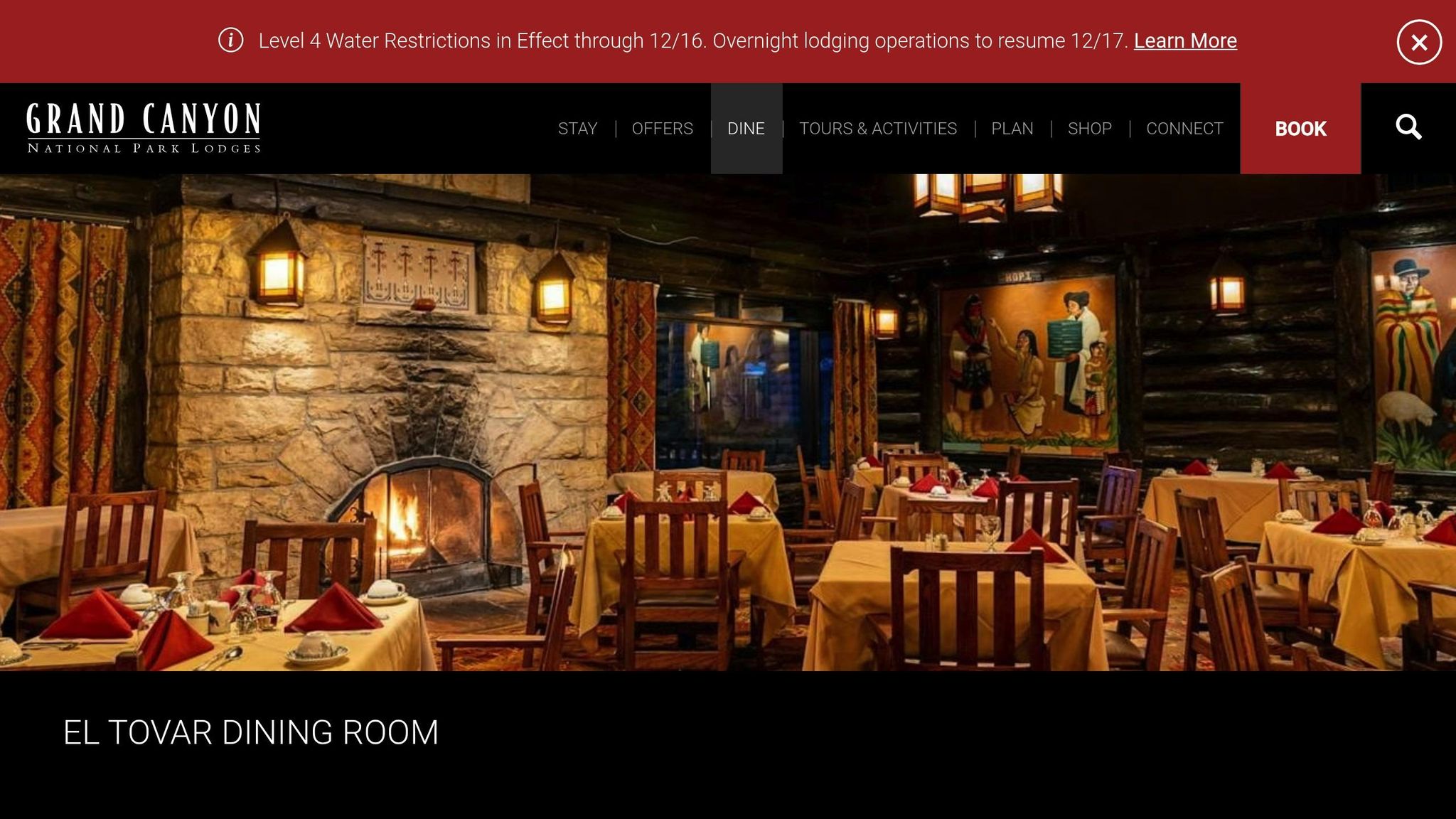
Located on the edge of the Grand Canyon, the El Tovar Dining Room combines history with a refined dining atmosphere. Large windows provide breathtaking views of the canyon, creating a setting as memorable as the food. To maintain its elegant ambiance, casual attire is not permitted.
The menu blends Southwestern influences with contemporary American cuisine, offering a variety of gourmet options and daily specials that emphasize regional ingredients.
The Ahwahnee Dining Room – Yosemite National Park

The Ahwahnee Dining Room is one of the most visually stunning spaces in the national park system. Completed in 1927, it features a 34-foot-high ceiling supported by massive pine trestles and granite pillars. Floor-to-ceiling windows frame spectacular views of Glacier Point, Half Dome, and Yosemite Falls, adding to the grandeur.
A formal dress code is required, and reservations are strongly recommended, as staying at the hotel does not guarantee a table. The menu showcases classic American and California-inspired dishes, including hand-carved prime rib, rotisserie free-range chicken with cheddar polenta, and the ever-popular boysenberry pie. The Sunday Grand Brunch, running from 7:00 AM to 2:00 PM, is a cherished tradition featuring prime rib and fresh seafood among its offerings.
sbb-itb-00512f3
How to Plan Your Lodge Dining Visit
Reservations and Seasonal Availability
When planning a lodge dining experience, timing is everything. Reservation windows typically open anywhere from 30 to 366 days in advance. Dinner at historic lodges often requires a reservation, while breakfast and lunch are more flexible, with many offering walk-in availability. If you’re staying in the park, you might get an exclusive booking window, as many parks prioritize in-park guests. During peak season, dining rooms fill up fast, so planning ahead is crucial. Keep in mind that many historic lodges operate seasonally, meaning their dining rooms often close during the winter months.
Once you’ve locked in your reservations, the next step is figuring out how to enjoy your meals without stretching your budget.
Dining Costs and Budget Tips
Lodge dining can feel like a splurge, but there are ways to enjoy it without overspending. Many lodges offer tiered dining options to suit different budgets. For example, cafeterias like Old Faithful Lodge and Maswik Food Court provide meals that won’t break the bank.
"Expect higher prices: Everything has to be shipped in." – Sara Reimers, Family Travel Author
Looking for value? Breakfast or à la carte options often cost less than full buffets. Grab-and-go choices, such as pre-made sandwiches and salads, are another budget-friendly alternative. General stores with grills and deli counters can also be a great option for quick and affordable meals.
Dietary Restrictions and Environmental Practices
Historic lodges make an effort to accommodate various dietary needs. Whether you’re dining in a formal setting or grabbing a quick bite at a casual cafeteria, options are available for vegetarians and those seeking healthier fare. Menus at spots like Yosemite’s Village Grill and Grand Canyon’s Harvey House Café include items tailored to diverse dietary preferences. When you arrive, it’s always a good idea to confirm specific dietary options with the lodge staff.
Sustainability plays a growing role in lodge dining. For instance, Yellowstone National Park Lodges aims to source 70% of its food and beverages locally (within 500 miles) and sustainably. The Mammoth Hotel Dining Room has even earned a 4-Star certification from the Green Restaurant Association, a first for any National Park restaurant. Efforts like purchasing sustainably raised beef not only enhance the dining experience but also support the preservation of western ranchlands.
Final Thoughts
Main Points to Remember
Dining at historic national park lodges offers more than just a meal – it’s a chance to immerse yourself in history while surrounded by some of the most stunning landscapes in the country. These lodges are architectural gems, from the iconic log design of the Old Faithful Inn to the legendary works of Mary Colter. Their charm lies in their ability to preserve the past, blending rustic elegance with regional cuisine. Modern conveniences might make things easier, but they’d never replicate the authenticity these places exude. Whether you’re enjoying a grand feast in The Ahwahnee’s majestic dining hall or savoring hearty western dishes at Roosevelt Lodge, there’s an experience to match every palate and budget.
"Eating in these old lodges and tiny gateway towns is part of the experience. You’ll remember that bowl of elk chili or slice of huckleberry pie just as much as the geysers." – Sara Reimers, Family Travel Author
Keep in mind that many historic dining rooms require reservations and often operate seasonally. Always check their operational status ahead of time to ensure a smooth visit. Planning ahead is part of the adventure and ensures you don’t miss out on these incredible experiences.
Plan Your Visit with The National Park Guide
Make your trip stress-free with The National Park Guide (https://thenationalparkguide.com). This resource is packed with tools to help you navigate reservation systems, check seasonal schedules, and explore dining options across America’s national parks. Whether you’re envisioning an elegant evening at El Tovar or a quick bite at a lodge cafeteria, this guide has you covered.
Dining at these historic lodges isn’t just about the food – it’s about connecting with the rich heritage and breathtaking beauty that define our national parks. Start planning now to take part in a tradition that has been cherished for over a century.
FAQs
How do I make a dining reservation at a historic national park lodge?
Start by deciding which lodge and restaurant you’d like to visit. Head to their dining page to check operating dates and see if reservations are required for specific meals. Dinner reservations often give priority to overnight guests staying in the park. Typically, guests staying at the same lodge can book up to 60 days in advance, while those staying at other park accommodations can book up to 30 days ahead. If you’re not staying overnight, you might still snag a table with same-day seating by visiting the host stand.
Most reservations can be made online through the lodge’s website. Simply choose your dining date, time, and party size. You may also need to provide your lodging details. Once your reservation is confirmed, you’ll receive an email with all the details – don’t forget to bring this with you when checking in at the restaurant.
To lock in your preferred dining time, it’s best to book as early as possible, especially during the busy summer months when spots fill up fast.
What are some affordable dining options at historic national park lodges?
If you’re aiming to enjoy the charm of historic national park lodges without breaking the bank, there are plenty of wallet-friendly dining options available. Many lodges feature cafeterias and quick-service grills that serve up hearty meals like sandwiches, soups, and kid-friendly favorites, typically priced around $10–$20 per plate. For example, spots like Lake Lodge, Canyon Lodge, and Old Faithful Lodge in Yellowstone are well-known for offering satisfying meals at reasonable prices.
General store counters, such as those at Mammoth General Store or Old Faithful General Store, are another go-to for affordable eats. You’ll find classic park staples like burgers, fries, and even elk chili, with breakfast items ranging from $12–$20 and lunch or dinner options between $18–$30. If you’re looking for something even quicker, snack bars and grab-and-go counters, like the M66 Grill at Canyon Lodge, provide convenient meals for under $25 per person.
These choices let you soak in the historic atmosphere of the lodges while keeping your budget in check. For the latest menus and operating hours, visit the official lodge websites or browse the dining section of The National Park Guide.
How do historic park lodges accommodate dietary needs and promote sustainability?
Historic park lodges are stepping up to cater to a wide range of dietary preferences while embracing eco-conscious dining practices. Many of these lodges feature menus with clear labels and staff trained to accommodate requests for gluten-free, vegetarian, vegan, dairy-free, or allergy-friendly meals. Some even go the extra mile by offering kids’ menus designed with common dietary restrictions in mind.
Sustainability plays a big role in their operations, too. Some lodge restaurants source much of their produce and ingredients from local farms, cutting down on food miles and boosting local agriculture. Efforts like waste reduction, composting, and water conservation are also common, reflecting a commitment to responsible dining practices.
For the latest updates on dietary options and sustainability efforts, it’s always a good idea to contact the lodge directly or check reliable resources before planning your visit.