
Capitol Reef National Park in Utah is a must-visit destination for nature lovers and history enthusiasts. Here’s a quick overview of what you need to know:
- Location: 3.5 hours from Salt Lake City, 2 hours from Bryce Canyon. Closest town: Torrey, UT.
- Main Feature: The Waterpocket Fold, a 100-mile-long geological marvel.
- History: Home to ancient Fremont petroglyphs and the Fruita Historic District with pioneer orchards.
- Top Activities: Scenic drives, hiking trails, fruit picking, and exploring rock art.
- Best Time to Visit: Spring (March–June) and Fall (September–October) for mild weather.
- Fees: $20 per vehicle for a 7-day pass; $20 for the Scenic Drive.
- Accommodations: Fruita Campground ($25/night), backcountry camping, and nearby hotels in Torrey.
Whether you’re hiking the rugged trails, marveling at ancient rock art, or enjoying a fresh pie at the Gifford Homestead, Capitol Reef offers something for everyone. Plan ahead to make the most of your visit!
14 Great Things to Do in Utah’s Most Charming National Park!
Top Park Attractions
Capitol Reef offers a fascinating blend of geological wonders and historical treasures. From awe-inspiring rock formations to remnants of pioneer life, there’s something here for everyone to enjoy.
Waterpocket Fold Views and Access
The Waterpocket Fold, a defining feature of Capitol Reef, can be explored through various routes, offering both convenience and adventure.
For the easiest access, Highway 24 is your best bet, as it’s the only paved road that crosses the fold. If you’re up for a more scenic journey, the Notom-Bullfrog Road runs parallel to the fold’s eastern side, leading to the park’s southern sections. Along the way, you’ll be treated to breathtaking views of cliffs and canyons. Another option is the Burr Trail, which features dramatic switchbacks climbing 800 feet in just half a mile, offering panoramic vistas.
For a comprehensive driving experience, consider the “Looping the Fold” tour. This 100-mile route connects Highway 24, Notom-Bullfrog Road, and Burr Trail Road, eventually looping back to the visitor center via Highway 12. You can pick up a "Loop the Fold" booklet at the visitor center to guide you through the journey’s highlights.
Don’t miss the Strike Valley Overlook Trail, a short 0.9-mile hike that showcases 150 million years of geological history. After soaking in the natural beauty, head to the Fruita Historic District to explore the park’s human stories.
Fruita Historic District
The Fruita Historic District is the park’s vibrant centerpiece, preserving the legacy of a small pioneer community that never grew beyond ten families. This area, listed on the National Register of Historic Places, demonstrates how settlers transformed an arid desert into a flourishing agricultural haven.
The Fruita Orchards are a standout feature, with over 3,000 trees bearing cherries, apricots, peaches, pears, apples, plums, mulberries, almonds, and walnuts. From mid-June to late October, visitors can pick fruit straight from the trees for free, though taking some home requires a small fee comparable to supermarket prices.
Another highlight is the Gifford Homestead, where you can enjoy fresh fruit pies, homemade cinnamon rolls, and ice cream. Park Ranger Sue Fritzke sums it up perfectly:
"If you come and you get a pie, consider it to be a treat. If you don’t get a pie, there are 242,000 acres of this park that you can experience."
Arrive early to snag baked goods before they sell out. You can also visit the Fruita Schoolhouse, a charming reminder of frontier education from the late 1800s. Be sure to check with park rangers for orchard picking schedules and campground availability, especially if visiting between March 1 and October 31.
Ancient Rock Art Sites
Capitol Reef also preserves ancient history through its stunning rock art. The Fremont petroglyphs and pictographs, created between 300 and 1,300 C.E., reflect the deep connection the Fremont people had with this rugged landscape. The Fremont Petroglyph Panel, located near the Fruita Historic District, is the most accessible site and can be reached via an easy walking trail.
These carvings depict human figures, animals, and geometric designs, which may have been used for religious ceremonies, as hunting maps, or even as seasonal calendars. When visiting, remember to keep a respectful distance – touching the images can cause irreversible damage. Photography is welcome, but avoid using flash to preserve the artwork’s integrity.
Park Scenic Drives
If hiking isn’t your thing, Capitol Reef’s scenic drives offer a fantastic way to experience the park’s diverse landscapes.
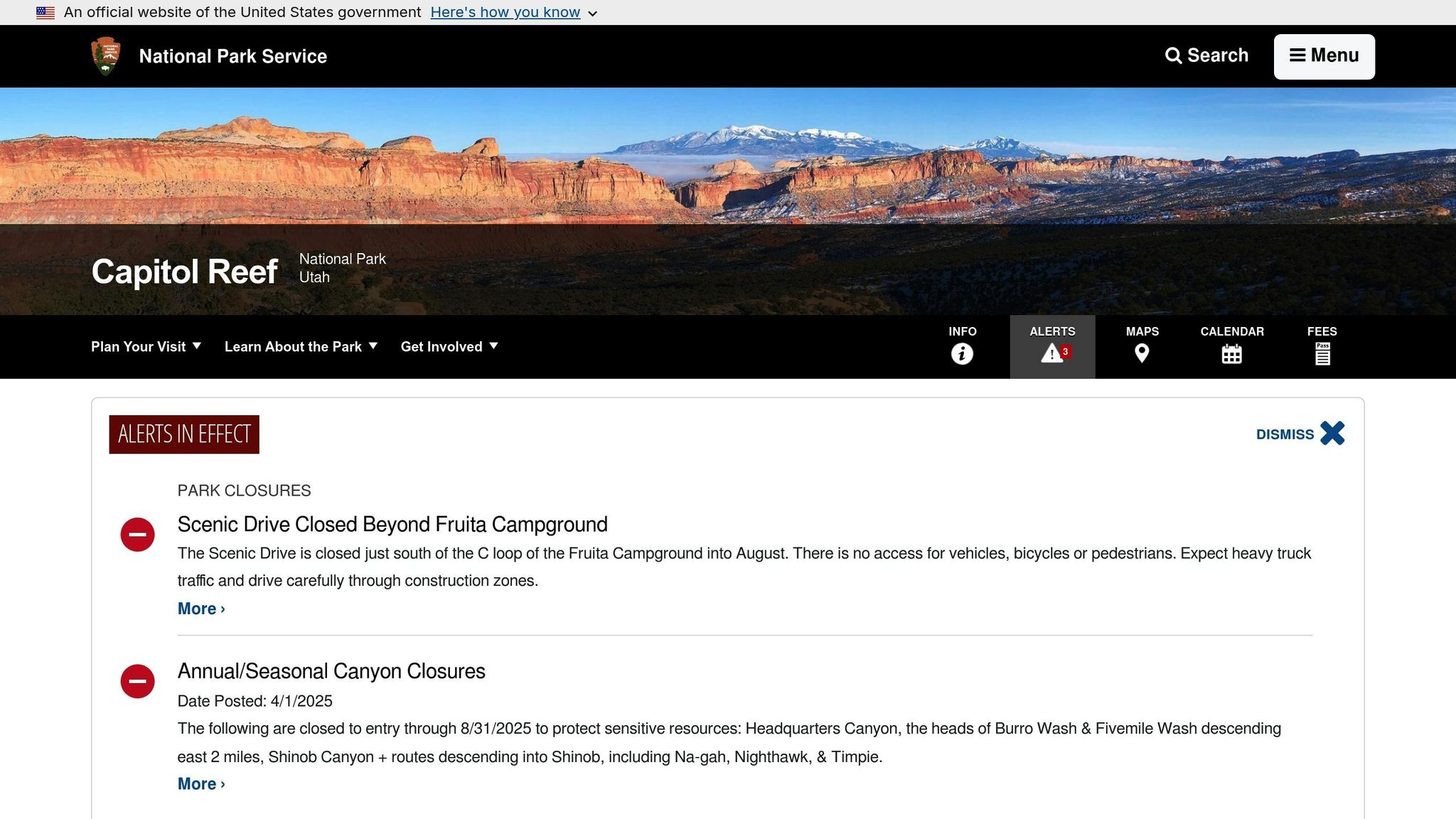
The Capitol Reef Scenic Drive spans 7.9 miles from the visitor center and connects to Grand Wash Road, Capitol Gorge Road, and Pleasant Creek Road. A $20 entrance fee (or an America the Beautiful Pass) is required, but the route includes access to some of the park’s most iconic landmarks. Note that construction may affect parts of the drive through August 2025.
Highway 24, which runs from Loa to Hanksville, is another option and is often praised for its stunning scenery. One writer described it as offering “nonstop knockout scenery” as it winds through Capitol Reef.
For a more rugged adventure, the Cathedral Valley Loop is a 58-mile journey through the park’s remote northern section. This route requires a high-clearance vehicle, with 4WD highly recommended. Along the way, you’ll encounter towering monoliths and untouched wilderness.
Before heading out on any drive, check road conditions at the visitor center, especially if you plan to travel on dirt roads, which can become impassable after rain. Take your time to enjoy the scenery, stop for short hikes, and snap plenty of photos. For the ultimate road trip, the Loop the Fold drive combines multiple routes into a 100-mile adventure. While most dirt sections are well-graded, they can be rough, so plan accordingly.
Best Hiking Trails
Capitol Reef isn’t just about scenic drives and historic landmarks – it’s also a haven for hikers. The park’s trails offer a mix of experiences, from easy canyon strolls to challenging summit climbs. At 5,000 feet above sea level, even the gentler trails can feel demanding for visitors accustomed to lower altitudes. Plus, trailheads tend to get busy between 9:00 AM and 4:00 PM, so plan accordingly.
Before heading out, it’s a good idea to check trail conditions. Stop by the visitor center or call 435-425-3791 for updates on weather, road conditions, and flash flood warnings. And don’t forget to bring plenty of water – the desert climate can be unforgiving.
Short and Easy Walks
If you’re looking for a quick introduction to Capitol Reef’s stunning landscapes, these trails are a great place to start:
- Capitol Gorge Trail: This 1.5-mile round-trip hike takes about 45 minutes and is mostly flat. Along the way, you’ll pass the Pioneer Register, featuring historic rock carvings, and ancient petroglyphs. The trailhead is accessible via a 2.3-mile gravel road suitable for most vehicles.
- Grand Wash Trail: A 4.8-mile round-trip journey through towering canyon walls. About a mile in, the trail narrows into a dramatic slot canyon. You can access it from Highway 24 or Grand Wash Road.
- Goosenecks Overlook: A super short 0.2-mile loop offering breathtaking views of Sulphur Creek as it winds through the canyon. Perfect for a quick stop.
- Sunset Point: This 0.8-mile trail leads to a scenic overlook, ideal for capturing the golden hues of the red rocks during late afternoon.
| Trail | Distance | Time | Highlights |
|---|---|---|---|
| Goosenecks Overlook | 0.2 miles | 10 minutes | Stunning canyon views, quick and easy |
| Capitol Gorge | 1.5 miles | 45 minutes | Pioneer Register, petroglyphs, slot canyon |
| Sunset Point | 0.8 miles | 20–30 minutes | Panoramic views, great for sunset photos |
| Grand Wash | 4.8 miles | 2 hours | Narrow canyon walls, slot canyon experience |
If you’re up for more of a challenge, the park also offers moderate hikes with rewarding views and unique terrain.
Moderate Day Hikes
For those seeking a bit more adventure, these trails provide a mix of geological wonders and sweeping vistas:
- Hickman Bridge Trail: This 1.3-mile round-trip hike leads to a stunning 133-foot natural arch. With a 4.7/5 rating from over 8,000 AllTrails reviews, it’s a favorite for its beautiful scenery and relaxing atmosphere.
- Cohab Canyon Trail: A 3.4-mile loop that takes you through hidden side canyons and offers panoramic views of the Fruita area. The trail includes several spur paths and overlooks, earning it a 4.7/5 rating. Its name comes from early Mormon settlers who reportedly used these canyons as hideouts.
- Cassidy Arch Trail: Climbing 845 feet, this trail lets you walk right on top of Cassidy Arch. With a 4.8/5 rating from over 5,000 reviews, hikers rave about the incredible views and vantage points over Grand Wash.
- Chimney Rock Loop: Featuring 600 feet of elevation gain, this loop offers expansive views of the Waterpocket Fold. It holds a 4.7/5 rating from nearly 2,500 reviewers.
- Rim Overlook Trail: Known for its panoramic views of Capitol Reef, this trail has earned a 4.7/5 rating, with many hikers praising the incredible perspectives of Pectol’s Pyramid.
Challenging Long Hikes
For experienced hikers, Capitol Reef has trails that test your endurance while delivering unforgettable vistas:
- Navajo Knobs: This 9.4-mile round-trip trek involves about 1,600 feet of elevation gain and is one of the park’s most demanding routes. Expect a strenuous 4–7-hour hike. The trail follows rock cairns through exposed terrain, so downloading a map beforehand is highly recommended. Starting early is key to avoiding the midday heat and crowds.
Capitol Reef’s desert environment can be extreme, with summer temperatures often exceeding 90°F or even 100°F. Shade is scarce, so bring at least 1 gallon of water per person. Also, keep an eye on the weather – afternoon thunderstorms can come out of nowhere. On the bright side, the top of Navajo Knobs offers cellular service, making it easy to share your summit photos right away.
sbb-itb-00512f3
Where to Stay
Capitol Reef National Park offers a range of accommodations, from basic camping to more luxurious lodging options. Whether you’re looking for a rugged outdoor experience or a cozy hotel room, there’s something to fit your preferences and budget.
Fruita Campground
Located in the Fruita Historic District, Fruita Campground is the park’s only developed camping area. It features 71 sites available for $25 per night, and reservations are required in advance. Each site includes a picnic table, and the campground is equipped with restrooms and potable water, making it a convenient choice for visitors.
Backcountry Camping Areas
For those seeking solitude and a more rustic experience, Capitol Reef offers two remote campgrounds. These spots are perfect for stargazing, as the park is recognized as an International Dark Sky Park.
- Cathedral Valley Campground: Features 6 sites.
- Cedar Mesa Campground: Offers 5 sites.
Both campgrounds are free and operate on a first-come, first-served basis. However, reaching them requires a high-clearance, four-wheel-drive vehicle due to rough dirt roads. Neither site provides water, so you’ll need to bring all your essentials.
Here’s a quick overview of the camping options:
| Campground | Sites | Price | Vehicle Requirements | Amenities |
|---|---|---|---|---|
| Fruita | 71 | $25/night | Standard vehicles | Restrooms, water, picnic tables |
| Cathedral Valley | 6 | Free | High-clearance 4WD | Vault toilets only |
| Cedar Mesa | 5 | Free | High-clearance 4WD | Vault toilets only |
Backpacking and Area Hotels
For those eager to explore the backcountry, overnight backpacking is an option. You’ll need a free backcountry permit, which can be obtained in person at the visitor center. Group sizes are capped at 12 people, and campsites must be at least 0.5 miles from maintained roads and trails. Since campfires are not allowed, you’ll need a fuel-burning stove for cooking. Water sources are scarce outside the Fruita area, so plan to carry at least one gallon per person per day.
If camping isn’t your thing, nearby Torrey offers a variety of lodging options. One standout is Capitol Reef Resort, located just one mile from the park entrance on a spacious 58-acre property:
"Capitol Reef Resort offers you indulgent accommodations and endless adventure. Find abundance here."
Other options include Red Sands Hotel, which is 3 miles away and features free Wi-Fi, an indoor heated pool, and a hot tub, and Skyview Hotel in Torrey, offering air-conditioned rooms, private bathrooms, a garden terrace, and a hot tub. Prices for accommodations range from $141 for 3-star hotels to $162 for 5-star options, with early booking recommended during peak seasons.
For even more choices, nearby towns like Escalante, Bicknell, Boulder Town, and Hanksville provide additional lodging options to suit a variety of budgets and preferences.
Up next, discover essential tips to help you plan your trip and make the most of Capitol Reef’s incredible landscapes.
Planning Your Visit
To fully enjoy the wonders of Capitol Reef, a bit of planning goes a long way. From choosing the right time of year to packing the right gear, a thoughtful approach can make your visit smoother and more enjoyable.
When to Visit
The ideal times to explore Capitol Reef are spring (March–June) and fall (September–October). The weather during these months is mild, making it perfect for hiking and other outdoor activities. You’ll avoid the intense summer heat and the winter chill, giving you a more pleasant experience.
Capitol Reef experiences an arid climate, with an annual average of just 7.91 inches of precipitation. Here’s a closer look at the spring and fall weather:
| Month | High Temp (°F) | Low Temp (°F) | Precipitation (in.) |
|---|---|---|---|
| March | 58 | 34 | 0.48 |
| April | 65 | 39 | 0.51 |
| May | 74 | 48 | 0.63 |
| September | 80 | 55 | 0.97 |
| October | 66 | 43 | 0.85 |
Summers (July–August) can be scorching, with highs around 91°F, and there’s an increased chance of flash floods during the monsoon season. Winters, while less crowded, can be cold, with January lows dipping to 20°F and occasional snow. If you’re visiting in March, be prepared for chilly nights, as it’s a popular time for backpackers.
What to Bring
Capitol Reef’s varied terrain and weather call for careful packing. Here are some essentials to include:
- Water: Bring at least one gallon per person per day.
- Sun Protection: Sunscreen and a wide-brimmed hat are must-haves.
- Footwear: Sturdy hiking boots or shoes with good tread will keep you steady on rugged trails.
- Clothing: Pack layers to adapt to temperature changes throughout the day.
- Navigation: A paper map is essential since cell service can be unreliable.
- Safety Gear: A first aid kit and a backup phone battery are smart additions.
- Cash: Handy for entrance fees and any services you might need.
Since weather conditions can change quickly, plan your hikes to start early in the morning or later in the afternoon to avoid the midday heat.
Wildlife Safety and Park Rules
Capitol Reef is home to a variety of wildlife, so it’s important to stay cautious. Always let someone know your hiking plans before heading out. During thunderstorm season (July–September), keep an eye on weather forecasts to avoid flash floods. You can also check with park officials at (425) 3791 for the latest conditions.
To protect the park’s delicate ecosystem, stick to marked trails. This helps preserve the cryptobiotic soil, which can take decades to recover from damage. Follow Leave No Trace principles by packing out all trash.
Be mindful of the risks of dehydration and heat exhaustion, especially in the summer months. If you encounter wildlife, maintain a safe distance and never feed the animals.
Entry Fees and Services
Capitol Reef has entrance fees based on your mode of transportation. Here’s a breakdown of the costs for a standard 7-day pass:
- $20 per vehicle
- $15 per motorcycle
- $10 for individuals on foot or bicycle
Additional pass options include:
- Capitol Reef Annual Pass: $35
- America the Beautiful Pass: $80 (grants access to all national parks)
- Senior Annual Pass: $20
- Senior Lifetime Pass: $80
Certain groups, such as U.S. military personnel, individuals with permanent disabilities, fourth graders, and volunteers with 250+ service hours, qualify for free entry.
Mark these free entrance days for 2025 on your calendar:
- January 9 – National Day of Mourning for President James Earl Carter Jr.
- January 20 – Martin Luther King, Jr. Day
- April 19 – First Day of National Park Week
- June 19 – Juneteenth National Independence Day
- August 4 – Anniversary of the Great American Outdoors Act
- September 27 – National Public Lands Day
- November 11 – Veterans Day
If you plan to explore the Scenic Drive, note that it requires an additional $20 fee for a 7-day pass. However, the America the Beautiful pass covers this as well. These fees contribute to park conservation and help maintain visitor services. Before setting out, stop by the visitor center for maps and up-to-date trail information.
Stay tuned for more tips on planning your Capitol Reef adventure.
Start Planning Your Capitol Reef Adventure
Capitol Reef National Park is a treasure trove of stunning landscapes, historic landmarks, and outdoor adventures. The best part? It’s open 24/7, every day of the year – giving you complete freedom to plan your visit whenever it suits you best. Plus, you don’t need a reservation or timed-entry ticket to explore this park, making it perfect for last-minute trips.
Before heading out, make sure to check the park’s website or call (435) 425-3791 for the latest updates on road conditions, closures, or alerts. This will help you avoid any surprises and ensure a smoother trip.
Since cell service is sparse in the park, it’s a good idea to download maps and brochures ahead of time. Keep in mind that the park doesn’t have a lodge or restaurant, so planning ahead is key, especially if you’re venturing into its more remote areas.
If camping is part of your plan, the Fruita Campground is a great option, but reservations are required from March through October. Be sure to book early, as spots fill up quickly during peak months. Group campsites also need to be reserved in advance. For a quieter experience, consider visiting during the winter, when only about 10% of the park’s annual visitors come through.
Some activities, like canyoneering, rock climbing, backpacking, and special events, require permits. Make sure to apply for these ahead of time. If you need accommodations or dining options outside the park, the Wayne County Travel Council can provide helpful information.
Parking can be tricky at popular trailheads, especially during peak seasons. To avoid the hassle, arrive early – ideally by 8:30 AM – to secure a spot and enjoy the trails without the crowds. Visiting on weekdays instead of weekends can also make a big difference.
Whether you’re captivated by the towering red cliffs of the Waterpocket Fold, the historic charm of Fruita’s orchards, or the rugged backcountry trails, Capitol Reef has something for everyone. Use these tips to plan your visit and make the most of this incredible park. Your adventure is waiting!
FAQs
What are the top attractions to visit in Capitol Reef National Park for first-time visitors?
First-time visitors to Capitol Reef National Park should make sure to check out these unforgettable spots:
- Hickman Bridge: This impressive natural arch is accessible through a moderate hike and offers stunning views along the way.
- Cassidy Arch: Named after the legendary outlaw Butch Cassidy, this dramatic rock formation provides incredible photo opportunities and panoramic views.
- Panorama Point: A great spot to take in sweeping views of the park’s vibrant and colorful landscapes.
- Sunset Point: The perfect place to end your day, offering spectacular desert sunsets that will leave you in awe.
- Petroglyph Panels: These ancient rock carvings give a fascinating glimpse into the history and stories of the area’s early inhabitants.
These spots capture the essence of Capitol Reef’s beauty and history, making them perfect for a memorable first visit!
What should I know before hiking in Capitol Reef’s desert environment?
Hiking in Capitol Reef’s desert landscape calls for some thoughtful preparation to ensure both safety and comfort. Start with the basics: carry plenty of water – at least a quart per hour of hiking is recommended – and don’t forget to apply sunscreen, wear sunglasses, and bring a wide-brimmed hat to shield yourself from the intense sun. A good pair of sturdy, closed-toe hiking shoes is a must for tackling the park’s rocky paths.
Before you set off, make sure to check the weather forecast. If there’s any chance of rain, steer clear of narrow canyons or washes, as flash floods can happen quickly and without much warning. Stick to the marked trails – not only to keep yourself from getting lost but also to help preserve the park’s delicate ecosystem. And remember, summer temperatures can get extremely high, so watch out for signs of heat-related illnesses like dehydration or heat stroke.
What are the accommodation options near Capitol Reef National Park, and how can I book a stay?
If you’re planning a visit to Capitol Reef National Park, you’ll find plenty of places to stay nearby, ranging from cozy cabins to comfortable hotels. Popular options include Capitol Reef Resort, Cowboy Homestead Cabins, Skyview Hotel, and Pine Shadows Cabins. Whether you’re looking for rustic charm or modern amenities, there’s something to fit every taste and budget.
You can secure your accommodations directly through the property’s website or by giving their reservation desk a call. Many places also offer perks like contactless check-in for added convenience. Since availability can be tight during busy seasons, it’s a smart idea to book your stay early to lock in your spot.