
Yellowstone National Park offers incredible opportunities to observe wildlife, but timing is crucial. Here’s what you need to know:
- Spring (April–June): Best for spotting newborn bison calves, elk calves, and bear cubs. Predators like wolves and grizzlies are also active. Visit Lamar Valley or the Northern Range early in the morning.
- Summer (July–August): Wildlife moves to higher elevations. Highlights include the bison rut and grazing elk. Lamar and Hayden Valleys are top spots.
- Fall (September–October): Elk mating season (rut) peaks, with bugling sounds filling the air. Bears actively forage for winter. Mammoth Hot Springs and the Madison River are great locations.
- Winter (November–March): Ideal for wolf watching, especially in the Northern Range. Snow makes spotting animals like bison and elk easier.
Key Tip: Wildlife is most active at sunrise (5:00–9:00 AM) and sunset (6:00–8:00 PM). For the best experience, plan to arrive early, dress warmly, and bring binoculars or a spotting scope. Lamar Valley is a year-round hotspot for diverse species.
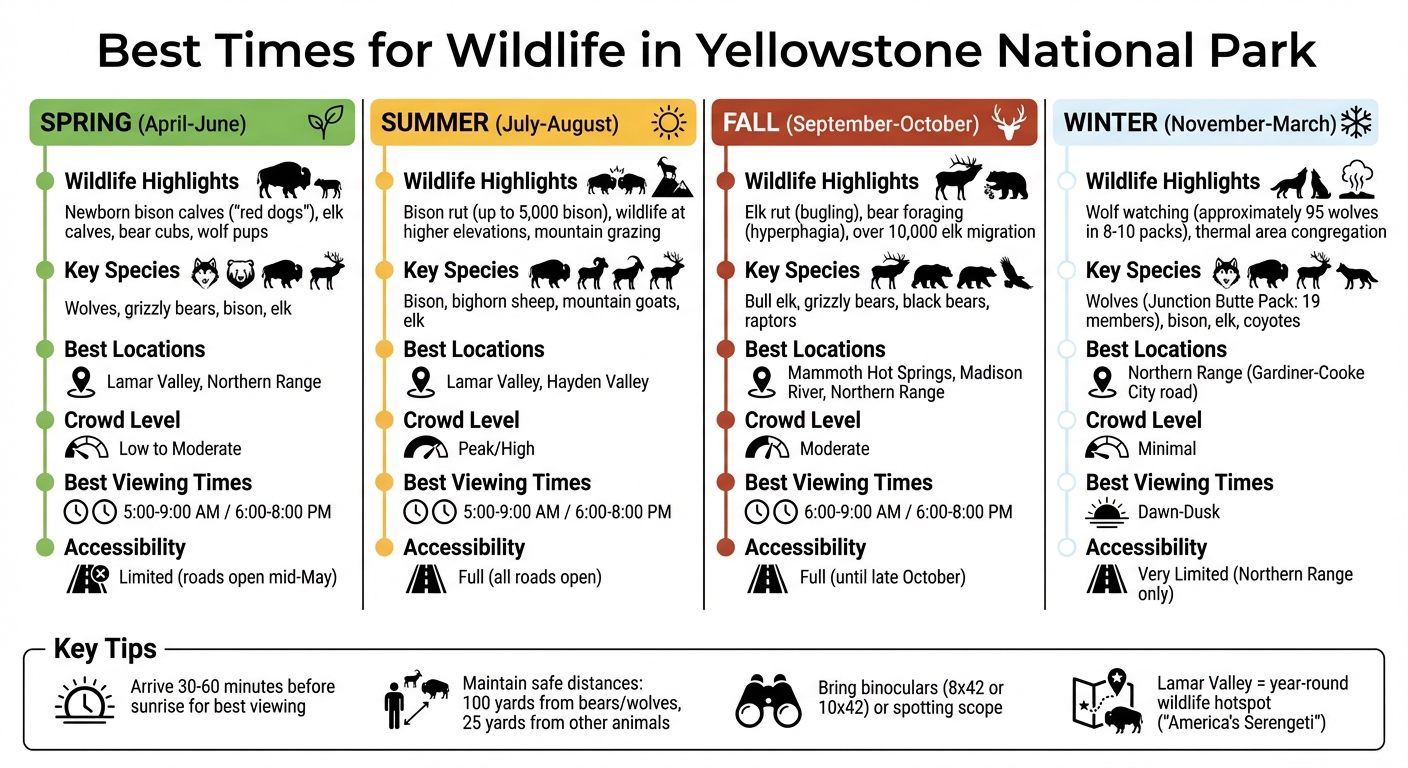
Yellowstone Wildlife Viewing Guide by Season: Best Times, Animals, and Locations
Wildlife in Yellowstone: Grizzly Bears, Wolves, Bison Rut, & More | National Park Guide [4K]
What to See Each Season in Yellowstone
Plan your visit to Yellowstone by timing it with the park’s seasonal wildlife patterns.
Spring (April to Early June): Newborns and Predator Activity
Spring in Yellowstone is all about new life. Bison calves, often called "red dog" calves because of their reddish-brown coats, start appearing in April. Elk calves and bear cubs follow in May and June, emerging from their dens. This influx of young animals draws predators like wolves and grizzly bears, making the Northern Range and Lamar Valley prime spots for wildlife viewing. Wolf pups begin to emerge from their dens in May, while adult wolves are often seen hunting. Bears, fresh out of hibernation, are also on the move, searching for protein-rich meals. As temperatures climb, animals gradually shift to higher elevations, signaling the arrival of summer.
Summer (Late June to August): Wildlife at Higher Elevations
As the snow melts, animals like bighorn sheep and mountain goats head to cooler, higher altitudes. Elk spread out from their winter herds, making Lamar Valley and Hayden Valley great places to spot them. In August, the bison rut begins, with massive bulls battling for dominance in the valleys. These dramatic displays can draw herds of up to 5,000 bison, creating unforgettable sights. By the time fall arrives, the focus shifts to elk mating and bear preparations for hibernation.
Fall (September to October): Elk Rut and Bear Foraging
Fall is defined by the elk rut, which kicks off in mid-September. Bull elk can be heard bugling across the valleys as they gather harems of females. Popular spots to witness this include Mammoth Hot Springs, the Madison River, and the Northern Range. These vocal and physical displays peak in early October. Meanwhile, bears enter a feeding frenzy, known as hyperphagia, consuming berries, roots, and carcasses to prepare for hibernation. If you’re visiting during this time, remember to maintain a safe distance of at least 100 yards from bears.
Winter (November to March): Wolves and Serene Landscapes
Winter is an exceptional season for wolf watching. The snowy landscape makes it easier to spot the park’s approximately 95 wolves. As Cara McGary from In Our Nature Guiding Services explains:
"Winter is arguably the best time to see wolves in Yellowstone. The snow makes them easier to spot, and they are sometimes seen hunting elk and bison."
The cold season forces elk and bison to lower elevations and thermal areas, where vegetation regrowth provides food, attracting predators. The Northern Range, particularly the stretch between Gardiner and Cooke City, becomes a hotspot for wildlife activity. Among the park’s 8–10 active wolf packs, the Junction Butte Pack, with around 19 members, is a frequent sight.
By planning your visit around these seasonal highlights, you can experience Yellowstone’s incredible wildlife at its best. Here’s a quick guide to what you can expect each season:
| Season | Wildlife Highlights | Must-See Species |
|---|---|---|
| Spring | Newborn animals and predators | Bison calves, elk calves, bear cubs, wolves |
| Summer | Bison rut and mountain grazing | Bison, bighorn sheep, mountain goats |
| Fall | Elk bugling and bears foraging | Bull elk, grizzly bears, black bears |
| Winter | Wolf activity and thermal areas | Wolves, bison, elk, coyotes |
Best Times of Day to See Wildlife
Planning your visit during key times of the day can make all the difference in spotting Yellowstone’s incredible wildlife. Animals are most active around sunrise and sunset, taking advantage of cooler temperatures to feed and hunt before the heat of the day. These moments, when the park transitions between day and night, are ideal for wildlife viewing.
Morning: Arrive Before Sunrise
Early mornings are a golden opportunity to witness Yellowstone’s wildlife. Aim to arrive 30–60 minutes before sunrise in areas like Lamar Valley or Hayden Valley, which means around 5:00 AM. The best viewing typically happens between 6:00 AM and 9:00 AM, as animals like wolves and bears are on the move – wolves travel between hunting grounds, and bears scour for food.
Sarah Ernst from Wildlife Expeditions highlights this perfectly:
"The gutsy visitors who hit the road by sunrise will be rewarded by more active wildlife and fewer crowds. Generally, the best time to look for wildlife in Yellowstone is at dawn."
Driving in the pre-dawn darkness requires extra caution, as bison and other animals can be hard to see. Dress warmly, as mornings can be cold, and bring waterproof boots for added comfort. High-quality binoculars (8×42 or 10×42) or a spotting scope are essential for spotting animals across the vast valleys. Keep in mind, as the sun rises and temperatures climb, wildlife activity tends to dwindle.
Evening: Dusk Brings Wildlife Back
Evenings are another prime time for wildlife activity. As temperatures cool, animals emerge once again, making the 6:00 PM to 8:00 PM window a fantastic time for sightings. The low-angle light of this "Golden Hour" not only enhances visibility but also creates stunning conditions for photography.
Certain species, like beavers, are especially active during the extended dusk hours. If you’re hoping to spot them, focus on the 6:30 PM to 8:30 PM timeframe near places like Willow Park or the Gallatin River. During the fall months of September and October, Mammoth Hot Springs and the Madison River area are excellent spots to hear the haunting calls of bull elk bugling at dusk.
Always remember to pull off the road safely if you need to stop and maintain a safe distance from all wildlife for both your safety and theirs.
sbb-itb-00512f3
Where to Find Wildlife in Yellowstone
Timing is everything when it comes to spotting wildlife in Yellowstone, but choosing the right location is equally crucial. Different areas of the park offer unique opportunities to see specific animals, depending on the season. Yellowstone’s wildlife tends to gather in certain valleys and regions, making these spots prime locations for unforgettable encounters.
Lamar Valley: A Year-Round Wildlife Hotspot
Known as "America’s Serengeti", Lamar Valley is one of the most dependable places for wildlife sightings in Yellowstone. Its vast, open terrain makes it easier to spot animals like wolves, bison, grizzly bears, and pronghorn. The Junction Butte Pack, one of the park’s most observed wolf packs, often roams this area, with roughly 19 wolves in the pack.
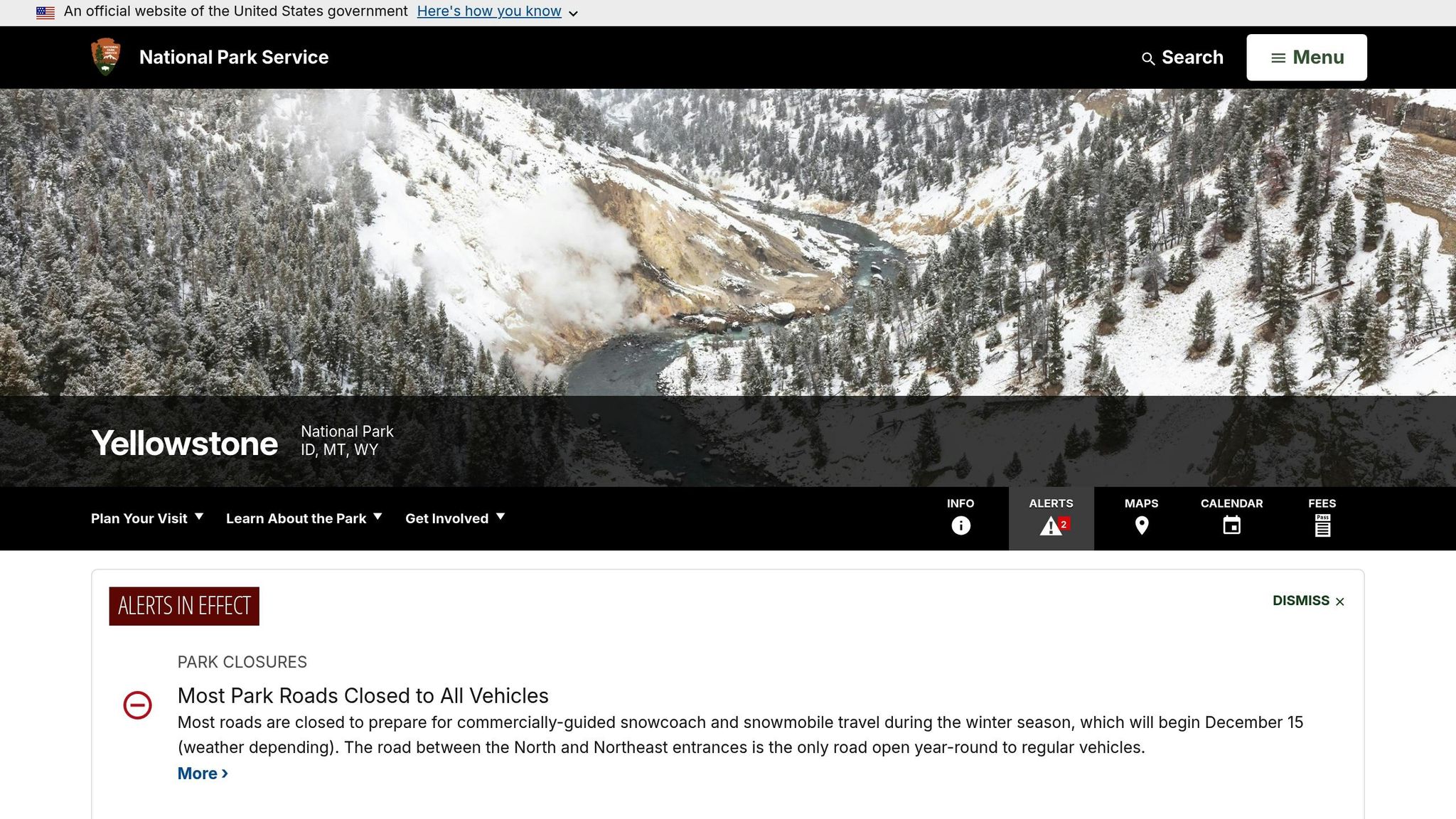
Lamar Valley is accessible year-round via the Gardiner–Cooke City road, making it the only major wildlife area you can reach by car in winter. Winter is also prime time for wolf activity, while spring (April through June) brings "red dog" season, when bison calves sport their striking reddish-orange coats before they turn brown.
For the best experience, bring a spotting scope – many animals, especially wolves, are often seen at distances beyond the reach of binoculars. Aim to arrive between 5:00 AM and 6:00 AM for the best chances of spotting wildlife.
Hayden Valley: Spring and Summer Highlights
Located in central Yellowstone, Hayden Valley comes alive in spring and summer. Grizzly bears are frequently seen in roadside meadows from April through June, while bison herds dominate the landscape during the summer months. August offers a front-row seat to the dramatic bison rut, where males compete for dominance.
This valley is also a top spot for birdwatchers, with raptors migrating through in September and October. Waterfowl, including trumpeter swans, add to the diversity of wildlife here. Keep in mind that Hayden Valley becomes inaccessible during the winter months when park roads close to regular vehicles.
Mammoth Hot Springs: Elk in Their Element
If elk are on your list, Mammoth Hot Springs is the place to be. Elk are present year-round, but the fall rut in September and October is a spectacle you won’t want to miss. During this time, bull elk fill the air with their iconic bugling calls as they vie for mates.
Even in winter, elk and deer remain visible as they move to lower elevations to escape the deep snow of the mountains. Remember to keep a safe distance – federal law requires staying at least 100 yards from bears and wolves and 25 yards from other animals, including elk. This is especially critical during the aggressive rutting season at Mammoth.
Choosing Your Visit Based on Wildlife Goals
Timing your visit to Yellowstone can make all the difference, especially if you have specific wildlife goals in mind. Each season offers its own unique opportunities to observe the park’s incredible animals in their natural habitat.
If wolves are at the top of your list, winter (December–March) is your best bet. The snow not only makes these elusive creatures easier to spot but also provides a dramatic backdrop for observing their behavior. Cara McGary from In Our Nature Guiding Services shares:
"Winter is arguably the best time to see wolves in Yellowstone. The snow makes them easier to spot, and they are sometimes seen hunting elk and bison."
Keep in mind that winter access is limited to the Gardiner–Cooke City road or snowcoach transportation.
For bears, spring (April–May) is the prime season. As the bears emerge from hibernation, they become more active and easier to observe. Sarah Ernst from Wildlife Expeditions captures the magic of this season:
"Spring is a magical time in Yellowstone. And it’s the best time of year to observe bears!"
While spring is ideal, fall also offers a secondary chance to see bears as they forage in preparation for winter.
If elk are your focus, plan your trip for September. This is the rutting season, when bull elk compete for dominance and fill the air with their iconic bugling calls. Mammoth Hot Springs is one of the best spots to witness this spectacle, as over 10,000 elk migrate from higher elevations.
Wildlife Viewing by Season: Quick Reference
Here’s an at-a-glance guide to Yellowstone’s seasonal wildlife highlights, crowd levels, and the best times for viewing:
| Season | Key Wildlife | Crowds | Accessibility | Best Viewing Times |
|---|---|---|---|---|
| Spring (Apr–Jun) | Baby bison, bears, wolf pups | Low to Moderate | Limited (roads open mid-May) | 5:00–9:00 AM / 6:00–8:00 PM |
| Summer (Jul–Aug) | Bison rut, birds, high‐elevation species | Peak / High | Full (all roads open) | 5:00–9:00 AM / 6:00–8:00 PM |
| Fall (Sep–Oct) | Elk rut, bears foraging, raptors | Moderate | Full (until late Oct) | 6:00–9:00 AM / 6:00–8:00 PM |
| Winter (Nov–Mar) | Wolves, bison near thermal areas | Minimal | Very Limited (Northern Range only) | Dawn–Dusk |
For a balanced experience with active wildlife and fewer crowds, consider visiting from mid-May to early June or September through October. By aligning your trip with these seasonal insights, you can make the most of your Yellowstone adventure and enjoy the park’s incredible wildlife on your terms.
Conclusion
Timing your visit by season, time of day, and location is essential to getting the most out of your Yellowstone wildlife experience. Spring (April to early June) is a standout season, with newborn bison calves and bears emerging from hibernation. Fall (September to October) brings the dramatic elk rut, particularly around Mammoth Hot Springs. And for those willing to brave the cold, Winter (November to March) offers unparalleled wolf-watching opportunities, especially in the Northern Range, though access can be limited.
Whether you’re captivated by springtime births, the fall elk rut, or winter wolf sightings, arriving before sunrise and revisiting at dusk increases your chances of spotting active wildlife while avoiding crowds. Lamar Valley is a year-round hotspot for diverse wildlife, including Yellowstone’s estimated 95 wolves spread across 8 to 10 active packs. Hayden Valley is ideal for spring grizzly sightings and summer bison herds, while Mammoth Hot Springs shines as the go-to elk viewing spot each September.
Always keep a safe distance from animals and bring a good pair of binoculars to enhance your viewing experience. By planning around the best seasons, times, and locations, you’ll have the opportunity to witness Yellowstone’s wildlife at its most dynamic.
For more tips and resources to plan your Yellowstone trip, check out The National Park Guide for everything you need to explore America’s national parks.
FAQs
Do I need a guide to see wolves or bears?
For spotting wolves or bears in Yellowstone, you don’t always need a guide. To enjoy wildlife viewing safely and responsibly, make use of roadside pullouts. Equip yourself with binoculars or a telephoto lens – these tools let you watch animals from a safe distance while ensuring their natural behavior isn’t disrupted.
What gear should I bring for wildlife viewing?
For spotting wildlife in Yellowstone, binoculars or a telephoto lens are must-haves for observing animals safely from afar. If you’re into photography, a camera with a solid zoom feature will help you capture those incredible moments.
Weather in Yellowstone can be unpredictable, so dress in layers and pack some rain gear to stay comfortable throughout the day. And remember, safety comes first: always keep at least 100 yards away from bears and wolves and 25 yards from other animals. This distance protects both you and the park’s wildlife.
How do road closures affect winter wildlife plans?
During winter, from early November to late April or May, heavy snow leads to road closures across much of Yellowstone, restricting access to several areas. However, the Northern Range road remains open throughout the year, providing a chance to observe wildlife even in the colder months. If you’re planning a visit, it’s important to note that certain areas can only be reached through guided tours or snowcoach trips. Knowing which roads are accessible and planning accordingly is key to enjoying safe and rewarding wildlife viewing during this season.