
Want to witness nature’s raw survival stories? Some of the best predator-prey interactions can be seen in U.S. national parks, from wolves chasing elk in Yellowstone to bears fishing for salmon in Katmai.
Here’s a quick rundown of where and when to go for these incredible wildlife moments:
- Yellowstone National Park: Spot wolves hunting elk and bison, especially in Lamar Valley. Winter offers the best visibility.
- Katmai National Park: Watch brown bears catch salmon at Brooks Falls during July’s peak salmon run.
- Lake Clark National Park: Coastal and inland bear viewing, particularly during salmon runs from July to September.
- Isle Royale National Park: Observe the unique wolf-moose dynamic in this isolated ecosystem during summer.
- Grand Teton National Park: See wolves and grizzlies in action, especially in spring and fall.
Each park offers a unique glimpse into predator-prey relationships, but timing and preparation are key. Read on for tips, highlights, and safety guidelines to make the most of your visit.

Best National Parks for Predator-Prey Viewing: Comparison Guide
Minute Out In It: The Chase
sbb-itb-00512f3
Yellowstone National Park

Yellowstone is one of the best places to witness wild wolves in their natural habitat. As of January 2026, the park is home to at least 84 wolves spread across eight packs. Its open landscapes make spotting these incredible animals much easier. Wolf-related tourism also plays a big role in supporting local communities, bringing in over $80 million annually.
The northern range of Yellowstone, particularly Lamar Valley, is a hotspot for observing predator-prey interactions. Wolves in this area primarily hunt elk and bison, which account for about 82% of their kills. These prey animals, abundant in the region, naturally attract predators. The northern elk herd, which once reached numbers as high as 17,000 in the 1990s, has since stabilized at more sustainable levels. A 2024 study conducted over 4.5 months documented 211 wolf kills and 56 cougar kills across the park, with many taking place in Lamar Valley, where prey density is highest. For instance, the Junction Butte pack is often seen hunting near the road. In June 2025, Kyle Wonders from the Yellowstone Forever Institute observed a dramatic two-and-a-half-hour bison hunt, showcasing fascinating pack dynamics.
Lamar Valley: Where to Watch Wolves
Lamar Valley’s sweeping landscapes and open terrain make it an ideal spot for long-distance wildlife observation. The road through the valley is maintained year-round, making it accessible even during transitional seasons.
Timing your visit is key. Arriving at dawn gives you the best chance to catch wolves in action before they settle down as the day warms up. The prime viewing hours are between 6:00 am and 10:00 am. Winter is particularly rewarding for wolf watchers, as the snow provides excellent contrast against their coats, and prey animals tend to gather in the valleys.
Keep an eye out for signs of predator activity. If you see elk, bison, or pronghorn herds clustered together, facing one direction, or acting skittish, a wolf or bear might be nearby. Ravens or eagles circling overhead often signal the presence of a carcass and possibly active predators. You’ll also notice groups of people with spotting scopes and radios – these are often professional wolf spotters or biologists sharing updates on pack movements.
To observe safely and responsibly, use quality scopes or binoculars and maintain a legal distance of at least 100 yards from wildlife.
| Recommended Spot | Best For | Specific Tips |
|---|---|---|
| Soda Butte Cone to Fisherman’s Pullout | General Wolf Sightings | A one-mile stretch with frequent wolf activity. |
| Jasper Bench | Pack Observations | Located across from Dorothy’s Knoll; great for glassing. |
| Hitching Post / Hiking Bridge | Denning Activity | Visit at dawn or dusk during spring for den sightings. |
| Slough Creek Hills | Predator-Prey Dynamics | Offers high vantage points for tracking wolf movement. |
While Yellowstone is iconic for wolf watching, other parks like Katmai and Lake Clark also offer incredible opportunities to witness predator-prey interactions in the wild.
Katmai National Park
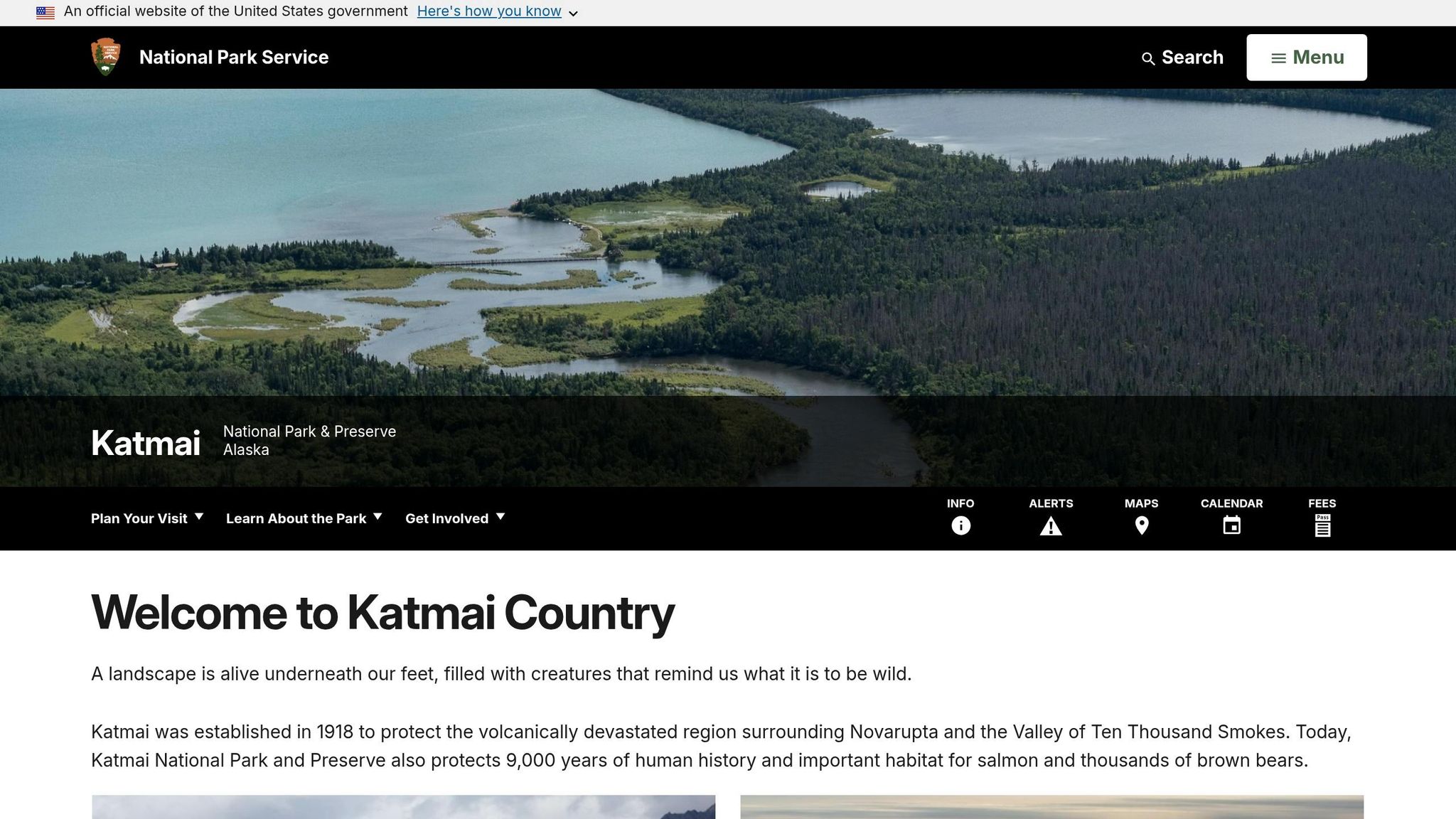
Katmai National Park in Alaska is home to around 2,000 protected brown bears, making it the largest population of its kind in North America. The park’s rich volcanic history, shaped by events like the 1912 Novarupta eruption, has created coastal habitats teeming with nutrients – perfect for supporting such a dense bear population.
One of the park’s standout features is Brooks River Falls, where visitors can witness the unforgettable sight of brown bears catching salmon in midair. During peak season, as many as 25 bears can gather at the falls. However, reaching this remote location requires careful planning. There’s no direct road access, so visitors must first fly into King Salmon from Anchorage and then take a floatplane or water taxi to Brooks Camp.
Brooks River Falls: Bears and Salmon in Action
The sockeye salmon run at Brooks River kicks off just after June 15th, setting the stage for an intense and captivating predator-prey interaction. July is the peak month for both salmon and bear activity, but viewing on the main platform is limited to 30 minutes, and tripods are not allowed. By August, bear activity remains strong at about 60–70% of July levels, even as visitor numbers drop by more than half. By mid-September, the bears – often referred to as "fat bears" as they prepare for hibernation – begin to spread out along the river. If you’re planning a trip, aim to visit before services shut down around September 17–18.
"If your dream is to see bears catch fish on the falls, this is it; there is no alternative." – Steven Benjamin, Fishing Guide and Local Expert
"August might actually be the best-kept secret about when to visit Brooks Falls… August offers what we believe to be the best of what is available at Brooks camp." – Steven Benjamin
A 1.2-mile accessible trail leads to elevated platforms, offering a safe and close-up view of this raw display of predator-prey dynamics. Much like Yellowstone’s wolves, the interaction between Katmai’s bears and salmon highlights nature’s unfiltered drama at its finest.
Lake Clark National Park
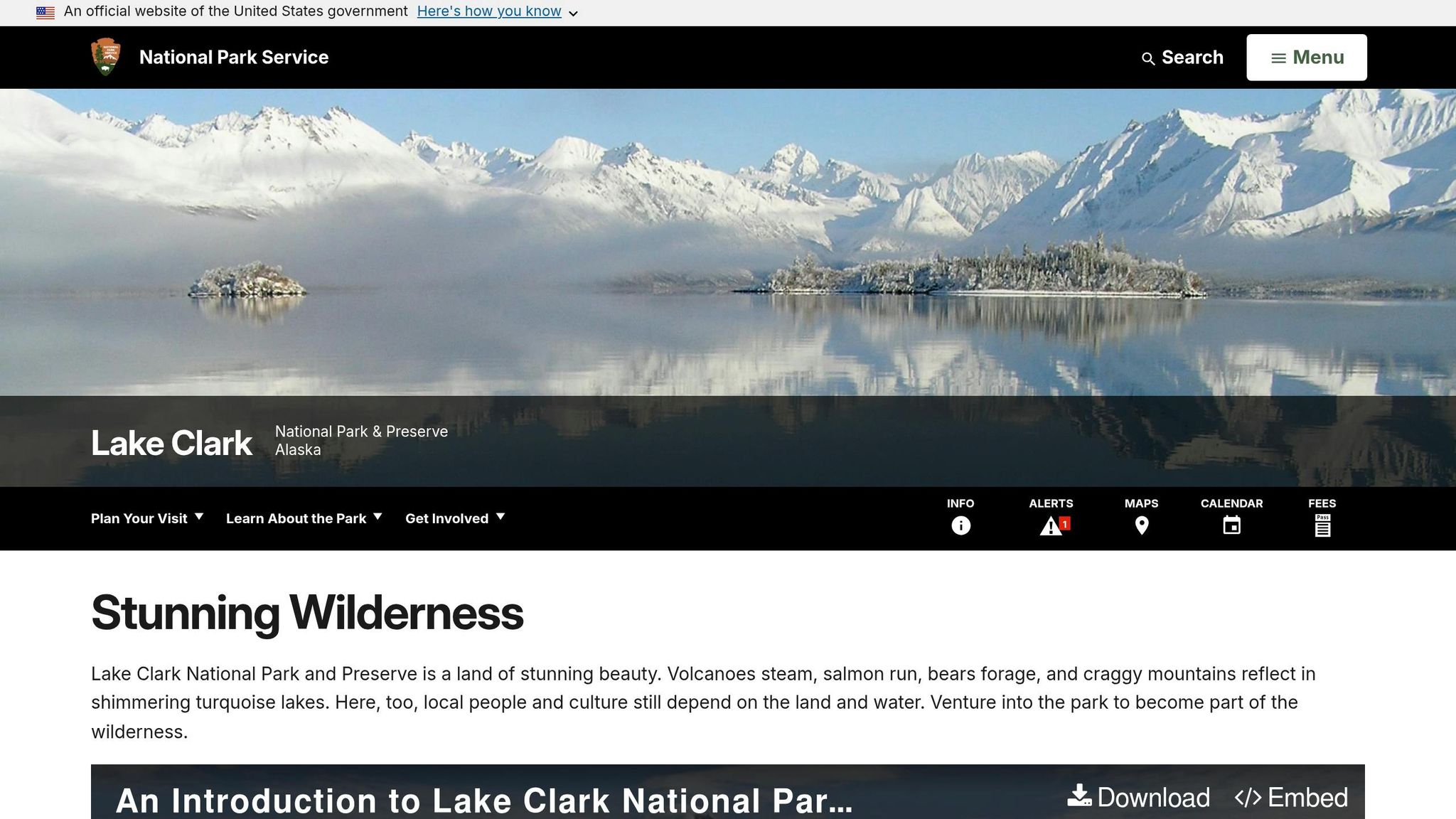
Lake Clark National Park is a fantastic destination for bear-viewing, especially during the salmon run. Whether you’re exploring the coastal areas or the inland wilderness, the park offers a front-row seat to observe bears in their natural habitat. Chinitna Bay showcases coastal bear activity, while Crescent Lake provides a more secluded inland perspective of this annual spectacle.
Chinitna Bay, located along the southern Cook Inlet coast, is a top spot for coastal bear viewing. It’s common to see more than 20 brown bears roaming the salt marshes and tidal flats near Middle Glacier Creek. The abundance of food – like sedge, clams, and salmon – creates an environment where bears are more tolerant of each other and even of human presence. For the best experience, visit in early summer, from June to early July, when bears are most active in the sedge meadows.
Chinitna Bay and Crescent Lake
If you’re looking for a different kind of bear-viewing experience, Crescent Lake in the Chigmit Mountains offers an inland alternative. Both brown and black bears gather along its shores during salmon runs. Sockeye salmon arrive in July, followed by coho salmon from mid-August through early September. Crescent Lake is only accessible by floatplane, with flights from Anchorage, Kenai, or Homer taking less than an hour.
The rugged terrain around Crescent Lake, with its dense brush and steep slopes, makes boat tours – whether by motorboat or kayak – the best way to explore. At Chinitna Bay, visitors are encouraged to use designated viewing areas and trails, as the sedge meadow is off-limits to protect critical bear feeding zones. For a safe and enriching experience, consider hiring a licensed outfitter to guide you through these remote areas.
Lake Clark National Park’s diverse landscapes offer a chance to witness the dynamic relationship between predators and prey, creating unforgettable wildlife moments.
Isle Royale National Park
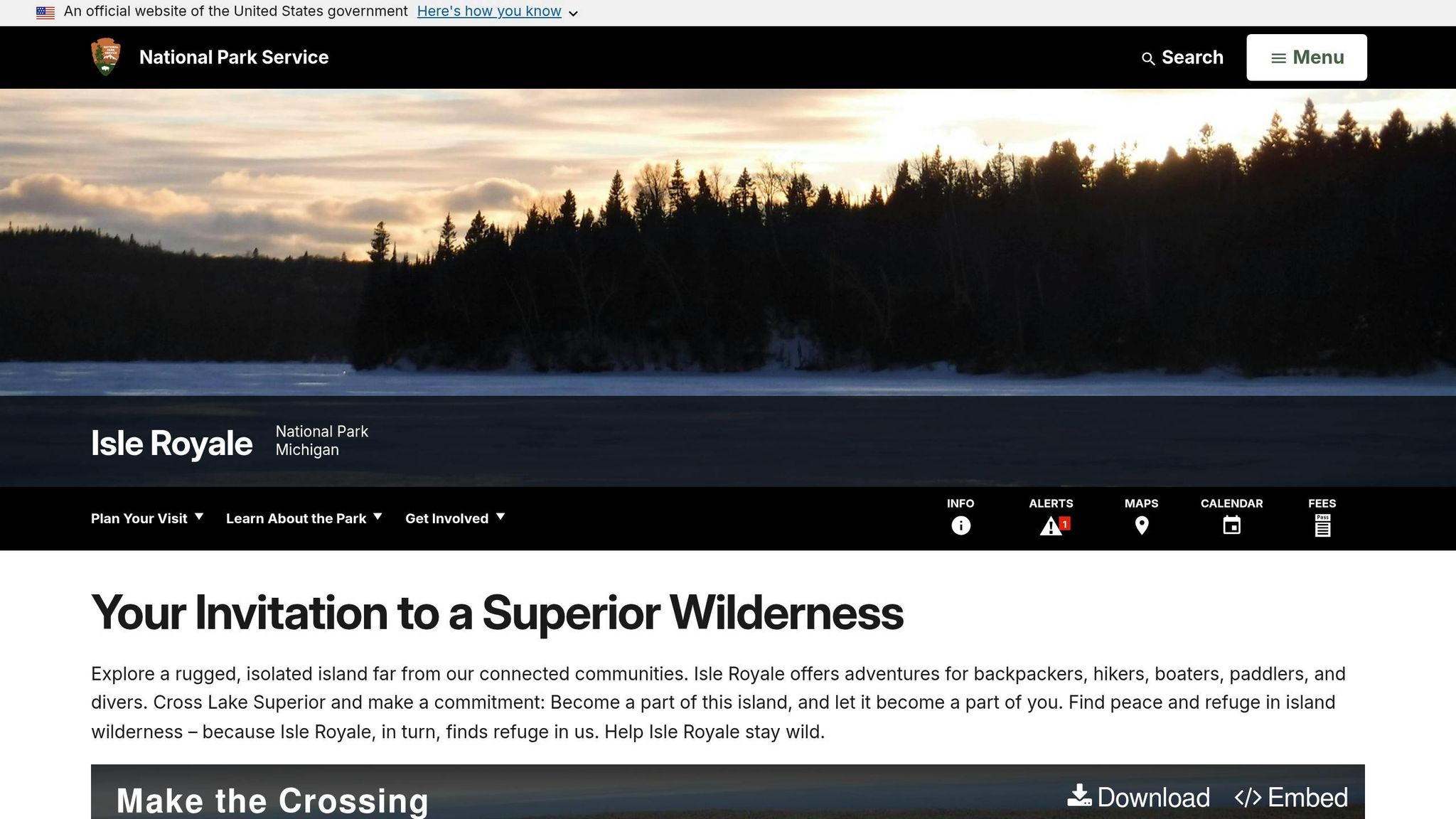
Isle Royale is home to the world’s longest-running predator-prey study, which has been monitoring the relationship between wolves and moose since 1958. The island’s remote location – 12 miles from the mainland – creates a simplified ecosystem where wolves reign as the top predator, relying on moose for about 90% of their diet. This unique setup has shown how predator and prey populations can rise and fall unpredictably due to factors like climate and genetics.
The numbers paint a vivid picture. Wolf populations have fluctuated dramatically, peaking at 50 in 1980 but dwindling to just two individuals between 2016 and 2018. Moose numbers have ranged from 500 to 2,500 during the study. Severe inbreeding nearly wiped out the wolves, with all individuals suffering from spinal deformities. To address this, the National Park Service relocated 19 wolves from Minnesota and Canada between 2018 and 2019. These findings not only aid conservation efforts but also enrich the experience for visitors hoping to witness wildlife in its natural state.
Wolves and Moose: Predator-Prey Dynamics
Research has provided fascinating insights into the predator-prey relationship on Isle Royale. Each wolf kills between 0.44 and 1.69 moose per month and can eat up to 18 pounds of meat in a single sitting. A 2019 study led by Dr. Jerry Belant analyzed 381 GPS collar locations, uncovering 60 prey remains. Of these, 54.5% were moose, and 63.4% of those were calves.
"Restoring wolves is really about restoring integrity and resiliency to the ecosystem; making the ecosystem whole." – Mark Romanski, Division Chief for Natural Resources at Isle Royale NP
For visitors, this research offers practical tips for spotting wildlife interactions. Moose are most active at dawn and dusk, particularly near inland lakes and beaver ponds during the summer months. For the best chances of observing them, stick to lakeshores, open areas, and hiking trails. The park operates seasonally, closing from October 30 to April 15, so plan accordingly. If you come across a moose carcass, back away immediately – wolves may be nearby guarding their kill. And don’t bring pets; they’re prohibited to prevent the spread of diseases and avoid territorial conflicts with wolves.
Grand Teton National Park
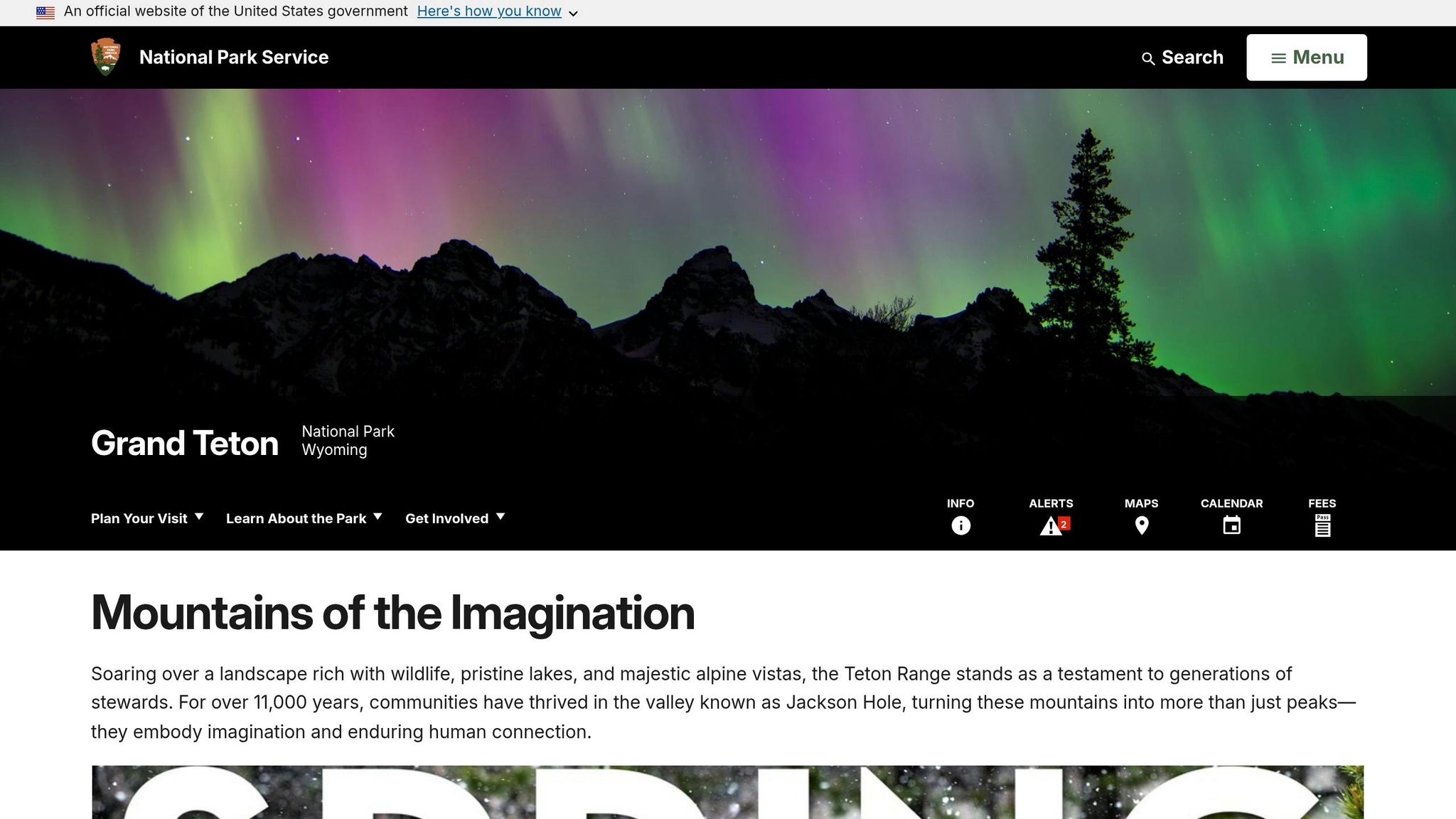
Following the raw, untamed experiences of Yellowstone and Katmai, Grand Teton National Park offers its own drama of predator-prey interactions. The park’s wide-open sagebrush flats and valleys become a stage for nature’s survival stories. In Jackson Hole, wolves are often seen hunting elk, while winter brings coyotes preying on rodents. As spring arrives, grizzlies shift their focus to newborn elk, deer, and bison.
"Wolves are exceptionally capable predators, often running down prey in open territory. In Jackson Hole, they primarily feed on elk." – Jackson Hole Traveler
Overhead, bald eagles and ospreys glide above the Snake River, while the park’s 61 mammal species – like the lightning-fast pronghorn, capable of reaching speeds of 60 mph – add vitality to the landscape. Just beyond the park’s boundaries, the National Elk Refuge becomes a winter haven for around 7,000 elk, creating prime opportunities to spot predators in action. This rich interplay of wildlife makes Grand Teton a must-visit for nature enthusiasts.
Open Terrain for Wildlife Watching
Grand Teton’s open terrain provides exceptional visibility, especially across its sagebrush meadows and valleys. The Teton Range, with its east-facing slopes, is a favorite for sunrise photography and wildlife observation. Early morning and late evening offer the best light, and the park’s 45 mph speed limit during these hours ensures a safer experience for both visitors and animals.
Spring and autumn are ideal times to visit, thanks to cooler weather and fewer crowds. Key spots include Willow Flats, where moose and grizzly bears are often seen, Oxbow Bend for birdwatching and bear sightings, and the Antelope Flats/Kelly Loop for encounters with bison and pronghorn. To make the most of your visit, bring binoculars or a telephoto lens to observe wildlife from a respectful distance.
Park Comparison Table
Planning a trip to see predator-prey interactions? This table breaks down five iconic parks – Yellowstone, Katmai, Lake Clark, Isle Royale, and Grand Teton – based on key factors like wildlife, timing, and accessibility.
| Park | Primary Predator-Prey Pair | Best Viewing Season | Key Location | Accessibility |
|---|---|---|---|---|
| Yellowstone | Wolves & Elk/Bison | Year-round (winter ideal for wolves) | Lamar and Hayden Valleys | Drive-in access; spans 3,600 sq. miles across WY, MT, ID |
| Katmai | Grizzly Bears & Sockeye Salmon | July (peak) | Brooks River Falls | Fly-in only; remote location |
| Lake Clark | Grizzly Bears & Salmon | July–September | Chinitna Bay, Crescent Lake | Fly-in only; wilderness access |
| Isle Royale | Wolves & Moose | Summer (June–September) | Greenstone Ridge Trail | Boat/seaplane; backpacking terrain |
| Grand Teton | Wolves & Elk | Spring and Fall | Willow Flats, Oxbow Bend | Drive-in access; open terrain |
Yellowstone and Grand Teton stand out for their drive-in convenience and developed amenities, making them easier to explore. In contrast, Katmai, Lake Clark, and Isle Royale require more effort – think flights or boat rides – to reach their remote locations. Isle Royale, in particular, is ideal for seasoned adventurers, as it demands backcountry skills to navigate its rugged trails.
For timing, July is perfect for watching grizzly bears feast on salmon in Katmai and Lake Clark, as highlighted by BeautifulNow. Meanwhile, Yellowstone’s Lamar Valley offers wolf sightings throughout the year, with winter being especially rewarding thanks to the stark contrast of wolves against snow-covered landscapes. Knowing these distinctions can help you pick the right park to match your wildlife viewing dreams.
Wildlife Viewing Tips
Best Times and Locations
If you’re hoping to catch wildlife in action, timing is everything. Dawn and dusk are the golden hours for spotting predator-prey interactions. Predators are on the hunt during these cooler hours, while prey animals are busy feeding. For instance, Katmai National Park in July is the ultimate destination to see grizzly bears chasing sockeye salmon along Brooks River and Brooks Falls. It’s a breathtaking spectacle you won’t want to miss.
At Yellowstone’s Lamar Valley, the early morning hours between 6:00 am and 10:00 am are ideal for wildlife sightings. Winter is particularly special for wolf watchers, as the snow creates a stark contrast that makes these elusive animals easier to spot. Similarly, Grand Teton offers prime wolf-watching opportunities in the early morning and late evening, especially during spring and fall. These seasons not only bring cooler temperatures but also fewer crowds, making your experience even more enjoyable.
If you’re heading to Isle Royale, moose are most active at dawn and dusk during the summer, often near inland lakes and beaver ponds. Over at Lake Clark’s Crescent Lake, the wildlife calendar revolves around the salmon runs. Sockeye salmon arrive in July, followed by coho salmon from mid-August through early September, attracting both brown and black bears.
Can’t make it in person? Many parks, like Katmai, offer live webcams so you can still enjoy the action and plan your trip accordingly. While these peak times increase your chances of witnessing incredible wildlife moments, always remember that safety comes first.
Safety Guidelines
Enjoying wildlife is thrilling, but it’s important to stay safe and respect the animals’ space. The National Park Service recommends staying at least 100 yards away from bears and wolves, and 25 yards from all other wildlife. To get a closer look without disturbing them, bring along binoculars or a spotting scope.
Bear spray is a must-have when venturing into bear country, but it’s only effective if it’s within easy reach. Keep it on a belt or chest strap, and practice removing the safety clip before heading out. Another key tip: travel in groups of three or more. Statistically, larger groups are far less likely to have negative encounters with bears. And don’t forget to make noise when walking through dense vegetation – clapping or calling out helps prevent startling animals at close range.
"Ultimately, staying safe and keeping wildlife wild is up to YOU!" – National Park Service
Feeding wildlife is a strict no-no. Always secure food and scented items in bear-proof lockers or hard-sided vehicles. As wildlife author Ed Preston wisely says, "A ‘fed bear is a dead bear’ remains a hard truth in the ecosystem". Animals that become food-conditioned often turn aggressive, and in some cases, they must be euthanized. Lastly, if you stop to admire wildlife, use designated pullouts to avoid causing dangerous "wildlife jams" on the road.
Conclusion
America’s national parks offer a window into the intricate predator-prey relationships that define the natural world. Picture Yellowstone’s Lamar Valley, where wolves pursue elk across vast grasslands, or Katmai’s Brooks Falls, where as many as 25 grizzly bears gather to fish for salmon during the height of the season. Then there’s Isle Royale, a living laboratory for the interaction between wolves and moose, and Grand Teton, with its open landscapes teeming with 61 mammal species. Each park shares its own story, showcasing the delicate balance that keeps ecosystems thriving.
However, enjoying wildlife comes with responsibility. The National Park Service emphasizes, "Staying safe and keeping wildlife wild is up to YOU!". Always maintain a safe distance from animals, and never feed them – altering their natural behavior can lead to serious consequences.
FAQs
Which park gives me the best odds of seeing an actual hunt?
Isle Royale is a top spot to witness a hunt in nature. Wolves, the island’s top predators, frequently hunt moose, beavers, and snowshoe hares. Since 1958, researchers have been studying the predator-prey relationships here, making it an ideal place to observe these fascinating interactions firsthand.
Do I need a guide or special permits to view wildlife safely?
You don’t need a guide or special permits to enjoy wildlife in U.S. national parks. That said, it’s up to you to stick to safety guidelines and park rules to keep yourself, others, and the animals safe. Always keep a respectful distance and take care not to disturb the natural environment.
What gear should I bring to watch predators from a safe distance?
To safely observe predators in national parks, make sure to bring equipment like spotting scopes or binoculars. These tools let you enjoy wildlife from a safe distance without interfering with their natural behavior. Dress in sturdy, long clothing to protect yourself from the elements and potential hazards. Additionally, carry essential safety items, such as bear spray, to prepare for any unexpected encounters. Always adhere to park rules and maintain a safe distance to ensure the well-being of both you and the animals.