
Imagine swimming in lakes surrounded by mountains, forests, or volcanic peaks. This guide highlights the best national parks for lake swimming, focusing on clean water, scenic views, and visitor amenities. From Acadia’s freshwater lakes to Crater Lake‘s deep blue waters, each park offers a unique experience. Here’s a quick rundown of the top spots:
- Acadia National Park: Echo Lake Beach offers warmer waters (up to 73°F in summer) with accessible amenities. Sand Beach provides ocean swimming but with colder temperatures.
- Grand Teton National Park: String Lake is shallow, family-friendly, and warms up faster than glacier-fed lakes.
- Glacier National Park: Lake McDonald features clear waters and a comfortable 70°F in August.
- Olympic National Park: Lake Crescent’s turquoise waters are stunning but cold year-round.
- Lassen Volcanic National Park: High-elevation lakes like Manzanita and Summit Lake are beautiful but chilly.
- Yellowstone National Park: Limited swimming areas with strict safety rules due to cold water and thermal hazards.
- North Cascades National Park: Diablo Lake‘s turquoise waters are breathtaking but icy cold.
- Yosemite National Park: Tenaya Lake offers alpine swimming with scenic granite backdrops.
- Crater Lake National Park: Swimming is restricted to Cleetwood Cove (closed until 2028) with very cold waters.
- Voyageurs National Park: Water-centric park with swimming in Kabetogama and Rainy Lakes, best in late summer.
Quick Tip: Always check water temperatures, safety guidelines, and park-specific rules before diving in. Many lakes lack lifeguards, and conditions can vary. For families, Acadia and Grand Teton offer warmer waters and better amenities. For adventure seekers, Glacier, North Cascades, and Crater Lake deliver unmatched natural beauty but colder swims.
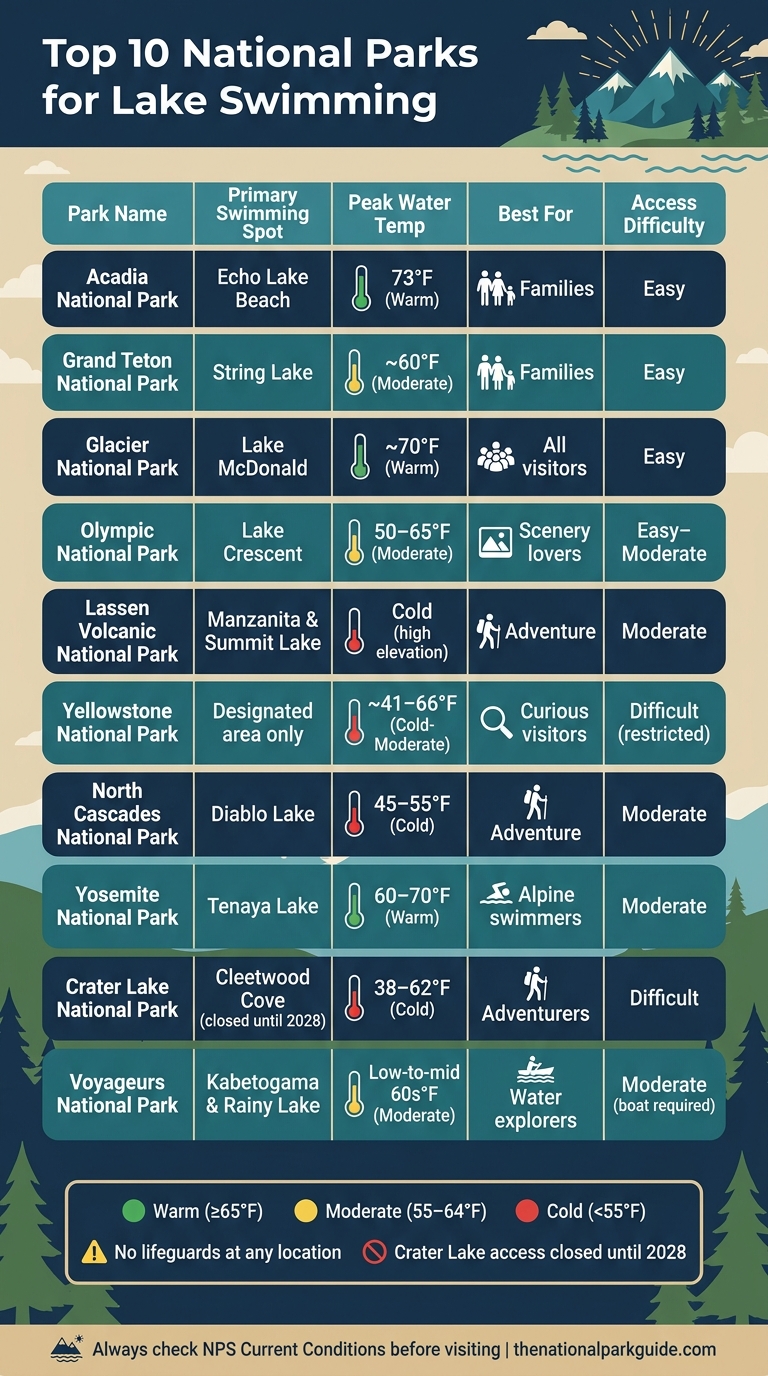
Top 10 National Parks for Lake Swimming: Water Temp & Access Guide
39: Swimming Holes in the Parks – Grand Teton, Redwood, and Crater Lake
1. Acadia National Park – Sand Beach and Freshwater Lakes

Acadia National Park offers the rare chance to enjoy both ocean and freshwater swimming in one visit. Its only sandy ocean beach, Sand Beach, is tucked between granite cliffs along the Park Loop Road. The dramatic setting is unforgettable, but don’t expect warm waters – the Atlantic here stays a chilly 50°F to 60°F, even in the peak of summer. If that sounds too brisk, the park’s freshwater lakes provide a cozier option. Let’s dive into what makes each spot unique.
Echo Lake Beach is a favorite for visitors seeking warmer waters. Found on the quieter western side of Mount Desert Island, it’s surrounded by forest and granite cliffs, offering a serene, scenic experience. During July and August, the water temperature climbs to a more inviting 72°F–73°F. The area includes helpful amenities like a roped swimming zone, a paved path, an accessible boardwalk, and seasonal restrooms with drinking water.
For those looking for a more secluded experience, Lake Wood offers a small freshwater beach with picnic spots nearby. Keep in mind, though, there are no lifeguards, and the access road only opens after June 1.
It’s important to note that not all lakes in the park allow swimming. Jordan Pond, Eagle Lake, Bubble Pond, and several others are off-limits because they serve as drinking water sources for local communities.
If you plan to visit during summer, parking at both Sand Beach and Echo Lake fills up quickly in the mornings. To avoid the hassle, take advantage of the free Island Explorer shuttle (Routes #3 and #4 for Sand Beach). Also, keep in mind that pets are not allowed at Sand Beach (June 15–September 15) or Echo Lake (May 15–September 15). For safety, water quality is tested weekly from June through August, so check the NPS website for the latest conditions before heading out.
2. Grand Teton National Park – String Lake
String Lake in Grand Teton National Park is a shallow gem where you can wade across without the water reaching much higher than your waist. Thanks to its depth (or lack thereof), it warms up faster than nearby glacier-fed lakes like Jenny and Jackson, hitting around 60°F in August. This makes it a more inviting spot for those who find the icy chill of other lakes a bit too much.
As U.S. News & World Report notes:
"At its warmest (in August), String Lake is still only about 60 degrees."
Beyond its mild temperature, String Lake boasts stunningly clear water and a sandy bottom that’s perfect for bare feet. Raelin Karstens of Wildberry Rae describes it beautifully:
"The water itself is shockingly clear with an enjoyable sandy bottom."
The lake’s narrow shape perfectly frames the towering Teton Range, creating a postcard-worthy backdrop. Even better, the main swimming area is just a short stroll from the nearby parking lot and picnic area.
The String Lake Picnic Area is well-equipped, with picnic tables, grills, flush toilets, and bear-resistant food storage. There’s also a small boat launch. The parking lot, which includes ADA and RV spaces, has 226 spots but fills up quickly – usually by 9:00 AM during the summer. To avoid the crowds, plan to arrive early or later in the afternoon, after 4:00 PM. If you’re up for a little walk, head 0.5 miles north along the Leigh Lake shoreline trail to discover quieter, sandy entry points.
Keep in mind that this is bear country, so safety is key. Always carry bear spray, use the provided food storage boxes, and never leave food unattended. If you’re bringing a kayak, canoe, or paddleboard, you’ll need a $25 annual non-motorized boat permit. Entry to the park costs $35 per vehicle for a 7-day pass, or you can opt for the $80 America the Beautiful Annual Pass.
3. Glacier National Park – Lake McDonald
Lake McDonald is Glacier National Park’s largest and deepest lake, stretching 10 miles long and plunging to depths of around 464–472 feet. It’s also the warmest lake in the park, making it a popular choice for swimming. By August, surface temperatures usually reach a comfortable 65°F to 70°F.
The lake’s stunningly clear waters showcase multi-colored, glacially smoothed pebbles visible at depths of 20–30 feet. Linnea, a seasonal resident and park expert, beautifully describes the experience:
"One of life’s most wonderful experiences, in my opinion, is floating on your back in Lake McDonald on a calm day when the water’s surface has been warmed by the sun and it is as still as glass."
Key Swimming Spots and Amenities
For swimming, the most popular spots include Apgar Beach at the southern end, the area near Lake McDonald Lodge, and Fish Creek Campground. Apgar Village offers plenty of conveniences, like a visitor center, restrooms, picnic areas, and restaurants. You can also rent paddleboards ($24.20/hr) or kayaks ($32.50/hr) there. Parking fills up quickly, so plan to arrive before 9:00 AM. Alternatively, a free shuttle runs from the Apgar Visitor Center along Going-to-the-Sun Road between 9 a.m. and 5 p.m..
Important Safety Tips
Keep in mind, there are no lifeguards, and drowning is one of the top three causes of fatalities in the park. The rocky shoreline makes water shoes a smart choice. Always ease into the water to prevent cold shock, and avoid swimming during thunderstorms or high winds.
For access, the park charges $35 per vehicle for a 7-day pass, and during the summer, a $2 vehicle reservation is required to drive Going-to-the-Sun Road.
4. Olympic National Park – Lake Crescent

Lake Crescent, located in Washington’s Olympic National Park, plunges to an impressive depth of 624 feet, making it the second deepest lake in the state. Its ultra-oligotrophic waters create a dazzling turquoise color and offer remarkable clarity, with visibility reaching up to 60 feet.
Where to Swim
Lake Crescent boasts several inviting spots for swimmers. Popular choices include East Beach, Fairholme, and Bovee’s Meadow, all of which provide beach access, picnic areas, and accessible restrooms. For a more adventurous experience, head to Devil’s Punchbowl, accessible via a 1.2-mile hike along the Spruce Railroad Trail. This area features deep, clear water and a footbridge that attracts thrill-seekers for cliff jumping. However, be cautious – slick rocks and icy water can pose risks. If you prefer a tranquil setting, visit Barnes Point near Lake Crescent Lodge. This spot offers picnic facilities, boat rentals, and even a free life jacket loaner program for children.
Safety and Water Temperature
The lake’s water temperature stays between 50°F and 65°F year-round. Since there are no lifeguards, cold-water shock is a serious concern. To stay safe, always wear a life jacket when venturing into the water.
Practical Details
The best time for swimming is from June to August, when air temperatures range from 60°F to 75°F. To secure parking at popular spots like East Beach, plan to arrive by 10:00 AM, as the lot accommodates only 15–20 vehicles. Keep in mind that the nearest gas stations and full grocery stores are in Port Angeles, about 18 miles away, so it’s wise to stock up before heading to the lake. Additionally, alcohol and glass containers are not allowed on public beaches. Entry to the park costs $30 per vehicle for a 7-day pass or $55 for an annual pass.
5. Lassen Volcanic National Park – Swimming Lakes
Lassen Volcanic National Park in northern California offers a stunning mix of natural beauty and refreshing swimming spots. With over 200 lakes and ponds scattered throughout the park, it’s a haven for water lovers. While swimming is permitted in most of these lakes, hydrothermal areas are strictly off-limits. Thanks to the park’s elevation, which ranges from 5,500 to over 10,000 feet, the water remains cold even during the warmest summer days.
Where to Swim
- Manzanita Lake (elevation 5,800 ft): This lake is popular for its easy access and convenient amenities, making it an excellent choice for first-time visitors.
- Summit Lake (elevation 6,695 ft): A favorite among families, this lake features a shallow, sandy north shore that provides a safe and fun area for kids.
- Lake Helen: Nestled at the base of Lassen Peak, this lake offers stunning views. On calm days, you might see a mirror-like reflection of the snow-capped summit.
- Butte Lake: For a quieter, more secluded experience, Butte Lake is perfect. Its coves, surrounded by lava rock and towering pines, create a peaceful retreat.
Water Quality and Key Rules
The lakes in Lassen Volcanic National Park are fed by snowmelt, resulting in crystal-clear water. Lake Helen, which reaches depths of over 100 feet, often retains snow and ice well into the summer months. To preserve its clarity and scenic beauty, floating devices are prohibited on Lake Helen, and only non-motorized boats are allowed across the park’s lakes. When entering the water, stick to designated rocky or gravel paths to protect fragile shoreline plants like Lupine.
Safety
There are no lifeguards at any of the park’s lakes, so safety is up to you. The cold water, especially in high-elevation lakes like Lake Helen, poses a risk of hypothermia. Additionally, avoid hydrothermal waters, as their sulfuric acid content can cause serious harm to skin and lungs.
Amenities and Fees
For a comfortable visit, the park provides various amenities:
- Manzanita Lake: Offers a camper store, hot showers, flush restrooms, and a boat launch.
- Summit Lake North: Features seasonal flush and vault toilets, as well as potable water.
- Lake Helen: Has no drinking water, so be sure to bring your own supply.
The park entry fee is $30 per vehicle for a 7-day pass or $55 for an annual Lassen pass. If you’re planning to camp, Summit Lake North costs $24 per night, while Summit Lake South is $22 per night. Note that access to Juniper Lake is currently closed for repairs.
6. Yellowstone National Park – Designated Lake Swimming Area
Yellowstone National Park, famous for its geysers and hot springs, also offers the chance to swim in its cold lakes. Yellowstone Lake, the largest high-elevation lake in North America at 7,733 feet, is open for swimming. However, the water is chilly – temperatures hover around 41°F (5°C) year-round and rarely exceed 66°F, even in late summer. This geothermal wonderland, shaped by dramatic hydrothermal activity, presents unique but potentially hazardous water experiences. Prolonged exposure to these cold temperatures can pose serious risks.
Swimming in the park is allowed only at your own risk, as there are no lifeguards. The Firehole Swim Area, a popular spot on the Firehole River, will remain closed for the 2025 season due to safety concerns. These restrictions highlight the park’s cautious stance on water activities.
"Thermal waters may cause skin rashes, gastrointestinal illness, or other infections".
Swimming is strictly forbidden in all thermal features, including hot springs, geysers, and runoff channels. For instance, underwater vents near Mary Bay can heat the water to a scalding 252°F, making these areas extremely dangerous. Similarly, parts of the Firehole River near thermal basins and channels around Bridge Bay Marina are off-limits. Despite these restrictions, there are designated areas where visitors can safely swim.
If you’re planning to swim, stick to designated spots. Accessible entry points for Yellowstone Lake include areas near Bridge Bay and Grant Village. For a more picturesque setting, Sedge Bay offers restrooms and a picnic area. For those seeking a more remote experience, Plover Point is a backcountry destination with a sandy beach, picnic tables, and outhouses. It’s accessible by boat or the "Otter" shuttle. To stay safe, consider wearing water shoes, staying close to shore, and using a wetsuit. Don’t forget that standard park entry fees apply – check the NPS website for updated pass options and conditions before heading out.
| Location | Amenities | Notes |
|---|---|---|
| Sedge Bay | Restroom, picnic area | Swimming allowed but not encouraged |
| Plover Point | Sandy beach, picnic tables, outhouses | Backcountry; accessible by boat or shuttle |
| Bridge Bay | Marina, boat rentals, ranger station | Common lake entry point |
| Firehole Swim Area | Two vault toilets, limited parking | Closed for 2025 season |
sbb-itb-00512f3
7. North Cascades National Park – Diablo Lake
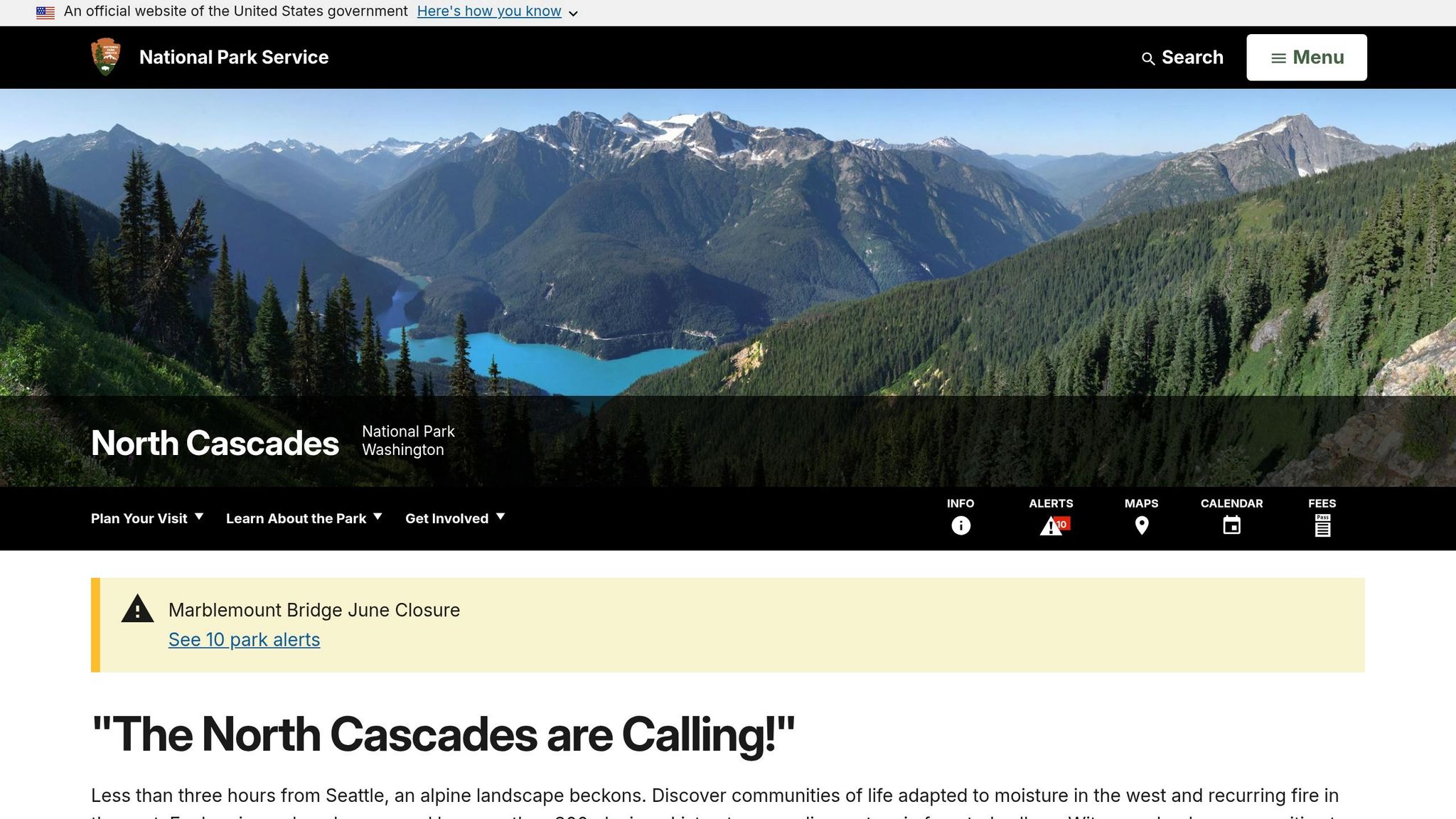
Diablo Lake is instantly recognizable for its mesmerizing turquoise waters, a result of glacial rock flour suspended in meltwater between July and September. Framed by the majestic Colonial Peak, Pyramid Peak, and Jack Mountain – often referred to as the "American Alps" – the scenery is nothing short of breathtaking. Travel writer Chantelle Kincy captured its essence perfectly:
"Vibrant. Striking turquoise."
Despite its beauty, the lake’s water remains icy cold even during summer, with temperatures ranging from 45°F to 55°F. If you plan to take a dip, a wetsuit is highly recommended, as there are no lifeguards on duty. The National Park Service cautions that accidental immersion in such cold water can be life-threatening within minutes.
For those planning a visit, Diablo Lake is easy to access. You can stop at Vista Point, which features a paved parking lot (accommodating about 20 vehicles), vault toilets, and a short path to the shoreline. Alternatively, the Colonial Creek Campground on the southern shore offers 142 campsites for $20 per night, with amenities like flush toilets, potable water, a boat launch, and bear-proof picnic tables. Keep in mind, however, that the Vista Point parking lot tends to fill up quickly on summer weekends, so aim to arrive before 10 AM.
One of the perks of visiting North Cascades National Park is that there’s no entrance fee. However, services within the park are limited – there are no gas stations or grocery stores inside. It’s a good idea to stock up in Marblemount, located 25 miles west of the park. Also, note that State Route 20, the only road providing access, is closed from mid-November through late April due to snow.
With fewer than 18,000 annual visitors, Diablo Lake offers a serene and unforgettable experience for those seeking tranquility and natural beauty.
8. Yosemite National Park – Lake Swimming Spot
Tenaya Lake, nestled at 8,150 feet along Tioga Road, is Yosemite’s go-to high-country swimming destination. This alpine gem features a rare sandy beach and crystal-clear waters that stay between 60°F and 70°F during summer. On calm mornings, the lake’s surface reflects the surrounding granite domes and peaks, creating a stunning backdrop for visitors. Non-motorized watercraft, such as kayaks and paddleboards, are welcome here, provided personal flotation devices are used.
The area is equipped with convenient amenities, including two picnic areas (one of which is wheelchair accessible), animal-safe food storage lockers, vault toilets, and several parking spots along Tioga Road. However, keep in mind that Tioga Road is only accessible from late May or early June through October or November. It’s a good idea to call 209/372-0200 to confirm road conditions before planning your visit.
While the lake’s beauty is undeniable, swimming here requires caution. Water-related accidents are the second leading cause of visitor deaths in Yosemite. Cold water temperatures, hidden rocks, and sudden fatigue are some of the primary hazards. A Rescue Ranger advises:
"I think anybody looking for a place to dip in the Merced should do a really comprehensive assessment of the dangers, and if they struggle to understand what a comprehensive assessment of the dangers is don’t get in."
For those seeking a safer alternative, consider the outdoor pools at Curry Village and Yosemite Valley Lodge. These pools feature treated water and lifeguards, with entry fees of $5.75 for adults and $3.75 for children. Still, for unmatched alpine scenery and pristine waters, Tenaya Lake is an experience like no other in Yosemite’s national park system.
9. Crater Lake National Park – Swimming at the Lake
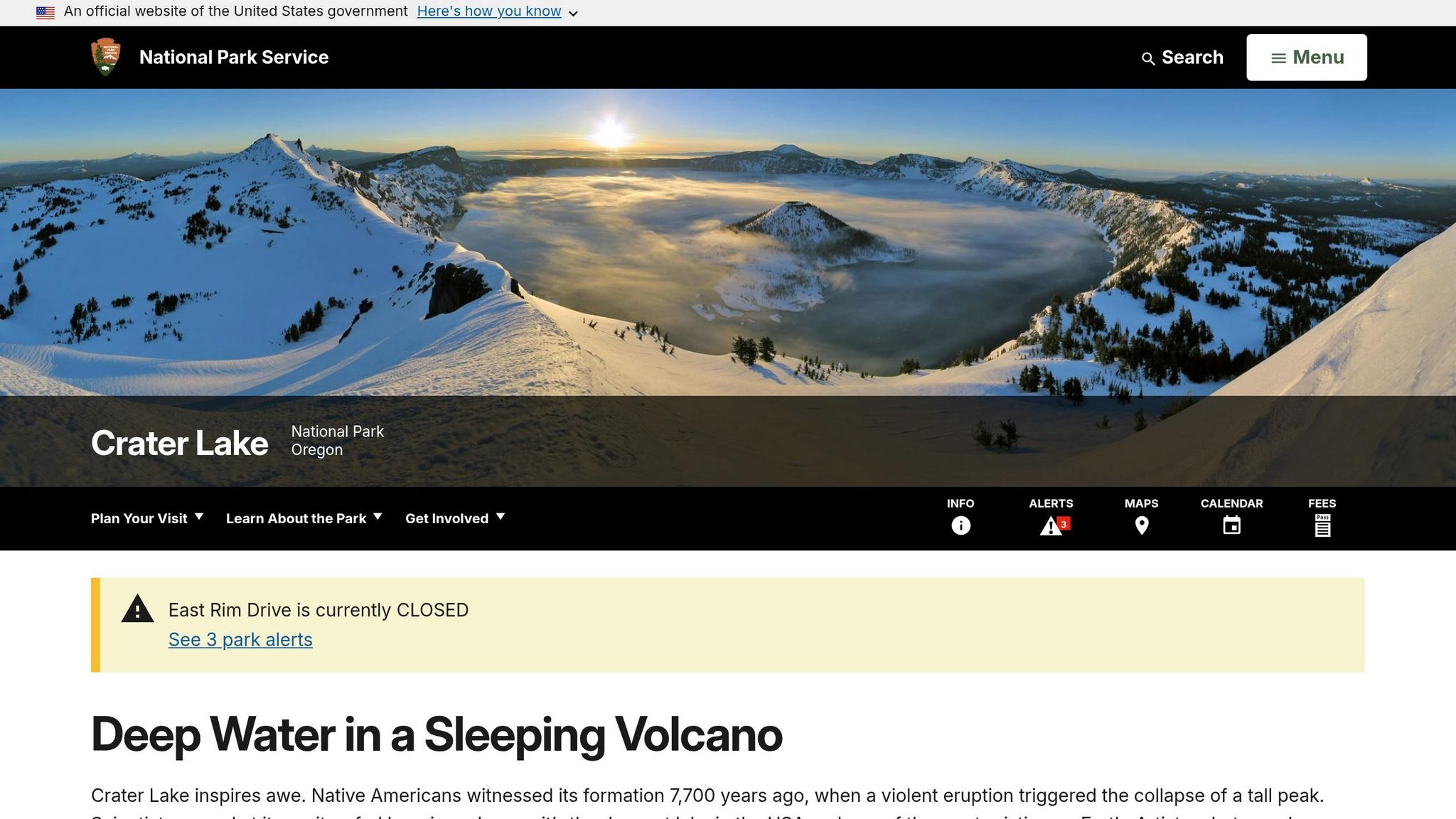
Heads up for 2026 visitors: The Cleetwood Cove Trail, the only legal access point to the lakeshore, is closed for major renovations until 2028. According to the National Park Service:
"The Cleetwood Cove Trail is CLOSED for construction. This critical project will fully rehabilitate the trail and marina to ensure safe access to the lake, provide a much-improved visitor experience, and protect the environment."
Crater Lake stands out not only for its breathtaking beauty but also for the challenges it presents to those eager to take a swim.
With a depth of 1,943 feet, Crater Lake is the deepest lake in the U.S. and among the clearest in the world. Its water comes solely from rain and snowmelt, with no rivers or streams feeding into it. This purity allows for incredible underwater visibility – up to 100 feet. The National Park Service explains, "The water is so blue because there is hardly anything else in it – just water". That iconic blue hue is part of what makes this lake so special.
When the trail reopens, swimming will only be allowed within 100 yards of Cleetwood Cove and Wizard Island. Keep in mind, there are no lifeguards, and the water is cold, averaging around 57°F, with temperatures ranging from 38°F to 62°F. To preserve the lake’s pristine condition and avoid introducing invasive species, wetsuits, goggles, fins, snorkels, and flotation devices are strictly prohibited.
The hike down to the lake via Cleetwood Cove Trail is no joke – it’s a 700-foot descent over 1.1 miles, which is like walking down 65 flights of stairs. The climb back up can be grueling, and many rescue operations involve visitors struggling with the ascent. Be sure to wear sturdy hiking shoes, as the trail’s loose pumice surface can be slippery. Also, pack plenty of water since none is available at the lakeshore.
For those planning a visit, the trailhead offers a parking area on East Rim Drive and vault toilets at both the trailhead and the lakeshore. If you’re looking to relax after your hike, there are five picnic spots along the scenic 33-mile Rim Drive. Dining options include the casual Rim Village Café or the more refined Crater Lake Lodge Dining Room. Entry to the park costs $30 per vehicle (valid for seven days) or $80 with the America the Beautiful Annual Pass.
10. Voyageurs National Park – Kabetogama Lake and Rainy Lake
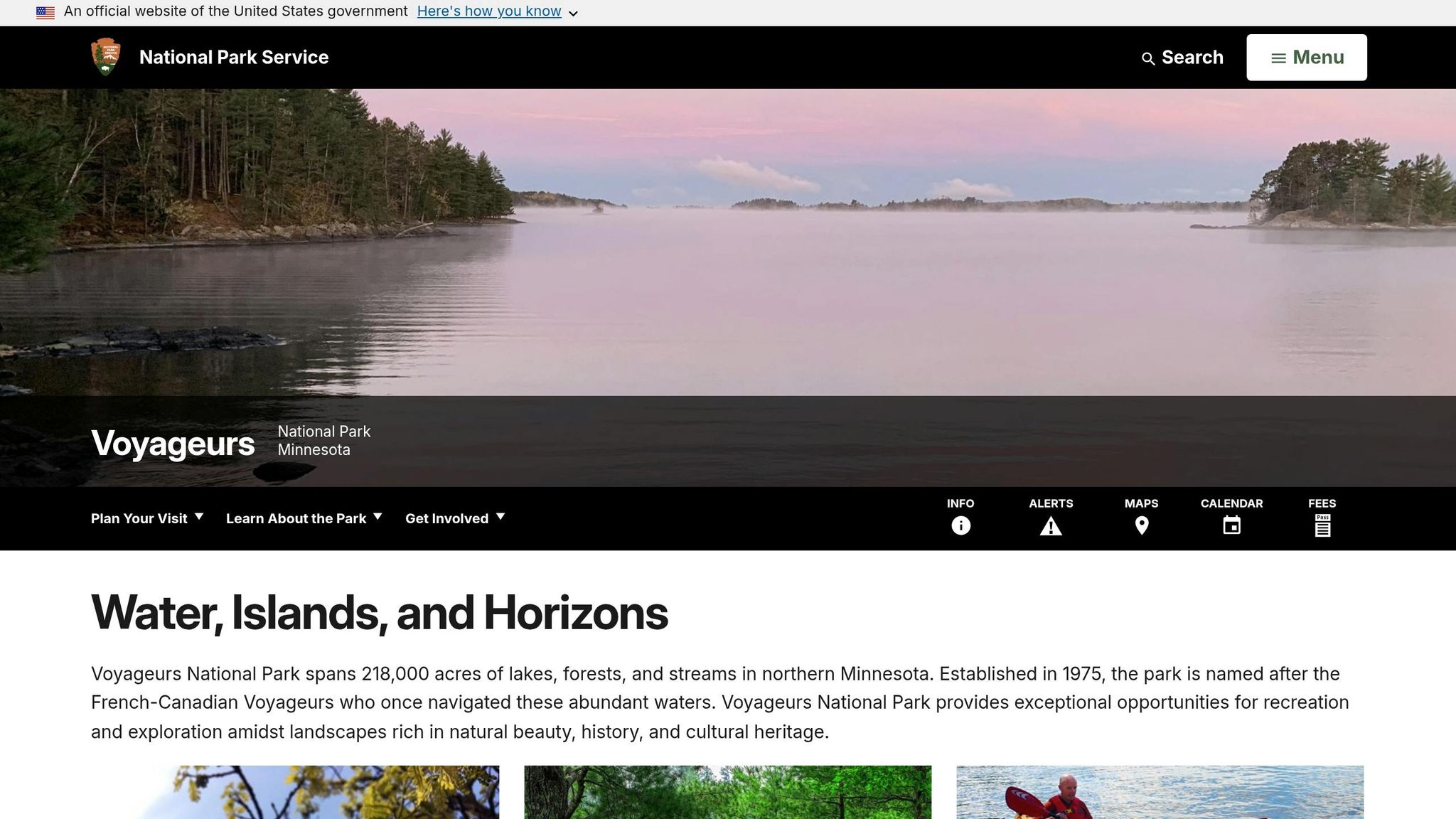
Voyageurs National Park is a haven for water-based adventures, with nearly 40% of its 218,000 acres covered by water. Unlike most parks, exploration here revolves around boating. As Parks Decoded explains:
"The trade-off: zero traditional hiking. Most trails require paddling to the trailhead first, and services are minimal."
This aquatic focus creates a unique setting for swimming enthusiasts.
Swimming is allowed throughout the park, but many access points require a boat. If you don’t have one, nearby communities like Kabetogama and Ash River offer boat rentals and water taxi services. Late July to mid-August is the best time to swim, with water temperatures climbing to the low-to-mid 60s°F. Between noon and 3:00 PM, unoccupied frontcountry campsites serve as convenient spots to relax or enjoy a picnic.
For first-time visitors, Rainy Lake is an excellent starting point. Its deeper waters, year-round visitor center, and variety of rental options make it especially appealing. Kabetogama Lake, on the other hand, offers a quieter experience with its 78 miles of shoreline and over 200 islands. However, swimmers should be cautious of harmful algal blooms (cyanobacteria) that can occur in late summer. According to the U.S. Geological Survey:
"Cyanotoxin concentrations that exceed World Health Organization’s drinking water guidance were observed in ~50% of samples taken during bloom events at Lake Kabetogama."
Always check for park alerts or visible algae – especially in August – before entering the water.
Beyond swimming, the park’s designation as an International Dark Sky Park makes it a prime location for stargazing. Visitors can enjoy breathtaking views of the Milky Way and even catch glimpses of the northern lights on clear nights.
Facilities are available at visitor centers in Rainy Lake, Kabetogama, and Ash River, including restrooms, parking, and picnic areas. Additionally, 33 designated day-use sites provide picnic and toilet facilities without requiring reservations. While park entry is free year-round, fees apply for camping and houseboat permits. With its water-centric activities and stunning natural beauty, Voyageurs National Park offers a swimming experience unlike any other in the U.S. park system.
Comparison Table
Each park provides a unique swimming experience, with differences in water temperature, accessibility, and nearby facilities that can shape your visit. The table below highlights key details to help you decide which park suits your summer plans best:
| National Park | Primary Swimming Spot | Peak Water Temp | Swimming Access | Nearby Amenities |
|---|---|---|---|---|
| Acadia | Echo Lake Beach | 73°F (August) | Designated beach with roped-off, monitored area | Wheelchair-accessible restrooms, Island Explorer bus |
| Grand Teton | String Lake | Warmer than neighboring lakes | Drive-up, family-friendly, shallow entry | Picnic areas, bathrooms |
| Glacier | Lake McDonald | ~70°F (August) | General access (no lifeguard) | Visitor center, lodge |
| Olympic | Lake Crescent | Moderate | General access | – |
| Lassen Volcanic | Various lakes | Cold (high elevation) | General access (hydrothermal areas off-limits) | – |
| Yellowstone | Designated area | Varies | Strictly limited to one designated spot | – |
| North Cascades | Diablo Lake | <50°F | Limited access | – |
| Yosemite | Various lakes | Moderate | General access | – |
| Crater Lake | Cleetwood Cove | Cold (deep, high elevation) | One access point via steep trail | Rim Village, lodge, café |
| Voyageurs | Kabetogama & Rainy Lake | Varies | Variable access | – |
Some trends emerge from the data. Acadia and Grand Teton are excellent choices for families, offering warmer waters and convenient amenities. In contrast, Glacier and Crater Lake boast stunning landscapes but colder water, with Glacier’s Lake McDonald reaching around 70°F in August. On the other hand, North Cascades’ Diablo Lake remains icy, rarely exceeding 50°F, even in midsummer.
For those seeking warmer waters, lower-elevation parks like Acadia, Grand Teton’s String Lake, or Glacier’s Lake McDonald are ideal. If you prefer a more rugged, remote experience, parks like North Cascades or Crater Lake are worth the extra preparation. Choose a destination that aligns with your swimming preferences and the type of adventure you’re looking for!
Conclusion
From the glacial depths of Lake Crescent to the volcanic stillness of Crater Lake – known as the deepest lake in the United States at an astonishing 1,943 feet – each national park offers a swimming experience that’s entirely its own. Whether you prefer the warm, family-friendly waters of String Lake or the adventurous plunge into the remote wilderness of the North Cascades, there’s a spot for every kind of swimmer. That said, nature always requires respect and caution.
Conditions in natural settings can shift quickly, so it’s crucial to stay informed. Always check the National Park Service’s "Current Conditions" or "Alerts" page before heading out. For instance, as of May 2026, the Cleetwood Cove Trail – the only legal way to access Crater Lake’s shoreline – is closed for a multi-year rehabilitation project. Being prepared can make all the difference.
Keep in mind that none of these swimming spots have lifeguards on duty, and many lakes are much colder than you might expect. Crater Lake’s surface temperatures, for example, can dip to a brisk 38°F. Swimming near marinas, boat launches, or hydrothermal areas is prohibited for safety reasons. Always swim with a buddy, use a Coast Guard–approved life jacket if you’re inexperienced or swimming with children, and avoid swallowing lake water.
With these safety tips in mind, plan ahead to make the most of your adventure. For up-to-date park details and resources, visit The National Park Guide.
FAQs
Which park has the warmest lake for swimming?
Whiskeytown Lake and Lake Powell are famous for their inviting summer swimming conditions, with surface water temperatures frequently hitting or surpassing 80°F. These spots boast some of the warmest waters you’ll find in national parks. If you’re planning a trip or looking for more details about these destinations, The National Park Guide is a handy resource to help you make the most of your visit.
What safety gear should I bring for cold-water lake swimming?
For swimming in cold-water lakes, safety and warmth are key. Always bring a U.S. Coast Guard-approved life jacket to ensure flotation and safety. To stay warm, wear a wetsuit or dry suit. If those aren’t accessible, consider using a neoprene swim cap, thermal socks, or gloves. Protect your feet with water shoes or neoprene booties, and for added visibility and emergency support, carry an open-water swim buoy.
How do I check if a park has swim closures or water-quality alerts?
When planning a trip to a national park, it’s a good idea to check the official National Park Service website for the park you’ll be visiting. Many parks provide a "current conditions" page or a dedicated swimming section with updates on closures and water quality.
Once you’re there, keep an eye out for posted advisories at trailheads, visitor centers, or near swimming areas. To stay informed, check online for updates before heading out or speak with a park ranger upon arrival for the most accurate and up-to-date information.