
If you want the short answer: Grand Canyon is the top long expedition, New River Gorge is the top one-day hard run, Yellowstone and Glacier are best for newer rafters, and Big Bend or Canyonlands are best if you want remote multi-day river time.
I’d sort these seven parks by skill, trip length, permits, and season first – not by name alone. This list covers everything from Class I scenic floats to Class V whitewater, with trips that range from 2–3 hours to 18 days, and costs that can start around $79 for a guided half-day trip while private expedition runs take far more planning.
Here’s the full lineup:
- Grand Canyon National Park
- Canyonlands National Park
- New River Gorge National Park and Preserve
- Yellowstone National Park
- Glacier National Park
- Denali National Park and Preserve
- Big Bend National Park
What matters most:
- Best for long, hard trips: Grand Canyon
- Best for a hard day trip: New River Gorge
- Best for beginners: Yellowstone, Glacier, and calm parts of Canyonlands
- Best for remote desert runs: Big Bend and Canyonlands
- Coldest water: Denali and Glacier
- Most permit planning: Grand Canyon
- Shortest guided trips: Yellowstone and Denali
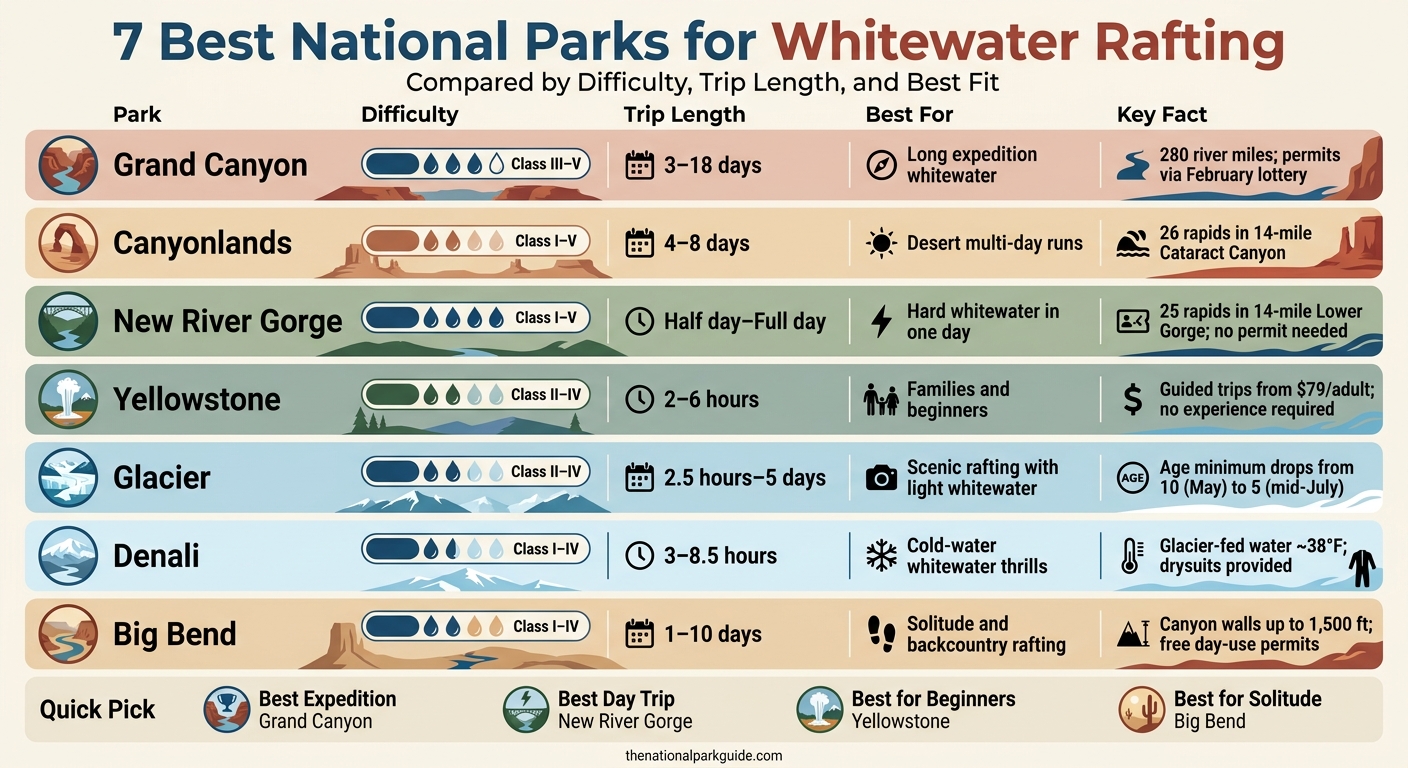
7 Best National Parks for Whitewater Rafting: At-a-Glance Comparison
The Ultimate Grand Canyon Rafting Trip
sbb-itb-00512f3
Quick Comparison
| Park | Main River Style | Usual Difficulty | Typical Trip Length | Best Fit |
|---|---|---|---|---|
| Grand Canyon | Big-water expedition | Class III–V | 3–18 days | Long whitewater trips |
| Canyonlands | Flatwater + hard canyon rapids | Class I–V | 4–8 days | Desert multi-day runs |
| New River Gorge | Fast, technical day rafting | Class I–V | Half day to full day | Strong whitewater in one day |
| Yellowstone | Guided roadside rafting | Class II–IV | 2–6 hours | Families and first-timers |
| Glacier | Cold scenic mountain runs | Class II–IV | 2.5 hours to 5 days | Scenic rafting with light whitewater |
| Denali | Cold glacial rafting | Class I–IV | 3–8.5 hours | Cold-water whitewater |
| Big Bend | Remote desert canyon trips | Class I–IV | 1–10 days | Solitude and backcountry rafting |
Bottom line: if I were picking fast, I’d choose Grand Canyon for the full river trip, New River Gorge for the strongest short trip, Yellowstone for the easiest guided outing, and Big Bend if I wanted long miles in a quiet canyon.
The rest of the article breaks down where each park fits, how hard it gets, and what you need to plan before you go.
1. Grand Canyon National Park
Grand Canyon National Park is the most iconic – and one of the toughest – whitewater trips in the U.S. park system.
The Colorado River through Grand Canyon runs for 280 river miles from Lees Ferry to Pearce Ferry. People usually break this stretch into three parts: the Upper Canyon, the Lower Canyon, and the Western Canyon.
River Sections
Each section has its own feel.
- The Upper Canyon covers 88 miles through Marble Canyon.
- The Lower Canyon includes Lava Falls, one of the hardest rapids in North America.
- The Western Canyon is calmer and often done in 2 to 5 days.
Trip Length
Trip length varies a lot based on the route and boat type. Commercial trips can run from 3 to 18 days.
A full-canyon motorized trip usually takes about 6 to 8 days. Oar-powered trips take longer, usually 12 to 18 days. There are also half-trip options, which let you hike in or out at Phantom Ranch using the Bright Angel Trail. That hike is 7.7 miles with about 4,500 feet of elevation change.
Permit Access
If you’re planning a private trip from Lees Ferry to Diamond Creek, you’ll need to go through a February weighted lottery. Commercial trips skip that process, which is common for river lottery systems, but spots often book 1 to 2 years in advance.
Skill Level
This is where the split between private and commercial trips matters. Private trips call for prior big-water experience. Commercial trips do not.
Best Season
The main season runs from April through October. May and June usually bring the biggest whitewater because of snowmelt. Even then, the water near Lees Ferry stays close to 50°F year-round.
By August and September, conditions are warmer and often less intense on the river. But the inner canyon can still get brutally hot. One more detail worth knowing: motorized commercial trips must end by September 15.
Grand Canyon is the standard for size, difficulty, and trip commitment. Canyonlands, by comparison, is shorter but still technical.
2. Canyonlands National Park
Canyonlands gives you two very different river trips in one park. On one side, you have calm flatwater that works well for beginners. On the other, you have one of the toughest whitewater runs in the West. That mix is why Canyonlands ranks so high. Few rafting parks offer such a clear split between easy paddling and serious whitewater.
River Sections
Above the confluence, Stillwater and Meander canyons offer quiet water for canoes, kayaks, and self-guided paddlers. This part of the park is slower, quieter, and far more forgiving. The confluence is a standout moment: the muddy green and red-brown waters of the two rivers run side-by-side for about a quarter-mile before finally mixing. Then the river changes fast.
Below the confluence, Cataract Canyon becomes a much tougher run. This 14-mile stretch has roughly 26 named rapids. The Big Drops – rapids 1, 2, and 3 – are among the 10 biggest rapids in the United States. It’s the kind of shift that can catch people off guard if they only know Canyonlands for its calm sections.
Trip Length
Most Cataract Canyon trips cover about 100 miles from Moab to Lake Powell and take 4 to 6 days. If you want a longer trip that mixes flatwater with whitewater, expect 7 to 8 days. Getting in and out is fairly simple compared with some remote river trips, but the shuttle details still need planning.
Permit Access
Permits are required for all overnight and day-use trips. They’re available through Recreation.gov on a first-come, first-served basis. Reservations open four months ahead, and private overnight permits cost $36 non-refundable plus $25 per person.
One detail matters a lot here: flatwater trips ending at Spanish Bottom have no road access. That means you’ll need to line up a jet boat shuttle back to Moab ahead of time through a licensed company such as Tex’s Riverways.
Skill Level
The flatwater sections are beginner-friendly and work well for paddlers who want scenery without heavy whitewater. Cataract Canyon is a different story. It’s best for experienced river runners, especially at high water. Most visitors run it with a commercial outfitter. In plain terms, water level changes almost everything, from the feel of the trip to the level of risk.
Best Season
Spring, especially May through June, brings the biggest flows from Rocky Mountain snowmelt. That’s when Cataract Canyon can hit Class IV–V, making it best for high-water runs. In summer, from July through August, the river usually drops to Class III–IV. Fall, from September through October, tends to bring Class III water, cooler temperatures, and exceptional canyon light, which makes it a strong pick for lower-water sightseeing.
3. New River Gorge National Park and Preserve
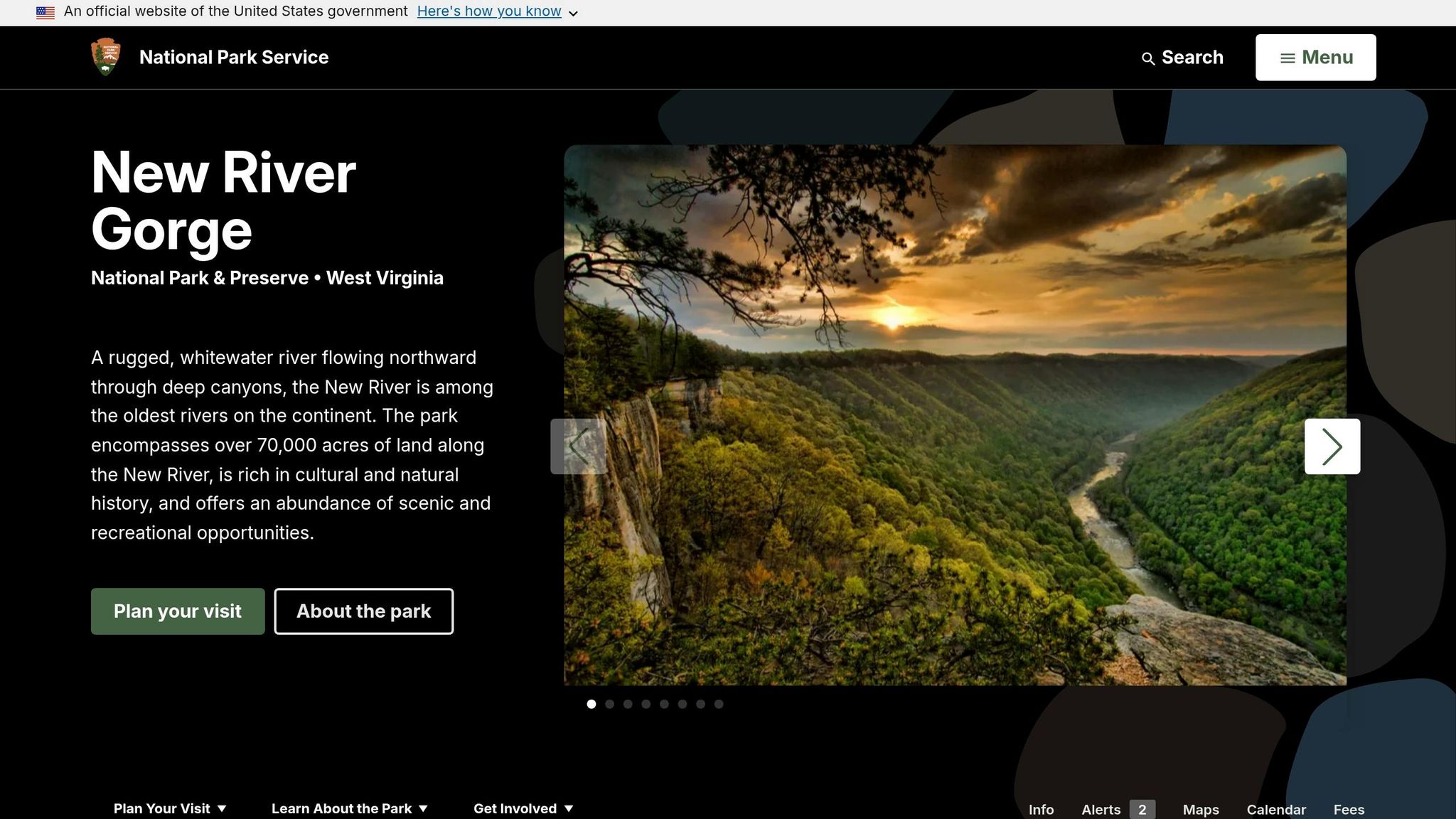
After Utah’s canyon runs, the list heads east to a park that delivers a shorter trip with a lot more punch.
New River Gorge is the top pick for hard whitewater in a single day. That’s the big reason it stands out. You can get Class IV–V rapids on either a half-day or full-day trip, which isn’t something every national park can offer.
River Sections
The park protects 53 miles of free-flowing river, and those miles split into two very different outings. The Upper New runs from Hinton to Thurmond. It’s a scenic stretch with Class I–III rapids, so it works well for families and first-timers.
The main draw, though, is the Lower Gorge.
The Lower Gorge runs 14 miles from Cunard to Fayette Station and packs in about 25 rapids, including Upper and Lower Keeney Brothers, Double Z, and Undercut Rock. The gorge drops more than 1,000 feet, which helps explain why this section hits so hard.
That split between the Upper New and Lower Gorge affects more than the scenery. It also shapes how long your trip takes, where you put in and take out, and what skill level you need.
Trip Length
Most visitors run the Lower Gorge as a full-day trip covering 8 to 12 miles. Half-day trips are also available. And if you want more river time, some outfitters offer multi-day packages that combine both sections.
Permit Access
Private paddlers do not need a permit or reservation. If you go with a commercial outfitter, Lower Gorge trips usually cost $115 to $159 per person, based on the day and the trip type.
Skill Level
The Lower Gorge is best for advanced paddlers and experts. The minimum age is usually 12. There are calm pools between the big drops, which can make the river look a little forgiving at times. But don’t let that fool you – the technical moves still call for solid paddling skill.
Best Season
Rafting season runs April through October. Spring, especially April and May, brings the highest water levels and the strongest rapids. By summer, flows ease up, which makes conditions easier to handle for a broader mix of paddlers.
4. Yellowstone National Park
After the hard drops at New River Gorge, Yellowstone is the easiest guided whitewater stop on this list. You can’t raft inside the park, so trips leave from nearby gateway towns, most often Gardiner, Montana, right outside the North Entrance. That setup makes this the low-hassle pick here: easy to reach, no permit headache, and water that fits a broad mix of skill levels.
River Sections
Most trips run on the stretch near Gardiner. The "Town Stretch" covers 8 miles of Class II–III rapids, with named drops like "Queen of the Waters" and "Sleeping Giant". It’s the main pick for first-timers who want a fun ride with some splash, but not too much pressure.
If you want something gentler, the Scenic Float runs 6–8 miles on flat water with views of Electric Peak.
Trip Length
Most outings are half-day trips: 8 miles in about 2 to 3 hours. Full-day trips cover 18 miles in 5 to 6 hours and continue into Yankee Jim Canyon, where the rapids step up to Class III–IV. Lunch is served at Lunch Island.
Permit Access
Commercial outfitters take care of river access permits, so you don’t need any special permit or past rafting experience.
Here’s the basic pricing:
- Half-day whitewater trips cost $79–$84 per adult and $69–$74 per child.
- Full-day trips cost $159–$160 per adult and $139–$145 per child, with lunch included.
- Private boat charters run from $650 for a half-day to $1,300 for a full day for groups of up to six.
Skill Level
The Town Stretch is Class II–III, which makes it a good fit for beginners through intermediate paddlers. Most outfitters ask that kids weigh at least 40–45 lbs, so many children around age 4 and up can join. The Scenic Float is the easiest choice and has no minimum age or weight rule.
Best Season
The rafting season runs from May through September. May and June bring peak runoff above 30,000 cfs, which means faster water. By August and September, conditions are warmer and calmer, making those months the better pick for families.
Next up is Glacier, where colder, glacial-fed water makes things tougher again.
5. Glacier National Park
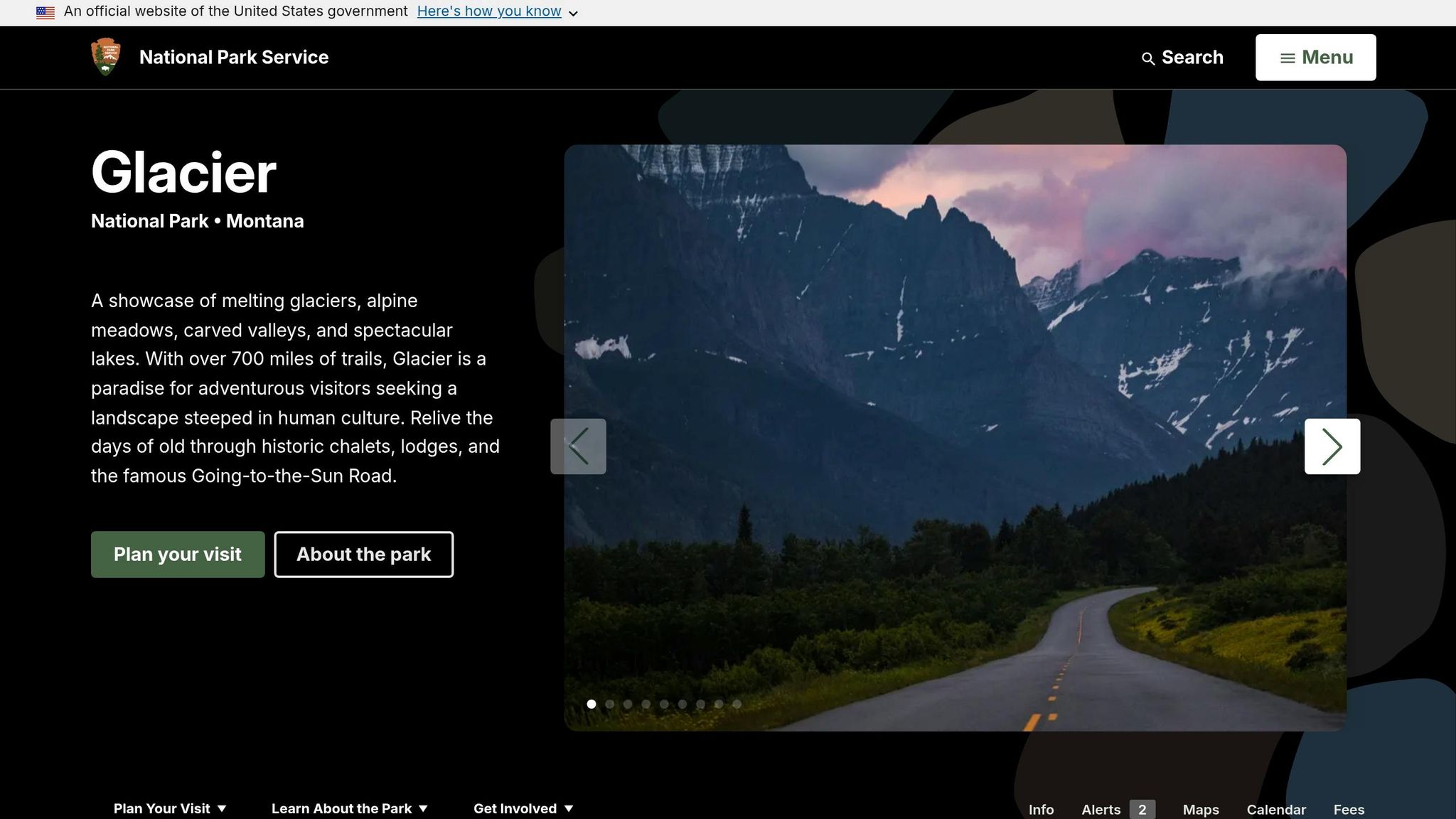
Glacier rafting mostly happens on the Middle Fork and North Fork of the Flathead River, with mountain views almost the whole way. Both rivers run along the park boundary, not through the park itself.
That detail shapes the whole experience. In Glacier, rafting is as much about where you can get in and out as it is about the rapids.
River Sections
The Middle Fork’s most popular whitewater run is the 8-mile stretch from Moccasin Creek to West Glacier. It features Class II–III rapids, including Bonecrusher, Jaws, and Pinball. It’s also easy to reach from Highway 2.
If you want something calmer, there are two easy float options: Nyack Flats, which runs from Cascadilla to West Glacier, and the stretch from West Glacier to Blankenship. Both are flat-water sections.
The North Fork follows 59 miles of Glacier’s western edge and is accessed by the unpaved Outside North Fork Road. It’s a better match for paddlers who want more solitude and a stronger backcountry feel.
Trip Length
Trip length is pretty standard across outfitters:
- Half-day trips usually last about 2.5 to 3 hours
- Full-day trips usually run 5 to 6 hours
- Multi-day trips usually span 2 to 5 days
Permit Access
Private day floats on either fork do not need a permit. Overnight camping on the Glacier side does require a Wilderness Camping Permit, which is why most overnight trips camp on the Flathead National Forest side instead.
Skill Level
Most guided whitewater trips on the Middle Fork and North Fork are Class II–III, so they work well for beginners and families. Age minimums shift with the season: 10 in May and June, 8 in late June, and 5 by mid-July.
Helmets are mandatory on whitewater sections.
Best Season
Water levels change fast with the season, so timing makes a big difference. A trip in May can feel like a whole different river than a trip in September.
| Month | Conditions | Best For |
|---|---|---|
| May–June | High water; rapids can reach Class IV | Experienced paddlers |
| July | Moderate flows; warm, sunny weather | Best overall conditions; peak season |
| August | Lower, slower water | Families with young kids; inflatable kayaks |
| September | Very low water; fall colors | Scenic floats; fewer crowds |
If you’re aiming for July, book weekend trips early.
Next comes Denali, where colder glacial water makes the rafting feel more remote and more demanding.
6. Denali National Park and Preserve
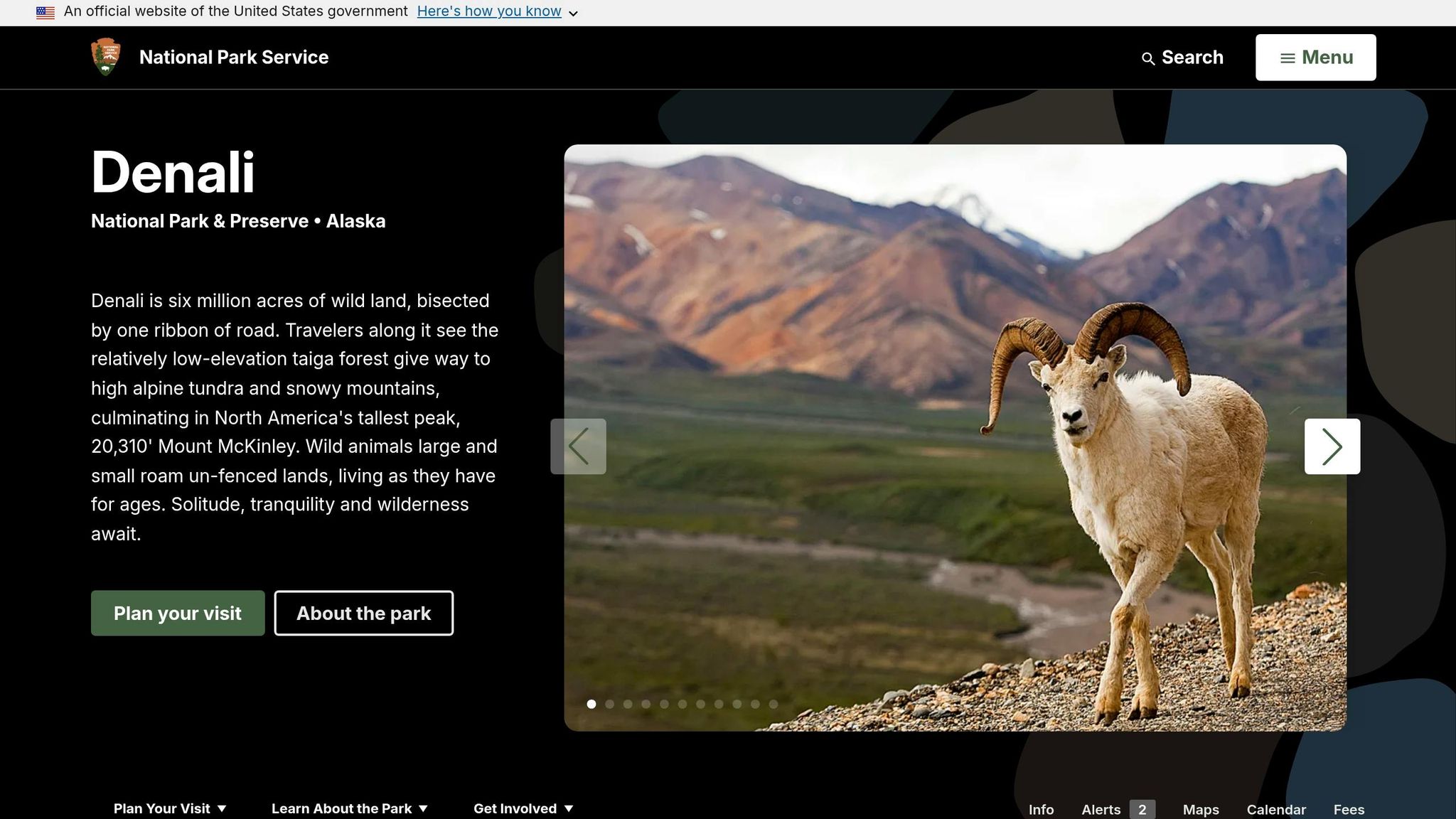
Farther north, Denali offers a different kind of rafting trip than Glacier. The mountain views are still there, but the water is colder, rougher, and more remote. Expect glacier-fed water that often sits around 38°F. That has a direct effect on gear and safety. Most commercial outfitters supply drysuits, neoprene booties, and life jackets.
Denali rafting is all about cold glacial water, fast current, and huge mountain scenery.
River Sections
The Nenana River runs along the park’s eastern boundary for nearly 40 miles. Most trips fit into two main options.
The Wilderness Run is the scenic choice. It features Class I–III rapids, open mountain views, and a good chance of spotting wildlife.
The Canyon Run, also called Nenana Gorge, is the tougher whitewater section. It includes Class III–IV rapids that push through tight rock walls and drops with names like "Coffee Grinder", "Ice Worm", and "Cable Car".
Trip Length
| Trip | Difficulty | Typical Duration |
|---|---|---|
| Wilderness Run | Class I–III | 3–3.5 hours |
| Canyon Run | Class III–IV | 3–3.5 hours |
| Healy Express | Class I–IV | 5.5 hours |
| Full Day Adventure | Class I–IV | 8.5 hours |
Permit Access
Commercial trips and private day floats do not need a permit. Overnight backcountry stays do.
Skill Level
Most guided trips don’t require past rafting experience. On an oar raft, the guide handles the rowing while passengers stay seated and hold on. On a paddle raft, everyone helps paddle.
If you want the easiest ride, the Wilderness Run is the better fit. If you’re after stronger whitewater, the Canyon Run is the step up, with Class III–IV rapids that suit people looking for a more active trip.
Best Season
The rafting season usually runs from May 20 to September 10. Water levels often peak in late June as glacier melt picks up, and a second peak often shows up in mid-September. Big Bend shifts the list from cold alpine water to desert rafting.
7. Big Bend National Park
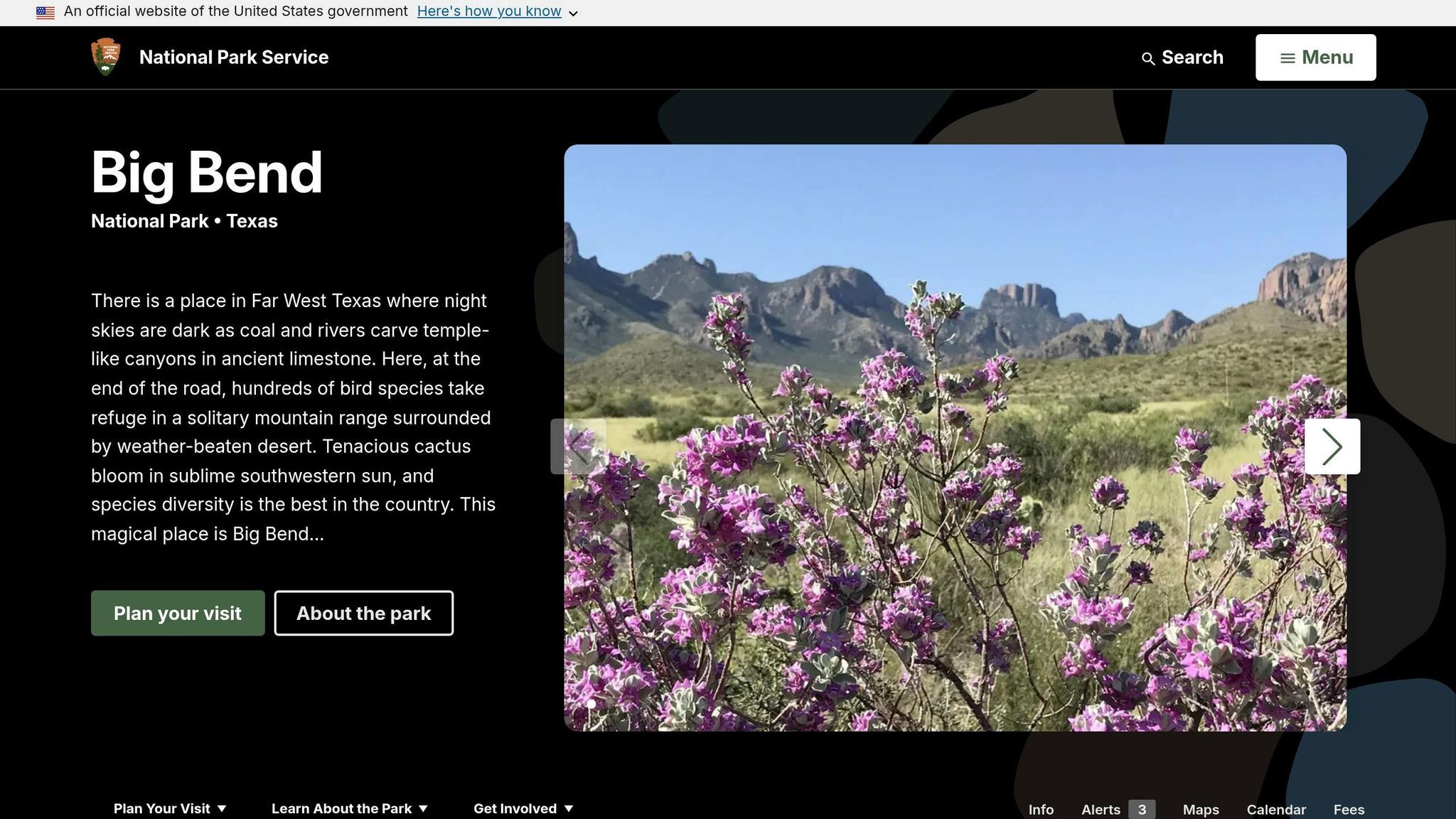
After Denali’s icy glacial runs, Big Bend feels like a total change of scene. Here, the water is warmer, the landscape is drier, and the trips often stretch deeper into the backcountry. The park is known for desert canyon rafting on the Rio Grande, with options that range from easy floats to expert-level expeditions. In Santa Elena Canyon, the river cuts between limestone walls that tower as high as 1,500 feet.
River Sections
| Canyon | Length | Difficulty | Best For |
|---|---|---|---|
| Santa Elena | 20 miles | Class I–IV | Intermediate paddlers; dramatic cliffs |
| Mariscal | 10 miles | Class II–III | Remote feel; shorter trip |
| Boquillas | 33 miles | Class I–II | Beginners; relaxed multi-day float |
| Lower Canyons | 83 miles | Class II–IV | Expert paddlers; wilderness expedition |
That spread gives Big Bend a lot of range. You can do a short, easy float if you’re still learning, or head out on a remote run where you need strong judgment and the ability to handle things on your own.
Santa Elena Canyon gets the most attention, and for good reason. It’s the park’s best-known run, and its standout rapid, the "Rock Slide", reaches Class IV at certain water levels. Boquillas is a better fit for paddlers with less experience who want a calmer multi-day trip. The Lower Canyons are a different beast altogether, meant for expert paddlers who are ready for long stretches of isolation.
Trip Length
Trip length depends on the section. Santa Elena usually takes 1–3 days, Mariscal 1–2 days, Boquillas 2–3 days, and the Lower Canyons 5–10 days, with a normal pace of about 10–15 miles per day.
Permit Access
If you’re planning an overnight river trip, you’ll need a National Park Service backcountry permit. Day-use permits are free. You can pick up permits at park visitor centers up to seven days ahead of your trip. There’s also a $12 per person river access fee at the Black Gap Wildlife Management Area.
Skill Level
Boquillas is the best entry point for less-experienced paddlers. Santa Elena asks for more boat control and tends to suit intermediate paddlers at lower flows. Once the "Rock Slide" goes above 600 cfs, the run gets much harder. The Lower Canyons are for paddlers with deep experience and strong self-reliance, since help may be days away.
Best Season
Winter is the best time to paddle here. Lower winter flows under 200 cfs can make upstream-and-back trips into Santa Elena Canyon possible. And Big Bend has one of those details you don’t forget: on the shortest days of the year, sunlight only reaches the bottom of the deepest canyon sections for a short time.
How These Parks Compare for Planning and Safety
Planning a river trip isn’t just about picking the wildest rapids. Access, permits, shuttle logistics, and skill level usually shape the trip just as much.
New River Gorge is the easiest park to plan for. Private boaters don’t need permits or reservations, and the park’s highway access makes shuttle runs pretty simple. If you want a short-notice trip without a lot of red tape, New River Gorge is the easiest choice.
Grand Canyon is the opposite. Dam-controlled flows mean it’s runnable year-round, though April through October is the main season. The Colorado uses a 1–10 rapid rating scale, and big rapids like Lava Falls land at 8–10. It’s also a pool-drop river, so long calm stretches sit between the biggest rapids. Even so, Grand Canyon asks for the most advance planning and the highest skill on this list.
Yellowstone and Denali tend to depend on guided access. Canyonlands, Glacier, and Big Bend bring added shuttle, permit, or multi-day backcountry logistics. And if your dates are locked in, season matters just as much as river difficulty. Spring often brings the highest water and the most intense conditions across nearly every park here.
So the simplest way to sort your options is this: access, season, and safety come first.
Pros and Cons of Each Park
Building on the planning and safety comparison above, here’s the short, practical take on each park.
Grand Canyon is the classic expedition choice. The scenery is hard to top, and the rapids are in a class of their own. The catch? Permits are the toughest to get, trips cost more, and you need to set aside a lot more time.
New River Gorge is much easier to plan and works well if you want options on trip length. That said, the Lower Gorge is no joke. Its technical rapids and undercut rocks demand skill and good judgment.
Canyonlands brings huge spring flows through Cataract Canyon and some of the most dramatic desert scenery on this list. But big water cuts both ways. In spring, the river can be harsh on paddlers who show up underprepared.
Glacier works well for scenic day trips and gives you those big, postcard-style views. The main downside is the water: it stays frigid. If you’re choosing between the northern heavyweights, Glacier leans more toward scenery-first, while Denali is colder, rougher, and farther out.
Denali pushes things a step further. It’s colder, more remote, and less forgiving, which makes dry suits and stronger prep a must.
Big Bend stands out for solitude. If you want long quiet stretches and canyon walls all around you, it delivers. But planning can get tricky because water levels often depend on upstream releases.
Yellowstone swings the list back toward ease. It’s the easiest scenic float here, especially for people who want a guided outing without much fuss. The tradeoff is that rafting is a smaller piece of the park’s draw.
The table below sums up the main tradeoffs for a quick side-by-side look.
| Park | Biggest Pros | Biggest Cons | Best For |
|---|---|---|---|
| Grand Canyon | Iconic scenery; world-class rapids | Hardest permits; high cost; long commitment | Expedition-style travelers |
| New River Gorge | Easy logistics; long season; no lottery | Undercut rocks in Lower Gorge | Families (Upper); Experts (Lower) |
| Canyonlands | Dramatic geology; massive spring rapids | Intense spring flows; strong flatwater winds | Multi-day desert adventurers |
| Glacier | Stunning scenery; accessible day trips | Extremely cold glacier-fed water | Scenic day trips |
| Denali | Class III–IV thrills; wild Alaska setting | Near-freezing water; dry suits required | Adrenaline seekers |
| Big Bend | Deep solitude; dramatic canyon walls | Unpredictable water levels; very remote | Wilderness seekers |
| Yellowstone | Scenic canyon scenery; easy guided access | Limited rafting access | Scenic floaters |
Conclusion
These seven parks cover the full range of rafting trips, from beginner floats to expert expeditions. Pick based on your skill level, how much time you have, and the kind of trip you want. Go with Grand Canyon for expedition-level whitewater, Upper New for easy access, and Canyonlands or Big Bend for remote multi-day runs.
After you choose a river, timing and access can make or break the trip. Before you book, check permits, river flows, and launch rules with the NPS or your outfitter. Spring often means higher, tougher water. Late summer usually brings warmer, calmer conditions that work better for families.
Whitewater comes with real risk, so match the river to your skill level and the current conditions.
For trip planning, use a national park itinerary generator before you contact an outfitter. The National Park Guide can help narrow your options.
FAQs
Which park is best for first-time rafting?
For first-time rafters, the Upper New River in New River Gorge National Park is a great pick. It has manageable Class II-III rapids, quieter stretches, and scenic floats that work well for families and beginners.
Other good options include Yellowstone National Park, where late-summer trips tend to feature gentler Class I-II rafting, and calm-water guided day trips on the Colorado River through Glen Canyon.
Do I need permits or a guide for these trips?
It all comes down to how you want to do the trip.
If you book with a licensed commercial outfitter, they take care of the permits and the trip logistics for you. That usually includes equipment, meals, and shuttles, so a lot of the heavy lifting is off your plate.
If you’re running the river on your own, you’ll need to get your own permits. The rules change by park, and some trips call for a lottery or advance reservations. Your best move is to check the specific National Park Service site for the latest requirements.
When is the best time to go rafting in these parks?
The main whitewater rafting season in U.S. national parks usually runs from April through September, with the busiest stretch and peak conditions from May through August.
In late spring and summer, rivers often run higher because of snowmelt and seasonal rain. By late summer and early fall, flows are often lower and more predictable.
That said, timing can shift from one river to the next. Snowmelt, dam releases, local weather, and each park’s climate all play a part.