
Arches and Canyonlands, two iconic national parks in Utah near Moab, offer mountain biking experiences tailored to different skill levels and preferences. Arches is great for riders seeking shorter, scenic trails with easier logistics, while Canyonlands caters to seasoned bikers with its rugged, technical terrain and multi-day adventures. Here’s a quick breakdown:
- Arches National Park:
- Features shorter, moderate trails like Courthouse Wash Road and Salt Valley Road.
- Known for slickrock surfaces, sandstone arches, and mild elevation changes.
- Best for beginners, families, or those looking for a quick ride.
- Accessible year-round with ideal conditions in spring and fall.
- Canyonlands National Park:
- Offers challenging routes like the 100-mile White Rim Road and technical paths in the Needles and Maze districts.
- Terrain includes steep climbs, loose rocks, and sandy stretches.
- Suited for intermediate to advanced riders seeking remote, multi-day adventures.
- Requires careful planning, permits, and often vehicle support.
Quick Comparison
| Factor | Arches | Canyonlands |
|---|---|---|
| Trail Difficulty | Beginner to Intermediate | Intermediate to Advanced |
| Trail Length | Shorter day rides | Multi-day routes |
| Scenery | Sandstone arches, fins | Vast canyons, mesas |
| Accessibility | High | Low |
| Vehicle Support Needed | No | Often Yes |
Choose Arches for a relaxed, scenic ride or Canyonlands for a rugged, adventurous challenge. Both parks showcase Utah’s stunning landscapes in their own way.
1. Arches National Park Mountain Biking Trails

Trail Types
Arches National Park offers a handful of memorable biking trails that follow existing dirt roads and designated paths. Some of the standout routes include Courthouse Wash Road (a 4.3-mile out-and-back starting near the visitor center), Salt Valley Road (an 8-mile stretch that leads to Fiery Furnace and Sand Dune Arch), and the Four Wheel Drive Road (3.4 miles of sandy and rocky terrain). Each route offers a unique mix of scenery and technical challenges, which we’ll explore below.
Scenery and Terrain
The park’s trails showcase a mix of slickrock surfaces, sandy washes, and packed dirt roads, all set against the dramatic Entrada Sandstone formations. With elevations ranging from 4,085 to 5,653 feet, the terrain consists of rolling hills and gentle inclines rather than steep climbs, making it more approachable than some of Utah’s other mountain biking hotspots. That said, sandy sections can test your skills, requiring steady momentum and precise bike handling.
Accessibility
Arches National Park is open year-round for mountain biking, but the best riding conditions are typically in the spring (March–May) and fall (September–November), when temperatures hover between 60–80°F. Summers can be scorching, with temperatures climbing past 100°F, so if you’re riding during that time, early mornings are your best bet for a safer and more comfortable experience.
There’s convenient parking at several trailheads, including a designated area near the visitor center at Courthouse Wash and various pullouts along park roads. Entrance fees are $30 per vehicle (valid for 7 days), or you can opt for a $55 annual Arches pass. Alternatively, the $80 America the Beautiful Annual Pass grants access to all national parks.
Before heading out, make a stop at the visitor center, where you’ll find water, restrooms, and detailed trail information. Be sure to carry enough supplies, as amenities are limited once you’re on the trails.
Skill Levels and Difficulty
For beginners, Courthouse Wash Road offers a relatively easy ride with moderate terrain. More experienced riders will find Salt Valley Road and the Four Wheel Drive Road more engaging, thanks to their sandy and loose rocky sections. These routes are best tackled with wider tires (2.3 inches or larger) for better stability and control.
While Arches lacks the highly technical trails found in other parts of Utah, the mix of sand and slickrock presents its own challenges, requiring riders to adapt their techniques. Up next, we’ll dive into the varied and demanding terrain of Canyonlands National Park.
2. Canyonlands National Park Mountain Biking Trails
Trail Types
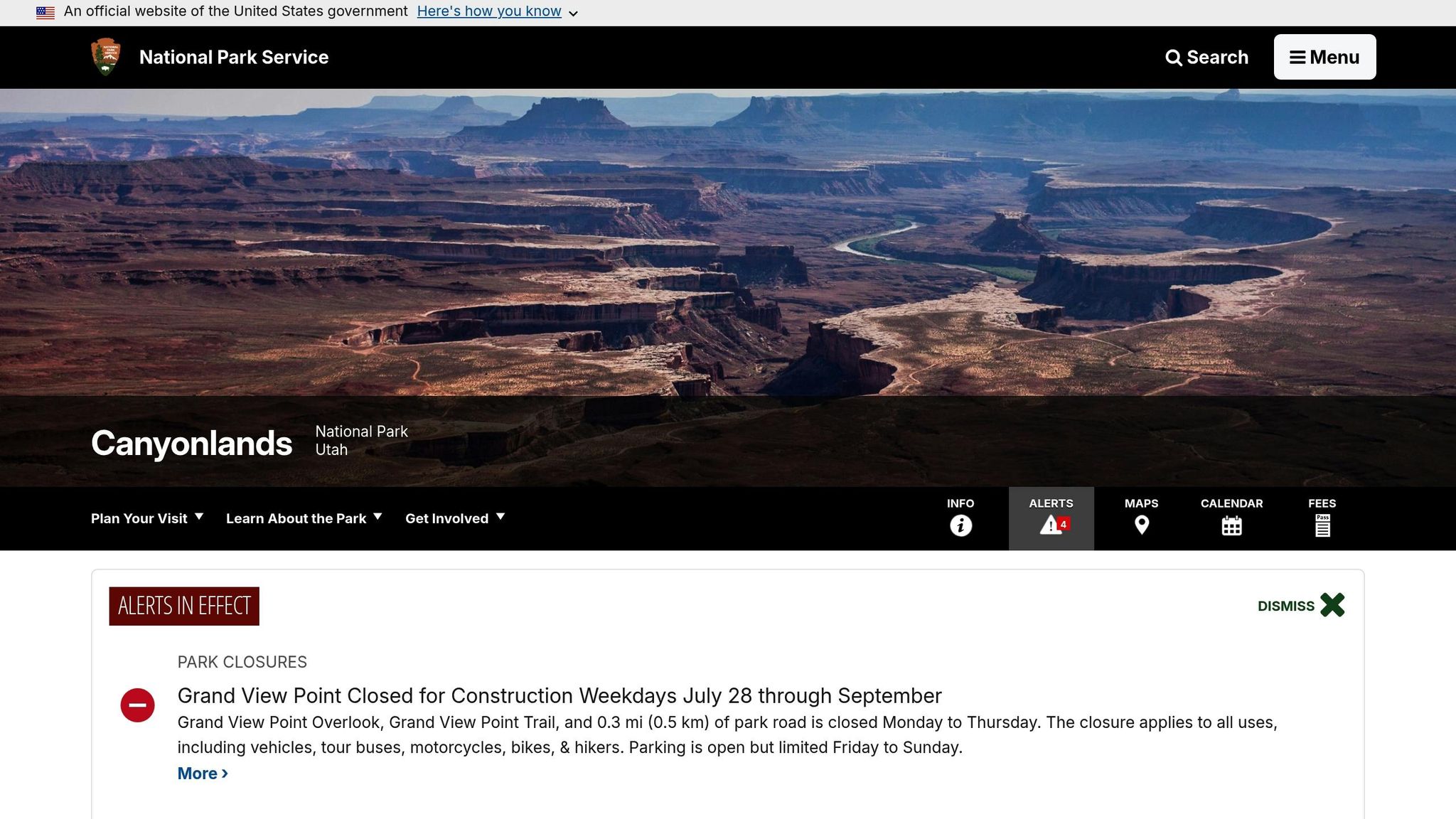
Canyonlands National Park is a haven for mountain bikers, offering a vast network of four-wheel-drive roads that stretch across its districts. The standout route is the iconic White Rim Road, a demanding 100-mile loop that winds below the Island in the Sky mesa. Unlike Arches National Park, which offers shorter day rides, Canyonlands is all about multi-day backcountry adventures. These trips often require vehicle support to carry essential supplies.
Each of the park’s three districts brings its own flavor to the biking experience. The Needles district is known for technical routes like Elephant Hill Road, Salt Creek, and Lavender Canyon. The Maze district offers remote, rugged terrain that challenges even the most experienced riders. Meanwhile, Island in the Sky features the White Rim Road and other trails that are better suited for single-day rides. This variety ensures there’s something for every seasoned biker who craves an adventure.
Scenery and Terrain
The terrain in Canyonlands is more technical and demanding compared to Arches. For example, Elephant Hill Road in the Needles district challenges riders with steep inclines, loose rocks, and stair-like drops. Salt Creek and Lavender Canyon add their own obstacles, including deep sand, water crossings, and even quicksand. Despite the effort required, the reward is unmatched – breathtaking canyon views and sweeping mesa vistas await those who tackle these trails.
The White Rim Road is another highlight. As it loops around and below the Island in the Sky mesa, bikers are treated to stunning, panoramic views of the rugged canyon landscape.
Accessibility
Planning ahead is crucial for biking in Canyonlands, especially for multi-day trips. The remote and rugged nature of the park means vehicle support is often a necessity, particularly for longer routes like the White Rim Road. Proper preparation can make all the difference in navigating this challenging terrain.
Skill Levels and Difficulty
Canyonlands is best suited for intermediate to advanced riders. The trails demand a combination of strong bike handling skills, physical endurance, and the ability to navigate tricky conditions like loose rock, sand, and steep grades. Many of the routes stretch over several days, requiring not just technical skill but also careful planning and preparation. These challenges make Canyonlands a top destination for experienced riders looking to push their limits.
The Local’s Guide to Mountain Biking in Moab, Utah
sbb-itb-00512f3
Pros and Cons
Building on the trail overviews, here’s a closer look at what makes Arches and Canyonlands National Parks stand out for mountain biking – and where they might fall short. Each park offers a unique experience tailored to different types of riders.
Arches National Park is perfect for those seeking convenience and shorter rides. Its trails are easily accessible and ideal for combining with other activities like hiking to Delicate Arch or exploring the Windows Section. The compact trail network makes it a great option for families or riders looking for a quick outing without venturing far from park amenities.
That said, Arches has its drawbacks for serious mountain bikers. Trail access is limited, and most routes share space with vehicles on designated roads. For those craving the thrill of singletrack or longer, more challenging rides, Arches may feel a bit underwhelming.
Canyonlands National Park, on the other hand, is a haven for seasoned riders looking for epic, multi-day adventures. The White Rim Road, a 100-mile loop, offers breathtaking backcountry scenery with ever-changing canyon views. For those seeking technical challenges, areas like Elephant Hill Road in the Needles district test advanced skills with loose rock, steep climbs, and sandy stretches.
However, Canyonlands requires careful preparation and support. Multi-day trips mean securing camping permits and coordinating logistics, including vehicle support for supplies. The remote trails and rugged terrain can be daunting for less experienced riders or those unprepared for the technical demands.
| Factor | Arches National Park | Canyonlands National Park |
|---|---|---|
| Trail Variety | Limited; mostly shared roads | Extensive; over 100 miles of routes |
| Scenery | Iconic arches and formations | Sweeping canyon and mesa views |
| Accessibility | High; great for day trips | Low; requires significant planning |
| Difficulty | Beginner to intermediate | Intermediate to advanced |
| Trip Length | Half-day to full day | Multi-day adventures |
| Vehicle Support | Not required | Often necessary |
| Skill Requirements | Basic bike handling | Advanced technical skills |
| Permits Needed | Standard park entry | Backcountry camping permits |
If you’re after a laid-back ride with easy logistics, Arches is the way to go. But if you’re ready to tackle challenging terrain and plan for a multi-day adventure, Canyonlands delivers an unforgettable experience. Each park offers something unique – your choice depends on your skill level, trip goals, and appetite for adventure.
Conclusion
The contrasting experiences offered by Arches and Canyonlands create a well-rounded mountain biking adventure for enthusiasts of all levels.
Arches National Park is a fantastic starting point, especially for beginners and families. Its scenic, accessible trails provide a gentle introduction to Utah’s iconic red rock landscapes. It’s an excellent place to ease into desert riding while enjoying the park’s breathtaking views.
Canyonlands National Park, on the other hand, is a playground for experienced riders. The legendary 100-mile White Rim Road tests endurance, while routes like Elephant Hill Road push technical skills to the limit with loose rocks and steep climbs. For those who enjoy planning multi-day trips and navigating rugged backcountry terrain, Canyonlands delivers a rewarding challenge.
Opt for Arches if you’re looking for shorter, more approachable rides combined with easy access to other park attractions.
Go for Canyonlands if you’re seeking a demanding adventure that offers unforgettable experiences and stories to tell.
Arches offers simplicity and convenience, while Canyonlands provides vast, rugged challenges. Many riders find themselves drawn back to explore the contrasts of both parks. Whether you’re just starting out or chasing your next big challenge, these two parks highlight why Utah remains a top destination for mountain biking enthusiasts.
Start planning your adventure with resources from The National Park Guide (https://thenationalparkguide.com).
FAQs
What are the main differences in mountain biking trails between Arches and Canyonlands National Parks?
Arches National Park isn’t exactly a hotspot for mountain biking. Most of the biking options stick to paved or unpaved roads, and there aren’t any singletrack trails. This makes it a good spot for road biking, but if you’re looking for technical or off-road challenges, you might feel a bit constrained.
Canyonlands, however, is a different story. It boasts a variety of trails that cater to different skill levels. You’ll find everything from flatter, easier routes to intense backcountry challenges like the rugged White Rim Trail. Whether you’re a beginner or a seasoned rider craving technical terrain, Canyonlands has something to offer.
So, if mountain biking is your focus, Canyonlands is the clear winner with its diverse trail options. Arches, on the other hand, is better suited for those who prefer sticking to the roads.
What do I need to prepare and plan for a multi-day mountain biking trip in Canyonlands National Park?
For a multi-day mountain biking adventure in Canyonlands, securing a backcountry permit is a must for overnight stays, especially for well-traveled routes like the White Rim Trail. These permits can be reserved up to four months in advance, so planning ahead is key. If you’re only heading out for the day, certain routes still require a day-use permit, which can be obtained up to 24 hours before your ride.
Accessing backcountry roads requires a high-clearance, low-range 4×4 vehicle, and all bikes must stick to designated roads. Popular biking routes such as White Rim, Elephant Hill, and Lavender Canyon also require permits. For those camping overnight, a separate camping permit is necessary. Having support vehicles is strongly recommended to carry your gear and provide assistance during longer trips.
Before heading out, review the park’s regulations and prepare thoroughly for the remote conditions. Keep in mind that services and facilities are limited in the backcountry, so you’ll need to be self-sufficient.
What are the best tips for beginners and families to enjoy mountain biking safely in Arches National Park?
Beginners and families looking to enjoy mountain biking in Arches National Park should consider starting with trails like the Jurassic Trail or EZ Lazy Loop. These routes are known for being smooth and relatively flat, offering a great way to build confidence while soaking in the breathtaking views.
Safety should always come first. Make sure everyone wears a helmet, checks their bike’s condition before heading out, and packs plenty of water to stay hydrated. Stick to the designated trails and roads – this not only keeps you safe but also helps preserve the park’s natural beauty. With a little preparation, mountain biking at Arches can be an unforgettable adventure for riders of all ages!