
Glacier National Park is a dream destination for hikers, offering over 700 miles of trails with stunning views of alpine lakes, rugged peaks, and vibrant meadows. Whether you’re a beginner or an experienced trekker, there’s a trail for you. Here’s a quick look at five standout hikes:
- Trail of the Cedars: A short, easy 1-mile loop through a cedar forest, perfect for families or those seeking a relaxed walk.
- Hidden Lake Overlook: A 2.7-mile trail with moderate difficulty. Enjoy alpine meadows, wildflowers, and views of Hidden Lake and Bearhat Mountain.
- Highline Trail: A strenuous 11.8-mile trek along the "Garden Wall" with breathtaking vistas and wildlife sightings.
- Grinnell Glacier Trail: A 7.6-mile hike ascending to Upper Grinnell Lake, with views of turquoise glacier-fed lakes.
- Iceberg Lake: A moderate 9.7-mile trail leading to a lake surrounded by cliffs, often dotted with floating icebergs.
Quick Comparison
| Trail Name | Distance | Difficulty | Elevation Gain | Key Features |
|---|---|---|---|---|
| Trail of the Cedars | 1 mile | Easy | Minimal | Cedar forest, wheelchair-accessible |
| Hidden Lake Overlook | 2.7 miles | Moderate | 1,325 feet | Wildflowers, mountain goats, lake views |
| Highline Trail | 11.8 miles | Strenuous | 1,950 feet | Panoramic views, wildlife, "Garden Wall" |
| Grinnell Glacier | 7.6 miles | Challenging | 1,840 feet | Glacier, waterfalls, turquoise lakes |
| Iceberg Lake | 9.7 miles | Moderate | 1,275 feet | Icebergs, wildflowers, towering cliffs |
Key Tips for a Safe Hike
- Gear Up: Wear sturdy boots, pack layers, and carry the "Ten Essentials" (e.g., navigation, hydration, first-aid).
- Bear Safety: Carry bear spray, make noise on trails, and keep a safe distance (100 yards from bears).
- Plan Ahead: Start early, check trail updates, and prepare for sudden weather changes.
- Season Matters: July-August offers the best trail access, while September brings fewer crowds and golden larch trees.
Glacier National Park’s trails promise unforgettable experiences, but preparation is key to enjoying this wilderness responsibly.
Best Hikes in Glacier National Park: Ranked Easy to Difficult (Local Recs)
sbb-itb-00512f3
Best Hiking Trails in Glacier National Park
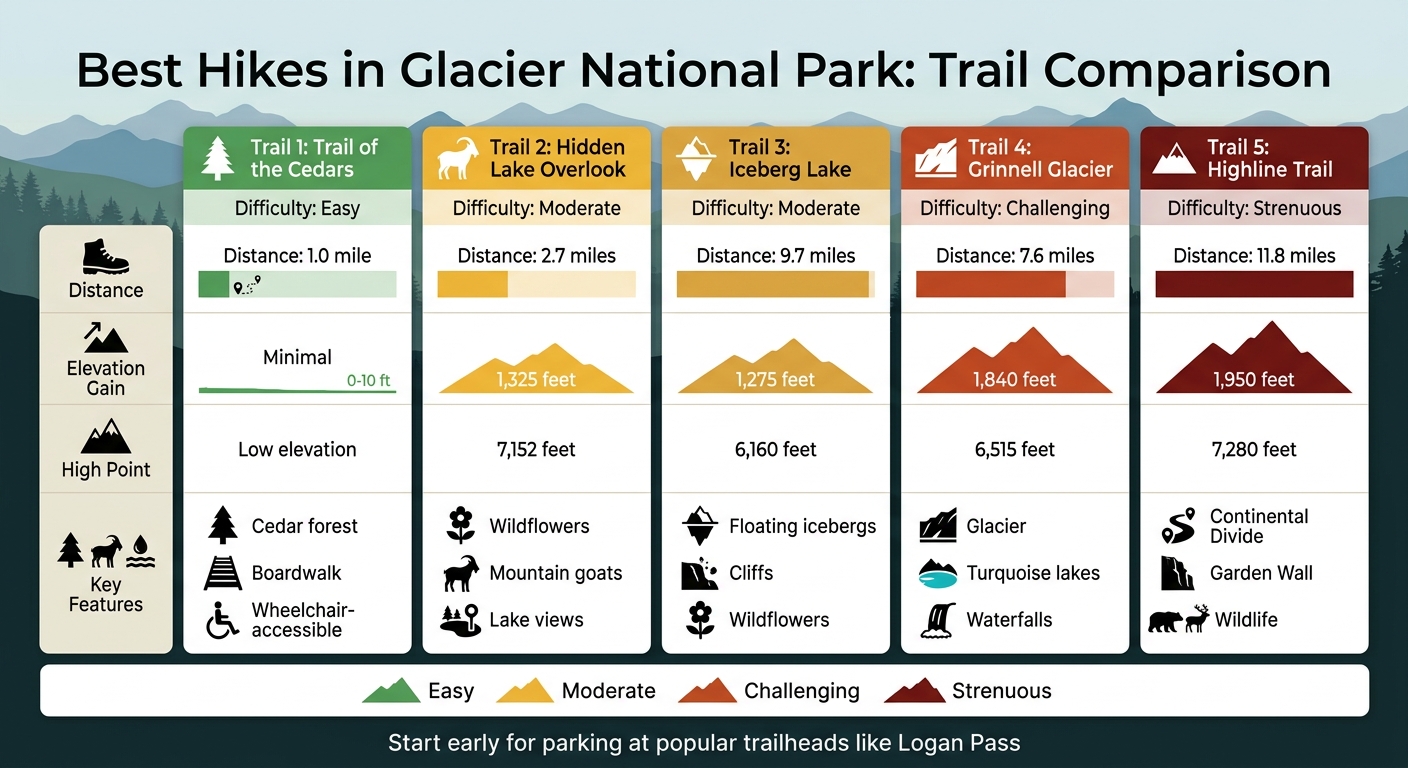
Glacier National Park Trail Comparison: Distance, Difficulty, and Elevation Guide
Glacier National Park offers a trail system that caters to all levels, from gentle walks for families to rigorous alpine adventures. Here’s a look at five trails that showcase the park’s incredible landscapes and provide unforgettable hiking experiences.
Trail of the Cedars
Perfect for families and beginners, this 1-mile loop is a leisurely stroll through a cedar forest. The trail features a wheelchair-accessible boardwalk, making it a great choice for anyone looking for a short, easy outing.
Hidden Lake Overlook
Starting at Logan Pass, this 2.7-mile round-trip trail offers breathtaking views of Hidden Lake and Bearhat Mountain. The hike begins with a boardwalk that winds through alpine meadows, bursting with wildflowers in July and August. Keep an eye out for mountain goats along the way. With a high point of 7,152 feet, layers are a must for the cooler temperatures.
Highline Trail
This 11.8-mile trail follows the Continental Divide and climbs 1,950 feet, offering panoramic views of the park’s rugged beauty. Starting at Logan Pass, the trail hugs the dramatic "Garden Wall", where you’ll see steep drop-offs and expansive alpine meadows. Wildlife sightings are common, including mountain goats and bighorn sheep. The trail ends at the historic Granite Park Chalet, making it a rewarding but strenuous hike. Arrive early to secure parking at Logan Pass.
Grinnell Glacier Trail
For those seeking a glacier adventure, the 7.6-mile Grinnell Glacier Trail is a must. The trail ascends 1,840 feet through the Grinnell Valley, passing turquoise lakes and waterfalls before reaching Upper Grinnell Lake at 6,515 feet. Along the way, you might encounter wildlife such as bears, mountain goats, and bighorn sheep. The glacier-fed lakes, with their striking turquoise color, create postcard-worthy views.
Iceberg Lake
This 9.7-mile round-trip hike leads to an alpine lake surrounded by towering cliffs. The trail climbs 1,275 feet through meadows filled with wildflowers, eventually reaching Iceberg Lake at 6,160 feet. True to its name, icebergs often float in the lake well into summer, making it a spectacular destination. Since this route passes through bear country, preparation is essential.
Here’s a quick comparison of these trails:
| Trail Name | Distance | Difficulty | Elevation Gain | High Point | Key Features |
|---|---|---|---|---|---|
| Trail of the Cedars | 1.0 mile | Easy | Minimal | Low | Cedar forest, boardwalk, wheelchair-accessible |
| Hidden Lake Overlook | 2.7 miles | Moderate | 1,325 feet | 7,152 feet | Wildflowers, mountain goats, lake views |
| Highline Trail | 11.8 miles | Strenuous | 1,950 feet | 7,280 feet | Continental Divide, Garden Wall, wildlife |
| Grinnell Glacier | 7.6 miles | Challenging | 1,840 feet | 6,515 feet | Glacier, turquoise lakes, waterfalls |
| Iceberg Lake | 9.7 miles | Moderate | 1,275 feet | 6,160 feet | Floating icebergs, cliffs, wildflowers |
Hiking Safety and Preparation Tips
Hiking in the wilderness comes with its fair share of surprises, from unpredictable weather to unexpected wildlife encounters. Being prepared is key. Weather can change in an instant, so it’s smart to pack for a mix of seasons – even in the middle of summer. To stay ready for anything, the National Park Service recommends carrying the Ten Essentials: navigation, sun protection, insulation, illumination, first-aid, fire, repair tools, nutrition, hydration, and emergency shelter. These basics, combined with the right gear, can make all the difference.
Required Gear and Supplies
What you wear and carry can make or break your hiking experience. Start with sturdy hiking boots paired with wool or synthetic socks to keep your feet dry and comfortable. Skip cotton altogether – it traps moisture and dries slowly, which can leave you feeling cold and uncomfortable. Instead, pack lightweight, moisture-wicking clothes like a synthetic T-shirt, a waterproof rain jacket with a hood, and a midweight fleece or wool sweater. If you’re heading out in cooler weather, don’t forget long underwear, a warm hat, gloves, and an insulated jacket.
Hydration is critical. Bring at least two 1-quart water bottles or a hydration bladder, and remember to drink regularly – even before you feel thirsty. High-energy snacks like trail mix or granola bars are perfect for keeping your energy levels up. Protect yourself from the sun with sunscreen, lip balm, sunglasses (with secure straps), and a sun hat. A headlamp with fresh batteries is also a must-have; it’s invaluable if you’re caught on the trail after dark.
And don’t forget bear spray – it’s absolutely essential. Keep it in an easy-to-reach spot, not buried in your pack.
| Category | Essential Items |
|---|---|
| Clothing | Synthetic T-shirt, quick-dry shorts/pants, rain jacket, fleece/wool jacket, wool socks |
| Safety & Tools | Bear spray, map/compass/GPS, multi-tool or knife, matches/fire starter |
| Emergency | Space blanket or bivy, first-aid kit, headlamp with extra batteries |
Wildlife Safety Guidelines
Having the right gear is only part of the equation – knowing how to act around wildlife is just as important. Always maintain a safe distance: at least 100 yards from bears and 25 yards from other animals like bison or mountain goats. It’s worth noting that grizzly bears can weigh anywhere from 400 to 1,500 pounds and can sprint up to 35 miles per hour. That’s faster than most people can run!
To reduce the risk of encounters, hike in groups of three or more and make noise as you go. Clap, whistle, or sing – especially in areas with dense brush or near streams where visibility is limited. Avoid hiking during dawn, dusk, or nighttime when bears are most active.
If you do come across a bear, stay calm and back away slowly. Never place yourself between a mother bear and her cubs. Keep an eye out for signs of bears, such as tracks, scat, or animal carcasses, and steer clear of these areas. Also, avoid using scented products like perfumes or lotions, which might attract bears, and always follow food storage rules by using bear-proof canisters.
Trail Etiquette and Leave No Trace Principles
Preserving the beauty of Glacier National Park’s trails requires everyone to do their part. Stick to marked paths and respect trail closures put in place for safety reasons. Carry out all your trash, including biodegradable waste, as it can harm wildlife. By following Leave No Trace principles, you help protect the environment and ensure that the park remains a haven for both wildlife and future visitors.
When to Hike in Glacier National Park
To make the most of your trip to Glacier National Park, understanding how the seasons affect trail conditions is key. With elevations ranging from valley floors to alpine heights, the park’s weather can vary dramatically depending on the time of year. Here’s a breakdown of what you can expect each season to help you plan your adventure.
Summer Hiking (June to September)
July and August are the prime months for hiking. During this time, even the high-altitude trails, like the Highline Trail, are typically clear of snow and ready to explore. Summer daytime temperatures hover in the low 80s°F, cooling to the low 40s°F at night. Early fall, around September, sees highs closer to 69°F. The famous Going-to-the-Sun Road is fully operational in summer, giving you access to some of the park’s most iconic trailheads. Be aware, though, that parking at popular spots like Logan Pass fills up fast – often before 7:00 AM. Plus, you’ll need a timed-entry vehicle reservation to enter the park between 6:00 AM and 3:00 PM.
If you’re planning a summer visit, book accommodations or campsites 6 to 12 months in advance, as this is peak season. Wildfire smoke, particularly in late July and August, can sometimes affect visibility.
By September, the crowds begin to thin out, offering a quieter experience. According to Travis Vaughan, owner of Glacier Tourbase:
"September might be the best month to visit Glacier. Crowds drop dramatically after Labor Day, the smoke from August usually clears, and the larches turn gold."
Visitor numbers drop by 40–50% compared to August, but trails remain in great condition through mid-October. September also brings the stunning transformation of larch trees into golden hues, attracting photographers from across the country. However, bear activity increases during this period as they prepare for hibernation, so always carry bear spray and consider hiking in groups.
June is another unique time to visit. Snowmelt fuels vibrant waterfalls, and wildflowers bloom at mid-elevations. That said, it’s the park’s rainiest month, and snow may still cover higher trails. If you’re hiking in June or early July, pack microspikes for lingering snowfields, especially near Logan Pass. Keep in mind that the Going-to-the-Sun Road usually doesn’t fully open until late June or mid-July.
Spring and Fall Hiking
For those seeking solitude, spring and fall offer quieter trails and unique experiences. In April and May, lower-elevation trails are generally clear, while higher routes may still be snow-packed. A favorite local activity during spring is cycling the Going-to-the-Sun Road after it’s plowed but before cars are allowed.
October brings vibrant fall colors and a sense of calm to the park. However, many facilities close by mid-October, and snowstorms can arrive early. It’s also worth noting that temperatures at Logan Pass, which sits at 6,600 feet, can be 15–20°F cooler than at lower elevations, so layering is a good idea – even in summer.
| Season | Avg High/Low | Trail Access | Crowd Level | Key Considerations |
|---|---|---|---|---|
| Summer (Jul-Aug) | 81°F / 51°F | Full access to all trails | Peak / Very High | Vehicle reservations required; book lodging 6–12 months ahead; potential wildfire smoke |
| Fall (Sep-Oct) | 69°F / 41°F | Most trails open through mid-October | Medium to Low | Fewer crowds; fall colors; increased bear activity; early snow possible |
| Spring (Apr-Jun) | 63°F / 39°F | Lower trails clear; high elevations snow-packed | Low to Medium | Rainiest period; waterfalls at peak flow; carry microspikes for high trails |
Conclusion
Glacier National Park has something for every hiker, whether you’re after a peaceful walk or a heart-pumping alpine trek. Trails like Hidden Lake Overlook, Grinnell Glacier, Iceberg Lake, and the Highline Trail each offer their own unique experiences – from spotting floating icebergs to soaking in sweeping mountain views. But as tempting as these adventures are, it’s crucial to prepare properly and stay mindful of the park’s conditions.
Preparation is key. Always keep bear spray within reach, bring the Ten Essentials (like a map, extra layers, and first-aid supplies), and hike with at least two companions. Wildlife safety is non-negotiable – stay at least 100 yards away from bears and 25 yards from other animals. Stick to marked paths, pack out your trash, and tread lightly to protect the park’s delicate alpine habitats.
When you visit also matters. July and August open up nearly all trails, though you’ll need to navigate larger crowds and potential wildfire smoke. September offers quieter trails, stable weather, and stunning larch trees turning gold, but bear activity ramps up as they prepare for hibernation. In June, the waterfalls are at their most powerful, though snow may still block higher trails.
Armed with this knowledge, you’re ready to explore Glacier National Park responsibly, soaking in its breathtaking landscapes while respecting its wild and fragile beauty.
FAQs
Do I need a timed-entry vehicle reservation to reach these trailheads?
You don’t need a timed-entry vehicle reservation to access trailheads in Glacier National Park, but they’re a good idea during busy seasons. Reserving ahead can help you secure parking and avoid any hassles, making your visit smoother and more enjoyable.
What’s the best hike if I only have half a day?
The Highline Trail is an excellent option for a half-day hike. Stretching approximately 11.8 miles, it offers stunning views that make every step worthwhile. Make sure to allocate enough time to fully take in the trail’s highlights and scenery.
How do I safely hike in bear country in Glacier?
When hiking in Glacier National Park, especially in areas where bears are present, taking precautions is essential for your safety and theirs. Here’s what you need to keep in mind:
- Keep your distance: Always stay at least 100 yards away from wildlife, including bears. This ensures both your safety and the animals’ well-being.
- Don’t feed or approach animals: Feeding wildlife can disrupt their natural behaviors and lead to dangerous encounters.
- Make noise: Talk, clap, or use a noise-making device to alert bears and other animals to your presence. This helps avoid surprising them.
Additionally, come prepared with the right tools and strategies:
- Carry bear spray: Make sure it’s easily accessible and know how to use it before heading out.
- Hike with a partner: There’s safety in numbers, and groups are less likely to encounter issues with wildlife.
- Stick to designated trails: Venturing off-trail increases the chances of disturbing wildlife and puts you at greater risk.
If you do encounter a bear, stay composed. Remain calm, stand your ground, and slowly wave your arms to appear larger. Avoid running or turning your back, as this can trigger a chase response. Following these steps can help ensure a safer experience for everyone on the trail.