
If I planned a park trip around one thing, I’d plan it around the event date first. This list covers 10 yearly park events across the U.S., from Hawaiʻi and Alaska to Arizona, Utah, Montana, Tennessee, and North Carolina.
Here’s the short version: you’ll find July Hawaiian heritage gatherings, June star parties, late-April wildflower walks, late-February winter events, and late-summer Native arts programs. Some are free with park entry, some need early registration, and a few need same-day tickets or extra planning for parking, weather, or shuttle access.
What stands out most to me:
- Great Smoky Mountains appears twice: one event for spring flowers and one for mountain history
- Grand Canyon appears twice: one event for Native heritage and one for night-sky programs
- Several events have long histories, including:
- Spring Wildflower Pilgrimage: started in 1951
- Native America Speaks: started in 1982
- Puʻuhonua o Hōnaunau festival: dates back to 1976
- Some events draw big crowds:
- Native America Speaks: more than 7,500 attendees each year
- Grand Canyon Star Party: more than 1,000 visitors per night
- Bryce Canyon now offers about 100 astronomy programs a year
Before I book anything, I’d check four things first:
- the exact date
- whether registration or tickets are needed
- weather at that park and elevation
- whether I need to plan for parking, shuttles, or entrance fees
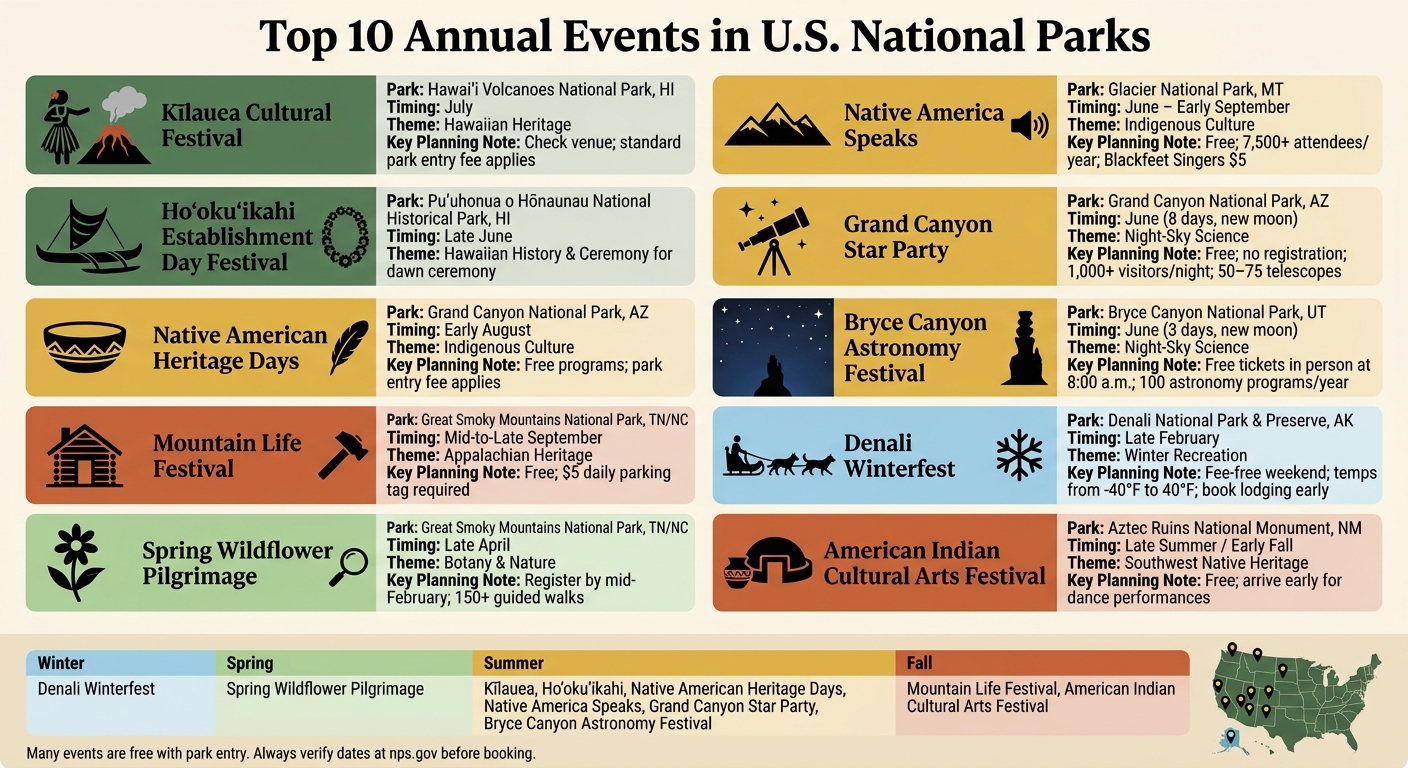
Top 10 National Park Annual Events: Quick Comparison Guide
Quick Comparison
| Event | Park | Usual timing | Best for | Main planning point |
|---|---|---|---|---|
| Kīlauea Cultural Festival | Hawaiʻi Volcanoes | July | Hawaiian heritage | Check venue and park entry |
| Hoʻokuʻikahi Establishment Day Festival | Puʻuhonua o Hōnaunau | Late June | Hawaiian history and ceremony | Arrive early |
| Native American Heritage Days | Grand Canyon | Early August | Tribal art, dance, and talks | Park entry applies |
| Mountain Life Festival | Great Smoky Mountains | September | Appalachian history | Parking tag may be needed |
| Spring Wildflower Pilgrimage | Great Smoky Mountains | Late April | Plants, walks, and field trips | Register early |
| Native America Speaks | Glacier | June to early September | Indigenous speaker programs | Check park schedule on arrival |
| Grand Canyon Star Party | Grand Canyon | June | Stargazing | Bring red light and layers |
| Bryce Canyon Astronomy Festival | Bryce Canyon | June | Astronomy programs | Same-day tickets can go fast |
| Denali Winterfest | Denali | Late February | Winter fun and sled dogs | Pack for severe cold |
| American Indian Cultural Arts Festival | Aztec Ruins | Late summer or early fall | Native art market and dance | Check date each year |
Bottom line: if you want more than a standard park stop, these events give you a better sense of each place through people, stories, science, foodways, art, and night skies.
sbb-itb-00512f3
What Makes These National Park Events Worth Attending
These events go far beyond a standard park visit. Each one mixes place-based learning with direct access to the people who know the landscape best, including tribal elders, artists, scientists, and botanists. That means you’re not just looking at a place. You’re hearing the stories, history, and science that give it meaning.
They’re also rooted in a specific park, return every year, and often open the door to experiences most visitors wouldn’t get on a normal trip.
Some of these gatherings have been around for decades. Native America Speaks at Glacier started in 1982, and the Puʻuhonua o Hōnaunau Cultural Festival goes back to 1976. Use the seasonal guide below to line up an event with your travel dates.
Before you go, check the official NPS calendar. Dates and programs can shift due to weather or park conditions. Many events are free, but park entrance fees may still apply, and some need reservations months in advance.
| Season | Event Type | What to Bring |
|---|---|---|
| Winter | Winter recreation and sled dog culture | Heavy-duty boots, base layers, hand warmers |
| Spring | Wildflower pilgrimages and botany talks | Rain jacket and trekking poles |
| Summer | Indigenous storytelling and cultural festivals | Sun hoodie, sunglasses, and sunscreen |
| Fall or year-round | Astronomy, art, and heritage events | Insulated jacket and gloves |
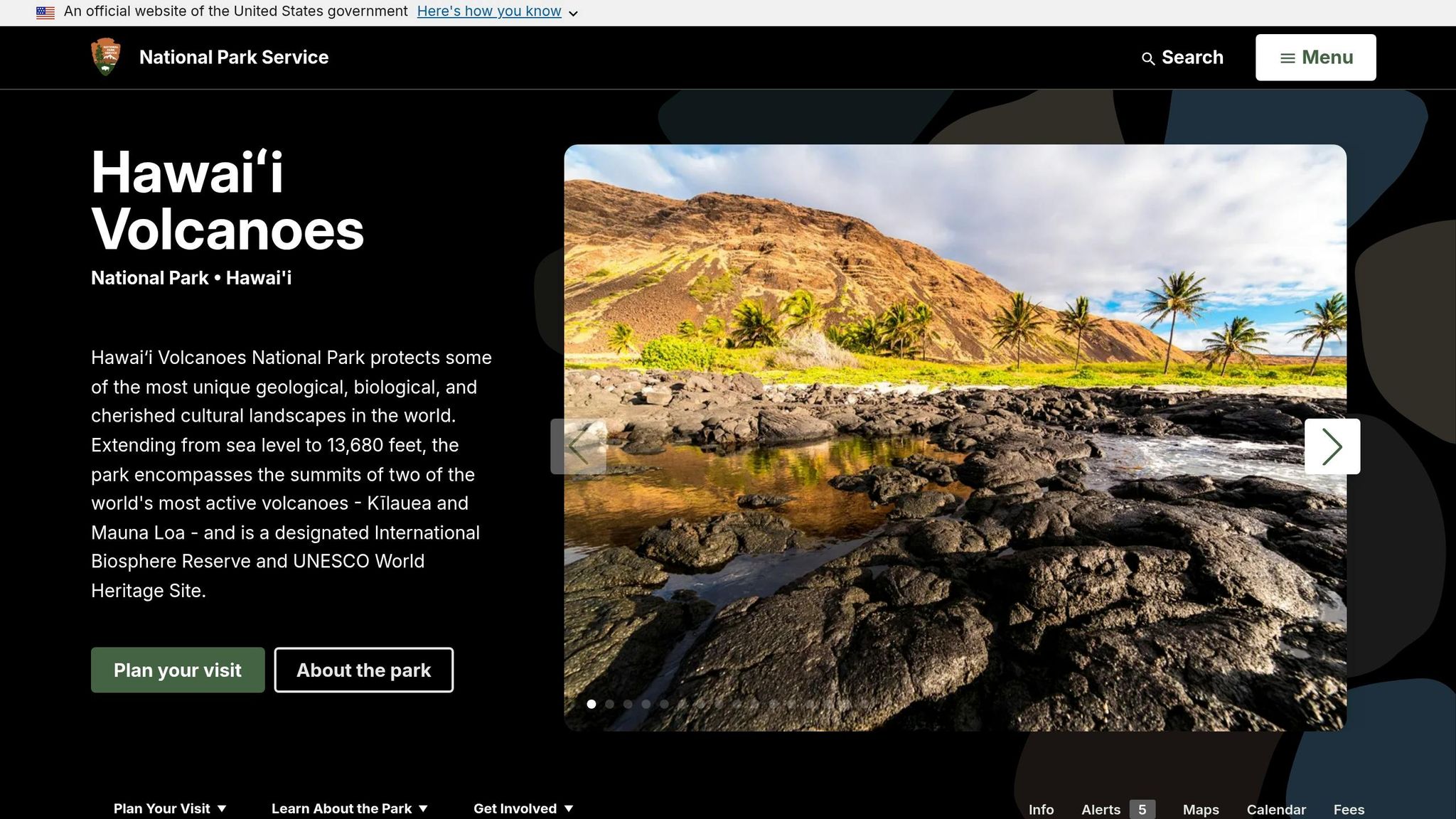
1. Kīlauea Cultural Festival at Hawaiʻi Volcanoes National Park
Cultural significance
E Hoʻomau ("to continue") sums up what this festival is about: passing Hawaiian culture, knowledge, and the relationship with the ʻāina to the next generation through hula, music, and traditional arts. Set in an active volcanic landscape, the event makes that connection feel grounded and close to home.
You can see that purpose all through the festival, from performances and workshops to community exhibits that visitors can experience up close.
The 2024 festival marked its 40th anniversary, and some families have been part of it from the start, including the Makuakāne ʻohana.
Visitor experience
Visitors can expect hula by hālau, slack-key guitar, and hands-on workshops such as sanding a makau and painting ʻohe kāpala designs. There are also conservation exhibits, which bring in an environmental angle without taking attention away from the day’s Hawaiian focus. The event is family-friendly and alcohol- and drug-free.
"The festival is an opportunity for the whole family to have fun while connecting to Hawaiian culture first-hand." – Rhonda Loh, Superintendent, Hawaiʻi Volcanoes National Park
Planning logistics
The festival takes place on a Saturday in mid- to late July. Admission is free, though standard park entrance fees may still apply. The venue alternates between the Kīlauea summit area and the Kahuku Unit, so it’s smart to check the location before heading out.
Parking can fill up fast, so arriving early helps. Bring water, sunscreen, a hat, and a rain jacket.
Check the park calendar for the current date and venue before planning your visit.
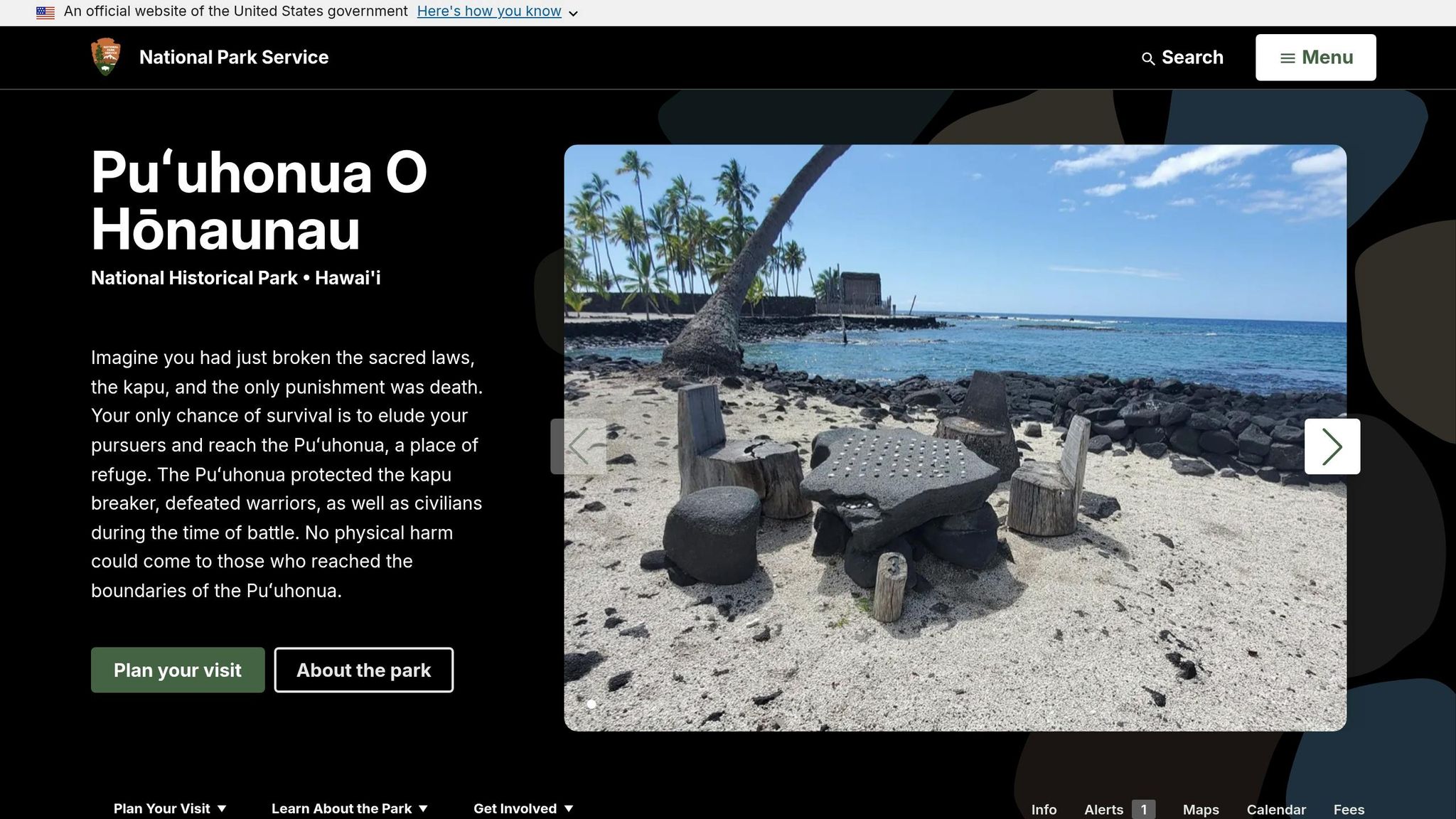
2. Hoʻokuʻikahi Establishment Day Hawaiian Cultural Festival at Puʻuhonua o Hōnaunau National Historical Park
Cultural significance
At Puʻuhonua o Hōnaunau, this festival ties Hawaiian sovereignty history to living practice. It honors King Kamehameha I’s unification of the Hawaiian Islands and the site’s 1972 National Historic Site authorization.
Visitor experience
The day begins at dawn with a solemn hoʻokupu ceremony, or gift-giving, led by hula hālau, civic clubs, and families. On Sunday, the opening includes mele and pule.
Visitors can also spend time watching craft demonstrations, which add another layer to the day’s events.
Planning logistics
The festival usually takes place on the last weekend in June, and the 2026 event is set for June 27. If you want to see the opening ceremony, get there early.
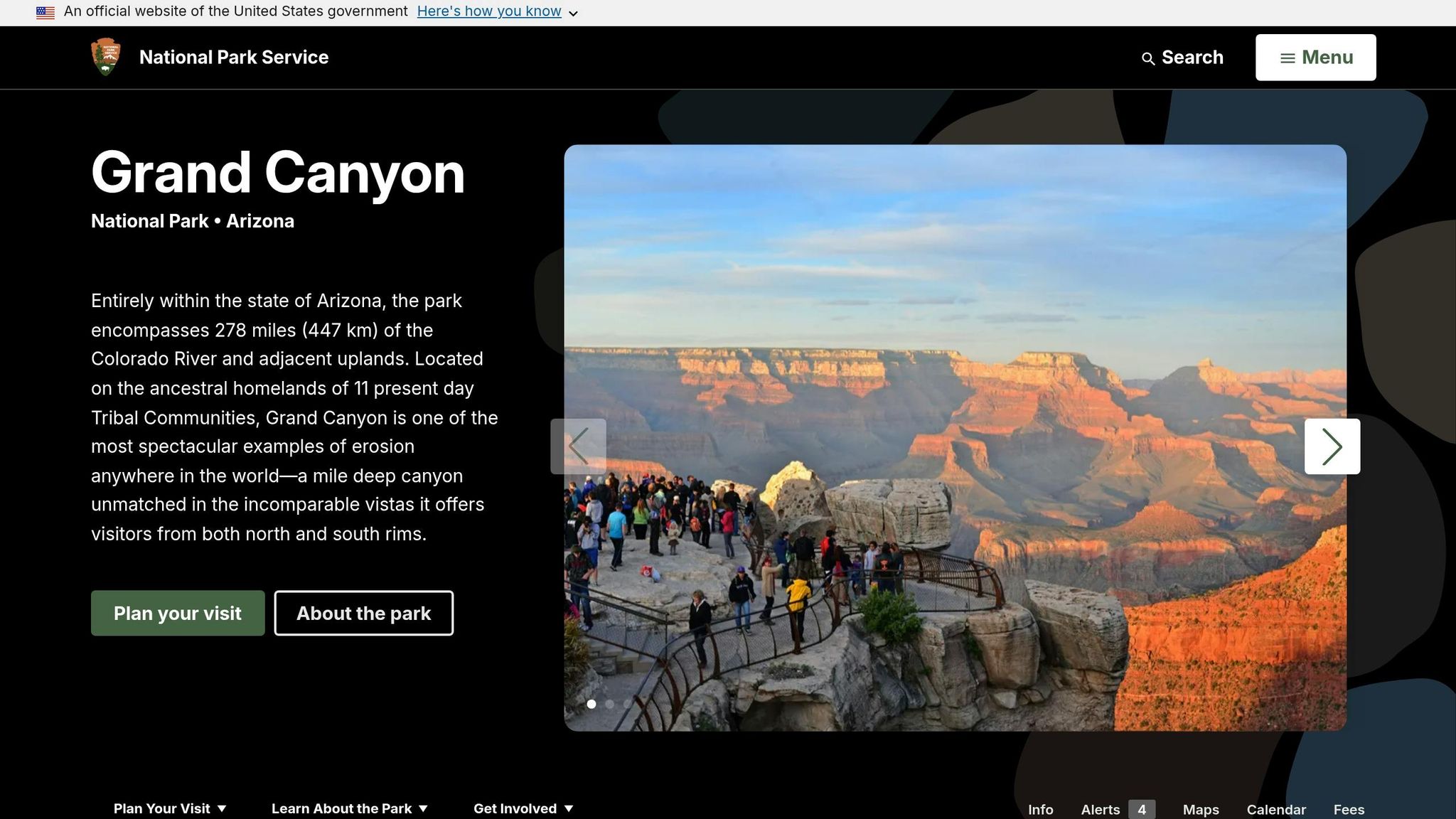
3. Native American Heritage Days at Grand Canyon National Park
Cultural significance
At the Grand Canyon, Heritage Days turns one of the park’s most sacred places into a living classroom. The Grand Canyon is the ancestral homeland of 11 federally recognized tribes, and Native American Heritage Days gives those tribes space to share their history, art, and traditions with visitors.
The event started in the early 1990s as “Paiute Days” on the North Rim and later grew to include all 11 associated tribes. The Cultural Demonstration Program, launched in 2014, now features more than 200 tribal artists.
Visitor experience and planning
Programs usually run from 9:00 AM to 4:00 PM at Desert View Watchtower. Visitors can watch pottery, weaving, silversmithing, beadwork, carving, music, and dances such as Apache Crown, Hopi Buffalo, and hoop dance.
Many programs begin and end with traditional prayers and welcomes from tribal elders. Native American Heritage Days is usually held in early August. Desert View sits 23 miles east of Grand Canyon Village, and the Watchtower is a short walk from the main parking lot. Programs are free, though regular park entrance fees still apply.
4. Mountain Life Festival at Great Smoky Mountains National Park
Cultural significance
In the Smokies, the story changes a bit. Here, the focus moves from tribal heritage and astronomy to the hands-on history of Appalachian life.
Each fall, the Mountain Life Festival brings that history into the open at the Mountain Farm Museum, behind the Oconaluftee Visitor Center in Cherokee, NC. It pays tribute to the families who once lived on this land. And it also includes Cherokee cultural demonstrations alongside Appalachian customs.
"The event preserves the legacy of the diverse Appalachian customs practiced for generations by the many families who lived on lands that later became Great Smoky Mountains National Park." – National Park Service
Visitor experience
The festival runs from 10:00 a.m. to 4:00 p.m. and is free to attend. That makes it easy to drop in, stay a while, and take your time.
Visitors can watch – and in some cases join in – demonstrations such as:
- Sorghum milling
- Apple butter making
- Cider pressing
- Hearth cooking
- Blacksmithing
- Broom making
- Soap making
- Hominy preparation
- Woodworking
Live traditional music and living historians make the whole thing feel active and welcoming, not like a museum display behind glass. It’s very hands-on and easy for families to enjoy.
Typical season/dates
The festival takes place each year on a Saturday in mid-to-late September. In some years, it lines up with National Public Lands Day, which can mean parking tags are not required.
Planning logistics
Admission is free, but there’s one detail many people miss: if your vehicle is parked inside the park for more than 15 minutes, you need a parking tag. Current prices are $5 for a daily tag, $15 for a weekly tag, and $40 for an annual parking tag.
The Mountain Farm Museum sits about 2 miles north of Cherokee, NC, on Newfound Gap Road.
5. Spring Wildflower Pilgrimage at Great Smoky Mountains National Park
Cultural significance
Once the park’s heritage festivals wrap up, spring brings a different kind of draw: wildflower season.
The Spring Wildflower Pilgrimage centers on the Smokies’ living landscape, from wildflowers and fungi to the rhythms of spring ecology. Great Smoky Mountains National Park has more than 1,500 flowering plant species, the highest total of any national park in North America, which is why people often call it the "Wildflower National Park". The event started in 1951 and will mark its 76th year in 2026.
Like the park’s other seasonal events, the pilgrimage turns a yearly tradition into something more hands-on and memorable for visitors.
"Great Smoky Mountains National Park is a world-renowned preserve of wildflower diversity… the park is sometimes referred to as the ‘Wildflower National Park.’" – National Park Service
Visitor experience
This nonprofit annual event includes guided walks, exhibits, and workshops led by botanists, wildlife biologists, and park rangers. Visitors can pick from more than 150 guided walks and hikes, with options for a full range of skill levels.
The schedule goes well beyond flowers. Programs also cover fungi, ferns, medicinal plants, birds, and salamanders. You’ll also find photography sessions, art, journaling, and evening lectures worked into the lineup. Each year, the event brings in more than 900 attendees.
Porters Creek Trail is one of the better-known outings, especially for white trillium and fringed phacelia. And if a lower-elevation bloom has already passed, there’s a simple workaround: head uphill. In the Smokies, spring flowers can show up from March through June based on elevation.
"Not only does the Smokies have one of the richest diversities of spring wildflowers found in the nation, but the season also extends from March through June depending on your elevation." – Friends of the Smokies
Typical season/dates
The pilgrimage takes place from Tuesday through Saturday during the last week of April. Lower-elevation blooms tend to peak in mid-to-late April. Higher-elevation displays, including flame azaleas on Gregory Bald, usually peak in late June or early July.
Planning logistics
Registration is required for the official guided programs and usually opens in mid-February. Popular hikes can fill up within just a few days, so waiting too long can cost you the spots people want most. The event is supported by registration fees and donations.
For access, Gatlinburg and Townsend serve as the main gateway towns. Sevierville is also a common base for lodging and dining. If you plan to park inside the park, you’ll need a parking pass.
6. Native America Speaks at Glacier National Park
Cultural significance
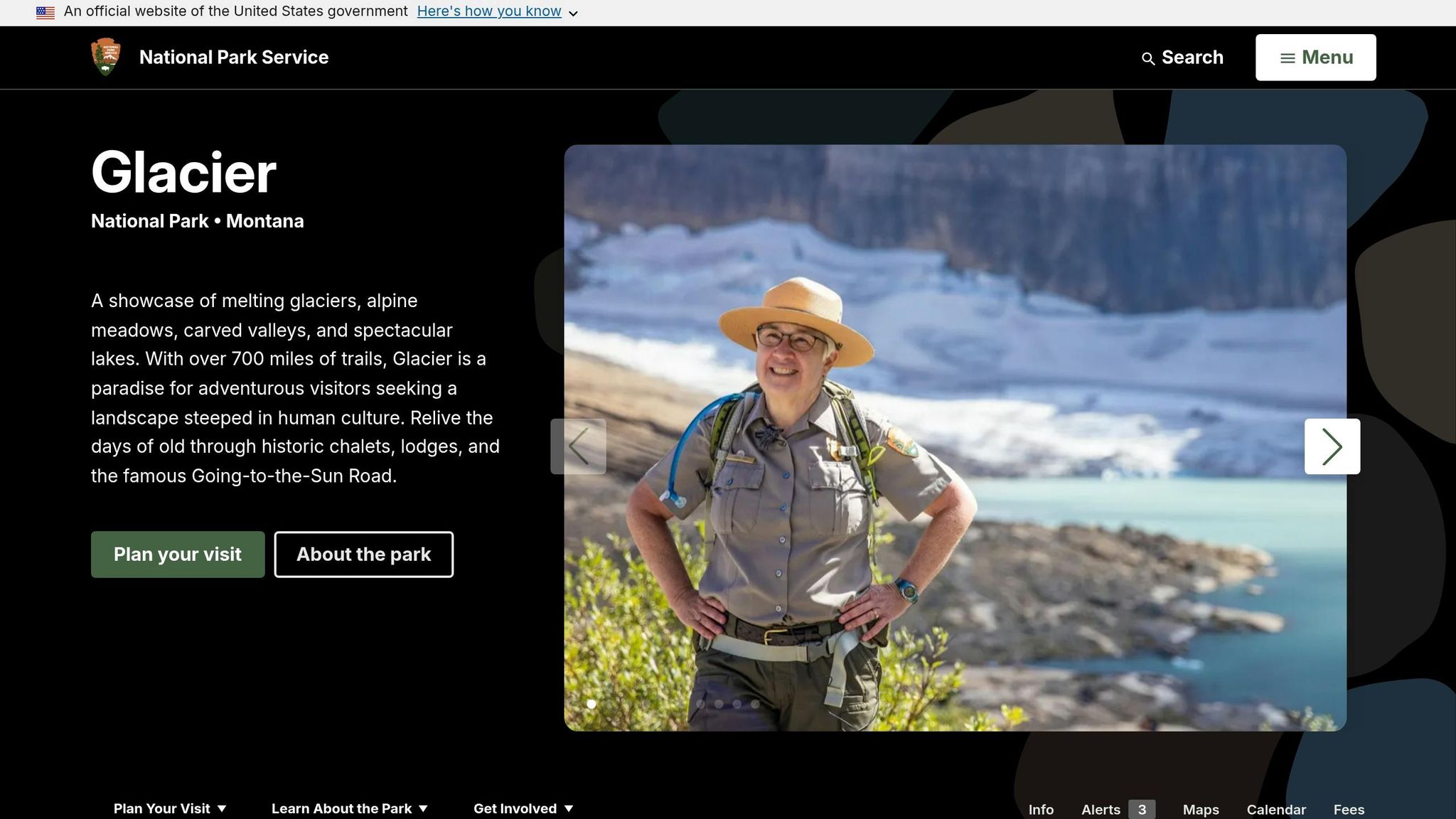
Glacier’s summer speaker series trades festival energy for something quieter and more personal: evening programs centered on Native history and living knowledge. Native America Speaks began in 1982 and is the longest-running Indigenous speaker series in the National Park Service.
Speakers come from the Blackfeet Nation and the Confederated Salish and Kootenai Tribes, including the Salish, Kootenai, and Pend d’Oreille peoples. At Glacier, which is part of their ancestral homeland, they share their history, language, and culture with visitors.
"Glacier National Park is part of my people’s aboriginal homeland and I feel that it is my obligation to inform non-natives of our people’s way of life and to help with understanding and appreciating the Native American’s belief and philosophy." – Don Fish, Blackfeet Nation member and traditionalist
Visitor experience
The programs cover a broad mix of topics, including storytelling, music, dance, ethnobotany, ancestral foods, language, and native plant knowledge. More than 7,500 visitors attend each year, which gives you a sense of how much interest these talks draw.
You’ll find them at campground amphitheaters across the park, such as Apgar, Rising Sun, and St. Mary. Most sessions last 45 to 60 minutes, so they’re easy to fit into an evening after a day on the trail.
Typical season/dates
Programs are usually offered from June through early September, though exact dates change from year to year. For the current schedule, check at a visitor center or ranger station once you’re in the park.
Planning logistics
Most programs are free to attend. The main paid exception is Blackfeet Singers and Dancers, which costs $5 per person. Lap children can attend free. Ticket sales open at 10:00 a.m. on the Monday before the Wednesday performance, and purchases are limited to eight per group.
A few practical notes can make the night go more smoothly:
- Bring warm layers for outdoor evening programs.
- Wheelchair-accessible venues include the Apgar, Fish Creek, and Rising Sun amphitheaters.
- Other accessible sites include the St. Mary Visitor Center auditorium, Lake McDonald Lodge, and the lower level of Many Glacier Hotel.
7. Grand Canyon Star Party at Grand Canyon National Park
Cultural significance
Grand Canyon Star Party brings together telescope-based astronomy and Indigenous sky traditions. It also supports the park’s dark-sky mission, with the park’s dark-sky designation helping back efforts to cut light pollution.
That blend of science and long-held sky knowledge gives the event its feel.
Visitor experience
Each night, 50 to 75 telescopes bring in more than 1,000 visitors. Visitors can see Saturn’s rings, Jupiter’s moons, nebulae, and distant galaxies. During the day, solar telescopes are often available for safe views of sunspots and solar flares.
"Grand Canyon National Park is one of the best places in the world to enjoy pristine night skies." – National Park Service
The evening starts with a guest speaker presentation at 8:00 PM at the South Rim Visitor Center Plaza. After that, park rangers lead green-laser constellation tours at 9:00, 9:30, and 10:00 PM.
Typical season/dates
The event runs for eight days each June, planned around the new moon so skies are at their darkest. The 36th annual Star Party took place June 6–13, 2026. Here are the next scheduled dates:
| Year | Dates |
|---|---|
| 2027 | May 29 – June 5 |
| 2028 | June 17 – 24 |
| 2029 | June 2 – 9 |
| 2030 | June 22 – 29 |
Note: The 2026 North Rim event was canceled due to impacts from the Dragon Bravo Fire. Activities were held at the South Rim only.
Planning logistics
Admission is free with park entry. After 9:30 PM, visitors should park in Visitor Center lots 1–4, since the free Blue shuttle stops running then. There are no tickets and no registration.
Seating for the 8:00 PM talks is limited, so it’s smart to arrive before sunset and bring a folding chair or cushion. June nights on the rim can still get cold fast, so layers matter. In the telescope viewing areas, use only red-light flashlights. White lights and phone screens can wreck night vision.
Lot 4 has wheelchair-accessible parking, and the evening programs plus one telescope are accessible.
8. Bryce Canyon Astronomy Festival at Bryce Canyon National Park
Cultural significance
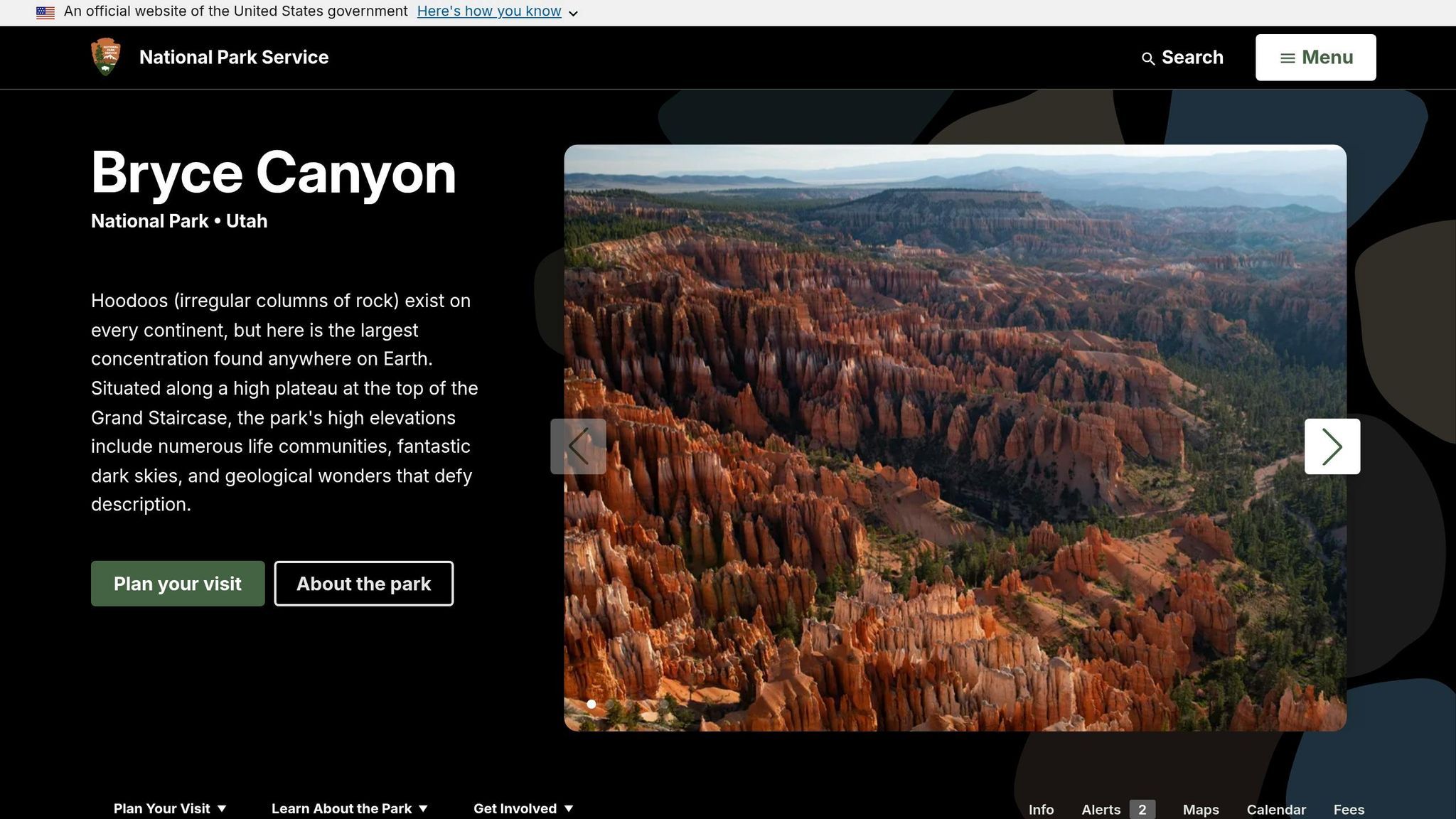
After the Grand Canyon’s night-sky programs, Bryce Canyon puts more attention on dark-sky science and Southern Paiute sky knowledge. The Bryce Canyon Astronomy Festival has been running for more than 20 years, which makes it one of the longest-running astronomy events in the National Park System.
What sets it apart is the way it brings together astronomy and Southern Paiute sky traditions. That includes talks on Indigenous astronomical knowledge in "The Nuwu Universe".
"Bryce Canyon is the ultimate place to learn about and enjoy the splendor of the night sky… a sanctuary for natural darkness." – National Park Service
Visitor experience
You can see that blend in the daily schedule. Daytime programs run from 12:00 p.m. to 4:00 p.m. at the Visitor Center Plaza and include solar viewing, NASA exhibits, and family activity tents.
At night, the pace shifts. Evening talks start at 8:30 p.m. and 9:00 p.m., then telescope viewing runs from 10:00 p.m. to midnight at the Overflow Parking Lot. Telescopes are provided by volunteers from the Salt Lake Astronomical Society.
The festival also includes free astrophotography workshops led by experts. These are limited to 15 people per night, and you need to register in advance by email.
Typical season/dates
The festival takes place in June and is scheduled around the new moon. In 2026, it runs June 11–13.
Bryce Canyon received International Dark Sky status in 2019 and now offers about 100 astronomy programs each year.
Planning logistics
Festival entry is free with standard park admission. Admission usually ranges from $20 to $35 based on vehicle type.
A few details matter here:
- Free evening program tickets must be picked up in person at the Visitor Center starting at 8:00 a.m. on the day of the event, and they often go fast.
- Don’t park at the Visitor Center for evening programs. Park at the Shuttle Station in Bryce Canyon City and take the Star Shuttle, which runs until 12:15 a.m..
- Bring a red-light headlamp, warm layers, and a chair. June nights can fall into the 40s°F at elevations from 7,600 to 9,100 feet.
If you’re staying overnight, book early. Reservations by March are recommended, especially for lodging inside the park or in nearby Bryce Canyon City and Tropic.
9. Denali Winterfest at Denali National Park and Preserve
Cultural significance
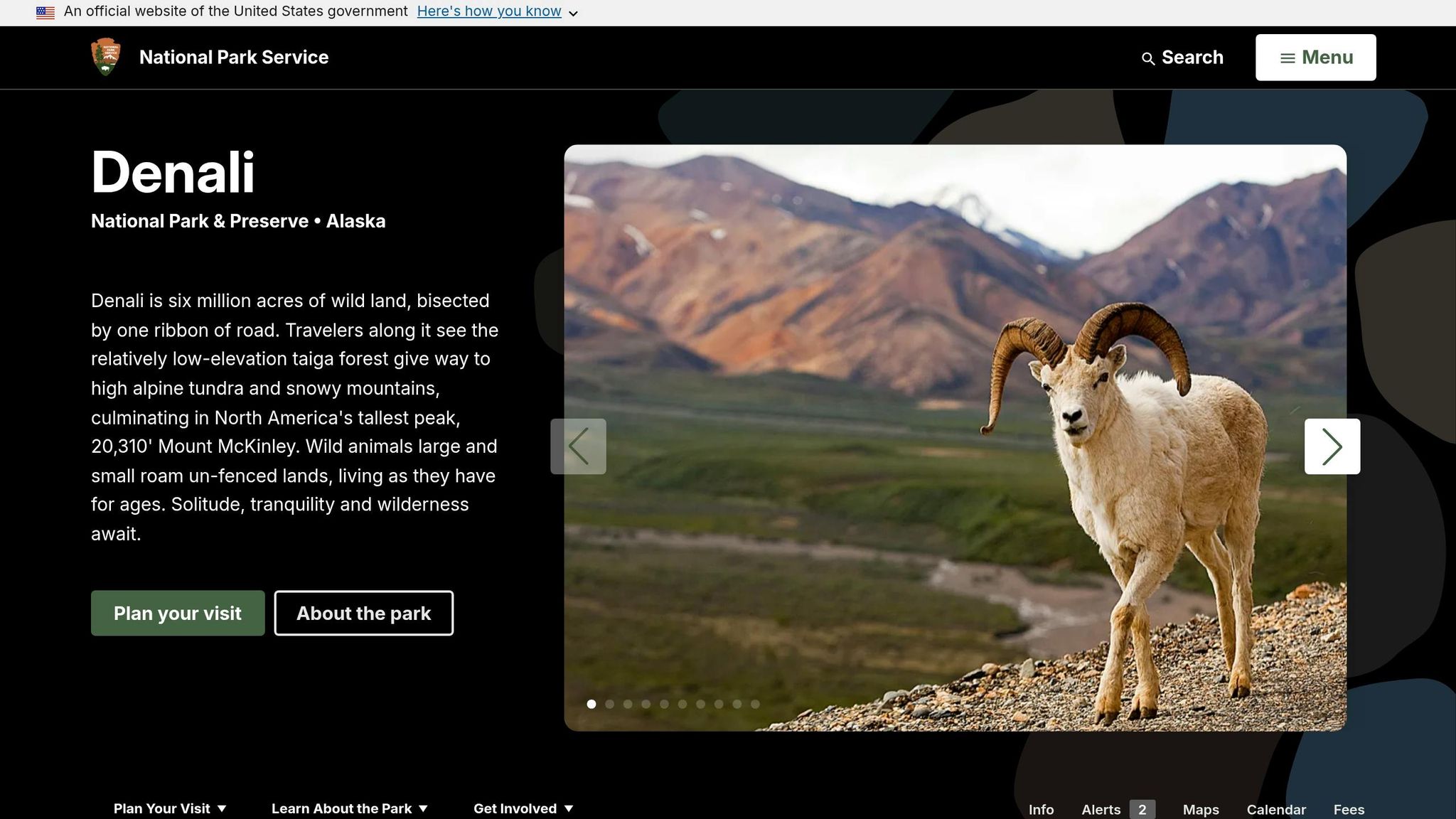
Denali Winterfest shifts this list away from summer and into a true winter celebration tied to park history and local life. Held each year in late February, the event celebrates Denali’s winter culture and the park’s dog-mushing heritage. It also pays tribute to the Denali Sled Dog Kennels, with ranger-led "A Peek at the Past" talks that feature historic photos of Denali.
Visitor experience
You can feel that history throughout the weekend. The festival blends outdoor activities, ranger programs, and sled dog demos in a way that feels both fun and rooted in place. The 2026 event included snowshoe walks, snow block sculpting, youth cross-country ski races, and kicksledding.
At the Denali Sled Dog Kennels at Mile 3.4, visitors can meet the park’s canine rangers. They can also watch the dog-pulling event in McKinley Village, where sled dogs team up with household pets. It’s the kind of scene that gives the weekend its own personality.
Planning logistics
Winterfest weekend is usually fee-free. Visitors can use free winter camping at Riley Creek’s Bear Loop, and the Murie Science and Learning Center serves as the Winter Visitor Center. The center also lends out snowshoes and snow sculpting tools at no charge.
A little prep goes a long way here:
- Bring your own food.
- Rent skis or fat-tire bikes before you arrive, since the park area has no winter gear rentals.
If weather allows, the park road is open to Mile 13. Temperatures can swing from 40°F to -40°F, so pack like winter means business.
10. American Indian Cultural Arts Festival at Aztec Ruins National Monument
Cultural significance
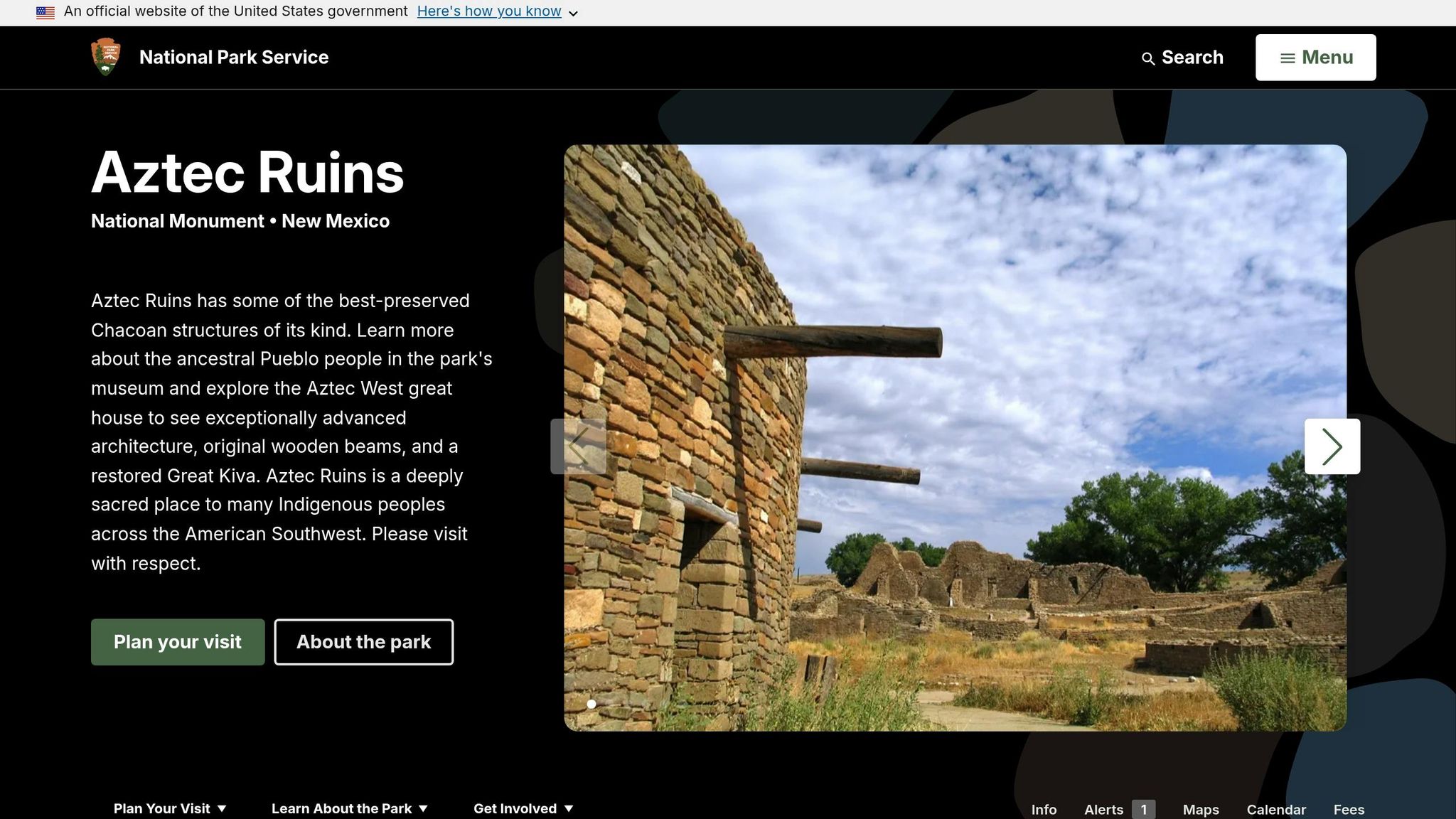
Across the Southwest, many yearly park events bring living Native arts into places with deep history. That’s exactly what this festival does. It connects the ancestral Puebloan setting of Aztec Ruins with the work of Native artists practicing today.
Over the years, the festival has featured Navajo, Zuni, Hopi, Jicarilla Apache, and Pueblo artists from Acoma, Santa Clara, Pojoaque, Laguna, and Tewa communities.
One of the most memorable parts is the storytelling in the Great Kiva. Set in that space, it carries an added sense of place that’s hard to miss.
Visitor experience
Visitors can walk through an art market and watch live demonstrations in:
- pottery
- stone carving
- jewelry
- basketry
- weaving
- traditional cooking
- Pueblo dance
The festival also includes hoop dance performances and live music. And if something catches your eye, you can buy artwork straight from the artists themselves.
Typical season/dates
The festival usually takes place in late summer or early fall. That said, the timing can shift from year to year. The 2023 event was held in July, while the 2025 festival was scheduled for Saturday, September 13.
Planning logistics
Admission is free, and the event is family-friendly. If you want a good spot for the dance performances, it helps to get there early. Groups such as the Pueblo Enchantment Dancers of Acoma Pueblo often perform in the morning.
Ranger programs in the Great Kiva are popular and usually run for less than 30 minutes, so it’s smart to check with the front desk when you arrive for that day’s schedule.
Summer temperatures in the Aztec/Farmington area can climb into the mid-90s°F. For current dates and the daily lineup, check the park’s official Facebook page or call the Visitor Center at 505-334-6174.
See the table below for a quick side-by-side look at season, focus, and planning details.
Event Comparison Table
These 10 events take place in different parks, states, and seasons. Seeing them side by side makes trip planning a lot easier.
This table gives you the quick version: event, season, theme, and the main thing to plan for.
| Event | Park & State | Typical Month/Season | Primary Theme | Key Activities | Plan Ahead For |
|---|---|---|---|---|---|
| Kīlauea Cultural Festival | Hawaiʻi Volcanoes (HI) | July | Hawaiian heritage | Hula performances, traditional art demos | Standard park entrance fee |
| Hoʻokuʻikahi Establishment Day Hawaiian Cultural Festival | Puʻuhonua o Hōnaunau (HI) | Late June | Hawaiian heritage | Hoʻokupu ceremony, hula, craft demos | Free; arrive early for opening ceremony |
| Native American Heritage Days | Grand Canyon (AZ) | Early August | Indigenous culture | Pottery, weaving, tribal dance | Free; standard park entrance fee |
| Mountain Life Festival | Great Smoky Mountains (TN/NC) | Mid-to-late September | Appalachian heritage | Hearth cooking, blacksmithing, live music | Free; daily parking tag required |
| Spring Wildflower Pilgrimage | Great Smoky Mountains (TN/NC) | April | Botany & nature | Ranger-led hikes, photography workshops | Registration required by mid-February |
| Native America Speaks | Glacier (MT) | June–early September | Indigenous culture | Speaker presentations, storytelling, dance | Free; Blackfeet Singers ticketed at $5 |
| Grand Canyon Star Party | Grand Canyon (AZ) | June | Night-sky science | Telescope viewing, constellation tours | Free; no registration; arrive before sunset |
| Bryce Canyon Astronomy Festival | Bryce Canyon (UT) | June | Night-sky science | Solar viewing, evening telescope sessions | Free evening tickets; pick up in person at 8:00 a.m. |
| Denali Winterfest | Denali (AK) | February | Winter recreation | Sled dog demos, snow sculpting, snowshoeing | Lodging reservations recommended |
| American Indian Cultural Arts Festival | Aztec Ruins (NM) | Late summer/early fall | Southwest Native heritage | Art market, Pueblo dance, Great Kiva storytelling | Free; arrive early for dance performances |
Use this table to narrow down your options. Then map out your dates, lodging, and any needed reservations in the next section.
How to Plan Your Visit Around a National Park Event
Once you choose an event, double-check the dates before booking anything. With seasonal events, timing matters just as much as the park itself. Schedules can shift due to weather or fire conditions, so head to the park’s official .gov site and review the Calendar, Alerts, and Plan Your Visit pages for the latest details. The NPS App and park visitor centers can also help with up-to-the-minute updates if conditions change.
For popular events, book lodging as early as you can. If attendance is capped, look for registration windows or lottery deadlines well ahead of time.
Pack for the event itself, not just the time of year. A summer trip can still mean cold evenings at an astronomy program, and a fall visit can turn wintry fast at higher elevations. Bring layers for evening stargazing, a red flashlight if the park asks for one, and winter gear for cold-weather events.
Cost is another thing to check early. Many events are free, but you may still need to pay the park entrance fee. Some programs also need separate registration, timed tickets, or lottery entry, so it’s smart to review the park’s official event page before you go.
If plans shift or conditions look uncertain, call the park directly. You’ll find contact numbers on each park’s NPS.gov contact page.
Conclusion
Taken together, these events show that a national park visit can be more than simple sightseeing. The best park events give the place more meaning. Whether they focus on culture, history, or science, they add depth to the visit and leave you with a better sense of the park’s people, past, and landscape.
Puʻuhonua o Hōnaunau is a clear example of how these events keep living traditions visible and relevant. The same idea runs through the rest of this list.
Each park offers a different kind of connection. Native America Speaks, the Smokies’ heritage festivals, and the astronomy programs at Bryce Canyon and Grand Canyon all offer their own way into a place. Whichever event you choose, these programs make a park visit richer because they connect you to the stories behind the landscape. That’s the real reason to plan around them.
FAQs
Which event is best for families?
Several work well for families, especially the Mountain Life Festival in Great Smoky Mountains National Park. It’s free and includes interactive demonstrations and hands-on history activities.
Other family-friendly picks include the Nicodemus Homecoming Celebration, the Ocmulgee Indigenous Celebration, La Fiesta de Tumacácori, and the Spring Planting & Music Festival. Each one offers games, kids’ activities, or exhibits made with children in mind.
How far in advance should I book?
For popular national park events, book early. Many standard park events are free and open to the public, but some activities – like guided cultural tours and big festival weekends – may need advance registration or a reservation.
During busy times, in-park lodging can sell out months in advance. Some events also use a lottery system for tickets or vehicle reservations.
Your best move is simple: check the park’s official website early for details on reservations, lotteries, and lodging.
What should I pack for these events?
Pack for comfort, hydration, and weather protection. A reusable water bottle is a smart thing to bring, and if it’s hot out, toss in salty snacks or electrolytes too. They can help you stay on your feet instead of feeling wiped out halfway through the event.
A hat, sunglasses, and sun protection can also make a big difference, especially if you’ll be outside for a while.
You might also want a folding chair or blanket, as long as it doesn’t block anyone’s view. Depending on the event, comfortable walking shoes, binoculars, a camera, and small bills for contributions can come in handy.