
Planning a backcountry trip? Here’s what you need to know about permit fees across U.S. national parks. Costs vary widely, with some parks offering free permits and others charging up to $30 or more. Fees often include a base charge plus additional per-person or per-night costs. Many parks also enforce quotas to manage crowds and protect fragile ecosystems.
Key Takeaways:
- Black Canyon of the Gunnison: $6 base fee + $4 per person; free permits in winter.
- Zion: $20 base fee + $7 per person, per night; strict quotas year-round.
- Yosemite: $10 base fee + $5 per person; quotas and lotteries for popular trailheads.
- Grand Canyon: $10 base fee + $15 per person, per night below the rim; $4 above the rim.
- Rocky Mountain: Flat $36 fee in summer, $10 in winter; no per-person charges.
Reservations are typically handled through Recreation.gov, with varying timelines depending on the park. To save money, consider the $80 annual America the Beautiful pass if visiting multiple parks. Plan ahead, especially for high-demand parks like Yosemite or the Grand Canyon, where permits can sell out months in advance.
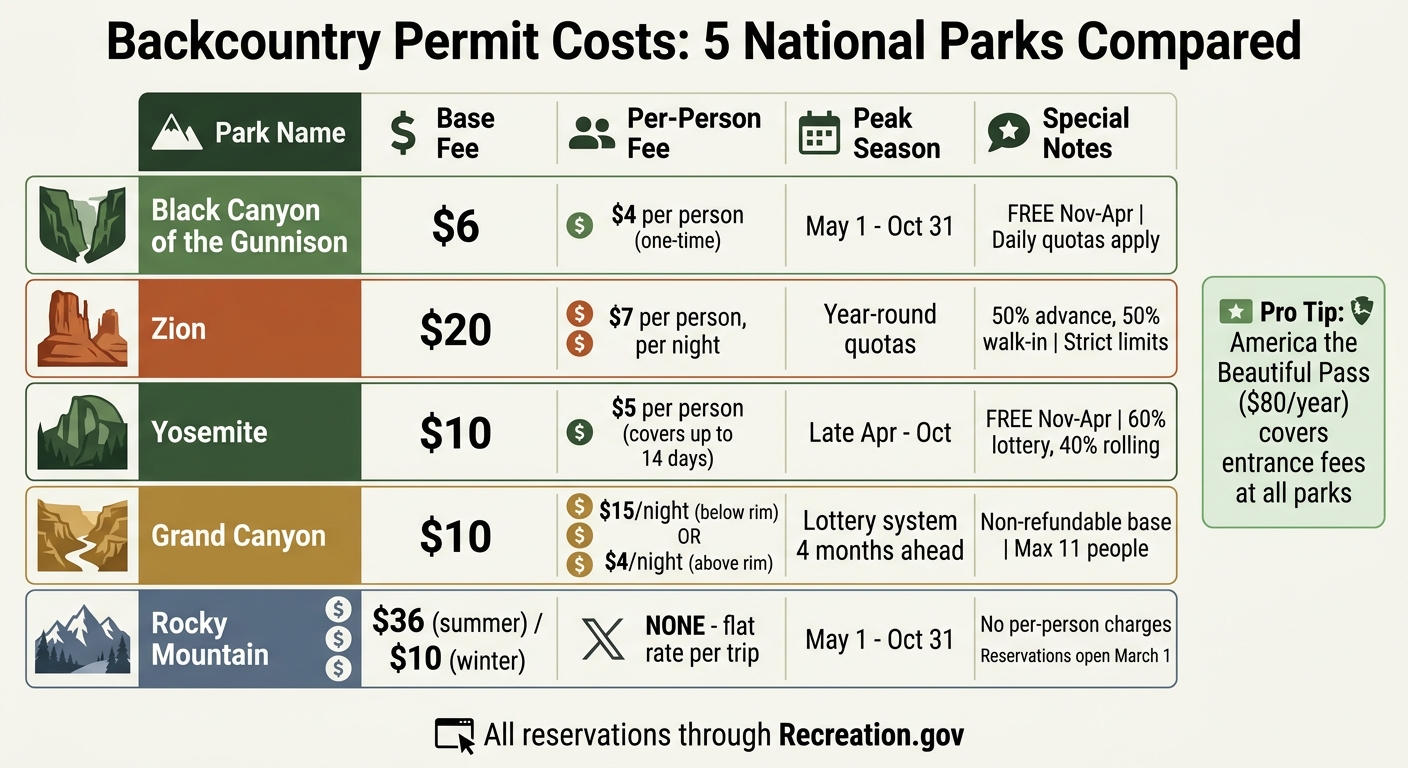
National Park Backcountry Permit Costs Comparison Chart
Backcountry Permit Information
sbb-itb-00512f3
1. Black Canyon of the Gunnison National Park
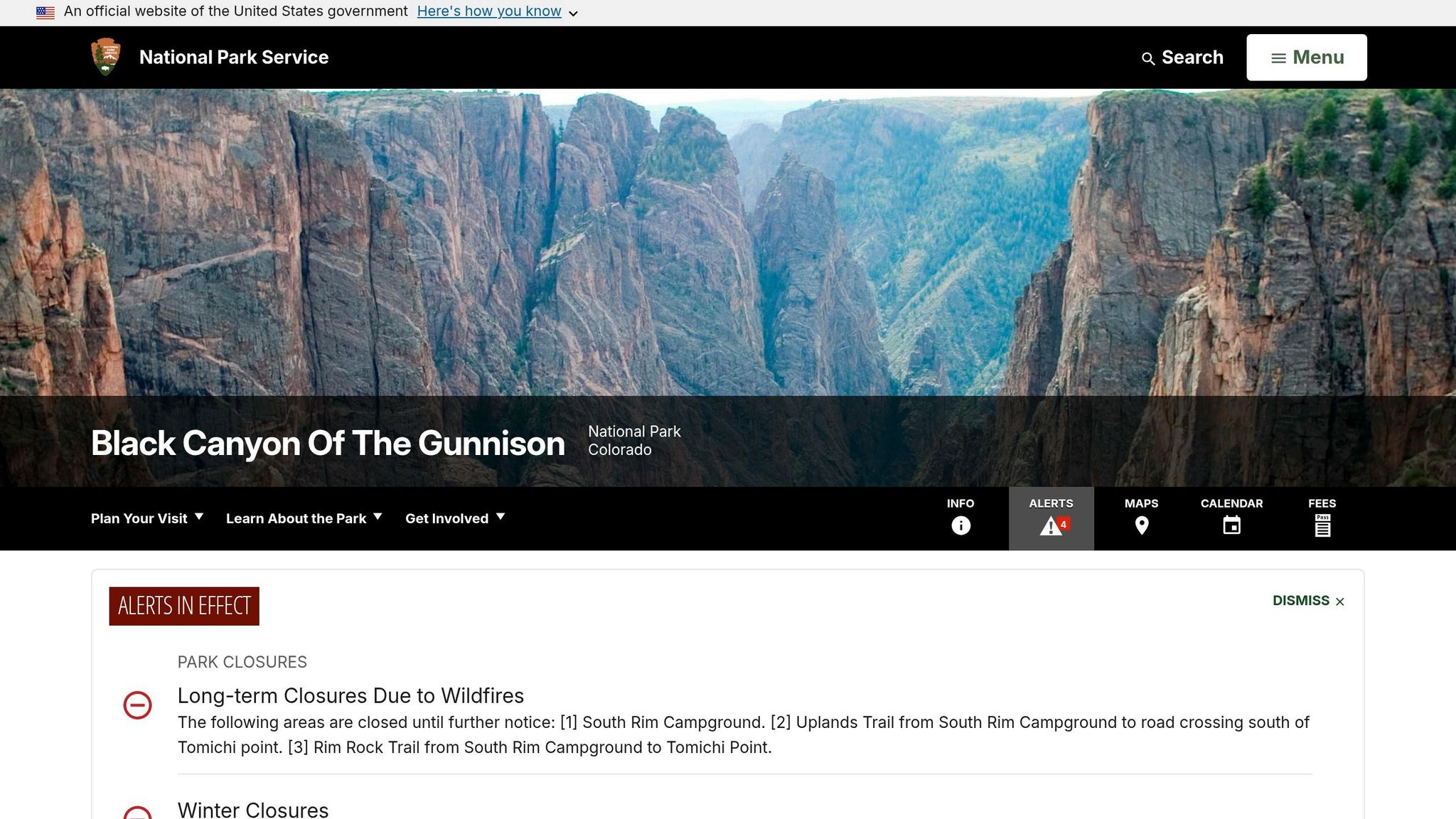
Black Canyon of the Gunnison has a distinctive fee system compared to other national parks.
Base Fee
Starting in January 2025, the park will charge a $6 base fee for wilderness permits. This increase follows a 2024 fee compatibility study showing other parks had higher fees. These permits are mandatory for anyone venturing below the canyon rim, whether for a day hike or an overnight stay.
Per-Person Fee
In addition to the base fee, there’s a $4 per-person charge. For instance, a solo hiker pays $10 total ($6 base fee + $4), while a group of four pays $22 ($6 + 4×$4). It’s important to note that these permit fees are separate from the park entrance fee, which is $30 per vehicle or $15 per individual. A significant portion – 80% – of the permit fees stays within the park to support trail maintenance and campground improvements.
Peak Season Quota
To preserve the wilderness experience, the park enforces daily quotas. For example, the Tomichi Route on the South Rim permits only 9 users per day, while the Warner Route allows 23. Group sizes are capped at four people, with a maximum stay of three nights. Between November and April, permits are free and available on a first-come, first-served basis, although the daily quotas still apply.
Reservation Platform
During peak season (May 1–October 31), all South Rim wilderness permits must be reserved online through Recreation.gov. The visitor center no longer issues permits in person. Reservations for May through July open on April 1 at 8:00 am MT, while those for August through October open on July 1 at 8:00 am MT. On the other hand, North Rim permits remain free year-round and are issued on a first-come, first-served basis either at the ranger station or via a self-registration kiosk. This organized system highlights a different approach compared to other parks discussed later.
2. Zion National Park
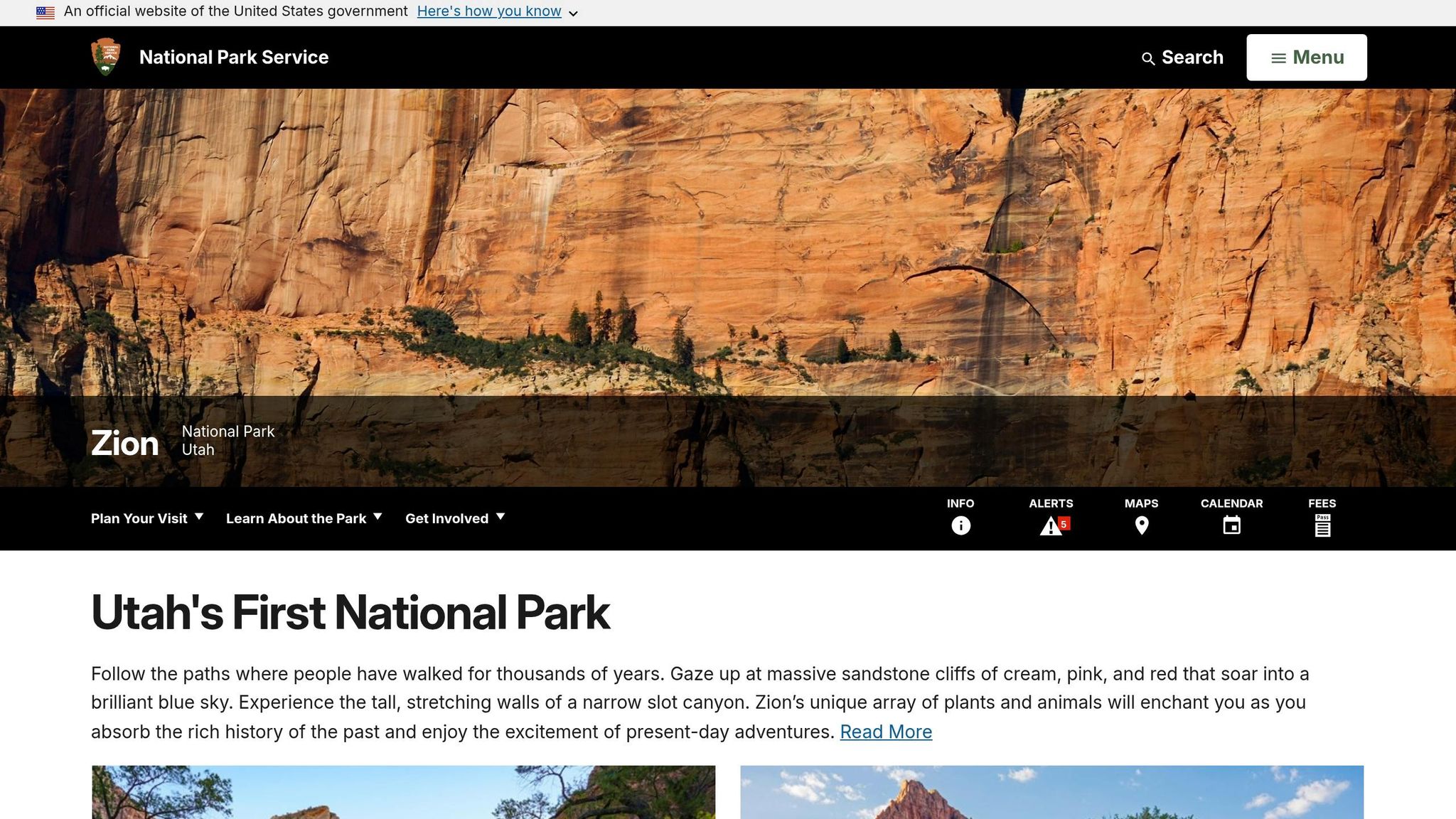
Zion National Park uses a two-part fee system that aligns with regional practices. This includes a flat base fee combined with a per-person charge for overnight wilderness trips.
Base Fee
For all overnight wilderness trips, Zion charges a non-refundable $20 base fee. Jeff Bradybaugh, Superintendent of Zion National Park, explained:
These changes reflect other similar campground and recreation permits in our region and help the park address costs for maintenance and operations.
Previously, fees were based on group size, ranging from $15 to $25. The current system was introduced to better match regional standards.
Per-Person Fee
On top of the base fee, there’s an additional $7 per person, per night charge. For example:
- A solo traveler on a two-night trip would pay $34 ($20 base fee + 2×$7).
- A group of four on a three-night trip would pay $104.
This $7 per person, per night fee is refundable if canceled before 5:00 p.m. on the day of the trip. However, day-use canyoneering permits follow a separate pricing structure, which includes a $6 reservation fee plus $10 per person. These fees accompany strict seasonal permit limits.
Peak Season Quota
Zion enforces strict permit quotas year-round to protect its wilderness. Across its 124,406 acres and 90 miles of trails, wilderness permits are limited. High demand means most backpacking sites are fully booked within minutes of reservations opening. To manage this, the park splits campsite allocation:
- 50% are available for advance online reservations.
- The other 50% are held for first-come, first-served walk-in permits, issued one day before the trip.
Permits allow for groups of up to 12 people, with a maximum stay of 14 consecutive nights.
Reservation Platform
To streamline the reservation process, Zion uses Recreation.gov for all advanced bookings. Reservations open on the 5th of each month at 10:00 a.m. MT, covering trips three months ahead. For instance, reservations for April–June trips open on March 5.
Even with an online reservation, visitors must pick up their physical permit in person at the Zion Canyon Visitor Center Wilderness Desk. This can be done either the day before or the day of the trip. Additionally, the permit holder must provide complete vehicle details for all group members.
3. Yosemite National Park
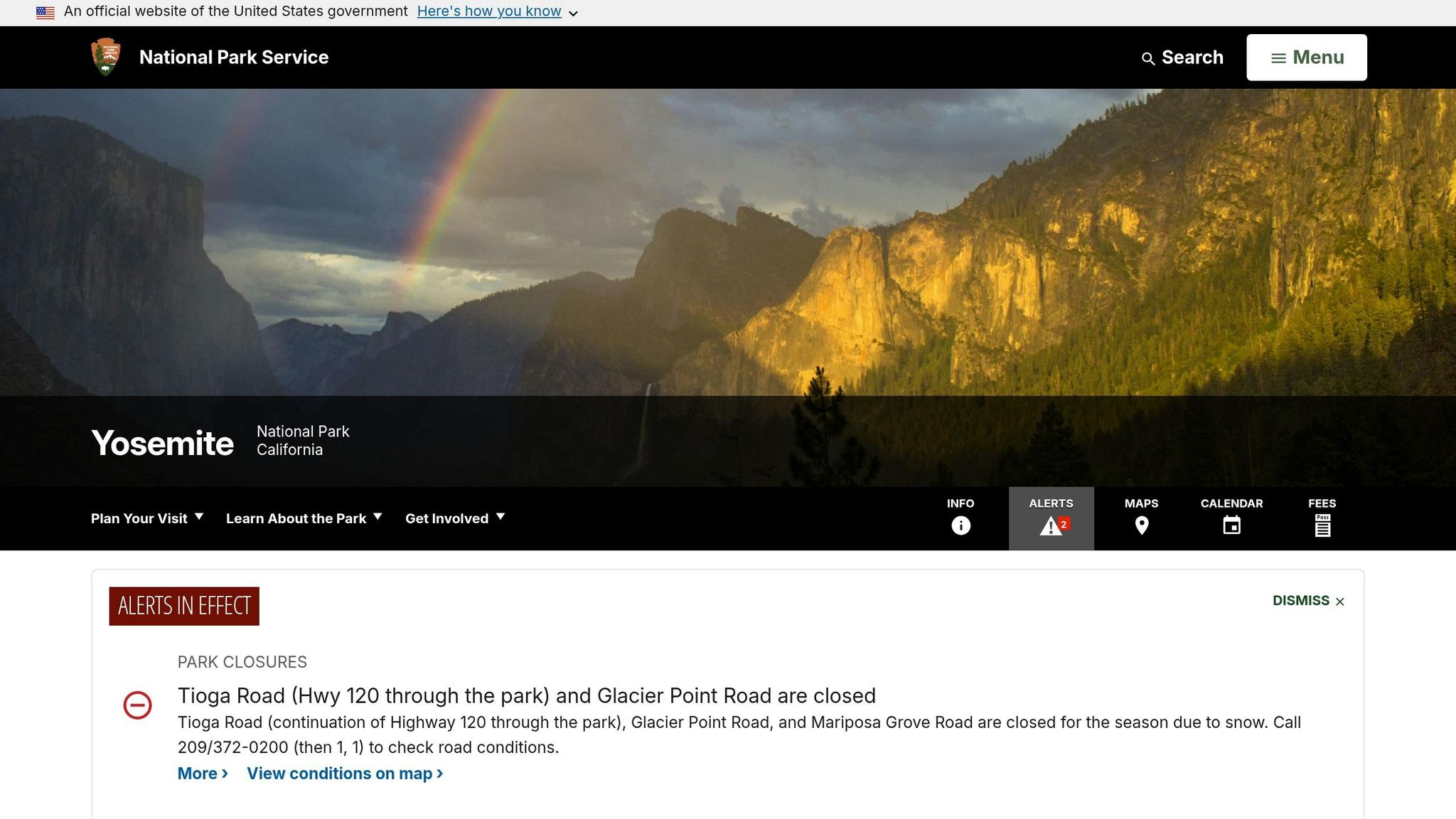
Yosemite uses a straightforward pricing system for wilderness permits: a $10 base reservation fee plus $5 per person. This flat rate covers trips lasting up to 14 days. For example, an individual backpacker pays $15 total, while a group of four would pay $30.
Base Fee
Yosemite’s flat fee structure sets it apart from parks that charge per night. The $10 base reservation fee applies to each wilderness permit application during the reservation period, which runs from late April through October. This fee is non-refundable and non-transferable, even if your trip is canceled. However, during the off-season (November through April), permits are free and can be obtained through self-registration at designated permit stations.
Per-Person Fee
On top of the base fee, Yosemite charges a $5 per person fee, regardless of how long the trip lasts. For instance, a three-person group on a five-night trip would pay just $25 total ($10 base fee + 3×$5 per person).
Peak Season Quota
To protect the wilderness experience, Yosemite enforces strict trailhead quotas from late April through October. According to the National Park Service:
Wilderness permits are only issued to a limited number of people for each trailhead in order to provide outstanding opportunities for solitude, as required by the Wilderness Act.
Sixty percent of permits are distributed via a lottery system 24 weeks (168 days) in advance, while the remaining 40% are released exactly seven days before the trip at 7:00 AM PDT. On busy summer days, the park receives between 300 and 500 reservation requests, with 80% to 90% focused on the John Muir Trail. Additionally, the daily exit quota for Donohue Pass is capped at 45 people. These measures highlight the high demand and the park’s structured approach to managing access.
Reservation Platform
Reservations are handled exclusively through Recreation.gov, with permits becoming available at 7:00 AM PDT, seven days before your start date. The National Park Service advises:
Popular trailheads will fill very quickly; be logged on and ready to reserve promptly at 7 am PDT seven days in advance of your desired start date.
Additionally, bear canisters are required year-round in Yosemite and can be rented for $5 per trip.
4. Grand Canyon National Park
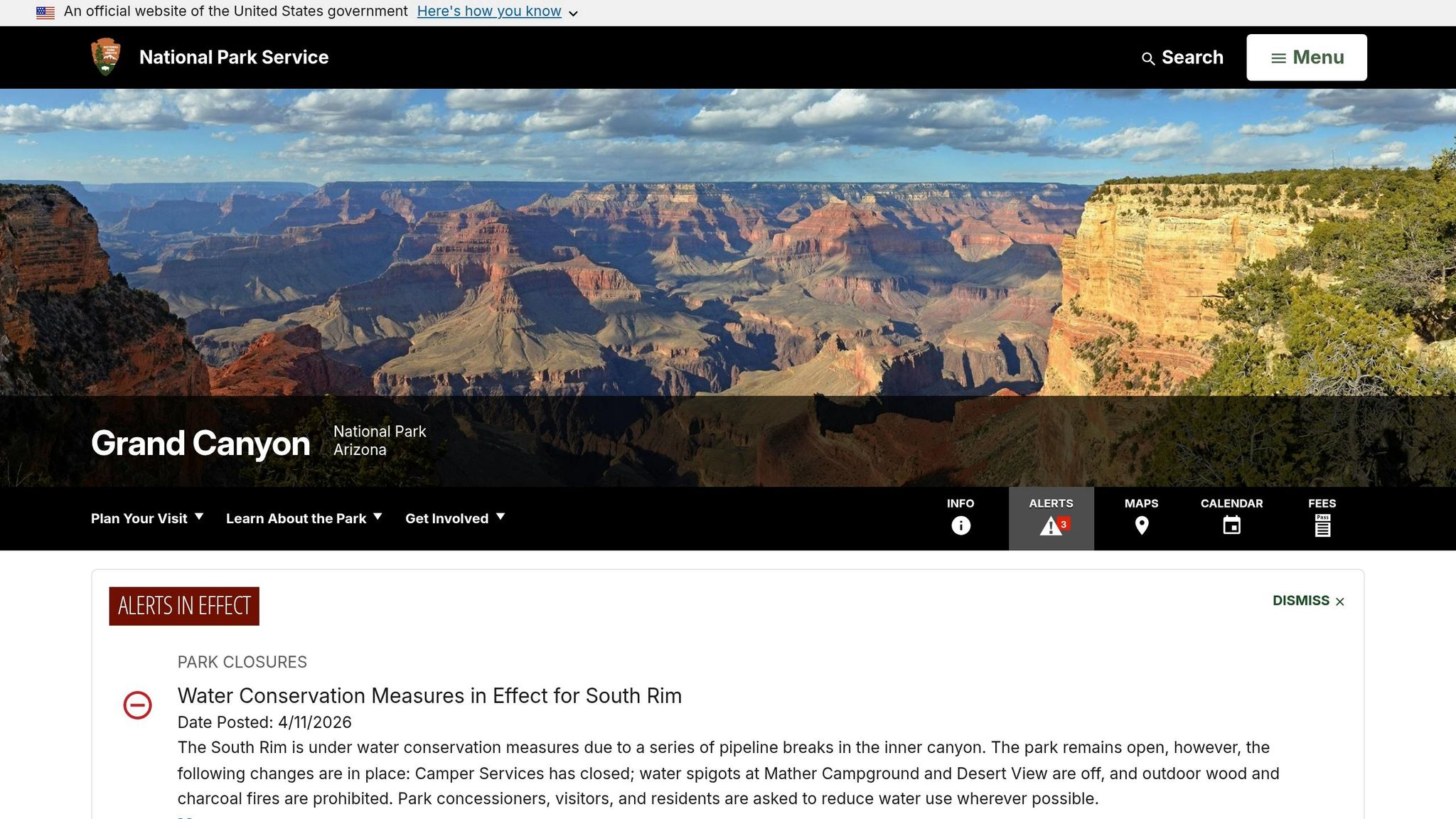
Grand Canyon National Park uses a two-tier pricing system for backcountry permits, which depends on where you plan to camp. There’s a $10 non-refundable base fee for each permit or lottery application, along with nightly fees: $15 per person for campsites below the rim and $4 per person for sites above the rim. Here’s how it works: A solo hiker spending three nights below the rim would pay $55 total (a $10 base fee plus $15 per night for three nights). Meanwhile, a group of four camping for two nights above the rim would pay $42 (a $10 base fee plus $4 per person per night for two nights). Let’s break it down further.
Base Fee
Every backcountry permit or lottery request comes with a $10 non-refundable fee. This fee is charged whether or not you secure a permit or decide to cancel your trip. However, the per-person nightly fees are refundable if you cancel at least 30 days before your trip’s start date. Note that the park operates on a cashless system, so payments must be made with a credit or debit card.
Per-Person Fee
The nightly rate varies based on the campsite’s location. Below-rim camping costs $15 per person per night, while above-rim camping is $4 per person per night. Group sizes are limited to a maximum of 11 people, with smaller groups (1–6 people) having access to more campsite options than larger groups (7–11 people). Interestingly, about 70% of backcountry permits are issued to small groups, with 26% of those being solo hikers and 44% being two-person groups.
Peak Season Quota
To manage visitor impact, the park uses a "use area" system, which limits overnight capacity in each backcountry zone based on its ecological sensitivity. During peak seasons, permits are distributed through an early access lottery. This lottery opens between the 16th of the month and the 1st of the following month, four months before the trip start date. Each month, up to 750 applicants are randomly assigned timeslots over a 10-day period (excluding weekends).
As the National Park Service explains:
Experience has shown that most highly desired sites are claimed by the time 750 requests have been considered.
For those who miss out on the lottery, there are still options. You can check Recreation.gov for cancellations up to five days before your trip or visit the Backcountry Information Center for last-minute permits to corridor campgrounds.
Reservation Platform
All backcountry permits must be obtained through Recreation.gov. Make sure to print a physical copy of your permit, as electronic versions won’t be accepted. If you fail to print your permit at least three days before your start date, your reservation will be automatically canceled.
5. Rocky Mountain National Park
Rocky Mountain National Park stands out with its flat, seasonal fee system for wilderness permits, which replaces the per-person or per-night charges seen in other parks. Dispersed camping isn’t allowed here; instead, visitors must reserve designated campsites. The park’s seasonal pricing model is straightforward: during the busy season (May 1 through October 31), the fee is $36 per trip, while in the winter months (November 1 through April 30), it drops to $10 per trip. This fee covers the entire group for the trip, regardless of its length. The park also operates a permit quota system to safeguard its backcountry areas.
Peak Season Quota
To protect its natural resources, the park limits the number of permits issued. Summer reservations open on March 1 at 8:00 a.m. MST, and popular campsites tend to book up quickly. As the National Park Service explains:
To minimize impact on the park’s resources, the number of Permits issued is limited.
During the peak season (June through September), visitors can stay up to 7 nights. From October through May, the limit increases to 14 nights, with a total annual cap of 21 nights. If a permit isn’t picked up by noon on the first day of the trip, it will be canceled and made available to walk-in campers.
Reservation Platform
For the peak season, permits must be reserved in advance through Recreation.gov at least three days before the trip. Winter permits, however, are issued on a first-come, first-served basis and cannot be reserved ahead of time. Permits can be collected in person at either the Beaver Meadows (east) or Kawuneeche (west) Visitor Center, both open daily from 7:00 a.m. to 3:30 p.m.. Note that the park operates cashless, so you’ll need a credit or debit card.
For non-U.S. residents aged 16 and older, there’s an additional $100 fee per person, which is charged on top of the standard entrance fees. Also, between April 1 and October 31, all food and scented items must be stored in hard-sided, commercially made bear-resistant canisters.
Pros and Cons
Every park’s fee structure comes with its own set of trade-offs, impacting costs, planning, and accessibility. For international visitors, a $100 non-resident surcharge applies at Zion, Yosemite, Grand Canyon, and Rocky Mountain, but not at Black Canyon of the Gunnison.
| Park | Strengths | Weaknesses |
|---|---|---|
| Black Canyon of the Gunnison | A $25 entrance fee and no $100 non-resident surcharge make it an affordable option for international visitors. | Limited amenities and fewer walk-up resources compared to larger parks. |
| Zion | Generates high revenue for park maintenance, with at least 80% of entrance fees staying within the park. Well-funded visitor services are a benefit. | The $35 entrance fee plus the $100 non-resident surcharge may deter some visitors. Traffic management restrictions add further limitations. |
| Yosemite | Offers flexible booking through multiple permit options, including lottery, quota, and walk-up systems. | The lottery system is highly competitive and requires months of advance planning. The $100 non-resident surcharge adds to the challenge for international visitors. |
| Grand Canyon | Features a reliable and easy-to-navigate reservation system, making the booking process predictable. | Combined fees – $35 entrance fee and $100 non-resident surcharge – can result in a hefty $135 cost for international visitors. |
| Rocky Mountain | Has a lower $25 base entrance fee compared to some other parks. | The $100 non-resident surcharge applies, and the park’s cashless payment policy may exclude those without credit or debit cards. |
The shift to cashless payments could be a hurdle for visitors who lack credit or debit cards. For those visiting multiple parks on a budget, the $80 annual resident pass or the $250 non-resident pass provides a way to manage overall expenses.
Booking systems vary widely, from spontaneous self-registration options to competitive lotteries that demand careful, long-term planning. These differences highlight the complexities of backcountry permit planning and its impact on accessibility.
Conclusion
The permit cost comparisons above highlight how backcountry fees can differ significantly across the national park system, making your choice of destination an important factor – especially if you’re traveling on a budget. Some parks offer free permits or have fewer restrictions, which can be a big advantage for cost-conscious adventurers.
If you’re planning to visit three or more parks that charge entrance fees within a year, consider the America the Beautiful pass. At $80, it grants access to over 2,000 federal recreation sites, making it a great option for frequent visitors. Pair this with exploring less-crowded trailheads, like the west side of Rocky Mountain National Park or Yosemite’s Hetch Hetchy area, where permits are often easier to secure.
For popular parks like Yosemite or the Grand Canyon, plan well in advance – ideally 4 to 6 months ahead. Keep in mind that many parks hold back a portion of permits for last-minute reservations. Starting your trip midweek (Tuesday through Thursday) can also improve your chances. Don’t forget to factor in additional costs like bear canister rentals or parking fees (e.g., $5/day in the Great Smoky Mountains). Keep an eye on recreation.gov for any last-minute cancellations that might open up opportunities.
Whether you’re chasing alpine vistas in the North Cascades or seeking the quiet beauty of Big Bend‘s desert, understanding how these fees work can help you make the most of your backcountry adventure.
FAQs
Do backcountry permit fees include the park entrance fee?
Backcountry permit fees are typically separate from park entrance fees, meaning you’ll need to budget for both. These permit fees can differ from one park to another. On top of that, there might be extra charges, such as camping or reservation fees, depending on the park’s specific rules and policies.
When should I reserve to have the best chance of getting a permit?
To improve your chances of securing a permit, make your reservation several months ahead of time. This is particularly crucial for locations with lottery or quota systems, where demand often exceeds the limited availability.
Does the America the Beautiful pass cover backcountry permits?
The America the Beautiful Pass does cover backcountry permits for national parks that require them. However, it’s important to double-check the rules for the specific park you plan to visit, as policies can differ from one park to another.