
If you’re planning a 4-day Arizona road trip, this itinerary covers three iconic national parks: Saguaro, Petrified Forest, and the Grand Canyon, plus must-see stops like Horseshoe Bend and Antelope Canyon. Starting and ending in Phoenix, it’s a 798-mile loop with 13–15 hours of driving, balancing scenic drives and exploration.
Key Highlights:
- Day 1: Phoenix → Saguaro National Park → Petrified Forest National Park
- Marvel at towering cacti and ancient petrified wood.
- Day 2: Petrified Forest → Grand Canyon South Rim
- Discover breathtaking canyon views and desert trails.
- Day 3: Grand Canyon → Page
- Visit Horseshoe Bend and enjoy a scenic drive.
- Day 4: Page → Antelope Canyon → Phoenix
- Tour Antelope Canyon and stop by Lake Powell.
Quick Tips:
- Get the $80 America the Beautiful Pass to save on park entry fees.
- Pack plenty of water, sunscreen, and sturdy hiking gear.
- Book Antelope Canyon tours early (required for access).
- Arizona doesn’t observe Daylight Saving Time; plan accordingly.
This trip offers stunning landscapes, short hikes, and unforgettable views. Let’s dive into the details!
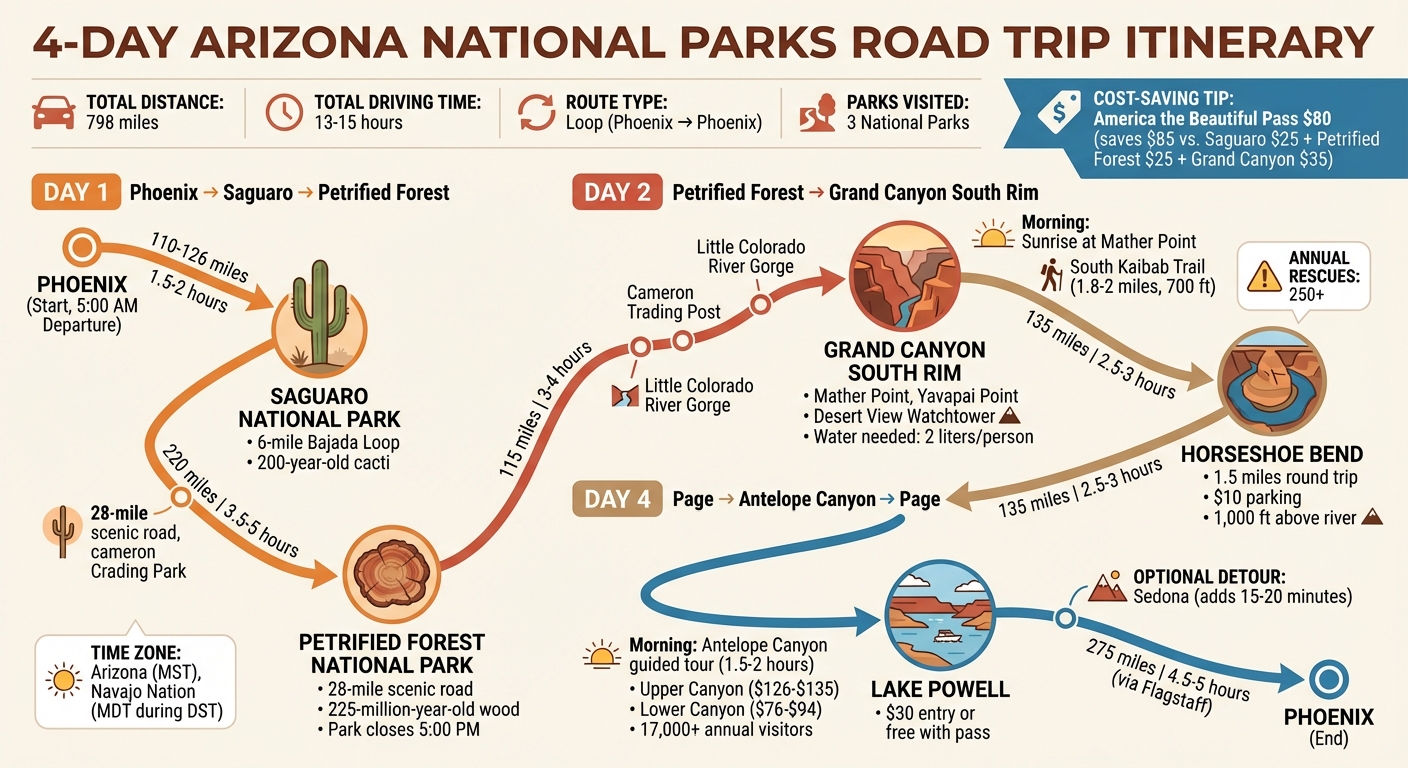
4-Day Arizona National Parks Road Trip Itinerary Map
Day 1: Phoenix to Saguaro National Park and Petrified Forest
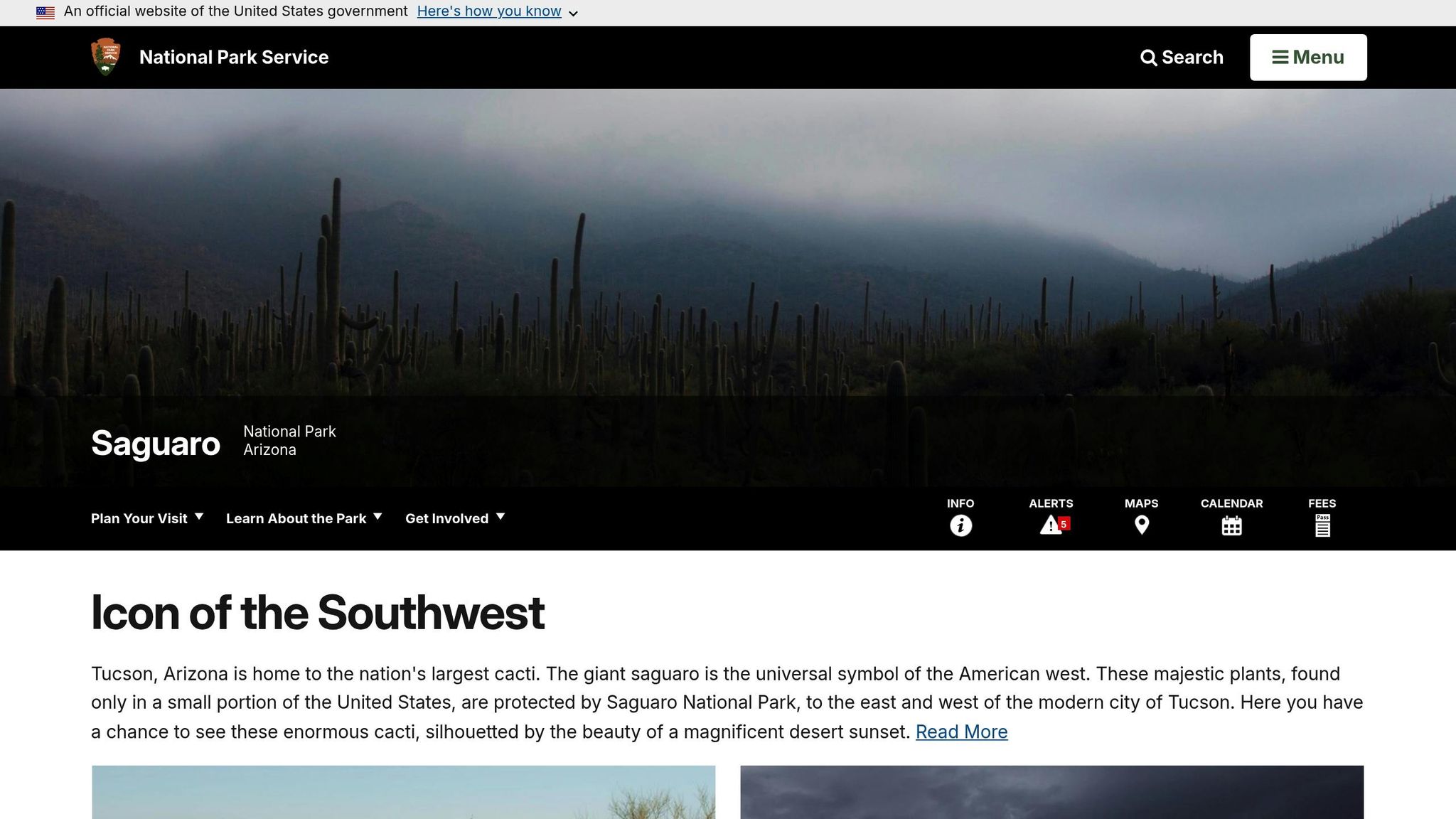
Morning: Drive to Saguaro National Park
Start your day bright and early, leaving Phoenix at 5:00 AM to make the most of your time. The drive to Tucson via I-10 East takes about 1.5 to 2 hours, covering around 110–126 miles.
Saguaro National Park is split into two districts: the Tucson Mountain District (West) and the Rincon Mountain District (East). Head to the West district for a stunning concentration of towering saguaro cacti. For a scenic drive, take the 6-mile unpaved Bajada Loop, which offers incredible views of these iconic 200-year-old desert giants. If you’re up for a short hike, the 0.8-mile Valley View Overlook Trail provides breathtaking panoramic views of the surrounding desert landscape. Be sure to pack a lunch, as there are no dining options within the park.
Once you’ve soaked in the beauty of Saguaro’s desert scenery, hit the road northeast toward your next destination: Petrified Forest National Park.
Afternoon: Explore Petrified Forest National Park
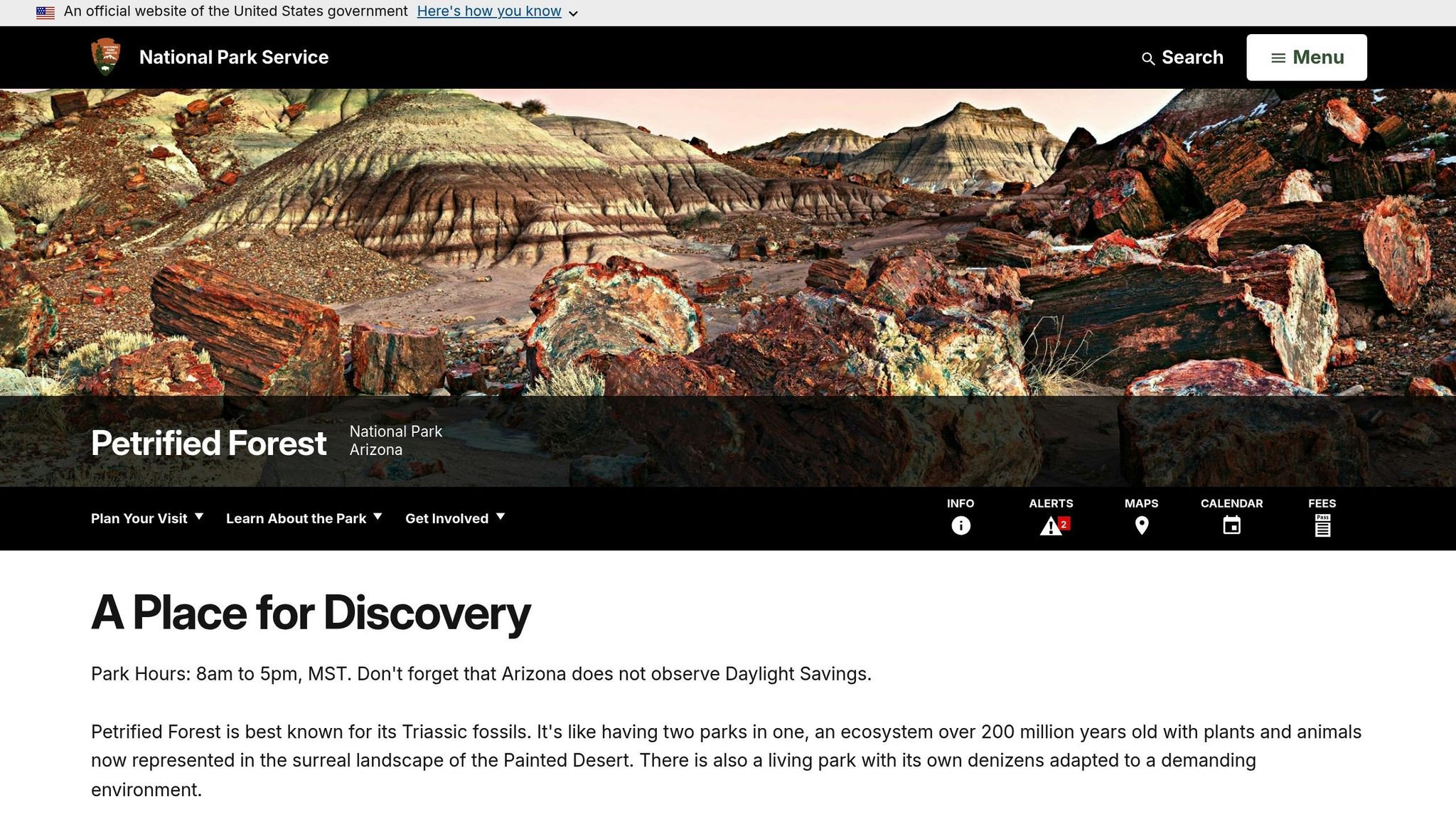
The drive to Petrified Forest National Park takes about 3.5 to 5 hours, covering roughly 220 miles. Opt for the route along US-60 through the Salt River Canyon for some unforgettable scenic views.
At the park, a 28-mile road connects the south and north entrances, and driving it without stops takes about an hour. Begin your visit at the south entrance and work your way north. Don’t miss the Blue Mesa Trail, a 1-mile loop through strikingly colorful, layered badlands that many consider the park’s standout hike. Next, head to Crystal Forest, where you’ll find an impressive collection of 225-million-year-old petrified wood. Before wrapping up your visit, stop by Newspaper Rock, which features over 650 ancient petroglyphs etched into the rock face. Keep in mind that the park closes at 5:00 PM, so plan your stops accordingly.
Day 2: Petrified Forest to Grand Canyon South Rim
Morning: Drive to Grand Canyon South Rim
Start your day early by leaving the Petrified Forest and heading west on I-40 toward Flagstaff – about 115 miles away. From there, take Highway 89 north to Cameron, then follow Highway 64 west to enter the Grand Canyon through the East Entrance at Desert View. This route, which avoids doubling back, takes around 3 to 4 hours.
"The East Entrance to the Desert View area of Grand Canyon National Park is 25 miles west of the Navajo Nation town of Cameron, Arizona." – National Park Service
Before entering the park, stop at Cameron Trading Post for a meal or a quick break. Just a little further along, the Little Colorado River Gorge Overlook offers stunning views of the gorge’s dramatic, narrow cliffs. Bring cash to support local Navajo artisans selling crafts at this spot.
Once inside the park, make your way to Mather Point near the Visitor Center. It’s a great spot to take in the canyon’s sheer scale and beauty. From there, a short walk leads to Yavapai Point, home to the Yavapai Geology Museum. Here, you can enjoy incredible views through large windows and learn about the canyon’s rock layers, which date back nearly 2 billion years.
After taking in the views at Mather and Yavapai Points, ease into the afternoon with a stroll along the Rim Trail.
Afternoon: Rim Trail Walk and Sunset Viewing
Spend your afternoon exploring the Rim Trail, a mostly flat and paved path that connects several breathtaking overlooks. For a bit more adventure, consider hiking the 2-mile round-trip Ooh Ahh Point trail on the South Kaibab Trail. This hike offers dramatic inner canyon views, but keep in mind that hiking down is optional – hiking back up is mandatory and can take twice as long.
Later in the day, take a scenic drive along Desert View Drive. This 26-mile stretch is dotted with incredible overlooks, including Navajo Point (the highest at 7,461 feet), Lipan Point (known for some of the canyon’s widest views), and Moran Point. As the sun begins to set, head to the Desert View Watchtower. This 70-foot stone tower, designed by Mary Colter, offers panoramic views and features historic Hopi murals inside. The watchtower, typically open until sunset, is the perfect place to watch the canyon’s colors transform as the day ends.
At this elevation – around 7,000 feet – stay hydrated by carrying at least 2 liters of water per person.
Day 3: Grand Canyon Exploration to Page
Morning: Sunrise and Short Hike at the South Rim
Start your day early with a sunrise at Mather Point, one of the most popular spots at the South Rim. If you prefer a quieter experience, take a short walk east along the rim to find a more secluded viewpoint. After soaking in the sunrise, head out for a short hike.
The South Kaibab Trail to Ooh Ahh Point is a great choice. It’s a 1.8- to 2-mile round trip with a 700-foot elevation gain. To get there, you’ll need to take the orange "Kaibab Trail Route" shuttle bus. Another option is the Bright Angel Trail, which leads to the 1.5-Mile Resthouse. This trail is a 3-mile round trip and offers seasonal water along the way. Keep in mind that the South Kaibab Trail doesn’t have water access, and hiking at 7,000 feet can be challenging. In fact, over 250 rescues happen here annually.
"Going down is optional. Coming up is mandatory."
Plan to start your hike right after sunrise to avoid the midday heat. During winter or early spring, trekking poles can be helpful, as the upper sections of the trail are often icy or snow-packed. After your hike, it’s time to hit the road toward Page.
Afternoon: Drive to Page and Visit Horseshoe Bend
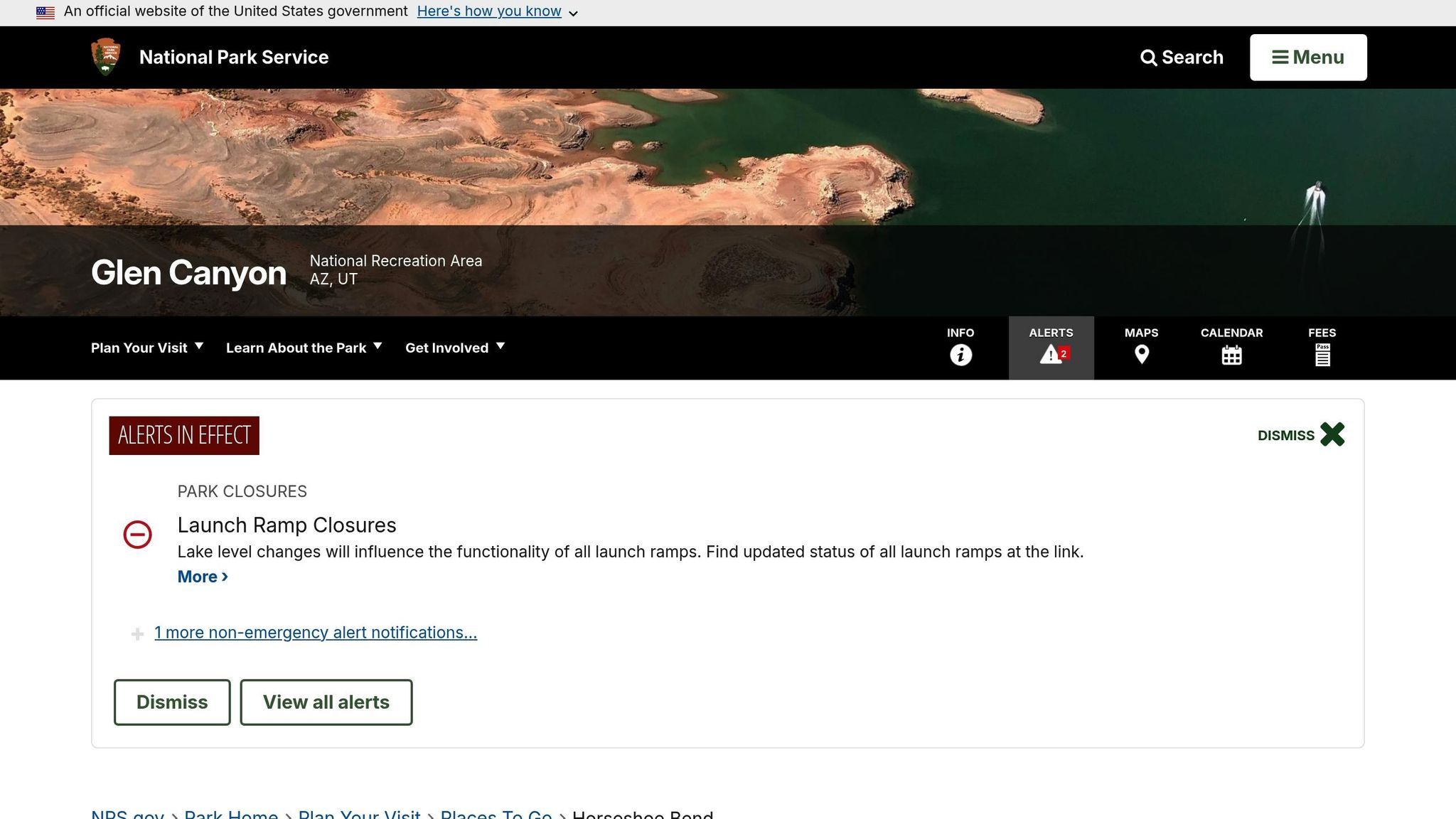
Once you’ve wrapped up your Grand Canyon adventure, begin the scenic drive north. Exit the park via Desert View Drive and follow US-89 to Page. The drive is about 135 miles and takes 2.5 to 3 hours.
Before reaching Page, make a stop at Horseshoe Bend, located 5 miles south of town. This iconic spot offers a breathtaking view of the Colorado River’s dramatic U-shaped curve from 1,000 feet above. The hike to the overlook is 1.5 miles round trip and accessible. Parking here costs $10 per vehicle, as the lot is managed by the City of Page rather than the National Park Service.
While sunset (4:30–6:30 p.m.) provides stunning, glowing views of the landscape, it also draws large crowds. One visitor described the moment:
"As soon as the sun hit the horizon, the landscape transformed with glowing rock formations and vibrant skies."
If you arrive earlier in the afternoon, you’ll find fewer people, though lighting may be flatter, and the heat can be intense – summer temperatures often exceed 100°F. Make sure to bring enough water, with the recommended amount being 1 liter per person for every two hours on the trail.
| Time of Day | Crowd Level | Lighting Quality | Temperature |
|---|---|---|---|
| Early Afternoon | Low to Moderate | Flat/High Contrast | Peak Heat |
| Sunset (4:30–6:30 PM) | Very High | Vibrant/Glowing | Cooling |
End your day in Page, ready to explore Antelope Canyon tomorrow.
Day 4: Page and Antelope Canyon Area to Phoenix
Morning: Guided Antelope Canyon Tour
Kick off your day with a tour of Antelope Canyon, a stunning natural wonder located on Navajo Nation land. Since access is restricted to guided tours with Navajo-certified guides, make sure to book well in advance – these tours are in high demand, with over 17,000 travelers reserving spots each year. Morning slots are especially popular and sell out quickly [39,41].
You’ll have the option to explore either Upper or Lower Antelope Canyon. Upper Antelope Canyon is known for its flat, easy-to-navigate terrain and the iconic light beams that appear later in the morning. Tours here range from $126 to $135 [39,41]. On the other hand, Lower Antelope Canyon offers a more adventurous experience, requiring the use of stairs and ladders to navigate its narrow passages. Tours for this section cost between $76 and $94 [39,42]. Both tours typically last 1.5 to 2 hours [42,45,46]. If you’re looking for a quieter experience, consider alternatives like Antelope Canyon X or Mystical Antelope Canyon [39,41].
Plan to arrive 15–30 minutes early for your tour. Keep in mind that backpacks, purses, and fanny packs are not allowed, so just bring your camera and a small water bottle. Tripods and selfie sticks are also prohibited on standard tours [38,41,42]. Wear sturdy, closed-toe shoes to handle the sandy and uneven terrain. Your guide might even share tips for adjusting your camera settings to capture the canyon’s vibrant hues.
Once you’ve wrapped up your tour, take some time to visit Lake Powell before hitting the road back to Phoenix.
Afternoon: Lake Powell and Return to Phoenix
Spend an hour or two exploring the beautiful viewpoints around Lake Powell. Popular stops include the Carl Hayden Visitor Center and the Glen Canyon Dam Overlook [43,46]. If you’re up for a short hike, check out the Hanging Garden trail, which can be completed in under an hour. Entry fees are $30 per vehicle for a 7-day pass, but you can skip the cost if you have an America the Beautiful Pass.
The drive back to Phoenix is about 275 miles, taking roughly 4.5 to 5 hours [42,44,45,47]. Follow US-89 South to Flagstaff, then continue on I-17 South to Phoenix [42,49]. Flagstaff makes for a great midway lunch stop. If you have time, consider visiting Cameron Trading Post along US-89 for Navajo tacos and Native American artwork. Pro tip: the "mini" Navajo Taco is plenty, as the regular size is enormous [40,42].
If your schedule allows, take a brief detour off I-17 to enjoy Sedona’s breathtaking red rock formations, like Bell Rock. This side trip adds just 15–20 minutes to your journey [42,49]. Lastly, don’t forget to download offline maps before leaving Page, as cell service can be unreliable on rural stretches of US-89.
sbb-itb-00512f3
Travel Logistics and Planning Tips
Driving Times and Distances
This 4-day road trip covers about 798 miles, with a total driving time of 13–15 hours. Keep in mind, Arizona sticks to standard time year-round, while the Navajo Nation observes Daylight Saving Time. This difference could impact the timing of your Antelope Canyon tour. If you’re visiting the Grand Canyon, plan to arrive at the entrance stations either before 10:00 a.m. or after 2:00 p.m. to avoid long lines.
Also, make sure to check park entry fees and passes in advance to streamline your travel experience.
America the Beautiful Pass and Park Entry Fees
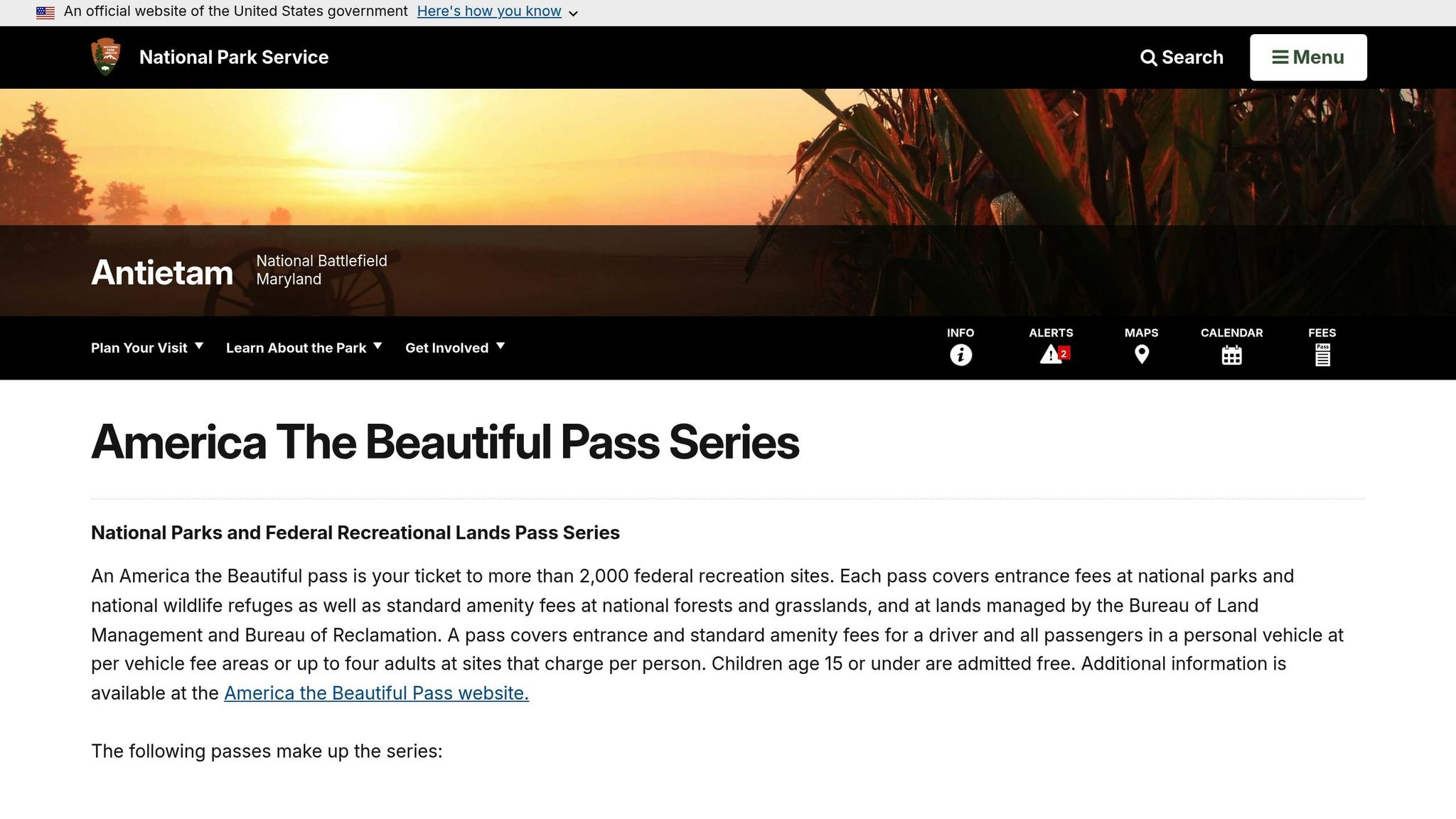
Simplifying park entry is key to a smoother trip. The America the Beautiful Annual Pass costs $80 and grants access to all three national parks on this route: Saguaro National Park ($25), Petrified Forest National Park ($25), and Grand Canyon National Park ($35). This pass is valid for an entire year and includes entry to over 2,000 federal recreation sites.
| Park | Entry Fee (Per Vehicle) | Pass Validity |
|---|---|---|
| Saguaro National Park | $25.00 | 7 days |
| Petrified Forest National Park | $25.00 | 7 days |
| Grand Canyon National Park | $35.00 | 7 days |
| America the Beautiful Pass | $80.00 | 1 year |
You can purchase the pass at your first stop, Saguaro National Park, or order it online beforehand for added convenience. The pass covers everyone in the vehicle at locations that charge per-vehicle fees. Keep in mind that the Grand Canyon only accepts credit or debit cards – no cash is allowed. If you’re a non-US resident aged 16 or older, you’ll need to pay an additional $100 per person at the Grand Canyon unless you have an America the Beautiful Pass.
It’s worth noting that the pass does not cover Antelope Canyon tour costs or the $10 parking fee at Horseshoe Bend. For US citizens or permanent residents aged 62 and older, a Senior Lifetime Pass is available for just $10, offering free entry for everyone in the vehicle.
Packing and Safety Tips for Arizona National Parks
What to Pack
Arizona’s desert climate is no joke – it demands careful preparation. Water is your best friend here, so bring one gallon per person per day and aim for one quart per hour if you’re hiking. Salty snacks or sports drinks are a smart addition to help replace the sodium you lose through sweat.
Protecting yourself from the intense sun is equally important. Pack high-SPF sunscreen, sunglasses, a wide-brimmed hat, and SPF lip balm to shield yourself from UV rays and dry air. For clothing, moisture-wicking layers are ideal, and during monsoon season (June through September), a rain jacket is essential for those sudden, drenching storms. Make sure your hiking boots are sturdy and well broken-in – they’ll be your best ally on Arizona’s rugged trails.
Don’t rely solely on your phone for navigation. Bring a paper map, download offline maps using the NPS app, and pack the 10 Essentials: a first aid kit, a whistle for each person, and a portable charger, among other basics. The National Park Service reminds visitors:
"Your cell phone is not a substitute for any of the 10 essentials. You may not have service in the park and the battery may not last the whole trip".
Being prepared with these items ensures you’re ready for whatever the desert throws at you.
Safety Considerations
Arizona summers can be brutal, with heat-related illnesses posing a serious risk. Watch for signs of dehydration, heat exhaustion, or heat stroke, and always turn back if you’ve used up half your water supply. To reduce risk, avoid hiking during the hottest hours – between 10:00 a.m. and 4:00 p.m..
Flash floods are another hazard, especially in slot canyons like Antelope Canyon. Even rain falling miles away can lead to sudden, dangerous flooding. Always check the weather forecast for flash flood warnings before heading into these areas. Additionally, leave a detailed trip plan with someone you trust, including your planned route and expected return time, so they know where to find you if something goes wrong.
Wildlife encounters are part of the experience, but keeping a safe distance is key. Stay 25 to 50 yards away from most animals and at least 100 yards from predators. As the National Park Service wisely notes:
"If you’re close enough for a selfie, you’re definitely too close".
A little preparation and caution go a long way in ensuring your desert adventure is both safe and unforgettable.
The Ultimate Arizona Road Trip: A 7 Day Journey through Arizona’s Untamed Beauty
Conclusion
This 4-day Arizona itinerary takes you through three incredible national parks – from the towering saguaros in the Sonoran Desert to the ancient petrified wood of the Colorado Plateau, and finally, to the awe-inspiring depths of the Grand Canyon. But here’s something to think about:
"If you only have a long weekend, it IS possible to visit all three national parks in three days. But is your goal to see them or to experience them?"
The key to making the most of your trip is staying flexible. Arizona’s weather can be unpredictable – southern areas might be sweltering while the Grand Canyon rim could be dusted with snow on the same day. Check live park cameras to monitor conditions before setting out on long drives, and don’t hesitate to tweak your plans if visibility is poor or the heat becomes overwhelming. Book popular experiences, like Antelope Canyon tours or Grand Canyon lodging, well in advance, but leave space in your schedule for unplanned stops or extra time at places that truly captivate you.
A few practical reminders: The America the Beautiful Pass can save you money on park entrance fees. Be prepared for temperature swings by packing layers, carry plenty of water, and keep in mind that Arizona doesn’t observe Daylight Saving Time – except within the Navajo Nation, which might affect tour schedules.
Arizona’s landscapes are vast and unforgettable. Stay safe, embrace the unexpected, and let the beauty of this incredible state leave a lasting impression.
FAQs
When is the best time to visit Arizona’s national parks on this 4-day itinerary?
The best time to visit Arizona’s national parks on this 4-day itinerary is in the spring (March to May) or fall (September and October). These seasons bring pleasant, mild temperatures that make outdoor adventures far more enjoyable. Plus, they usually attract fewer visitors than the bustling summer months.
Traveling during these times means you can soak in the stunning landscapes without battling the intense summer heat or winter’s chill, giving you a more relaxed and enjoyable experience.
What safety tips should I follow when visiting Antelope Canyon?
To visit Antelope Canyon, you’ll need to book a guided tour ahead of time – it’s the only way to access this stunning natural wonder. Make sure to wear comfortable, sturdy shoes since the terrain can be uneven, and prepare for tight spaces within the canyon. It’s also a good idea to check the weather forecast before your trip, as flash floods can occur without warning in slot canyons.
Stick to the designated paths, avoid climbing or touching the canyon walls to help preserve its formations, and always follow your guide’s instructions. Bring plenty of water to stay hydrated, especially if you’re visiting during warmer months, and be ready for some walking and navigating through the area. These simple steps will not only keep you safe but also help protect the canyon’s incredible landscape.
How can I make the most of my four-day trip to Arizona’s national parks?
To get the most out of a four-day trip, a well-thought-out itinerary is key. Focus on the most iconic and accessible spots in each park to make the experience both efficient and enjoyable. For instance, when visiting the Grand Canyon, head to the South Rim and check out popular viewpoints like Mather Point. If time allows, take a short hike along the Bright Angel Trail for a closer look at the canyon’s beauty. In parks like Saguaro or Petrified Forest, choose areas that are close to each other to cut down on travel time and allow for more meaningful exploration.
Consider staying in centrally located towns such as Flagstaff, which offers easy access to multiple parks. Start your days early to beat the crowds and take advantage of the cooler morning temperatures. Using maps and park resources in advance will help you plan your route efficiently, ensuring you hit all the must-see spots. With a little preparation, you’ll be set to enjoy Arizona’s breathtaking national parks to the fullest.