
Accessible ferry services help millions of Americans visit remote national parks like Cape Lookout and Isle Royale. These ferries include features such as wheelchair ramps, onboard assistance, and accessible restrooms, but conditions vary depending on the park, vessel, and tide levels. Planning ahead – checking dock conditions, reserving early, and confirming accommodations – can make these trips smoother.
Key Points:
- Dry Tortugas: The Yankee Freedom ferry offers ramps, accessible restrooms, and shaded seating. Tickets are $235, including a refundable park fee.
- Mammoth Cave: The Green River Ferry connects trails but may close due to water levels.
- Isle Royale: Ranger III ferry provides boarding assistance, baggage help, and an onboard cafe. Reservations are recommended.
- Cape Lookout: Island Express Ferry accommodates mobility devices, but dock repairs may limit wheelchair access.
Quick Tip:
Contact ferry operators directly to confirm accessibility features and current conditions before your trip.
Yankee Freedom Ferry to Dry Tortugas National Park
sbb-itb-00512f3
National Parks with Accessible Ferry Services
Some national parks are only accessible by ferry, offering services designed to accommodate visitors with mobility needs. Here’s a look at a few parks where accessible ferry services enhance the visitor experience.
Dry Tortugas National Park: The Yankee Freedom Ferry
The Yankee Freedom III operates daily between Key West, Garden Key, and Fort Jefferson, covering a 70-mile stretch of open water. This high-speed catamaran includes an air-conditioned main cabin, accessible restrooms, and shaded deck seating. Tickets cost $235 for adults, which includes a $15 park entrance fee (refundable if you have a valid National Park Pass). The ferry operates under a 10-year contract that started in November 2023. Park Manager James Crutchfield shared:
"We are thrilled to continue partnering with the Yankee Freedom to provide a seamless visitor experience. Their knowledgeable and dedicated staff ensure that visitors get the most out of their visit to Dry Tortugas National Park".
Mammoth Cave National Park: Green River Ferry
The Green River Ferry ensures year-round access for both vehicles and pedestrians, connecting visitors to trails like the Echo River Spring Trail. It supports vehicles up to 16 feet long and with a maximum weight of 12 tons. However, water levels can interrupt service, so it’s a good idea to check the park’s social media or call 270-758-2166 for updates before heading out.
Isle Royale National Park: Ranger III
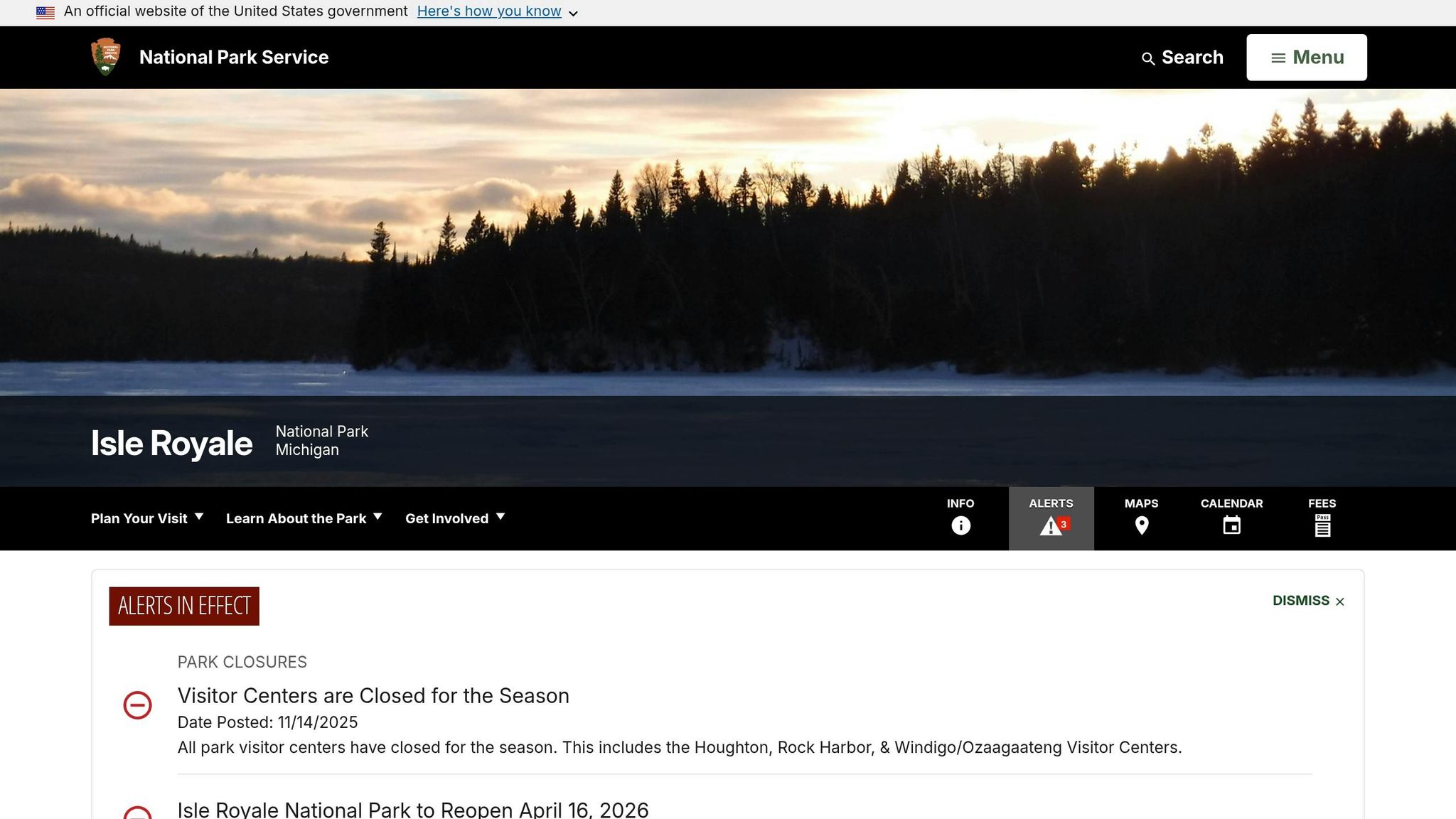
The Ranger III ferry offers service to Isle Royale, with reservations for the 2026 season opening in mid-April. The ferry includes structured boarding assistance, help with baggage handling, and an onboard cafe. Since space fills up quickly during peak times, advance booking is highly recommended.
Cape Lookout National Seashore: Island Express Ferry
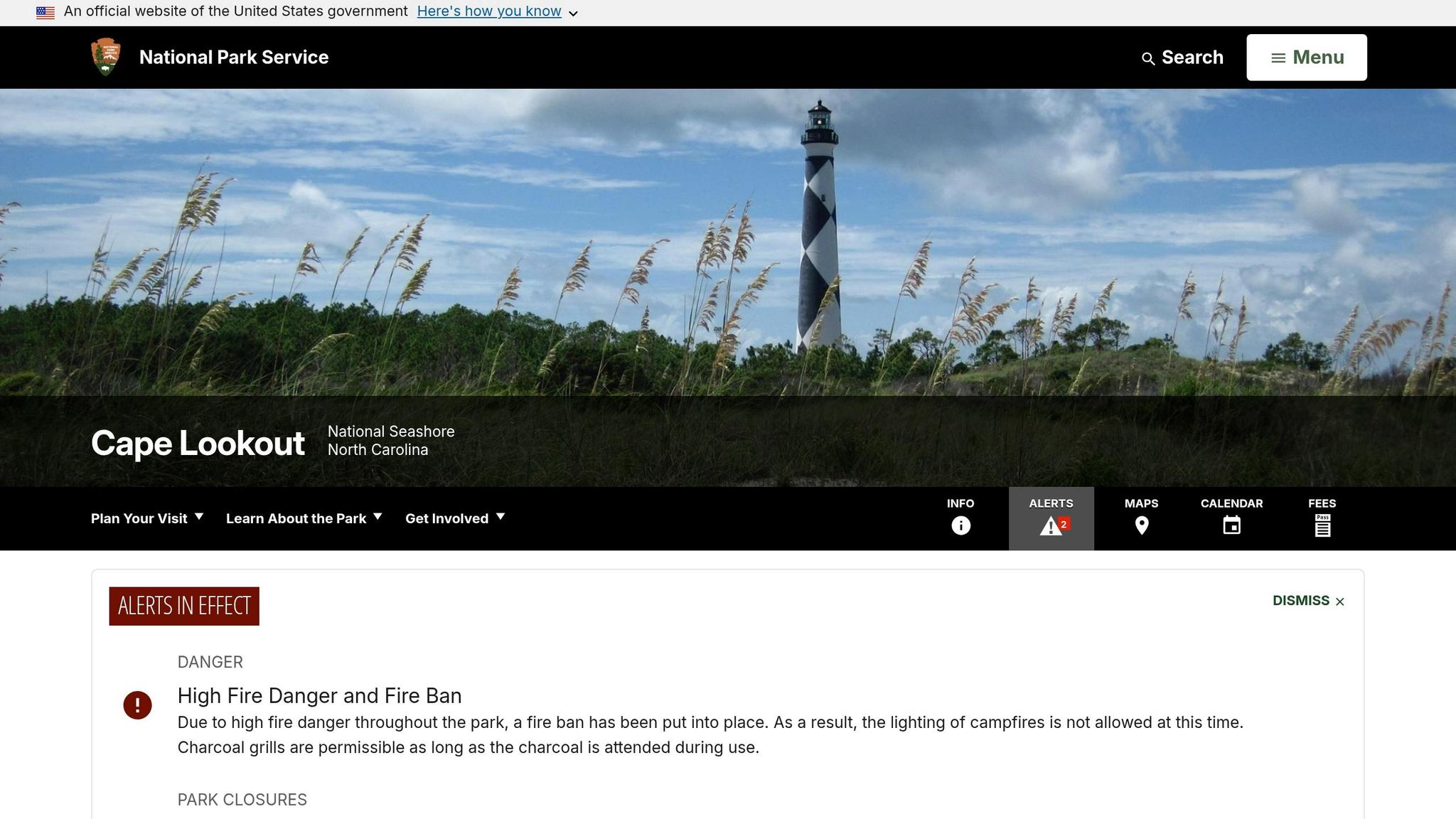
The Island Express Ferry transports visitors to Cape Lookout’s barrier islands and is equipped to accommodate mobility devices. Manually operated beach wheelchairs can also be borrowed from visitor centers. Note that as of early 2026, repairs to the Cape Lookout Lighthouse ferry dock require a 100-foot walk over soft sand, so it’s best to confirm the current status before visiting.
Accessibility Features Across Ferry Services
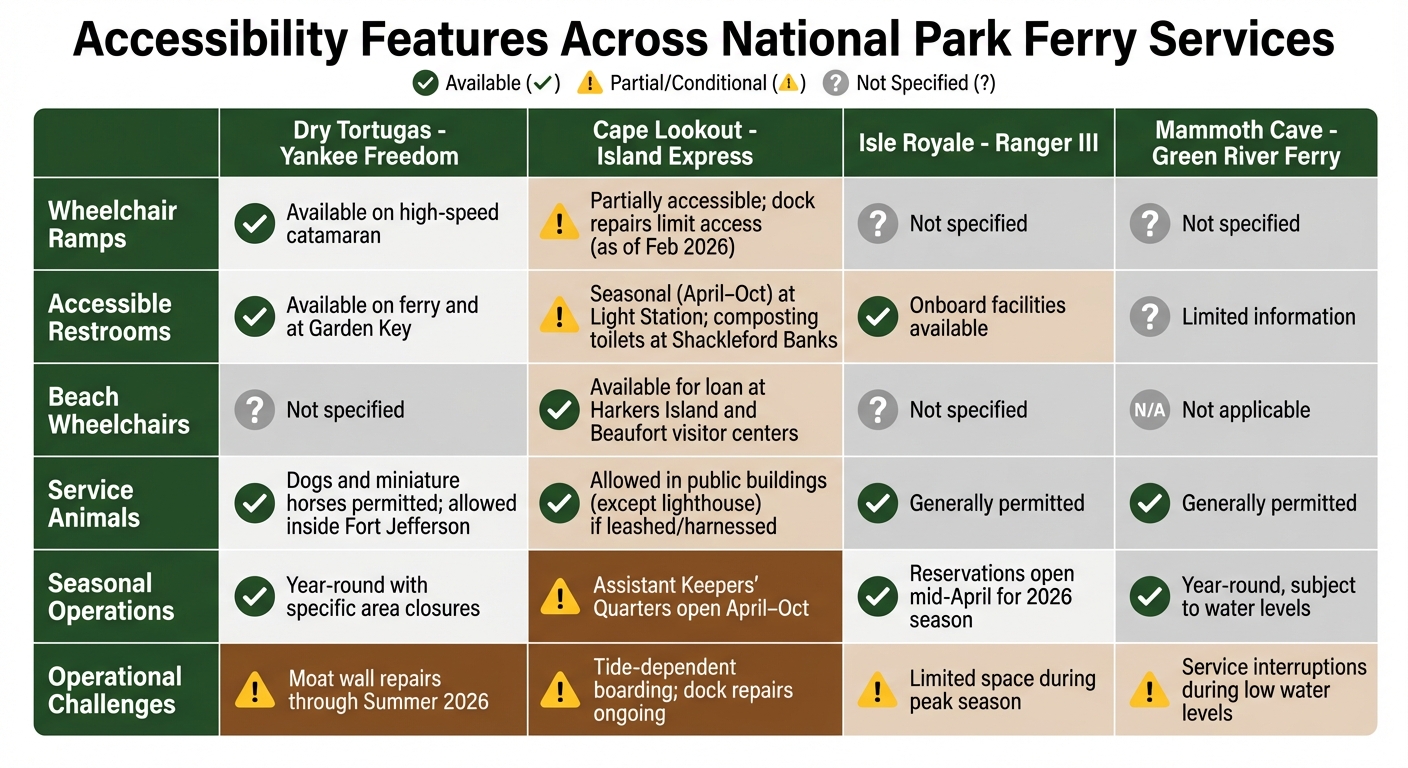
Accessibility Features Comparison of National Park Ferry Services
Accessing park ferries can be a mixed experience due to varying tide levels and infrastructure conditions. Many ferry services are classified as "partially accessible", meaning the ease of boarding depends on the type of vessel and the tide phase at the time of your visit. At Cape Lookout, for instance, the tide and the style of boat used can significantly impact aspects like ramp angles or whether passengers can board with dry feet or need to wade ashore. Because of this unpredictability, it’s a good idea to contact ferry operators directly before your trip to discuss your mobility needs and confirm the current accessibility of their vessels.
At Cape Lookout, manual beach wheelchairs are available for loan from visitor centers in Harkers Island and Beaufort. These wheelchairs must be brought aboard the ferry for use on the islands, and they require a companion to help navigate deep sand. Availability is on a first-come, first-served basis, so planning ahead is recommended.
Infrastructure repairs can also pose temporary challenges. For example, as of February 2026, the ferry dock at Cape Lookout Lighthouse is under repair, requiring visitors to walk 100 feet through soft sand. This currently makes the area inaccessible for wheelchairs. The National Park Service has stated:
"The dock remains in limited service, it is not accessible by wheelchairs. Wheelchair accessibility will be returned when permanent fixes are completed, and the dock is restored to full service".
Comparison Table of Accessibility Features
Here’s a quick overview of accessibility features across different ferry services:
| Feature | Dry Tortugas (Yankee Freedom) | Cape Lookout (Island Express) | Isle Royale (Ranger III) | Mammoth Cave (Green River Ferry) |
|---|---|---|---|---|
| Wheelchair Ramps | Available on high-speed catamaran | Partially accessible; dock repairs limit access as of Feb 2026 | Not specified | Not specified |
| Accessible Restrooms | Available on ferry and at Garden Key | Seasonal (April–Oct) at Light Station; composting toilets at Shackleford Banks | Onboard facilities available | Limited information available |
| Beach Wheelchairs | Not specified | Available for loan at Harkers Island and Beaufort visitor centers | Not specified | Not applicable |
| Service Animals | Dogs and miniature horses permitted; allowed inside Fort Jefferson | Allowed in public buildings (except lighthouse) if leashed or harnessed | Generally permitted | Generally permitted |
| Seasonal Operations | Year-round with specific area closures | Assistant Keepers’ Quarters open April–Oct | Reservations open mid-April for 2026 season | Year-round, subject to water levels |
| Operational Challenges | Moat wall repairs through Summer 2026 | Tide-dependent boarding; dock repairs ongoing | Limited space during peak season | Service interruptions during low water levels |
Planning Tips for Accessible Ferry Travel
If you’re planning a ferry trip and need accessibility accommodations, these tips will help ensure a smoother journey.
How to Make Reservations for Accessible Ferry Services
Book as early as possible – ferry capacity is limited. For instance, reservations for Isle Royale’s Ranger III open on January 2 for the upcoming season. Use official booking platforms like pay.gov for Ranger III, or specific ferry websites such as cumberlandislandferry.com for Cumberland Island.
When making your reservation, use the "special information" or "other information" fields to describe your mobility needs. Follow up by calling the ferry operator directly to confirm your requirements. For Isle Royale, contact (906) 482-0984, and for Cape Hatteras mobility transport permits, call (252) 473-2111.
Bring your own mobility device. While some locations offer loaner equipment, it’s often in limited supply and only available onsite. If you’re heading to Cumberland Island, choose your dock carefully. Ferries may stop at multiple locations, such as Dungeness or Sea Camp, so select the one closest to your destination to reduce travel distances on the island.
Arrive at least an hour early to allow time for check-in, parking, and security. These steps will help streamline your experience and prepare you for the unique challenges of ferry travel.
Preparing for Accessibility Challenges at Ferry Docks
Once your reservation is set, take time to understand the current conditions at ferry docks and aboard vessels.
Check for active alerts, as dock conditions can change. Repairs or weather can lead to unexpected challenges. For example, in February 2026, the Cape Lookout Lighthouse ferry dock closure required a 100-foot walk through soft sand. Contact ferry operators to get updates on dock conditions and any temporary adjustments that could impact wheelchair access.
Verify onboard facilities and vessel layout. Not all ferries offer ADA-compliant restrooms. For example, Statue City Cruises (serving the Statue of Liberty) advises visitors to use terminal restrooms before boarding since onboard facilities are not wheelchair accessible. Ask if all passenger areas are accessible from the main deck or if upper decks require stairs. On vehicle ferries, such as those to Ocracoke Island, space constraints may prevent lowering a vehicle ramp, which could mean wheelchair users need to stay in their vehicles during the trip.
Anticipate environmental challenges. Smaller ferries may rock significantly in rough waters, posing difficulties for those with balance concerns. Beach access routes can also be disrupted by shifting sand or storm erosion, creating steep inclines at ferry arrival points. If you plan to use beach wheelchairs, confirm their availability ahead of time. At Cape Lookout, these are available for loan at Harkers Island and Beaufort visitor centers but must be brought aboard the ferry.
Wear sturdy, closed-toe shoes to navigate uneven terrain or dock closures. If you’re traveling with medical equipment or need help with gangways, ask about specialized boarding procedures and check-in times, which may require arriving 60–90 minutes before departure. Lastly, U.S. citizens with permanent disabilities should consider obtaining the America the Beautiful Access Pass, which offers free lifetime entry and potential discounts on transportation systems, though acceptance varies by location.
Conclusion
Ferries play a crucial role in connecting the mainland to some of America’s most cherished island destinations. For places like Cumberland Island, the Statue of Liberty, and the Boston Harbor Islands, ferries often serve as the only way for visitors to access these iconic sites. Without them, many of these protected areas would remain unreachable, especially for those with mobility challenges.
The America the Beautiful Access Pass is a game-changer for U.S. citizens and residents with disabilities. This free, lifetime pass grants access to over 2,000 federal recreation sites and waives entrance fees. It also provides discounts on certain amenities, making outdoor adventures more inclusive. These efforts are further supported by mobility aids available across many park facilities.
For example, visitors to Cumberland Island National Seashore can take advantage of mobility aids to explore the area. At Cape Hatteras National Seashore, beach wheelchairs are offered free of charge at multiple visitor centers on a first-come, first-served basis. These resources help transform difficult terrains into accessible spaces, ensuring that more people can enjoy these remarkable landscapes.
FAQs
How do I confirm a ferry is truly wheelchair accessible on my travel date?
To ensure a ferry is wheelchair accessible, look for features such as ramps, elevators, and designated mobility drop-off points. It’s a good idea to reach out to the ferry service directly to confirm these details, ask about specific accommodations, and make sure everything aligns with your needs. While many ferries in national parks offer accessible options, confirming ahead of time can help you avoid any unexpected challenges on the day of your trip.
What should I do if tides, water levels, or dock repairs block accessible boarding?
If tides, water levels, or dock repairs make boarding difficult, get in touch with the park or ferry operator for help. Most parks and ferry services are prepared to offer alternative solutions or advice to accommodate your needs. It’s a good idea to contact them ahead of time to discuss your situation and find out what options are available.
Can I bring a power wheelchair or other mobility device onboard?
Yes, most ferry services within national parks accommodate power wheelchairs and other mobility devices that meet the ADA (Americans with Disabilities Act) definition of a wheelchair. These devices are typically allowed anywhere foot travel is permitted, including on ferries. For detailed information, refer to the specific park’s accessibility guidelines.